University of Austin
Public Hangings and the Politics of Virtue
Joe Lonsdale wants public hangings restored. History shows they failed—Western societies became safer after abandoning brutal spectacle justice.
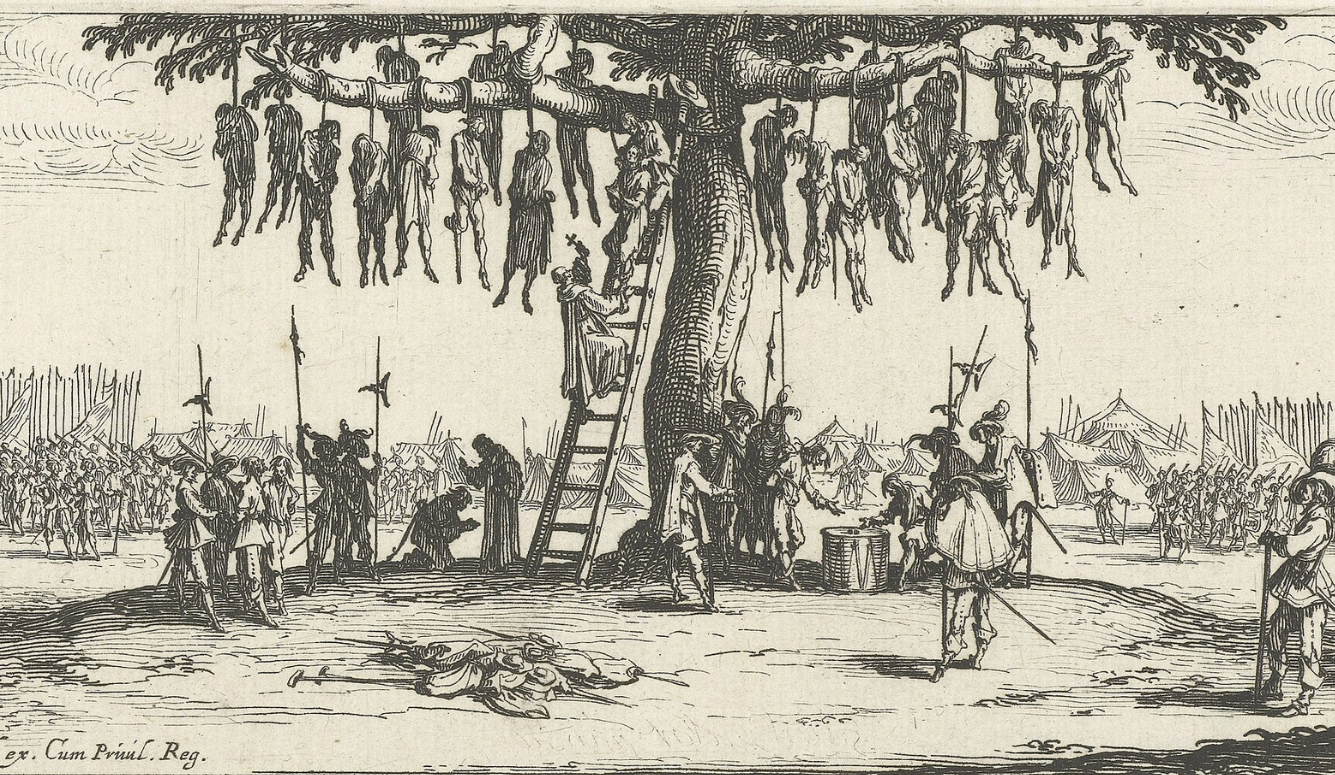

The execution was not going as planned. Robert-François Damiens, convicted of attempting to assassinate the King, had his arms and legs tied to four horses to be drawn and quartered. On the first attempt the horses could not dismember him—one even slipped on the pavement. In Henri-Clément Sanson’s family memoirs, Seven Generations of Executioners (1862), it is recorded: “Three times the horses, stimulated by the cries, by the whip, gave full collar, and three times the resistance brought them back.”
It was then decided that Damiens’s tendons would have to be cut to complete the punishment. They had no proper blade, so an axe was used to cut into Damiens’s armpits and thighs. Once the tendons were severed, the horses quickly tore his limbs away—first one thigh, then the other, and finally an arm. His limbless torso was burnt at the stake.
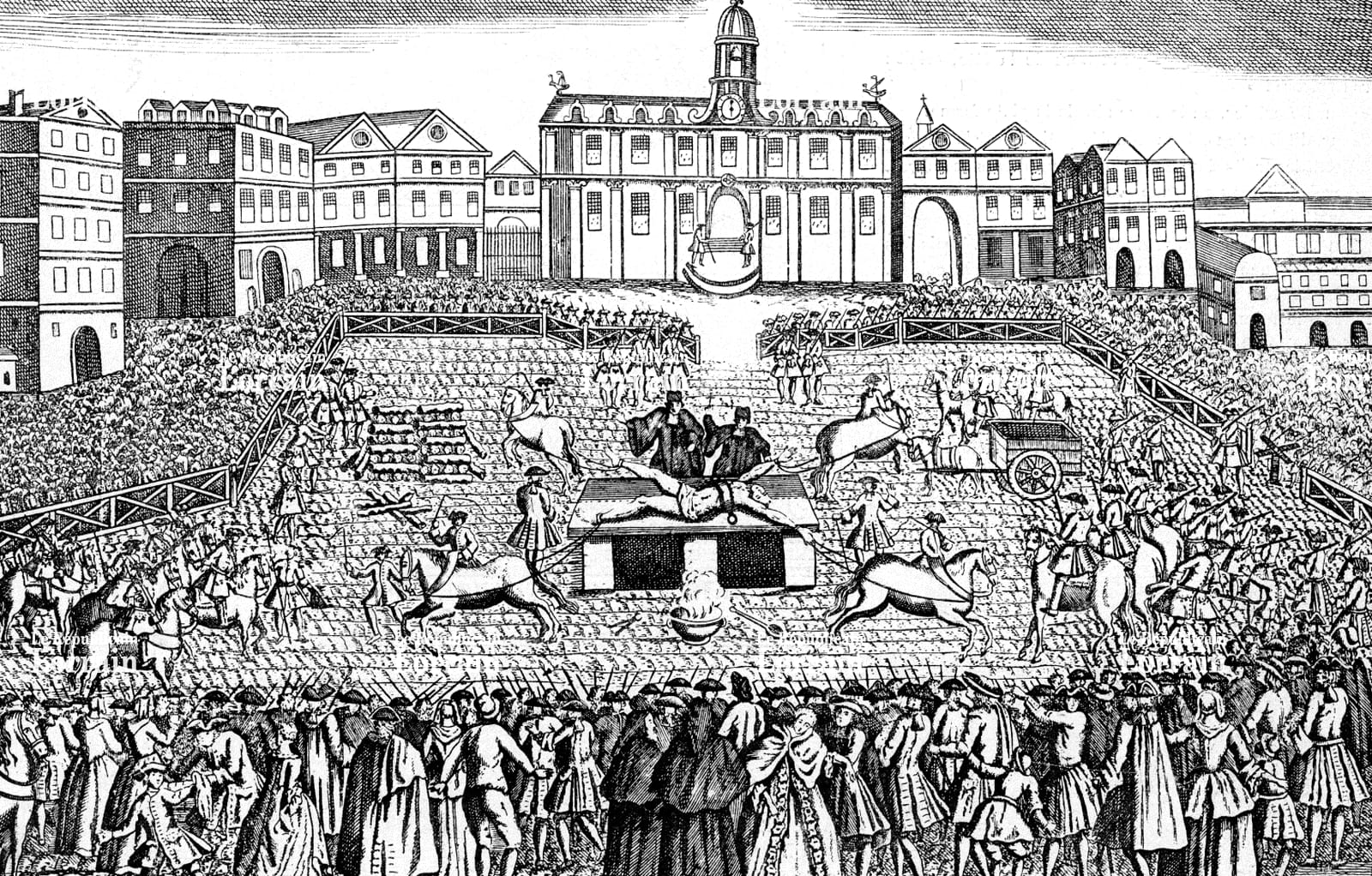
Damiens’s death was not only botched—it was prolonged public torture. Before being dismembered, he was displayed before a crowd, his legs crushed in “boots,” his flesh torn with red-hot pincers, his hand burned with sulphur. Into his open wounds were poured molten wax, lead, and boiling oil. He was also castrated.
The spectacle was so gruesome that it spurred calls for capital punishment reform in pre-Revolutionary France. When the guillotine was later introduced it was considered a more humane instrument of execution and a marker of progress. In Seeing Justice Done, Paul Friedland observes that while the purpose of public executions in pre-Revolutionary France was to instil fear and deter crime, the spectacle often had the opposite effect. Instead of prompting fear, executions drew excited crowds. This created a crisis among the elite: the very people they hoped to deter from crime were taking pleasure in the violence. Friedland also notes that these events carried a ritual quality, and were interspersed with practices like burning effigies or animals. Rather than serving as a deterrent, public executions had become a favourite form of entertainment.
Of course, even with the Revolution and Reign of Terror, France was not an outlier in its use of capital punishment. As Steven Pinker writes in The Better Angels of Our Nature, “In biblical, medieval, and early modern times, scores of trivial affronts and infractions were punishable by death, including sodomy, gossiping, stealing cabbages, picking up sticks on the Sabbath, talking back to parents, and criticizing the royal garden. During the last years of the reign of Henry VIII, there were more than ten executions in London every week.”
Yet during the Enlightenment, attitudes within the West toward capital punishment began to shift. In On Crimes and Punishments, the Italian jurist Cesare Beccaria argued that “the death penalty is not useful because of the example of atrocity it gives to men.” Beccaria’s work influenced Voltaire, who likewise cautioned against the cruelty and futility of execution. As ideas about natural rights and human dignity took hold across Europe, support for public torture and state-sanctioned killing waned. By the mid-to-late 19th century, public executions no longer occurred across most of Europe, and if capital punishment was carried out, it was done behind closed doors. By the mid-20th century, most European nations had abolished capital punishment altogether.
Did the end of capital punishment unleash an explosion of crime, as many feared that it might? With the benefit of hindsight, we know it didn’t. Pinker writes, “Abolition, far from reversing the centuries-long decline of homicide, proceeded in tandem with it, and the countries of modern Western Europe, none of which execute people, have the lowest homicide rates in the world.”
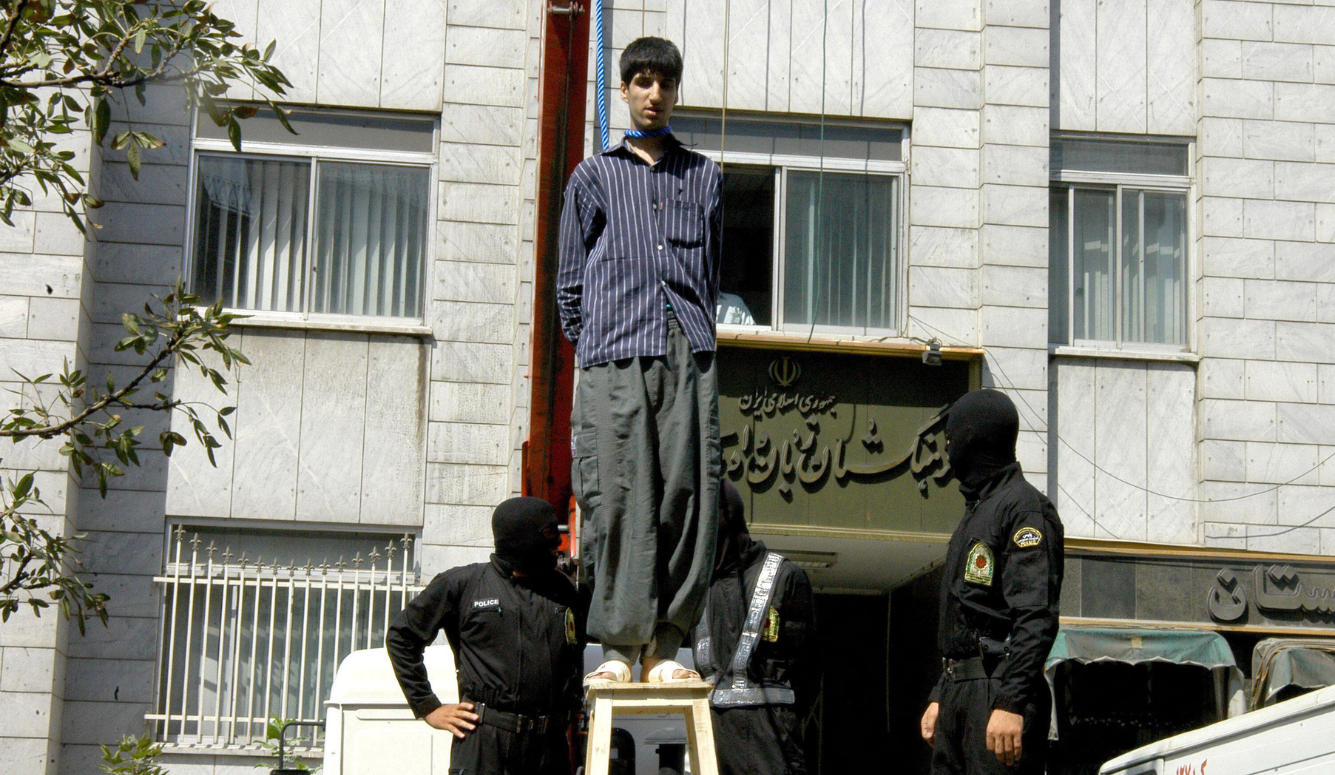
Like the abolition of slavery, the end of public executions can be seen as one of the many achievements of Western civilisation. Today, the handful of states or regions that still publicly execute people are overwhelmingly authoritarian and are often ruled by Islamic law, such as Iran and Afghanistan, or the Gaza Strip under the rule of Hamas.
Which is why it was disquieting to see Joe Lonsdale, American billionaire and co-founder of the University of Austin, openly arguing for the return of public executions in the United States. On X this week, he wrote: “If I’m in charge later, we won’t just have a three strikes law. We will quickly try and hang men after three violent crimes. And yes, we will do it in public to deter others.”
Lonsdale’s post was written in response to me. I had criticised United States Secretary of War Pete Hegseth—formerly of Fox News—after he boasted publicly about “sinking another narco boat.” I wrote: “This is really grotesque. (And look, I get that sometimes hard men must do ugly things. But if you’re going to do this, don’t broadcast it, and don’t brag about it. FFS.)”
Lonsdale quoted me, telling his followers that: “She’s just wrong. Leftist schoolmarm leaders cause violence and evil in our civilization. Sinking narco boats publicly helps deter others. As does hanging repeat violent criminals. Killing bad guys is DoW job. He should brag more. Masculine truth: bold, virtuous men deter evil.”
If I’m in charge later, we won’t just have a three strikes law.
— Joe Lonsdale (@JTLonsdale) December 5, 2025
We will quickly try and hang men after three violent crimes. And yes, we will do it in public to deter others.
Our society needs balance. It’s time to bring back masculine leadership to protect our most vulnerable.
One might argue that Joe Lonsdale’s remarks were flippant, and not meant to be taken seriously. An utterance on X is not the same as a policy proposal. When people make statements on X, they are generally performative: designed for a specific audience, with a specific agenda in mind. When Twitter was overrun with progressive activists, virtue signalling was a form of social currency. Under Musk’s ownership—and with Trump back in power—a different signalling economy has emerged. Among certain elite circles on the right, vice-signalling plays a similar role as virtue-signalling once did among the left. Today, toughness, cruelty, and transgression are all performed to demonstrate belonging. It is 2020 Twitter, but inverted.
Yet even if we treat Lonsdale’s comments as posturing on X, rhetoric does not live in a vacuum. The same aesthetic of performative toughness now appears in the behaviour of people with real power, including the current Secretary of War, Pete Hegseth.
For your Christmas wish list… pic.twitter.com/pLXzg20SaL
— Pete Hegseth (@PeteHegseth) December 1, 2025
The truth is that these performances are a civilisational regression. As Pinker shows in Better Angels, Western societies have seen a dramatic fall in homicide and interpersonal violence over the last 800 years, in tandem with the reduction of state-sanctioned violence. The shift from burning witches at the stake to jury trials reflects what the sociologist Norbert Elias called the “civilising process.” This process is characterised by cultural emphasis on self-control, empathy, and proceduralism. In the West, over time, violence became taboo. For almost everyone except criminals and gangster rappers, violence stopped being something to boast about.
Even in the United States, an outlier among rich nations for its high rates of homicide, executions are no longer conducted publicly. When capital punishment is used today, it occurs behind closed doors, only after lengthy legal appeals. The shift is not superficial, it reflects a deep civilisational norm that the state may only take life with the utmost restraint and seriousness—not before baying crowds, and not as a spectacle. Removing state violence from the public square is one of the defining moral gains of the modern West. We no longer stage cruelty as spectacle, and that reluctance is not a sign of softness—it reflects a society that no longer needs brutality to maintain order.
None of this means, however, that cities are free from serious problems of law and order. In places like San Francisco, Chicago, and Melbourne, crime has risen under increasingly lenient approaches to offending. In Melbourne, bail laws that are not fit for purpose have seen repeat offenders cycle in and out of custody. In San Francisco, harm-reduction policies have allowed open-air drug use and the associated disorder. In Chicago, reforms intended to reduce incarceration have created an environment of permissiveness.
 Paul H. Robinson
But the answer to failed progressive policies—which in some cities have created a kind of soft anarchy—is not a swing back to punitive excess. It is to apply the law consistently, fairly, and without theatrics. Our goal should not be a return to tyranny, but a restoration of order without sacrificing the moral progress that took centuries to achieve.
Public executions were eventually abandoned because they failed on their own terms. Rather than deterring crime, pickpockets worked the crowd, while onlookers cheered on acts of cruelty. They also served as political theatre. French Revolutionaries began with the execution of aristocrats and ended with executions of each other. When guardrails are removed, violence always risks becoming an escalatory spiral.
Keep reading
France’s Imaginary Austerity
A Clockwork Filmmaker

The Insight Trap
Cornell and Consent