Books
A Century and a Bit of Bloodshed and Chaos
Simon Sebag Montefiore’s sprawling 125-year history of the Middle East is flawed and overambitious but filled with eye-catching detail.
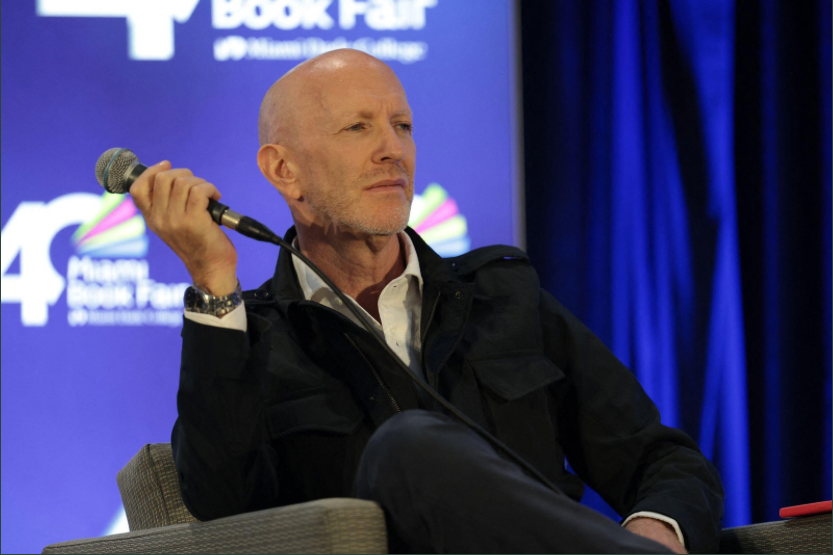
A review of The Cauldron: The Making of the Modern Middle East by Simon Sebag Montefiore; 528 pages; Weidenfeld and Nicolson (August 2026)
The Middle East—widely, and perhaps a bit perversely, defined by historian Simon Sebag Montefiore as stretching from Morocco to Iran—underwent two major, historic social-geopolitical revolutions in less than a century, a unique feat in the modern age. First came decolonisation and the emergence of real or artificial nation-states amid the rubble left by the receding imperial powers: the Ottomans, the Italians, the French, and the British. Then, a few decades later, came the explosion of Islamism across the region, which the saner rulers of the Middle East are now battling, in their different ways. In surveying the years 1900–2026 in this vast geographical and political landscape, Montefiore acknowledges the Herculean nature of his labours. It is, he tells us, a “daunting task,” and I am not sure any historian could have done it better. He looks, often in great detail, at what transpired during these years in Morocco, Algeria, Libya, and Egypt, in the Arabian Peninsula, and in the Middle Eastern heartland of Syria, Lebanon, Iraq, Jordan, and Israel-Palestine, as well as in Turkey and Iran. A daunting task, to be sure.
For the most part, Montefiore gives us the bare bones, usually telegraphically, of the political developments in each region at each stage of the history. But he routinely splices these—as has been his way in previous works—with eye-catching or telling anecdotes and portraits, and luminous philosophical-historical observations. And the writing, of course, is first-rate. All of which helps the reader to wade through the somewhat clipped, sometimes dry iteration of facts—events, names of potentates and bloodthirsty generals, assassinations, coups, wars, dynastic changes, and dates—and persevere.
The Cauldron has won extensive accolades in major publications in the West. The Wall Street Journal called it “a triumph of blood-and-thunder narrative history,” and Book Marks classified seven reviews as “rave.” Generally, this kind of praise indicates books chock-full of liberal attitudes and conclusions. But The Cauldron is no such book. It portrays most Muslim Middle East societies and polities for most of the period it covers as brutal and barbaric, bordering on the incorrigibly savage. And I speak not mainly or primarily of their interactions with Jews, Israel, and the West but of their behaviour toward fellow Muslims and non-Muslims at home and towards neighbouring societies and states. At one point, Montefiore, as if quietly beating a retreat, writes: