Podcast
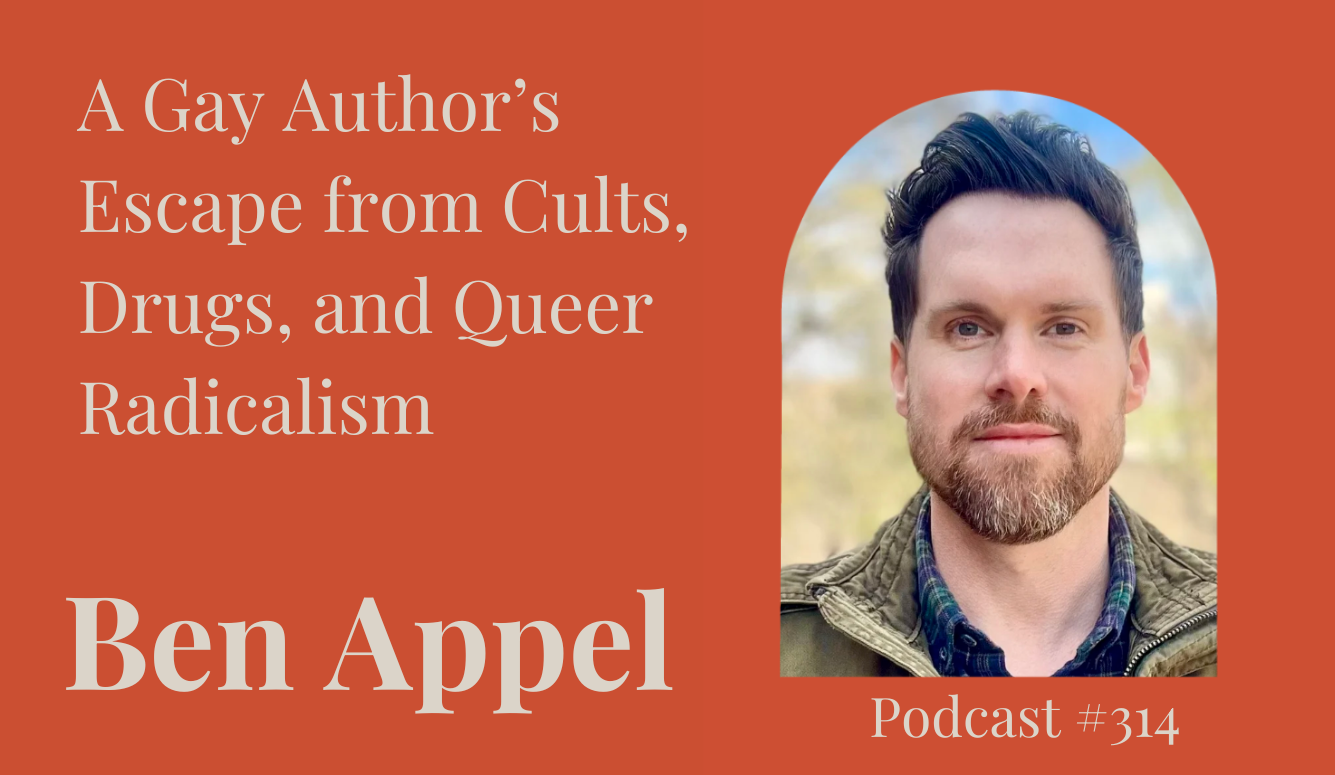
Podcast #314: A Gay Author’s Escape from Cults, Drugs, Queer Radicalism, and ‘Scrupulosity’
Quillette podcast host Jonathan Kay speaks with writer Ben Appel about his new memoir, ‘Cis White Gay: The Making of a Gender Heretic.’

This week, we’re going to dive back into the culture war over gender—which, as my guest will explain, also manifests itself as a civil war within the LGB & T communities.
That guest, gay writer Ben Appel, grew up in a Maryland-based Christian cult known as Lamb of God—in which he was taught that homosexual acts, and even mere homosexual thoughts, were a pathway to hell.
 Ben Appel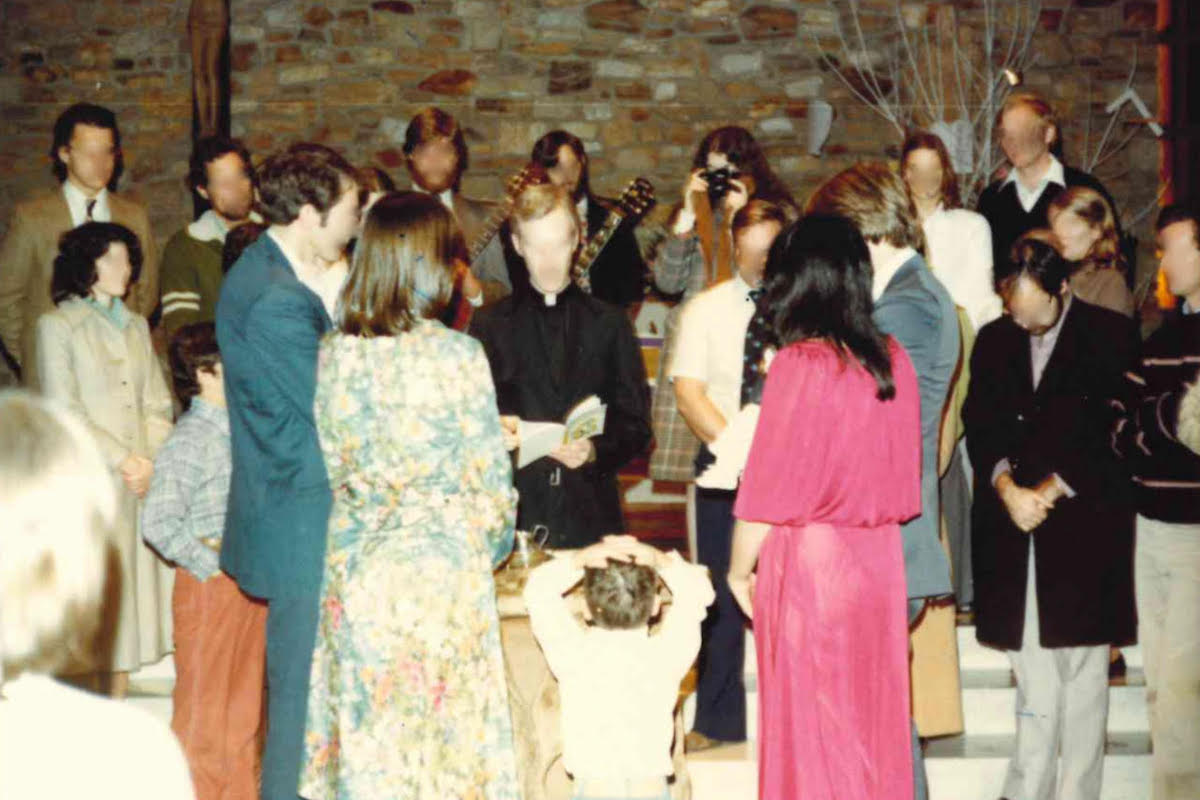
In time, Ben developed an OCD-like fixation on the rituals of prayer, spending endless hours begging God for forgiveness—a centuries-old Christian reflex known as “scrupulosity.”
Ironically, Ben’s mental-health problems only got worse after his family moved away from the Lamb of God cult, when Ben was 12 years old.
Suddenly, he was thrown into a large public-school environment that his isolated Christian upbringing had never prepared him for.
In response to bullying from homophobic classmates, Ben became consumed with shame and crippling anxiety—causing him to become even more compulsive about his prayer rituals.
Eventually, he self-medicated with alcohol and drugs, dropped out of college, and fell into a spiral of addiction, psychosis, and suicidal ideation.
Once in his twenties, Ben went clean with the help of a twelve-step program, and became more comfortable with his sexuality.
When gay marriage was on the Maryland ballot in the 2012 election, he became a gay-rights activist, and envisioned a career in the field.
He’d enjoyed writing since grade school, and enrolled in Columbia University at age thirty, with hopes of becoming a professional writer whose work would fuel the fight for LGBT rights and social justice.
Finally, he thought, after suffering through childhood traumas, addiction, and a number of false starts on the road to recovery, he’d found a community of caring, supportive people who shared his progressive values.
But as it turns out, the LGB and T communities he encountered at Columbia proved just as judgmental and cultish as the Lamb of God milieu he remembered from his childhood.
As Ben will discuss, this was a time when the so-called radical wing of the gay-rights movement was asserting itself at the expense of the so-called assimilationist wing, which had successfully fought for the rights of gay Americans to marry and serve in the military.
The radicals that Ben met at Columbia were interested in more dubious goals, such as destroying capitalism, replacing biological sex with gender identity as a marker of manhood and womanhood, and generally remaking society through an ill-defined process known as “queering.”
And when Ben questioned these ideas in class or in print, he was disparaged by his classmates as too white and too “cis”—which is to say, not transgender.
This treatment sent Ben into another mental-health spiral—and another bout of scrupulosity.
Except this time, Ben wasn’t seeking forgiveness from God, but from social-justice ideological enforcers who refused to tolerate dissent.
Please enjoy my interview with Ben Appel, author of the newly published memoir, Cis White Gay: The Making of a Gender Heretic.
Chapters
00:00 Intro / Pre-Conversation
03:27 Navigating Political Landscapes
04:37 The Evolution of Activism
05:07 Assimilation vs. Radicalism
05:51 Personal Reflections on Activism
06:59 Language and Identity
09:18 Growing Up in a Cult
12:19 Covenant Communities Explained
14:22 The Psychological Toll
16:28 Freedom and Control
18:45 Community Life and Pressure
21:27 Leaving the Community
23:01 Struggling With Identity
28:12 Scrupulosity and Self-Judgement
33:04 A Turning Point in New Orleans
36:51 Descent into Addiction
41:53 Finding Recovery and New Community
47:56 The Journey of Self-Discovery
48:08 How Marriage Changed Things
52:33 Love and Activism
54:43 Awakening of a New Activist
58:25 Navigating New Orthodoxy
01:02:17 Breaking Point at Columbia
01:05:29 Community, Belonging, and Identity
View full transcript
Introduction: Welcome to the Quillette Podcast. Quillette is where free thought lives. We are an independent, grassroots platform for heterodox ideas and fearless commentary. This week, we’re going to dive back into the culture war over gender, which, as my guest will explain, also manifests itself as a civil war within the LGB and T communities. That guest, gay writer Ben Appel, grew up in a Maryland-based Christian cult known as Lamb of God, in which he was taught that homosexual acts—and even mere homosexual thoughts—were a pathway to hell. In time, Ben developed an OCD-like fixation on the rituals of prayer, spending endless hours begging God for forgiveness—a centuries-old Christian reflex known as scrupulosity. Ironically, Ben’s mental health problems only got worse after his family moved away from the Lamb of God cult when Ben was twelve years old. Suddenly, he was thrown into a large public-school environment that his isolated Christian upbringing had never prepared him for. In response to bullying from homophobic classmates, Ben became consumed with shame and crippling anxiety, causing him to become even more compulsive about his prayer rituals. Eventually, he self-medicated with alcohol and drugs, dropped out of college, and fell into a spiral of addiction, psychosis, and suicidal ideation. Once in his twenties, Ben went clean with the help of a twelve-step programme and became more comfortable with his sexuality. When gay marriage was on the Maryland ballot in the 2012 election, he became a gay rights activist and envisioned a career in the field. He’d enjoyed writing since grade school and enrolled at Columbia University at age thirty, with hopes of becoming a professional writer whose work would fuel the fight for LGBT rights and social justice. Finally, he thought, after suffering through childhood traumas, addiction, and a number of false starts on the road to recovery, he’d found a community of caring, supportive people who shared his mainstream progressive values. But as it turns out, the LGB and T communities he encountered at Columbia proved to be just as judgemental and cultish as the Lamb of God milieu he remembered from his childhood. As Ben will discuss, this was a time when the so-called radical wing of the gay rights movement was asserting itself at the expense of the so-called assimilationist wing, which had successfully fought for the right of gay Americans to marry and serve in the military. The radicals that Ben met at Columbia were interested in more dubious goals, such as destroying capitalism, replacing biological sex with gender identity as a marker of manhood and womanhood, and generally remaking society through an ill-defined process known as “queering.” And when Ben questioned these ideas—in class or in print—he was disparaged by his classmates as too white and too cis, which is to say, not transgender. This treatment sent Ben into another mental health spiral and another bout of scrupulosity. Except this time, Ben wasn’t seeking forgiveness from God, but from social justice ideological enforcers who refused to tolerate dissent. Please enjoy my interview with Ben Appel, author of the newly published book Cis White Gay: The Making of a Gender Heretic. Transcript The following transcript has been lightly edited for concision and readability. Jonathan Kay: Ben Appel, thank you so much for joining the Quillette Podcast. Ben Appel: Thanks for having me, John. JK: So, usually I start my podcasts small and lead up to big issues, but I’m going to just start with a big-picture question here, because it’s something I’ve been thinking about the last couple of years. You and I come to the same political space from different directions. I worked at a conservative newspaper in the 1990s and early 2000s. And from reading your book, I know that you, for a period, were a mainstream gay rights activist, particularly on the issue of gay marriage. And yet, the two of us find ourselves in this weird political spot where disaffected liberals, disaffected progressives, and certain kinds of conservatives have become very aware of some of the policy distortions—let us say—that have been caused by what is sometimes grouped together as the LGBT constituency. I know that when I talk to conservatives—and also some progressives who maybe make common cause on this issue—they find it a little disorienting. Can you tell me about that? You don’t strike me as someone who’s particularly conservative, but maybe orthodox progressives would now lump you in with the Heritage Foundation. BA: For sure. JK: Is that disorienting for you? BA: It was at the beginning. You kind of wear that scarlet R—it’s like a scarlet letter, you know: “right-wing.” It’s scary, because right-wing is bad coming from the places that I come from. It’s immoral, it’s evil. The huge culture shock was when I entered further and further into activist spaces—and especially after I got to Columbia—to realise that there is this massive wing of radicals waiting. The moment that marriage is national—when it was legalised nationwide in 2015 in the US—they’re like, “Okay, you’ve gotten what you wanted. Now it’s our turn to take the helm back.” JK: You mean the assimilationists got what they wanted, and then the radicals said, “Okay, so that’s done. Let’s put a punctuation mark at the end of that, and now new chapter—we’re going to start queering the curriculum and stuff.” BA: Yeah. JK: There’s this vignette in the book where you worked at a hair salon, and a woman asked, “What did you think about the election?”—this is after Trump got elected, I think the first time—and you said something like, “I didn’t realise how racist the country was.” You realised she was a Trump supporter. She was sitting there getting her hair done by you, and you were calling her a racist. I thought it was admirable that you included that in the book because you were showing: “Hey, I get being judgemental and dogmatic—because I was like that.” BA: Yeah, someone would say—like, a co-worker—innocently would say something like, “That’s so gay.” And I would sit down with them and have a conversation, like, “Can we talk about why that’s offensive?” And I mean, there can be a time and place for these different things. If someone is gay, it’s not necessarily super great to have a co-worker saying that. But I mean, I say that now. I say things are gay. I spoke at a university last week and I said “faggy.” JK: Yeah, but that’s kind of ironic—you’re not using that at face value, right? And plus, you’re allowed to say that. Like I’m allowed to accuse my friends of being “Shylocky” or something. BA: Yeah, I know what you mean. JK: I probably would be misunderstood if I called them “Shylocky.” That’s a super weird example. “Dude, stop being so Shylocky.” “What? What are you talking about?” “Come on—it’s a thing, you know, it’s a thing we say to each other.” I have to mention I’m Jewish in the intro or all of this won’t make sense. JK: One thing that I mentioned in the introduction is that, by sheer coincidence, we had a guest on a couple of weeks ago—his name’s Danny Rensch—who was in a cult. He’s the Chief Chess Officer at Chess.com, which is the super popular site where people play chess. He wrote a book, and a publicist got in touch with me about it. They said, “Oh John, you write about board games. Here’s a great book—it’s by the guy who’s an executive at Chess.com.” And I was like, “Oh cool.” And I started reading it and the stuff about chess—I mentioned this in the podcast—was the least interesting part of the book, because the most interesting stuff was him growing up in this cult. Basically like a trailer-park compound type of thing—two hours north of Phoenix. He grew up there, and most of the book is about that. So we had this fascinating segment about cult stuff. And now just by sheer... it’s not like this is “Cult Month” at Quillette... your book comes along. And I know because, a couple of years ago, you wrote a great piece for us about cult life. I want to get into how hardcore cult Christian ideas created a really tortured mental relationship between you and your sexual orientation. I mean, that’s just—it’s a super intense part of the book. But could you, by way of background, tell us a little bit about what this Christian sect was like? Because it doesn’t sound like a normal Christian sect. It wasn’t like Unitarians. It was something darker than that, right? BA: Right. It was called the Lamb of God and it was a covenant community. It began in the very early seventies JK: What does that mean, a “covenant community”? BA: I’ll tell you. So, covenant communities were born out of the Catholic charismatic renewal movement of the late sixties. What it was, was a lot of believers—Christians—who found themselves suddenly “blessed” with these “charisms.” Like the ability to prophesy, to lay hands on each other and heal, or to speak in tongues—glossolalia, that weird mumbling that’s written about in Biblical scripture. So there was this awakening at the time. We’re coming out of the sixties and seventies, the “Me Generation,” but also the drug haze of that era. There was the women’s movement, the budding gay rights movement. And even within the church itself, there was concern from more conservative believers about liberalisation. They felt that Christianity was drifting away from its origins. So the idea behind covenant communities—again, growing out of the Catholic Charismatic Renewal—was this quirky blend of Catholicism and Pentecostalism: very sensational, emotional. Because Catholicism can be pretty rigid, as you know. But this was a hybrid. These communities started in places like the Midwest—Michigan, etc.—where groups of Christians said, “Let’s form these bulwarks against feminism and secularism and Islam,” all of these things which they foresaw were going to be the Church’s end, possibly. “Let’s all live in the same area. Let’s have male leaders and follow traditional biblical values.” It wasn’t quite Old Testament law, not Christianity’s version of Sharia law or anything. But it was very much a patriarchy: men as the heads of households, women submissive, docile, and obedient. JK: So “covenant” just means that everyone has agreed to this framework? BA: Exactly. And we’ll all live in the same area, have a school, raise each other’s children, spend our time in prayer and worship, and create this bubble to protect us from what they saw as secular decay. This really exploded. These groups—covenant communities—still exist. Amy Coney Barrett, the US Supreme Court Justice, was—or perhaps still is—a member of People of Praise, which is another covenant community. I remember when she was being considered for the Supreme Court, this came up a lot. People were concerned about how those beliefs might affect her legal decision-making. So this isn’t necessarily something that’s faded away—it’s grown. It’s now national, even international in some ways. But yes, it’s a movement within the broader Catholic Church. JK: Sounds like it doesn’t have to become a cult—maybe it could remain a reasonably mainstream Christian community if it had the right leadership. But the thing is, eventually, power corrupts. And if you centralise power within a few people who are also the spiritual leaders of the community... eventually you know what’s going to happen. BA: Exactly. You have this system where tithes are required—ten percent of your income, collected monthly or yearly. JK: The Mormons are like that. BA: You’ve got five male leaders—they were called “coordinators”—and then three women, the “handmaids.” The handmaids were the top female leaders. The structure was hierarchical. There were prayer meetings. You were expected to share everything with the people above you in the hierarchy. You’d confess: “I’ve lusted after this man’s wife,” or “I had a homosexual thought,” or whatever. And then there would be prayer, and people would pray over you. But those confessions weren’t private. That information would go up the chain of command to the coordinators and handmaids. I write about this in the book—the leaders basically had access to the hearts and minds of everyone in the community. It put them in a position to be coercive, to guilt and shame people, if they wanted to. JK: Your parents were all in? BA: Oh, they were all in. My dad was one of the five coordinators. He was one of the leaders. They joined around 1976, when they were engaged to be married. So before my siblings and I came along. And then they left around ‘95, so about nineteen years later. My dad gained authority quickly—not because he was this full-on believer in the dancing-in-the-aisles, speaking-in-tongues stuff. He actually thought it was weird at first. But he had an MBA and a law degree, he had business acumen, he was an attorney. And the leaders at the time were trying to grow this budding community and attract more shiny, successful people. They saw him as “solid.” That was the word they used for people like my parents: solid. Middle-class, attractive, well-employed. They wanted that kind of polish in the leadership. JK: As you’re saying this, it’s eerie, the similarities with Danny Rensch, who I mentioned earlier—his father was a lawyer. His parents joined their cult in their twenties. His mother was more into it, and his father was initially sceptical—but he eventually became the number-two authority in the group, as an enforcer. BA: Your listeners are going to be like, “Why? What are you doing, John—why do you have all these people with the same story?” JK: So, his name was Steve Rensch—confusingly, the actual leader of the cult was Steve Kamp. The premise of this cult was that Steve Kamp’s wife was the nominal spiritual leader of the group. They didn’t call it a cult—no one calls their cult a cult—but it was called the Church of Immortal Consciousness. He became the enforcer. And—sorry, I interrupted you, I just wanted to mention it because some of the listeners might have the Twilight Zone music playing in their head as they listen to this. One thing that’s just unforgettable from reading your book is… I think during the period of Martin Luther—centuries ago—when you read biographies of Luther, they talk about the “bath of hell”: monks and theologians sitting around, worried about hell and impure thoughts, convinced that every little thing they do or think might send them there. They were obsessed. It feels like you were in that position—you became obsessed with God casting judgment on you. A big part of that was your sexuality. The community was hard-line about it, but most of the torment was inward, right? It was you tormenting yourself. BA: A million per cent. The real inner turmoil and torment came once we left the community and were ripped out of it. We left when I was about twelve—going into Year 7. My mum had had enough. JK: You were programmed. By that time you were programmed. BA: Absolutely. It was encoded in my bones. I grew up in it from infancy. This is so deeply rooted. Life in a cult, as I write in the book, can actually be pretty great. The trouble doesn’t really come until you leave—especially if you’re a child and you have no agency over the rupture. Suddenly you’re in a different world and you have a different understanding. JK: I keep talking about that other guy, Danny Rensch—I won’t again—but he makes exactly that point. If you’re eight or ten, being in a cult is great: you’re playing in everyone’s house, the whole place is your playground. There’s no fences. You’re running through people’s kitchens. BA: Was he my neighbour? Because it really was like that. JK: You two should get together and compare notes. BA: It’s very true. We all lived in the same neighbourhood—not a commune exactly—but the leaders had this prophecy that everyone should settle in this area outside Baltimore called Catonsville, which is not far from Washington D.C., in Maryland. So every second or third house on a street was a Lamb of God family. You just wandered through everyone’s yards. We were always on bikes. We had father–son retreats, Fall festivals—it was idyllic in many ways. But within that community, there was this pressure to be perfect and not sin. As a kid, I didn’t know the adult perspective, so later for the book I had to interview former members, leaders, my parents, and read press coverage. But I knew what it felt like as a kid. JK: Because adults shield kids from a lot of the friction between the adults. BA: Yes, and they also left us to each other. It was communal child‑rearing. It was even in the covenant handbooks: everyone had a hand in raising and disciplining each other’s kids. Kids should just listen to whoever the authorities were. If we misbehaved, it wasn’t “detention and you don’t get to play.” It was: “you’re disappointing God.” JK: That’s so much worse. BA: A gazillion times worse. Because these leaders—teachers, handmaids, coordinators—were almost like human representations of God. And when we left, we were ripped out of it, we weren’t just cut off from friends who were like siblings. My mum had become a doubter. She questioned the leadership, she was having trouble in her marriage, so they pushed us out. First my dad, who was the school superintendent, was told there wasn’t money in the budget for his role anymore. It was a slowly edging us out. We left, and suddenly I didn’t have those hugely influential formative people anymore, who literally rested their hands on me and prayed over me. There was so much intimacy from a really young age. That was my way to achieve forgiveness. So when I did make a mistake, the guilt and the shame was so heavy, in terms of the way that it was communicated to us by our headmaster, our teachers … but it was also salvation. They also showed me how to repent and I could get right again. JK: There was someone to forgive you. BA: There was someone to forgive me. So when we were gone, I was in free fall. JK: Suddenly the only person who could forgive you was you but you kept arguing with yourself over whether you were a good person. But your sexuality started to manifest, and you couldn’t win that argument. BA: Right. I started the book with the fact that I was a profoundly girly kid—really gender non‑conforming. I would even be confused sometimes for a girl. But in the cult community, it wasn’t a problem the way it would be in a public school. It was such a small community. It wasn’t like there was this in-crowd of jocks and geeks. We were all part of God’s army. We were all just on fire for Jesus. If there were rumblings, discussions or offhand comments about my femininity, I could shrug it off, being in that bubble and feeling secure in that world, I was safe and it also just wasn’t so present. The summer we were leaving, we went to the Delaware shore, for a number of weeks in the summer. My parents told us mid‑vacation that while we stayed with my grandparents, they’d go back and move us from our old house to a new county and a new life. So when we returned, it was a totally new world. At the public pool, kids started saying: “Are you gay?” Meanwhile, in Bible class the previous year … I had been learning about the evils of homosexuality for so long. But I never thought it pertained to me. OK, they’re evil, they’re paedophiles, they’re dangerous, they’re going to hell, they’re going to die of a disease, they’re going to burn in hell for all eternity, they’re like worst on God’s list. Now the world was calling me on my gender expression. I was now connecting my femininity with homosexuality. I wasn’t even thinking in terms of being attracted to boys—I was only twelve. I had crushes on girls. It was all abstract. In Bible class in sixth grade, the year before we left the community, “sodomy” is a vocabulary word. We learn all about sodomy. I have to dissociate. That’s too terrifying for me to consider. Then, we’re ripped out of this community. Not long after that, my best friend said he was embarrassed to be seen with me because he was getting teased for hanging out with me. Suddenly I was aware. It’s a thing. I’m girly. So when I entered public school in seventh grade, I was petrified. They’re going to see. I felt like I was glowing with gayness. And they absolutely saw it. From week one: “Are you a boy or a girl? You’re a fag.” “Ben is a fag” written in library books. It was relentless. I go into this history of Martin Luther and scruples, especially during the Renaissance era and the Protestant Reformation. BA: I developed a form of OCD called scrupulosity. OCD can be debilitating. People often think OCD is about washing hands or flicking switches. But it’s really about anxiety. It’s a way of trying to self-soothe, trying to exert control through ritual. “If I flick the light this many times, my mom won’t die.” It’s a superstitious … JK: It gives you agency. Exactly. According to books that I’ve read, around this time [the Reformation], there used to be just a few mortal sins, but suddenly, with all this theology, the list was expanding, longer and longer and longer of what was wrong and what was sinful. Christians started going to confession over and over. It became like an epidemic. And Martin Luther was one of those people who struggled severely with scruples. It was hugely helpful for me to learn about that. With me it was about prayer. It was about saying, “I’m sorry, forgive me, please don’t let bad things happen.” Genuflecting, lifting my hands, making the sign of the cross. I had to do it because without it I felt so out of control. There were so many horrible things happening. My parents split up that year. I don’t have my friends anymore. I started drinking alcohol that year. I had no coping mechanism. JK: So, I had never thought about the somewhat blurry line between religious ritualism and clinical OCD. Because when you see a person clutching rosary beads and passionately confessing their sins or praying, you think of that as a religious phenomenon, in the same way as when you see someone washing a doorhandle 117 times right after they enter a room, that’s OCD. But what you’re describing is both. It sounds like it created a glide path to alcohol and drugs because no human brain can go on with that kind of strain indefinitely. BA: Especially an adolescent one. I had no ability to cope with any of that and to deal with it. So, really the scrupulosity was a coping mechanism. It became what pot became and what alcohol became. And what makes it so much worse is—like drugs or alcohol or anything—it can work in the beginning. It can be soothing, but then it becomes intense and the need becomes even stronger and the requirements become even longer. JK: When you came to terms with the fact that you are gay, you were still in the throes of alcohol and drugs. Again, the Hollywood movie version of it is: you realise, “hey, you know what? I’m a gay man.” And that creates a whole chapter of your life. But again, that was a sort of blurring because you did come to terms with your sexual orientation, but it absolutely wasn’t the end of your experience with drugs and alcohol. You describe this harrowing trip to New Orleans, a coming-of-age trip. BA: I had just turned nineteen. I went to college first semester in the fall of 2001. Throughout high school, my drug use is getting worse and worse. I’m becoming more and more detached from reality. And I drop out of college. I’m like, I’m just going to find myself. I’m going to travel. I’m going to … whatever. A month later, friends were going to New Orleans because a friend of mine, her boyfriend lived in Baton Rouge and they went every year. And I was like, that sounds great. Mardi Gras. So I go and it was what Mardi Gras would be like for a nineteen-year-old a drug addict who’s just looking to party and losing his mind, becoming total bananas. It was just like that. Most of my drugs of choice were downers. I was doing a lot of opiates, it really relaxed me. I would do LSD and I would do ecstasy and all of these things and I would drink, but drinking wasn’t so much a hardcore part of it. The drugs worked better for me. But down there I would occasionally do speed and down there I went on this big cocaine binge. I did a lot of cocaine and it just sent me into a complete manic tailspin. I ended up losing my shit. I came home and then perhaps two weeks later, after I had a complete and utter psychotic break, manic bipolar episode, whatever you want to call it, where my grandmother passed away. My dad’s mum. We’re driving to her funeral in New Jersey. I split off from everybody on the road because voices coming through the radio are telling me to, and it tells me to leave my brother, who was sixteen at the time, maybe seventeen, alone at a gas station and just take off without him. I drove across two states: Maryland and Pennsylvania. I ended up in middle-of-nowhere Pennsylvania, at a school where I just leave my car on the side of the road and I walk up and I say, “God sent me here.” And they call the police and that was where that ended in terms of my total joyride. And so I was taken to the station and that was my first psychiatric ward stay, the first of four in that year. And in the psych ward is where I really, really crashed and came down. And I had to go back after a week. I was there for a week, went home for a week and had to go back because I was actually very close to committing suicide. And I thankfully told my mum, said, “I’m about to kill myself. So you need to take me back to the hospital.” And she did. And then I went back and, like I said, I had a couple more stays that year. But the turning point for me was the following year when I went into twelve-step programmes and got sober. That was the first thing that I needed to do was to arrest that problem and to stop using drugs and alcohol. And that was the very first thing that I needed to do. It was bad. It was very, very dark. I shot heroin, I did all of these things and I ended up in psych wards and emergency rooms and it was terrifying and it was all of the above and it was awful and it just got so bad for me so quickly. You could say I’m lucky. I’m one of the fortunate ones to have been able to come through that and to actually get help and to recover. I was diagnosed with schizophrenia when that happened initially. JK: If some guy shows up at a school and says, “Hi, God sent me,” the first thing I’m thinking is, “Uh-huh, schizophrenic.” BA: Right. And that’s what my diagnosis was at the time coming out of the hospital because I’m nineteen years old, which I guess is a common age for the first break to reveal itself, in males especially. JK: Late teens, early twenties, yeah. BA: I was pumped with all these anti-psychotics and all of this stuff and it turned out it was not schizophrenia. I’m really lucky to come back from a total psychotic break … I’m just really lucky. I’m just grateful that I was able to stop using. JK: There are a dozen things you just described there that could have ended up with you in a ditch or... BA: A million percent. JK: It sounds like you got the help you needed at the time you needed it, including going to AA. But—good luck and bad luck—you go to AA, but you stumble into this weird cult version of AA. And by the way, just sidebar, AA in general has its critics and there are people who’d say, well, it’s a Christian thing and it’s kind of a cult, but even putting that aside, could you talk a little bit about your particular branch of the AA experience. It really was legit cult-like, it was like your second cult. BA: It is really funny. Did growing up in a cult just leave me with a cult-shaped hole where I was seeking that kind of community and that’s how I ended up there? Perhaps. But yes, it was called … it was in the Washington DC area. And I really just happened into this. I was starting to go to meetings because during my second stay in the psych ward, they pulled me and another gentleman out of the group. The other guy, I think, a crack user. And they said, “There’s people here, they’re from a twelve-step programme,” I think it was Narcotics Anonymous, and they were like, “They’re going to come in and they’re going to talk about their stories.” And I was like, “Of course, you’re signalling me out, because obviously, I can’t stop using. I knew for years it was a problem. And so I listened to them. In my head, I thought, okay, there’s this place you can go. There are other people, you can go to meetings and meet other people if you want to, to arrest this thing and get better. After I got out of the psych ward the second time, I started going. At one of those meetings, I met this young man. He introduced himself. He was maybe three years older than me. He was very charismatic. This was not in DC. This was about a half hour, 35 minutes away, closer to where I lived. He said, “I go to a lot of meetings in DC. You should come. I can be your sponsor and help you.” So I said sure. He was cute. He was straight, but I was taken with him. I thought, great, whatever, sure. He came and picked me up one day and we drove down to this big meeting. It was called Midtown. It was called the Q Group. People can look it up and read about it in the Washington Post and in Newsweek. I include this information in my book. It was a huge group in this very large hall. There were so many young people. There was an afterparty. They lived in houses together and there was this gathering at someone’s house. I had spoken to him about my OCD. I didn’t know the term “scrupulosity.” I didn’t know how to describe it, but I had told him I was on medication. The medications were not narcotic. They were SSRIs, antidepressants or anti‑anxiety medication. But in that group, it was, “You’re not truly sober if you’re taking doctor‑prescribed antidepressants.” He passed on that doctrine to me. He took me into his bedroom and said, “I want to show you something.” He opened his closet and said, “See how all of my clothes are arranged by colour and how they are exactly two inches apart?” I said yes. He said, “I have OCD as well, but I rely on God. That’s my higher power. I don’t need to take medication. Do you see what I’m saying?” He asked if I could rely on God instead. I can’t remember if I stopped the medication then. It’s possible I did. I kept going to meetings and finding parallels. It was like a congregation. It was like being in a Lamb of God prayer meeting all over again. Someone would speak, everyone would laugh at the same time, even if it wasn’t funny. There was lingo, jargon, and the way people talked. I was desperate for inclusion. There was that cult‑shaped hole. I wanted to do it. A huge part of that group—and twelve‑step programmes generally—is that it’s a spiritual programme. Prayer and meditation is one of the twelve steps. The 11th step is, “We sought through prayer and meditation to improve our conscious contact…” So I’m this kid who can’t stop praying. Part of the steps is that Step Four is, “We take a searching and fearless moral inventory of ourselves.” I was eager. I said, we need to get started immediately. Then Step Nine is making amends and apologising. I was ready to go on my apology tour, for what I didn’t know. I was ready to write a whole thesis about how horrible I was. I was ready to pray for however many hours you want. But I also knew it was a problem. It created so much distress. At that point, I knew I was gay. I knew I was attracted to guys and I was trying to reconcile what I could not get rid of. I couldn’t get rid of those thoughts. Every time I prayed, it was a constant reminder. I continued drinking. I ended up using heroin after that cult‑like AA group. I left. I couldn’t deal with it, after a couple of months. My drug use got worse. I ended up shooting heroin and I was in the psych ward and ER again. The following year, I came back to twelve‑step programmes and it stuck. I found one that wasn’t cult‑like. I found friends, young people. There was no requirement to believe anything. It was more about hanging out, smoking cigarettes at the diner until three in the morning. It was great. JK: The fact that you are keeping a journal from such a young age suggests a quality of self-awareness. You’re a good writer and it’s something that you’re doing now professionally, but was the writing just an outgrowth of these thoughts that you had to put on paper? BA: I was always a writer. The person who first encouraged me to write was the most fanatical teacher I had in the Lamb of God. A total nutso. But she had us, during the day, do journal time. I think this began in fourth grade, so when I was about ten years old. She had us write during prayer time. So much of it was meditation and prayer, but there was a time to write in your journal. BA: I enjoyed writing. JK: But would she read it? BA: No. In her mind, it was a way to commune with God. When I go back, a lot of my entries were prayer, scripture, or talking to God. But the writing to God did not become similar to the OCD prayer thing until after we left the community. When I went back and looked at these journals, I expected them to be: “God forgive me. God help me. I’m a sinner.” But it wasn’t that at all, because I was in this bubble. I was safe. I could be a normal kid. Yes, there was shame and coercion, but I was safe within the community. I had salvation as long as I was part of this group. So I could write: “I can’t stand Dave, he sucks at basketball,” or “Mark asked Sarah out and she said no, because he’s stupid.” All that stuff. JK: It’s like Dawson’s Creek stuff. BA: A couple of years later, my journals became entirely: “God, forgive me. You are most gracious and I love you,” and all of that. They were utterly different, because I wasn’t in that space anymore. JK: It sounds like the original journals were more interesting from a gossipy perspective. BA: Totally. They’re funny. I include excerpts in the book. JK: Let’s go back to the chronology. So, you eventually got the help you needed. For a period you were a work‑a‑day hairstyling professional. You didn’t write, “I was always burning with the desire to be a gay rights advocate.” Gay marriage came to Canada about a decade before the United States. And I remember at the time, I had a political opinion which was like your opinion before your epiphany, which pleased nobody. I was literally the only person in Canada with this opinion. As an editorial writer for a newspaper, people asked me if I was pro or anti‑gay marriage. And I was a self‑hating male. I didn’t think men had the emotional discipline to maintain a monogamous domestic relationship on their own. So my position was: marriage should be an arrangement between two individuals, at least one of whom is a woman. So, I was all in favour of lesbian marriage. I thought they were overqualified for marriage. Straight marriage I thought I could manage. But gay marriage was like two fourteen‑year‑olds driving a car. You can’t do it. BA: You’re not wrong. JK: It sounds like you had a similar opinion. You just didn’t think marriage was for gay men at the time? BA: I didn’t think deep down that we were capable. JK: Was that a shame thing? BA: Yes, probably. It was a shame thing, but also I thought of marriage as an antiquated institution. I was young, in my twenties, and you’re pulling ideas from your friends. I was parroting ideas. I hadn’t done the work of asking myself, “What do I really think about commitment and marriage?” I had broken up with my boyfriend. It was hugely painful because I felt super guilty, but we maintained a good relationship. I was super psyched to be single. It had been hard to end the relationship, and I thought: “This is my life. I’m going to be single for the rest of my life and I’m happy to.” Because it wasn’t working with him, but I cared so much about him, I thought maybe it’s just not for gays. Maybe it isn’t for men. It was a solipsistic view, universalising my own experience. I thought maybe marriage wasn’t for men. Like you, I understood sex differences. I understood men, and my own sexuality as a male being. Mostly I thought it was an antiquated institution and I wanted it legalised for equality’s sake. In 2009–2010, the conversation started in the States. Around 2011, Joe Biden came out in support of gay marriage, preceding Obama, which created a big PR problem for Obama because he’d said he believed in civil unions but not marriage. Before the 2012 election, when he was trying to get re-elected, he came out in support of this. It was a very divisive topic. I became aware of all of this, but I thought: it just doesn’t pertain to me. For them, absolutely. But I didn’t think marriage was for me. That changed in 2011 when I met my husband. I fell really hard. Three months into it, I thought: I want to marry this guy. He felt the same way. It was totally different than what I had ever experienced. Suddenly I knew what the love songs were about, when I would watch a romantic movie, I felt, “Now I get it.” Coincidentally, in early 2012, the Maryland state legislature passed a same‑sex marriage bill. Five or six months into my relationship, we were thinking about the future, he was meeting my family, and it was exciting. You know how people can be when they first fall in love. That was when I became involved. I thought I have a hat in the ring now. Maybe there is something I can do. I started seeing posts and emails from Equality Maryland and Marylanders for Marriage Equality, asking people to come volunteer and organise. I went to those meetings. I started talking to people. Election day came and I was campaigning at an elementary school, holding a sign saying, “Vote Yes on Question Six,” the ballot initiative. I was sure we weren’t going to win. I was cynical. But we won: 52 percent to 48 percent. Then all of the measures nationally won. That was what changed for me. JK: You describe it almost as a psychological phenomenon, as opposed to a political one. You describe a very evocative scene. After the celebration party, you’re driving home in your car in the wee hours. Thinking back on the moment, you think, “This is euphoric; I helped, in a small way, to accomplish this social change.” You wanted that feeling to keep going, so you started looking for new causes. Because, well, you win gay marriage. I thought that was one of the things that makes your book interesting. It’s not a conservative polemic against militant activists. You describe the joy of getting results on a cause you believe in—and still believe in. But from a personal point of view, it wasn’t like: “Okay, well I got what I want, time to go back to hairdressing.” You wanted to keep chasing that feeling and affecting social change. And in that moment, you’re a stand‑in for a lot of the LGBT community, because it’s like any other political movement—once you accomplish what you want, you still have these organisations with money, mandates, and manpower. They look for new causes. There are all sorts of causes out there. To some extent, I guess that’s what set us on the road to a more expansive idea of trans rights—which, at the time, you supported, right? BA: Yeah, I did. I didn’t know what I was supporting, per se. Very soon after marriage equality passed—in the following legislative session, in early 2013—so now, marriage was legal. They were trying to expand anti‑discrimination laws. Probably like in Canada and elsewhere, these laws mean you can’t legally discriminate against certain groups in housing or employment. You can’t say, “I won’t hire you because you’re gay,” or because you’re black or a woman. So they were going to add gender identity to that act. You can’t discriminate based on colour, creed, sexual orientation, or gender identity. That was for trans people. I didn’t really know many trans people—maybe one or two who identified as trans—but I hadn’t thought deeply about what that meant. If you’d asked me, I would’ve said: “people were born in the wrong body.” JK: And to be fair—whatever it does mean—I agree that you shouldn’t be able to deny a person an apartment because they have gender dysphoria. BA: Right. So I was fully on board. What I didn’t know at the time was how consequential adding gender—this ethereal or circularly defined thing—into law and policy would be. I didn’t see how it would lead to where we are today. For example, we’ve seen stories recently where a black lesbian woman is in a locker room, she turns around, and there’s a naked man there—and she’s kicked out of the gym for objecting. I wasn’t aware of how this would be consequential for women’s rights. Sex is hugely consequential. It’s very important to acknowledge, in medicine, in law, in policy. So, 2013 I was involved in that. In 2014, I got married. In early 2015, I went back to school. I said to myself: “I want to do more. I want to be an activist.” I imagined writing for HuffPost Queer Voices. JK: You weren’t saying, “I dream of writing for this thing that doesn’t yet exist called Quillette, where they’re gender‑critical”—which also doesn’t exist yet. You were the opposite, right? BA: I was a hardcore believer. I thought I’m going to go to school, I’m going to hashtag resist the Trump administration. Trump got elected at the end of 2016. I was as woke—for lack of a better word—as they come. I was geared up for it. After a year of community college, I got accepted to Columbia. I began finishing my undergraduate degree. I attended Columbia for three and a half years to complete that degree in my thirties. And so my husband and I moved to New York and my first semester began in January 2017. Coincidentally, it began the week that, Trump was inaugurated for his first term. And so I am like head down, like, I’m going to become the most effective writer and activist against the Right, against conservatism and fascism and Christian fundamentalism and all this stuff. And then, yes, there was a huge shift—not a pivot, but a complete awakening that occurred from studying and learning and being in this world, in this space at Columbia. It was very different from what I thought it would be. I expected it to be kumbaya with my people, and instead it was just a bunch of arseholes telling me I wasn’t queer enough, that I was something called “cis” and all this other stuff. I’m sitting next to this young woman with a boyfriend, and she’s scrolling through Grindr and saying how she’s also gay. And I’m thinking, “What are you?” Then suddenly this person is representative of the new dogma. It really was the new orthodoxy. This wasn’t something that was on the outskirts. This person was working at GLAAD, a gay rights organisation. These are the thinkers, this is where it all goes down. This is where people decide how everybody else should think about these issues. And I thought, “Oh my God. I don’t vibe with this.” But I stuffed it down. I held it in. I tried to re-educate myself. I did my best to go along. But that critical thinking faculty—being in my thirties, having grown up in a cult, going through all that—I thought, “I’m sorry, but…” JK: There must have been a kind of “not again” feeling for you. Because you survived the Christian cult, then you survived this weird AA cult. So you’re thinking, “Well, that’s over—what are the chances of landing in a third cult? That would be crazy. I guess I’ll just go to Columbia—this wrought-iron bastion of higher learning where rationalism prevails and cultism is the last thing I have to worry about.” And then a few months in, “Oh fuck, it’s happened again.” Like, “Is it me?” Didn’t it feel like, “God, why do you torment me?” Like something out of the Bible? If I were in your position, I would’ve said: “I’ve tried so hard to find a community in my life”—because everyone wants a community. A lot of people call themselves heterodox. I guess I call myself heterodox. But humans are social creatures—we don’t want to be heterodox. A lot of heterodox thinkers, the first thing they do is, you get four heterodox people in a room together and they say, “Let’s create a new orthodoxy.” Because people want that. Before I let you go, can you give us a sense of when the breaking point came for you at Columbia—when it became clear you couldn’t toe the line? BA: Maybe when I started having panic attacks. I had my first panic attack when I woke up at 3 am and it was unlike anything I’d experienced since I was in the psych ward at age nineteen. JK: And God wasn’t going to help you on this one. BA: I was terrified. That’s when it really started. JK: What was the fear in your head? Panic usually starts with a germ of legitimate fear. BA: It was that suddenly I was in a cult again. And yes, you could say it was me—but it was also what I was searching for. I was trying to be righteous. Getting into activism—maybe even that night on election night, driving home, filled with that high I wanted to keep chasing—it was the first time I’d felt righteous again since leaving the community. I had a new calling. I was one of the good guys. I was on the right side of history. Before, I was part of God’s army. Now I was part of a new army. It felt serendipitous. It felt like so many things. And this was the way I was going to achieve my new righteousness. But now I was in a place where I was all gung-ho—and yet I wasn’t living up to these moral standards. Because I didn’t agree with the orthodoxy. I wasn’t professing faith in it. I wasn’t following its dictates. My pronouns were still he/him, and I was... whatever the fuck. The most disturbing part of this experience—and much of the book is about my time at Columbia and afterwards—was how it exacerbated my OCD, my scrupulosity. Suddenly, I was doing all these repetitive prayers. Praying I didn’t know to what—to what god, to whom? But I was constantly self-scanning for signs of immorality: “How am I disagreeing with the dogma here?” “How am I falling short?” I was trying to silence my own thoughts. If I had a dissenting opinion, I’d think, “Don’t go there.” I kept myself quiet. I was just trying to be the best little gay, LGBTQ+ queer activist I could be. JK: In some ways, was your mother an example for you? Because it sounds like your mother called bullshit—not in those terms—on some of the things she saw at Lamb of God. BA: I write in the first part of the book about the community and the Lamb of God and how my mum became a doubter. JK: And that was enough. They effectively kicked her out before she went full heretic. BA: Yeah. It was just a nudging, it was a pushing out. Suddenly opportunities weren’t there anymore. It was like a slow cancelling. But my mom was ready to leave. She wanted to leave. So yes, I guess she was an influence in a way. I write a lot about her in the book. She and I have a very close relationship, and we relate wholeheartedly, so closely, about that feeling of guilt and fear and scrupulosity. In the past number of years, interviewing my mother and learning all these things, I realised she had a very similar or the same kind of disorder. She told me about times when she stayed up at night, repeating prayers out the window. She was about nine years old. Her father walked in, and she was embarrassed. He asked what she was doing, and she didn’t want to say, but she felt she had to. She grew up in a profoundly religious atmosphere. That’s what attracted her to the Lamb of God in the beginning. It began in the seventies as this kind of peace-and-love, former hippies on fire for Jesus, mercy, grace, everyone’s welcome, we love you. And that was great. That was a reprieve for her from the rigidity of the Catholic Church and the Catholic school that she had grown up with. She thought, “This is what I need.” But then it turned into that same kind of thing or even worse. JK: That woman you sat next to in class at Columbia, did she find love on Grindr? BA: I actually sat next to her at GLAAD. She didn’t go to Columbia. She went to a different school. If you want to hear something crazy: Grindr, the gay dating app, has a policy where so-called cis males cannot filter out—in terms of they’re searching for other males. They can’t exclude, because it says in their policy, “We all know trans men are men.” But they do allow trans men to filter us out, because their policy also says, “We all know how much trans people need community and connection.” It’s absolutely bonkers. That doesn’t mean there aren’t some men, who perhaps have bisexual tendencies and are open to having sex or hooking up with female-bodied people, with females, whether they masculinise or not. There’s such a thing as bisexuality. It’s out there and it happens. There’s also such a thing as men learning that there are a lot of females on these dating apps who are really eager to hook up. Maybe those men aren’t gay or bi at all—they’re just thinking, “I’ll go on the app and see what I can get.” Or perhaps they do hook up with both or whatever. JK: Has anyone started a version of Grindr for people who enjoyed Grindr ten years ago before it was full of people like this? BA: That’s a good question. I think Quillette has covered this in its pages. There was a case in Australia. JK: That’s in the female context. BA: Has there been any “male only”? I don’t think so, because they’d probably find themselves in the same situation as Sal Grover, in that Tickle vs Giggle situation. She lost that case. They said you have to allow males on the all-female platform. JK: Ben Appel, thank you so much for being on the Quillette podcast, and congratulations on your book, which is called Cis White Gay. There’s an excerpt at Quillette, and I saw there was a big spread in The Wall Street Journal quoting you at length. Good stuff. BA: Thank you so much, Jon. I appreciate it. JK: Thank you for listening to this episode of the Quillette Podcast. For more Quillette content, please visit us at Quillette.com.Keep reading
Addressing the Academic Skew
Letters to the Editor
Podcast #332: The Historical Case for Israel
The IOC Is Protecting Female Athletics. Canada’s Secretary of State for Sport Isn’t Happy About It

Rohmer at Camelot

Communism’s Obsolescence