Nations of Canada
New France 2.0
In the 25th instalment of ‘Nations of Canada,’ Greg Koabel describes the creation of Quebec’s first permanent farming settlements in the 1630s—and the death of Samuel de Champlain.
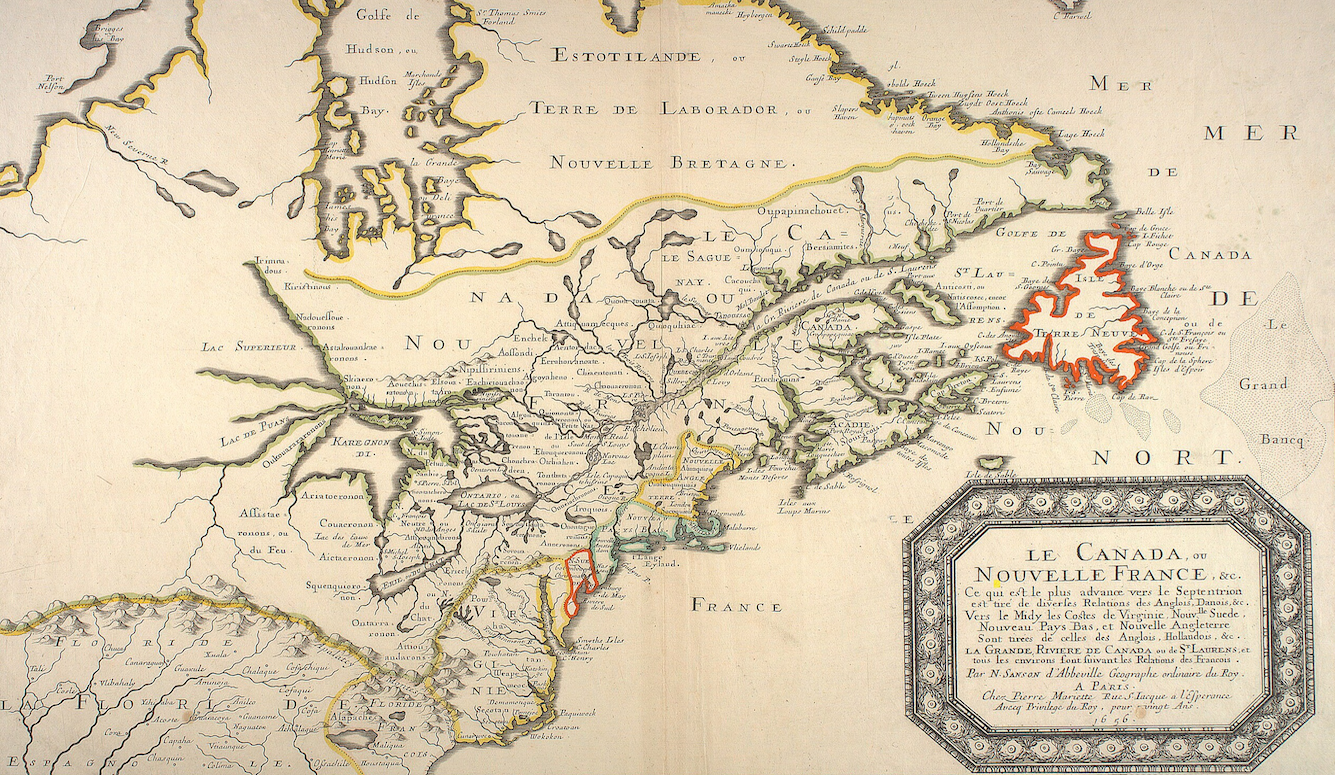

What follows is the twenty-fifth instalment of The Nations of Canada, a serialised Quillette project adapted from Greg Koabel’s ongoing podcast of the same name.
Our last instalment, titled The (First) Conquest of Quebec, presented a significant disruption in the story of Samuel de Champlain’s French colonial operations: In 1629, after a quarter century, this entire project was abruptly destroyed by English and Scottish interlopers. Champlain and his men returned to Europe as captives, while France’s fur-trading enterprise was taken over by British merchants and military adventurers.
But as things turned out, this French ouster from Quebec was brief. As previously discussed, the British attack on Quebec had emerged amid the geopolitical confusion produced by the Anglo-French War of 1627–29. Once that conflict ended, Quebec and Acadia (in the area now known as Canada’s Maritimes) were returned to the French as part of a larger peace settlement.
However, things did not go back to the way they’d been before the war. This was a new New France, so to speak.
In fact, major changes had been afoot in New France even before war broke out, in part thanks to the agitation of Cardinal Richelieu, who was then effectively running the foreign policy of France’s king, Louis XIII. Richelieu had been seeking to integrate Quebec into France’s global imperial operations for some time. In a sense, the British had done him a favour by allowing him to make a decisive break with the past.
Cardinal Richelieu had been seeking to integrate Quebec into France’s global imperial operations for some time. In a sense, the British had done him a favour by allowing him to make a decisive break with the past.
Like the king, Richelieu believed that France needed a more coherent and streamlined system of government, stripped of the legacy medieval institutions that allowed aristocratic cliques and autonomous regional institutions to thwart France’s central administration. During the sixteenth century, these stresses had led to France’s ruinous Wars of Religion. King Henri IV’s victory in 1594 was supposed to have healed the nation’s rifts. But his assassination in 1610 by a Catholic zealot, as well as the disorder that followed during the regency of his son and successor, Louis XIII, proved that those rifts still comprised an existential national threat.
Richelieu’s efforts to centralise as much authority as possible under the Crown brought him into conflict with the Dévots, a circle of pious and influential aristocrats who were suspected of putting the Catholic Church above French national interests. At the same time, Richelieu also faced opposition from the Huguenots of La Rochelle—Protestants who guarded their hard-won status as an autonomous religious minority within majority-Catholic France. Richelieu’s issue with the Huguenots wasn’t so much that they were heretics (though that didn’t help), but that they comprised “a state within the state”—an absurd political contradiction that threatened the basic functions of government.
Although freelancing fur traders on the St. Lawrence River didn’t pose the same threat to French national coherence as pious aristocrats or semi-autonomous Protestant enclaves back in France, Richelieu included them in his grand strategy. His goal was to transform the colonial company that Champlain had been running from a purely commercial enterprise run by merchants into an entity more directly responsive to Crown policy.
Foremost in Richelieu’s thinking was the development and projection of French naval power, an area in which France had begun to lag behind England. Shipbuilding in France was a highly decentralised operation, with individual port towns focusing on their own commercial needs, rather than contributing to a systematically outfitted national navy of any real size. More often than not, in fact, the most powerful ships under French sail were operated by the Huguenots of La Rochelle—which was obviously a problem, given the city’s tendency to revolt when the Crown tried to bring its residents under central national authority.
A successful colonial company on the other side of the Atlantic, working in close partnership with the central government, was part of Richelieu’s solution. Company members would provide the investment capital required to develop not only the colony itself, but also the navy required for its protection—a navy that would then be available to the Crown in times of war.
In spring 1627, Richelieu instituted a new colonial company—the latest in a carousel of monopoly companies throughout New France’s history to this point. But unlike the others, this one stuck.
Officially, Richelieu’s new organisation was known as the Compagnie de la Nouvelle-France, or Company of New France. But since that name did little to distinguish it from all the other similarly mandated “companies” that had come before, it became commonly known as the Compagnie des Cent-Associés, or Company of One Hundred Associates.
Presumably (to state the obvious), the name signified the Company’s membership count. But more important than their quantity was their identity. The coastal merchants who’d dominated the previous corporate iterations were still present, but they were now in the minority. Most of the new associates were political figures, many with ties to Richelieu, as well as court officials and influential clergymen.
The king even granted a special dispensation for aristocrats to buy in as associates. This was important because in this pre- (or perhaps proto-) capitalist age, elite landed nobles weren’t supposed to be connected to the grubby world of business. Instead, they were expected to simply collect rent on their estates and enjoy a life of pomp and leisure.
Which is to say, the new company was designed to be a creature of Paris, not the fur-trading ports of Rouen, Saint-Malo, and La Rochelle, whose merchant class has figured so prominently in our story thus far.
The new company was designed to be a creature of Paris, not the fur-trading ports of Rouen, Saint-Malo, and La Rochelle, whose merchant class has figured so prominently in our story thus far.
In formal legal terms, the Company’s monopoly jurisdiction covered all of New France—including not only the St. Lawrence basin, but also Acadia, the rights to which were now relinquished to the Company by Antoinette de Guercheville, the powerful French noblewoman whom we first met back in our seventeenth instalment. Charles de la Tour, the veteran adventurer and trader who’d been visiting Acadia since his teen years, joined the Company. And Henri de Lévis, Duc de Ventadour—the religious young aristocrat who’d championed the introduction of Jesuits in his capacity as Viceroy of New France, sold his commission to the Company. Richelieu himself took over the colonies’ management—even if, in practice, he would remain in France while delegating authority to his representative across the Atlantic. That of course, would be Champlain, now back in France after being released from English custody following his capture during the brief English occupation of Quebec.
 Greg Koabel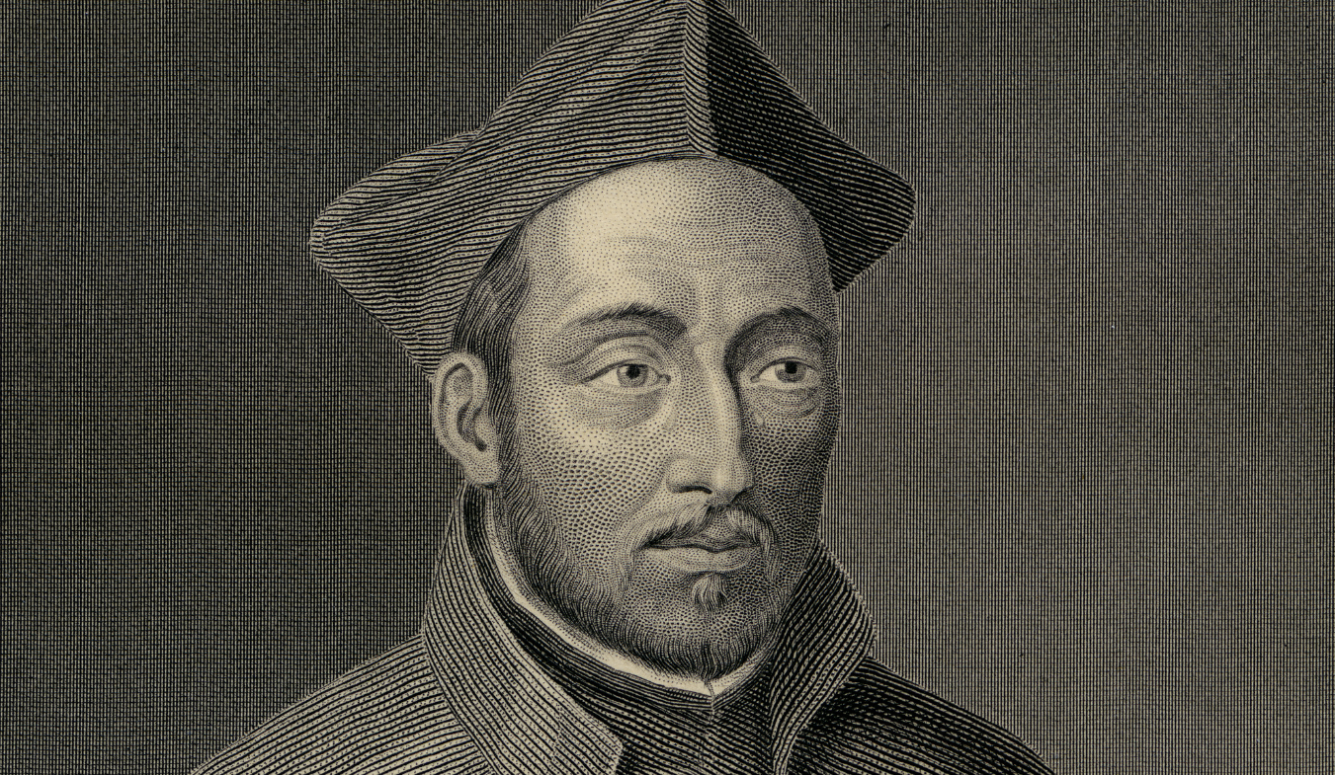
In keeping with the usual practice, the new Company was granted a new monopoly on the fur trade. But this one was good for fifteen years, far longer than any of the previous monopolies had lasted. Richelieu’s leadership effectively communicated that the Company, fully backed by the Crown, was, as the modern expression goes, too big to fail.
The initial financial contributions from associates were locked in for three years, with all profits during this period being re-invested in the Company’s development of the colony. This fact signalled another distinguishing feature of the new venture: While previous consortia had paid lip service to the need for migration and settlement, full-scale colonisation was now central to the new Company’s mandate.
The ambitious goal was to settle 4,000 colonists within the initial fifteen-year term—more than an order of magnitude above what Champlain and his colleagues had ever managed. In order to incentivise migration, the Company promised apprentices an expedited training process in the colonies: After just three years plying their trade in Quebec, young craftsmen would be granted master status. Compared to the much longer requirements imposed under the tightly controlled guild-dominated manufacturing sector in France, this presented aspiring weavers, masons, bakers, leatherworkers, candlemakers, carpenters, coopers, and such with a much faster path to becoming independent artisans.
The Company of One Hundred Associates also endorsed Champlain’s long-held notion of including local Indigenous populations in the growth of the colony. The king proclaimed that all baptised persons in New France, whether French or Indigenous, would be treated as subjects of the Crown, with all the same rights and privileges as those living in Europe. In the modern idiom, this would be seen as an effort at assimilating Indigenous peoples, and therefore a step toward eradicating their cultures. But by the standards of seventeenth-century colonial policy (an admittedly low bar), it ranked as enlightened.
And yet, just as the authorities in France were warming to Champlain’s idea of Indigenous inclusion, Champlain himself was starting to doubt whether a hybrid French–Indigenous settlement would be practical. This was in part because of what he saw as acts of betrayal perpetrated by the Innu during the Anglo-French War (though, as we’ve seen, the Innu very much saw the betrayal as coming from the French side). His position on this point reflected a pattern that would be repeated throughout the rest of the century: Administrative bosses in Europe saw Indigenous settlers as a cheap alternative to transatlantic migration; while those on the ground in Canada came to realise that Indigenous groups showed little interest in becoming European-style farmers.
Administrative bosses in Europe saw Indigenous settlers as a cheap alternative to transatlantic migration. But those on the ground in Canada realized Indigenous groups had little interest in becoming French farmers.
While the Company of One Hundred Associates was more focused on imperial colonisation than were its corporate predecessors, it was also more inclined to support the Jesuits’ missionary work, which was aimed at converting Indigenous communities to Christianity. For some of the associates, in fact, this was the primary driver of their outlays, which they regarded more as charitable contributions than investments.
The result was a hybrid company—in part a commercial enterprise based on the fur trade, in part an imperial power play, and in part a religious project that (its backers believed) would save souls and heap glory on the true (which is to say, Catholic) church. Not surprisingly, this would lead to the emergence of competing and contradictory interests among the various players who’d now be populating New France.
As we’ve already seen, the Company’s first efforts at getting its new colonists to Canada in spring 1628 ended ingloriously. France was still at war with England at this point. The French colonial fleet was intercepted on the St. Lawrence, before it could reach Quebec, and its entire incoming leadership was packed off to England as prisoners, while rank-and-file settlers were sent back to France. All their provisions and equipment were seized as war booty, marking this episode as the costliest failure to date in France’s North American colonial history. Richelieu was forced to call for new rounds of financial contributions in advance of a fresh venture slated for summer 1632.
Greg Koabel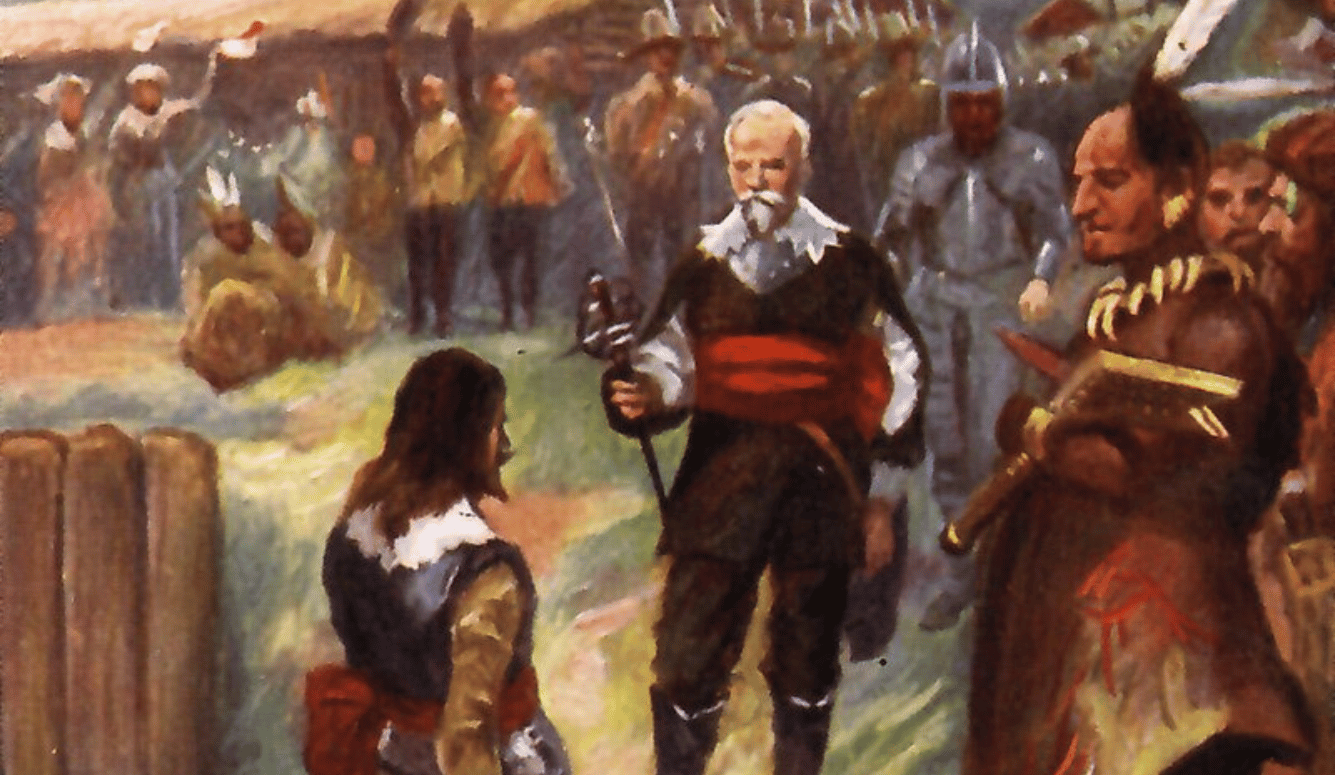
The new company wasn’t entirely idle during this period, however. While Quebec remained in English hands during the post-war negotiations, the situation in Acadia was more fluid. As previously discussed, a Company-sponsored voyage swept Scottish interlopers out of Cape Breton. And de la Tour succeeded in building a permanent trading post at the mouth of the St. John River, providing access to the interior of what would one day become modern-day New Brunswick.
Assisting de la Tour was an official Company representative named Nicolas Denys, an energetic merchant out of La Rochelle with a background in navigation and engineering. In keeping with the new Company’s focus on expanding New France’s economy beyond the fur trade, Denys took an interest in Acadia’s other natural resources, including fish. His goal was to establish fishing villages whose residents could more efficiently trawl the coast than fishermen coming all the way from Europe every summer.
Denys also saw commercial potential in Acadia’s forests—for reasons that will be obvious to any Quillette reader who’s made the drive through New Brunswick’s heavily forested interior.
Lumber was a precious commodity back in France, where whole forests had been cut down for shipbuilding and firewood (this being an era before the widespread use of coal). Most of Europe’s lumber came from the Baltic, a trade then dominated by Dutch and English merchants. The creation of a Canadian lumber industry could address a pressing French national security issue (and, of course, make Denys a tidy profit).
All told, by the time the 1632 Treaty of Saint-Germain-en-Laye confirmed French control over Acadia, the company was already fairly well positioned in this theatre. That year, Isaac de Razilly, a naval officer who’d closely advised Richelieu on colonial policy, led a 300-strong expedition to build on the Acadian groundwork laid by de la Tour and Denys. The St. Lawrence would remain the focus of French operations. But the deployment of such a large contingent, and one led by a member of Richelieu’s inner circle, demonstrated that Acadia still represented an important part of French plans.
This French recognition of Acadia’s strategic importance was partly due to concerns about how easy it had been for British invaders to swoop into the region amid the chaos of war. But an even stronger driver was the foundation, in 1630, of a new English colonial organisation known as the Massachusetts Bay Company. This group had a mandate to settle the coast south of Acadia, which Champlain and the French had tried to map back at the beginning of the century (an unsuccessful project that we discussed back in our twelfth instalment).
The area settled by the English would later become known as New England. But in the early seventeenth century, long before anything called Canada or the United States had come into political existence, it wasn’t clear to anyone in Paris or London where (if anywhere) New England would end and New France would begin. Indeed, wars would be fought over the issue until well into the eighteenth century.
The English had been poking their noses in the region for several decades. But to this point, the only permanent settlement they’d created was a village of religious refugees at Plymouth, founded in 1620. These Puritans were fairly insular, and had posed little commercial or territorial threat to French Acadia.
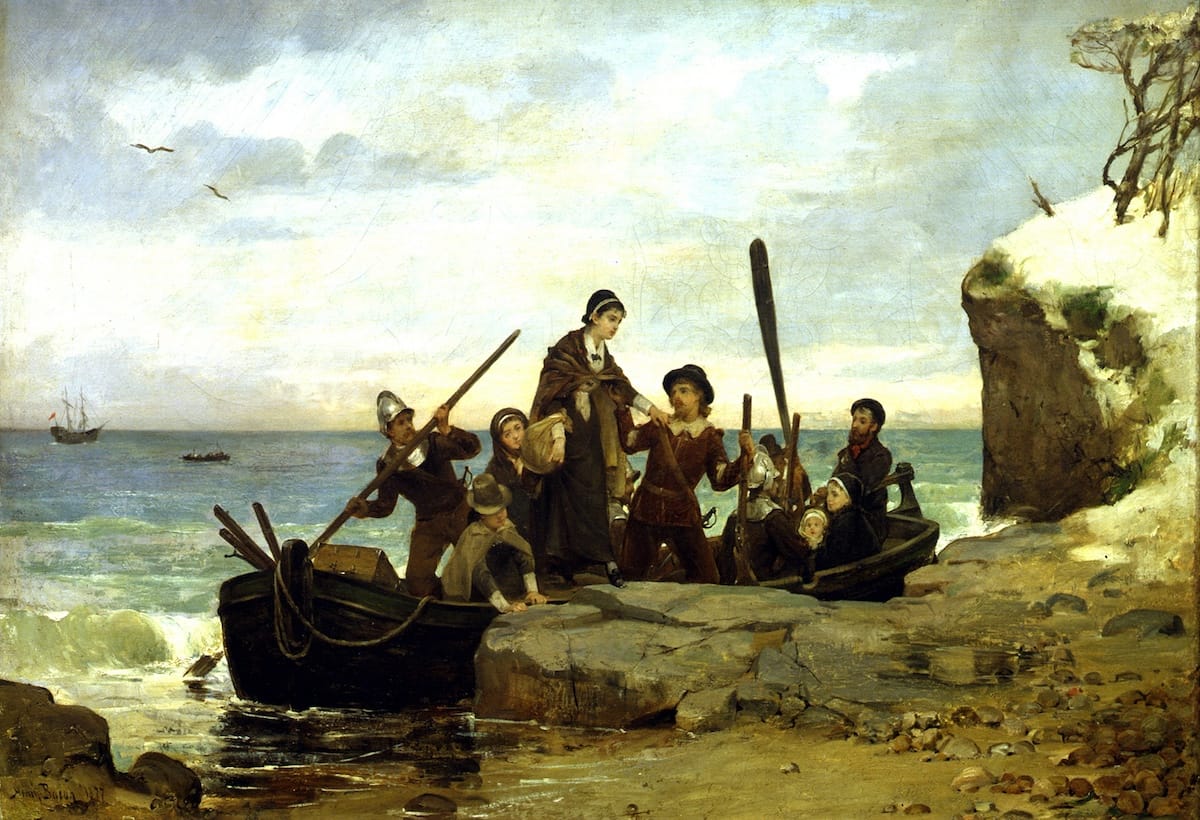
The newly formed Massachusetts Company, however, was a different kettle of fish. Like the Plymouth enterprise, the company was populated by religious dissenters who were unhappy with mainstream spiritual life in England. But these religious radicals had far grander plans in the New World: They hoped to create a religiously purified society whose predicted glories would attract future waves of dissident migrants from the old country.
By 1632, just over a year after the colony’s headquarters was founded at Boston, a steady flow of trans-Atlantic migration had developed. If the French didn’t beef up their presence in Acadia, traders such as Charles de la Tour would be overwhelmed by a deluge of English settlers heading northward to claim new land.
If the French didn’t beef up their presence in Acadia, traders such as Charles de la Tour would be overwhelmed by a deluge of English settlers heading northward to claim new land.
In response to this threat, Razilly established a set of rudimentary trading forts to ensure French control over the fur trade in the Bay of Fundy region. One of these, La Hève (modern LaHave), became Razilly’s main base of operations. Another, sitting at the mouth of the Penobscot River, south of Bangor in modern-day Maine, became the unofficial border between the French and English fur-trading operations.
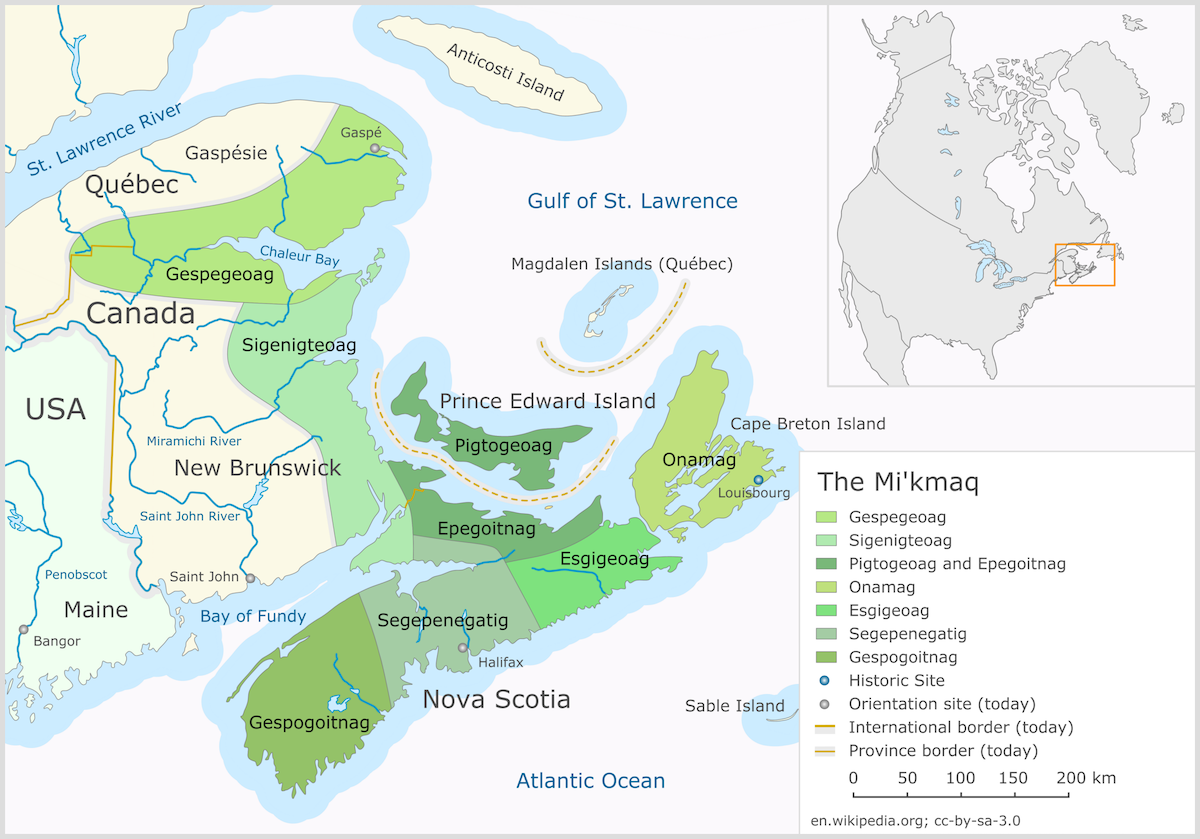
Notwithstanding Richelieu’s efforts at centralised control, the emerging governance structure in Acadia was somewhat ambiguous. Razilly wielded tremendous influence with company leadership back in France, and so had his own channels to resources and political power. But Charles de la Tour had greater experience in the region, dating back to his youthful days accompanying his father. He also had forged close relationships with local Indigenous groups who were key to the fur trade—the Mi'kmaq on the east side of the Bay of Fundy and the Abenaki to the west.
In order to avoid conflict, Razilly and de la Tour worked out an amicable power-sharing agreement. De la Tour held sway at his base on Cape Sable Island (off the southernmost point of the Nova Scotia peninsula), as well as French trading posts on the St. John and Penobscot Rivers. Meanwhile, Razilly would oversee the development of settlements at Port Royal, Le Have, and Canso (on the northeast tip of mainland Nova Scotia). In addition, Razilly maintained a trading post on the mainland at Saint Croix (where Champlain had suffered through his first Canadian winter).
When the sites of these trading posts are plotted on a map, the arrangement looks quite muddled, with neither man holding sway over a contiguous sphere of influence. While Razilly and de la Tour enjoyed a good working relationship, this ad hoc division of Acadia would lead to long-term problems.
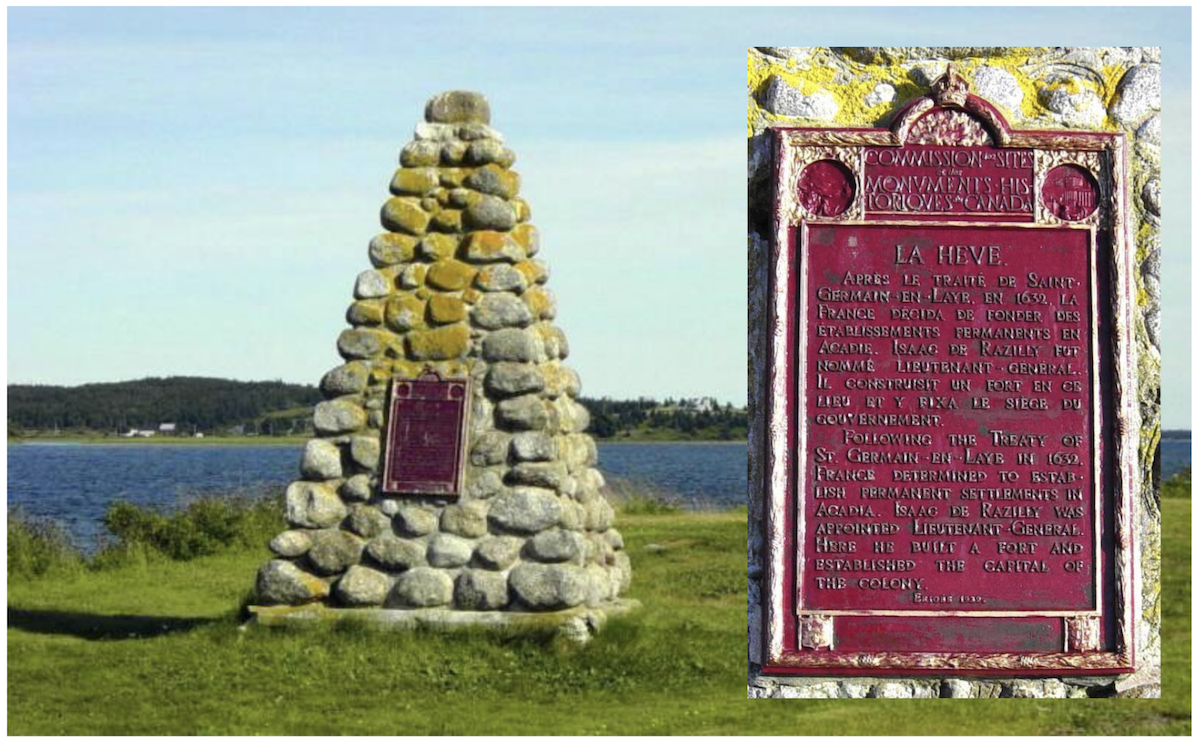
In the short term, however, the French return to Acadia seemed to be going well. For the first time, French farmers and fishermen were settling in the region, not just traders. Denys was particularly focused on importing experienced lumberjacks from the countryside around La Rochelle. But this recruiting effort proved difficult; and setting up an inland Acadian lumber industry proved prohibitively costly, despite the region’s abundance of fir, spruce, and pine. Denys eventually gave up his wood-harvesting efforts. And the distinct culture of French Acadia would instead become rooted in the coastal settlements.
While the French had been proactive about reasserting their control of Acadia, the situation was different on the St. Lawrence: Here, the English were able to delay their handover of Quebec until they’d reaped the profits from the summer 1632 fur-trading season (months after King Charles I had agreed to do so). And a full French re-colonisation effort had to be delayed until 1633.
In the interim, French reconnaissance teams on the St. Lawrence were coming back with bad news regarding France’s pre-war experiments with small, family-run farms in the vicinity of Quebec: The fledgling farming operations had all been destroyed, and the Quebec settlement itself was in a state of disrepair. The English hadn’t devoted resources to its upkeep. And even the combination seminary-monastery that missionaries had built on the banks of the St. Charles River—one of the few substantial structures the French managed to erect—lay in ruins.
But while the physical legacy of the French colony was in a sorry state, France’s diplomatic and commercial network seemed salvageable. From the perspective of Wendat and Algonquin traders, the English management of the St. Lawrence fur trade had left much to be desired. Unlike the French, the English did little to secure the St. Lawrence against Indigenous raiding parties coming from the south. During the Anglo-French war, the truce with the Mohawks had broken down, and many traders were (understandably) reluctant to bring their fur to market in light of the ensuing risks.
We’ve covered the seventeenth-century geopolitics of the Hudson River basin in previous instalments, and will return to the subject in the future. But for our present purposes, it’s relevant to simply note that by 1628, the Mohawk had successfully displaced the Mohicans in the region, and so enjoyed direct access to the Dutch trading post at Fort Orange (modern Albany, NY). Having ensured their local supremacy on this front, Mohawk raiders returned their attention to the St. Lawrence. And France’s anxious Wendat and Algonquin allies hoped that the return of the French to Quebec would lead to a reconstitution of the Laurentian Coalition alliance that had first stood up to the Mohawk in 1609.
Greg Koabel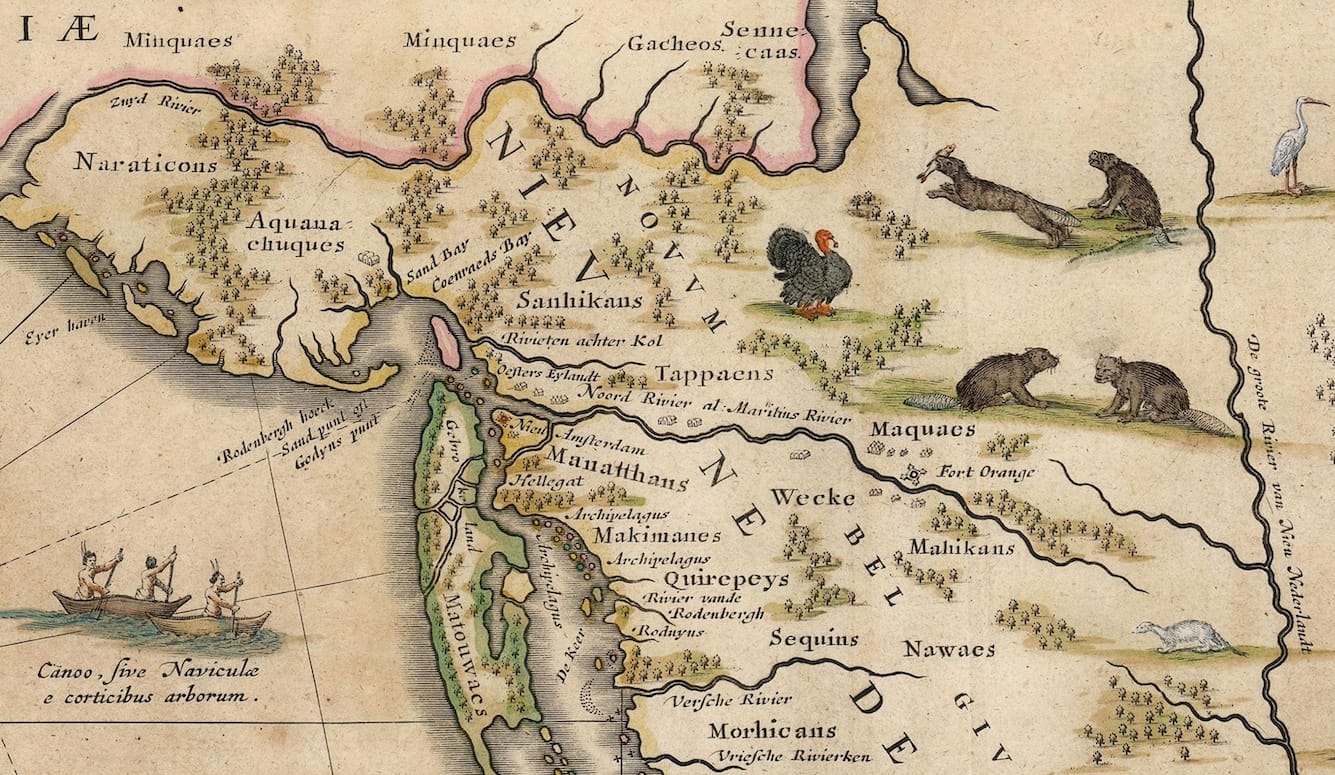
From a certain perspective, the French had never really left, as many key translators, such as Étienne Brûlé among the Wendat, and Jean Nicollet among the Nipissing, had remained in their positions throughout the war. But this was something of a mixed blessing for the Company of One Hundred Associates. On the one hand, the translators offered a degree of continuity, and so diplomatic links wouldn’t have to be rebuilt from scratch. But on the other hand, the loyalties of these men seemed suspect, as their interests had become at least as much aligned with their Indigenous hosts as with French merchants. This is one reason why, even before the war, colonial authorities had brought in missionaries—Récollets, and then Jesuits—to take over from the translators as intercultural mediators.
The English occupation had done little to allay French concerns about these translators—relatively low-born men who’d come to Quebec to make their fortune, not to strengthen France or heap glory upon God. Many proved a little too enthusiastic about continuing their work while the English managed the fur trade. By 1632, Brûlé in particular had been living among the Wendat for twenty years, virtually the entirety of his adult life. It seemed reasonable to ask whether he was now a Frenchman representing French interests in Huronia, or a Wendat trader serving Wendat interests on the St. Lawrence. His ability to move seamlessly between French and English trading networks suggested the latter.
By now, the French settlement at Quebec had been around, in some form, for about 25 years. Yet it still existed mostly as a glorified warehouse for seasonal trade goods. During the summers, it was home to a respectable contingent of traders conducting business on the St. Lawrence. But during the winters, the population plunged to a skeleton crew of colonials huddled for warmth in a group of buildings known as the Habitation de Quebec (on the site of Place Royale in what is now known as Vieux-Québec), holding out as best they could until the spring supply run arrived.
But in the 1630s, actual year-round settlers finally started to arrive, turning Quebec into a true functional community. Among the first wave was a group organised by Robert Giffard de Moncel, a middle-aged surgeon in the French navy who’d first seen the area while serving onboard a supply run from France. To his eye, the St. Lawrence valley looked like prime agricultural land, and when the newly formed Company of One Hundred Associates started talking about colonisation, he was one of the first to sign on.
This was actually Giffard’s second attempt to settle in Quebec. The first had been in 1628, when he’d been on board the Company’s ill-fated maiden voyage, and had become one of the many settlers unceremoniously shipped back to Europe when that fleet was captured. That episode might have spelled Giffard’s financial ruin, but the Company saw that it couldn’t afford to discourage willing migrants. Compensated for his losses, Giffard returned to Quebec in 1634, this time for good.
It was Giffard who laid the groundwork for what would eventually evolve into La seigneurie—a system of land management that adapted western European feudal traditions to the unique challenges of the Canadian landscape. Under this structure, the Company granted large swaths of land to nobles who became known as seigneurs. It was then the responsibility of the seigneurs to develop this land by sub-dividing it into plots, onto which recruited French families would settle. A seigneur who failed to develop his assigned property in this way would have the lands revoked.
In theory, the colonial seigneurs were true feudal-style lords who possessed legal and social supremacy over their (commoner) tenants. In practice, however, the relationship would prove to be mostly economic in nature: While the seigneur and his tenants certainly weren’t seen as equals, much of the rigid classism that marked life in Europe would be stripped away amid the exigencies of life on the Quebec frontier.
In order to raise funds for his venture, Giffard partnered with a provincial gentleman from Perche, a French province situated just west of Paris. And as a result, the thirty-odd fellow colonists whom Giffard managed to recruit were from this same area. We’re getting ahead of ourselves here, but these percherons, and those who followed, would multiply quickly; and over a million modern Canadians are now believed to have descended from their ranks—including Céline Dion, Ryan Gosling, Justin Trudeau, and, yes, Justin Bieber.

These migrants were, for the most part, modestly successful merchants and artisans looking for an opportunity to improve their economic and social standing. A master mason named Jean Guyon, for instance, brought his wife and six children; and a master carpenter named Zacharie Cloutier was joined by his family of five. Both would figure prominently in Quebec family trees.
The socio-economic make up of such seventeenth-century French settlers stands in contrast to the English trans-Atlantic migrations that were starting up during the same period. As in Plymouth, many of the English arrivals were religious dissidents, or displaced rural workers pushed out of consolidated estates of the land-owning classes. In modern parlance, these might be seen as either religious or economic refugees. Both groups were broadly alike in being alienated from their ancestral land, and looking to join a new society that was more equitable and humane. This differentiated them from their French counterparts, who, in general, viewed Quebec society through the lens of France’s pre-existing social contract.
As we’ve discussed at length, France had its own persecuted religious minority—the Protestant Huguenots. (Indeed, Champlain himself had been born into a Huguenot family before converting to Catholicism as an adult.) But the French Crown banned Protestants from New France. Which leads us to another fundamental difference: While Plymouth had been created as a haven for heretics, Quebec was just the opposite—a heretic-free zone (at least as regards Europeans).
The feudal backstory here is that, compared to their English counterparts, French landlords had more difficulty in pushing unwanted peasants off their lands. English rental contracts could be voided, or allowed to expire, thereby making peasant farmers homeless in the process. But under the French system, the line between owner and renter was blurrier. To over-simplify a complicated issue, both lord and peasant were seen as joint owners in France, and neither could unilaterally dispose of land as they chose.
This helps explain why English colonial migration would far outstrip that of France throughout the following decades: Many of the English men and women who settled in (what is now) America were driven by desperation. French settlers, on the other hand, often had other options, which is why generations of officials in both Quebec and Paris struggled with the burden of attracting migrants.
To return to Giffard and the first wave of French settlers: the company set him up with a tract of land called Beauport, about two miles downriver from Quebec, on the north bank of the St. Lawrence. (It still exists, under the same name, as a suburb of Quebec City.) In order to fulfil his obligations to the company, and complete the difficult work of clearing the forest, Giffard offered the settlers who’d accompanied him a deal. For three years, he’d provide them with all their necessary provisions as they hacked away at the forest, after which time each family would get a portion of the land they’d cleared. The rest of the land, Giffard determined, would be used to attract fresh rounds of migrants.
Almost immediately, however, the terms of the arrangement were disputed. Giffard believed he’d offered to make the settlers his seigneurial tenants, subject to all the traditional feudal obligations that went along with such an arrangement. The settlers, on the other hand, argued that Giffard had offered the lands as sub-fiefs, held by them as a kind of minor nobility, rather than as mere tenants.
Keep reading

The Insight Trap

Cornell and Consent

Robert Lynch on Status, Humour and the Apes We Pretend Not to Be | Quillette Cetera Episode 74

The Radicalisation of Tucker Carlson