Art & Culture
Too Much Chocolate
Fifty years of Robert Cormier’s “classic” young-adult novel is more than enough.
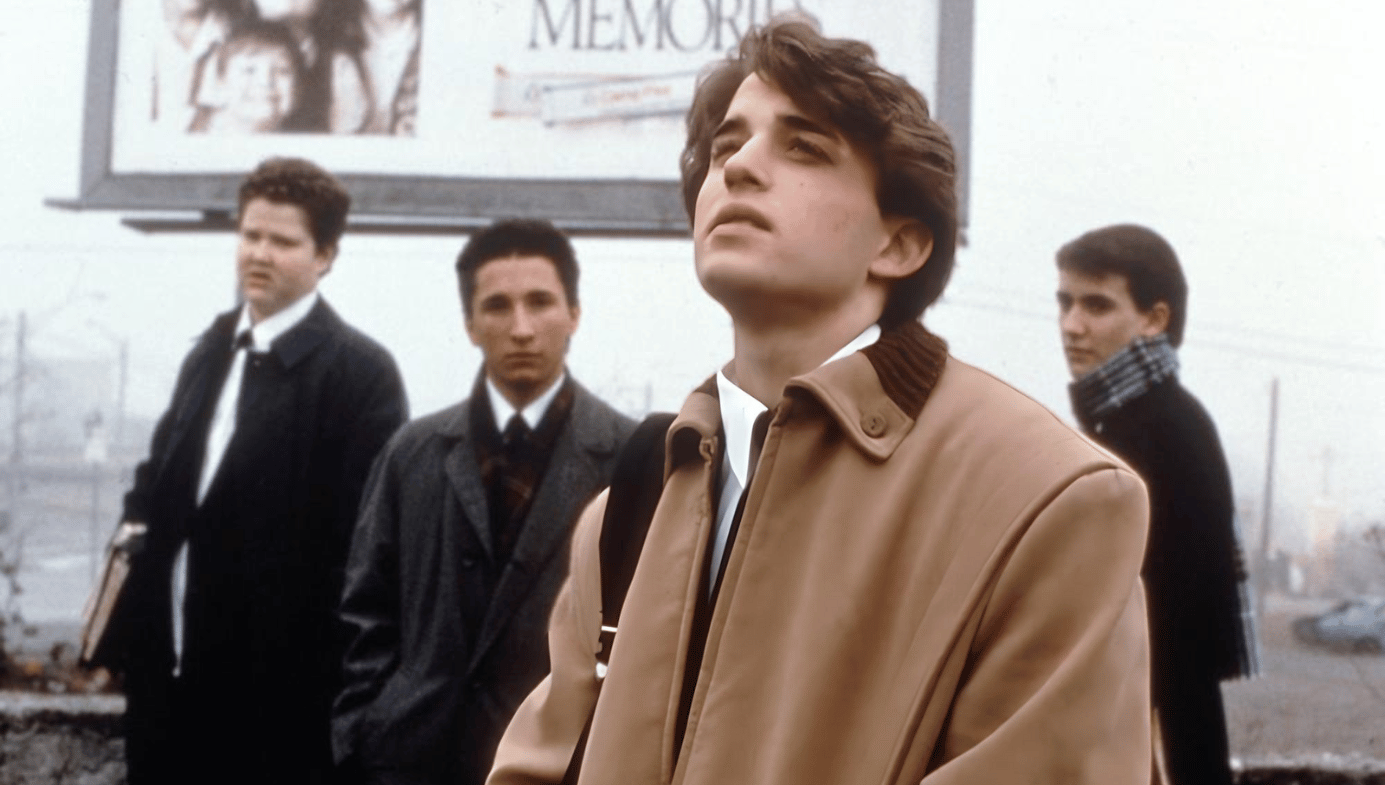

The Chocolate War, a young-adult novel by Robert Cormier published in 1974, has come to be regarded not only as a classic work of fiction but also as a litmus test of sorts for school librarians. Make the book available to students and you are a hero; fail to keep a copy on your shelves and you are a book-banning reactionary.
Earlier this month, the New York Times published an article by Brian Raftery that described Cormier’s most famous novel as “one of the country’s most challenged books.” It retold the story of a censorship battle that took place at Mowat Middle School in Panama City, Florida, in 1986. The confrontation between the school’s teachers (who liked the book and wanted it to be available to students) and various parents (who thought the book was inappropriate and wanted it removed from the school) became extremely heated and even led to an arson attempt on the home of a local reporter. But Raftery leaves unclear if the anti-Chocolate War forces wanted the book removed from the school entirely or if they simply wanted teachers to stop assigning it in class.
Here’s how Raftery describes the situation:
The fight had been ignited not by “The Chocolate War,” but by another Cormier novel: “I Am the Cheese,” his 1977 thriller about a troubled young man who can’t remember his past. When the parent of a Mowat seventh-grader objected to the book—citing its language and “morbid and depressing” tone—school officials immediately yanked it from classes, along with a few other titles, including “The Chocolate War” and Susan Beth Pfeffer’s “About David,” a 1980 novel about teen suicide.
It is not hard to see why many parents might not have wanted their middle-school children to be made to read The Chocolate War. Raftery reports that it upset some parents because of its “mild locker-room talk,” but the book actually includes a good deal of profanity. What’s more, the story contains no significant female characters—girls only exist in the novel as objects to be ogled by high-school boys admiring their breasts and tight jeans. At one point, Cormier writes, “Watching girls and devouring them with your eyes—rape by eyeball—was something you did automatically.” This type of “rape” occurs nearly every time the boys in the book are out in public.
The story of The Chocolate War is fairly simple. Trinity High School—an all-boys school located in a working-class neighbourhood of an unnamed US city—is presided over by a Catholic brotherhood, primarily the sadistic but cowardly Brother Leon, who may also be homosexual. Every year, the school raises money by encouraging the students to sell boxes of chocolates to relatives, friends, neighbours, and strangers. The protagonist is Jerry Renault, a fifteen-year-old freshman who refuses to sell any chocolates. Technically, participation in the fund-raising activity is voluntary, but Renault is the only student who has ever refused. Brother Leon has ordered 20,000 boxes of chocolate this year, which means that each of the school’s 400 pupils will have to sell fifty boxes if the fund-raiser is to be a success.
Leon approaches a pupil named Archie Costello who leads a secret group called Vigil. The group is banned on campus but its existence is an open secret, and Costello uses it to make trouble for Trinity students and teachers alike by playing one group off against the other. Archie Costello is not a violent person, but he uses his understanding of human weakness to get others to do what he wants by threatening to humiliate them in some way. In one notorious scene, he kicks in the door of a bathroom stall and points a camera at a student named Emile Janza he finds masturbating there so he can blackmail him.
As the fundraiser approaches, Brother Leon tells Costello to use Vigil to ensure that every boy sells fifty chocolate boxes. Costello agrees, but then orders Jerry Renault not to sell any chocolate for the first ten days of the fundraiser. Renault has a stubborn streak. His mother has just died of cancer and he is angry at the world. After the first ten days have elapsed, he continues to refuse to sell chocolates. This enrages Brother Leon, who orders Costello to make Renault cooperate, and things get out of hand.
The Chocolate War was published in 1974 and presumably takes place in that year. Jerry Renault is fifteen years old. In 1974, I was a fifteen-year-old student at Central Catholic High School, an all-boys school in Portland, Oregon. Our school held an annual candy sale to raise money, and we were made to sell a product called Almond Roca—an unappetising admixture of toffee, chocolate, and ground peanuts. I dreaded the days I was required to go door-to-door with this stuff and I rarely sold all of the boxes I was assigned. My father, a graduate of the same high school, usually ended up buying my unsold boxes, and for weeks afterwards, my mother would serve Almond Roca for dessert after dinner. To this day, I feel sick at the thought of it.
Probably no one has ever been better situated to appreciate The Chocolate War than I am. In 1974, I was already an avid reader but I didn’t get around to The Chocolate War until the late 1970s, after I had left high school. Alas, I didn’t like it much. I have a grudging admiration for it, but it certainly didn’t reflect my own experiences as a Catholic high-school student. The brothers who teach at Trinity are either bullies or ineffectual wimps. For the most part, the priests and nuns and laypeople who taught me in high school were decent human beings and good at their jobs.
The portrayal of the students isn’t much more optimistic. With the lone exception of Jerry Renault, the young boys in The Chocolate War are cowardly, cruel, stupid, easily coerced, or some combination of these traits. The student body of my high school included plenty of upstanding and decent human beings, many of whom have gone on to become pillars of their community, good fathers and husbands, and doctors and lawyers and teachers and so forth. Even the worst of my classmates didn’t strike me as evil or sadistic, and if any of my old classmates grew up to become a real-life villain, I haven’t heard about it.
Jerry Renault aspires to be a quarterback on the Trinity football team. I served as the equipment manager on my high school’s varsity football team for four years. When I was a freshman, our team’s best football player was a senior named Fred Quillan who was always kind to me and went on to win two Super Bowl titles with the San Francisco 49ers in 1981 and 1984. But his post-football life went haywire, and he died in 2016, at the age of 60, after years of battling depression and alcoholism. Quillan’s life and career illustrated a wide variety of human experience, but not one of the characters in The Chocolate War has any comparable depth. They can each be summarised with a single word—bully, coward, follower, leader, brainiac, idiot, and so forth.
 Kevin Mims
The story is bleak and the ending is even bleaker—Cormier at least had the courage of his convictions. The novel ends with a boxing match between Jerry Renault and Emile Janza (who has been forced to participate lest the photograph of him masturbating—which does not in fact exist—be made public). The set-up of this match is convoluted and ridiculous. The students have each written down the name of one of the two fighters and a boxing manoeuvre—for example, “Janza, Right to Jaw”—and these are then drawn at random by an emcee and read aloud. If the note says “Janza, Right to Jaw,” Renault has to stand there while Janza smashes him in the jaw.
When one fighter is incapacitated or resigns, the student whose written instruction was the last to be read out will win Renault’s fifty unsold boxes of chocolate. I can’t imagine anyone—even a dumbly obedient high-school boy—standing there and letting himself be hit in the face without putting up a defence. It certainly seems out of character for Jerry Renault, the only character in the book with any spine, to agree to this charade. After his weeks-long refusal to participate in a fairly painless fundraiser, why would he take part in something as nonsensical as Cormier’s ludicrous boxing match?
For years, people who have objected to the novel have been pilloried as censorious prudes. But I’m fairly certain that, in the 1970s, the powers-that-be at my high school would never have shelved a book like The Chocolate War in its library. They certainly wouldn’t have assigned it to the students. In 1987, Cormier said of his critics, “The fundamentalists are certainly rolling in high gear, and it gives me chills.” Like that quote, Cormier’s prose in The Chocolate War is often clichéd (“the sky was the limit,” he felt “lighter than air,” etc.) or ungrammatical (“Caroni had felt badly for Jerry Renault”)—he was a journalist for years and his writing rarely rises above that of a newspaper article. What’s more, the book’s cultural references are unlikely to resonate with young readers unfamiliar with Jimmy Cagney or Sammy Davis (Cormier omits the “Jr.”) and other once-famous entertainers.
Keep reading
The Beautiful and Banned
Creeping Annexation
‘Economic Vandalism’: Geoff Wilson on Labor’s War on Australian Aspiration
Like Odysseus. But Real
What Is Canada For?