Politics
Is Venezuela About to Invade Guyana?
Analysts are skeptical and Guyana is nervous. But history teaches us to pay attention when an unpopular despot starts to speak the language of irredentism.
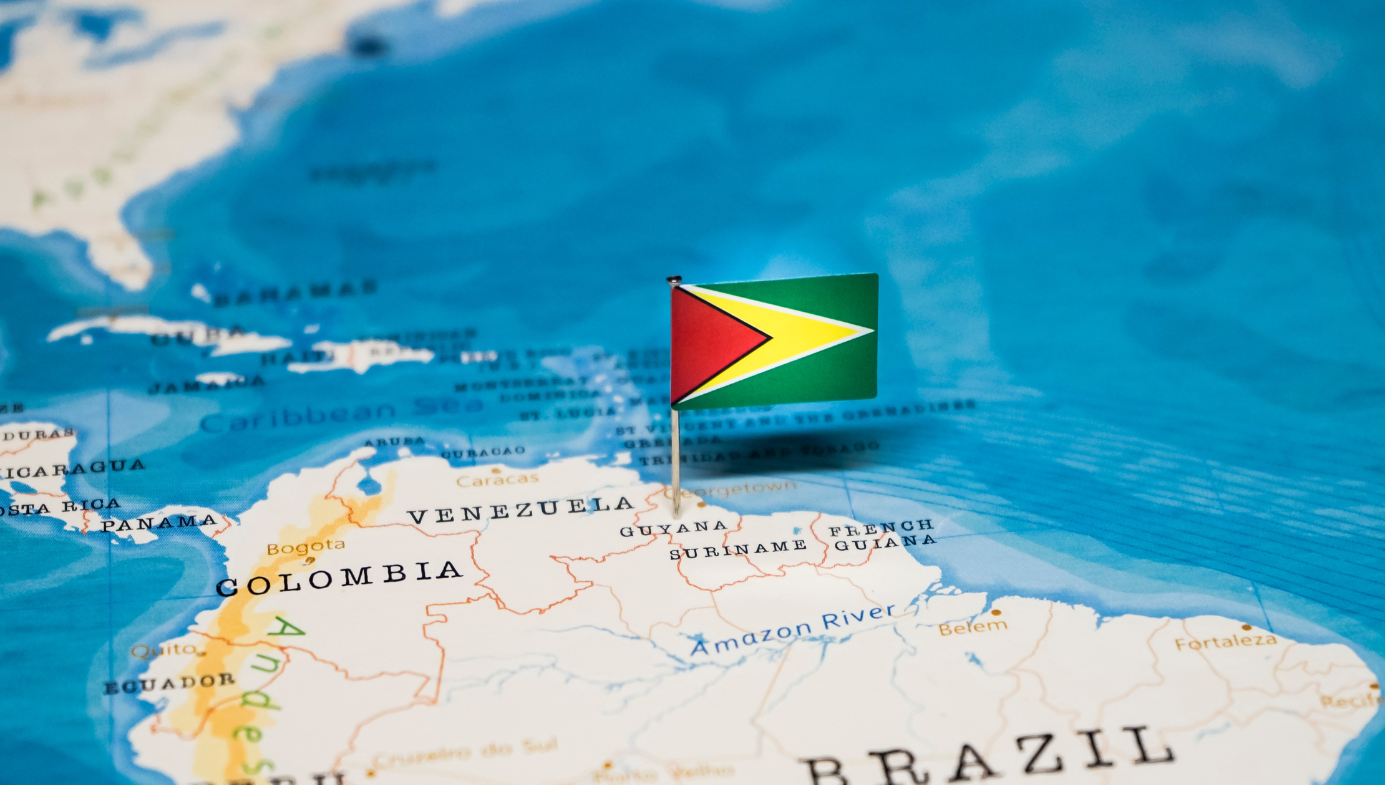

Guyana is the only South American country in which English is the official language. It is smaller than Utah, but over the last decade, it has emerged as an oil giant. The country’s reserves have attracted the interest of ExxonMobil, which has poured several multibillion investments into the former British territory, beginning in 2015 with the Liza-1 well discovery. But as Exxon rubs its hands, so does Guyana’s neighbor Venezuela—a country that already enjoys the largest oil reserves on the planet.
Venezuela and Guyana have had a long territorial dispute, which provides President Nicolás Maduro with a rationale for annexation beyond the lust for resources. In addition, Venezuela has had a sour relationship with Exxon, which it expelled from the country during the presidency of Hugo Chávez. In Maduro’s view, an American corporation and a US presence across the border present a threat to his own oil industry and leadership. In response, he has ramped up the belligerent rhetoric and begun preparing public opinion for the possibility of military action.
On December 3rd, a referendum was held on the status of “El Esequibo”—a disputed area of about 159,500 square kilometers that accounts for more than two-thirds of Guyanese territory. Many Venezuelans maintain that the territory was stolen from them during the redrawing of borders by the British in 1841. The fifth referendum proposition asked voters: “Do you agree with the creation of the Guayana Esequiba state and the development of an accelerated plan for the comprehensive care of the current and future population of that territory, which includes, among other things, the granting of citizenship and a Venezuelan identity card in accordance with the Geneva Agreement and International Law, consequently incorporating said state into the map of Venezuelan territory?”
The results are now in, and all propositions received more than 95 percent approval. Although this sounds like a massive endorsement, critics have pointed out that polling stations were sparsely attended. This has led to speculation that the regime’s claim that 10.5 million ballots were cast is almost certainly an exaggeration. Nevertheless, Maduro is certain to use the result as justification for annexation should he decide to press ahead with an invasion. Two days after the referendum, Maduro further signaled his resolve by proposing a law intended to create a Venezuelan province in the Esequibo. He also announced plans to establish an “Esequibo division” of PDVSA (Venezuela’s state-owned oil and gas company), and to grant operating licenses for the exploitation of natural resources in the area.
These are ominous developments. Guyana has already been sounding the alarm for months. On November 14th, Guyana representatives denounced Venezuela’s plans for its referendum at the World Court. “It is not an exaggeration,” testified the head of Guyana’s team, Carl Greenidge, “to describe the current threat to Guyana as existential and the need for provisional measures as urgent.” Guyana argued that the referendum was being used to prepare the ground for intervention, just as Russia used referenda to justify the invasion of Ukraine. In response, Venezuela’s Vice President Delcy Rodriguez was defiant, telling the court that “nothing will prevent the referendum scheduled for December 3rd from being held.”
The history of the Esequibo disputes is long and bitter. In the maps studied by Venezuelan schoolchildren, the territory has traditionally been labeled “Zona en Reclamación” (area under claim), and Venezuelan grievances have been reflected in the country’s popular culture, where the Esequibo has been a nationalistic theme. In 1983, Venezuelan rock band Témpano released a song that included the line: “The Esequibo is yours, it’s mine, it’s Venezuelan land.”
For a while, however, Venezuela’s rulers seem to have resigned themselves to the loss of the territory. During his 2004 official visit to Guyana, Chávez announced that “the Venezuelan government will not be an obstacle to any project to be conducted in Esequibo, the purpose of which is to benefit the inhabitants of the area.” He continued: “The issue of Esequibo will be eliminated from the framework of the social, political, and economic relations between the two countries.”
Chávez’s speech was criticized by the Venezuelan opposition at the time, but he justified abandoning the cause in the name of securing better relations with Caribbean countries. According to Venezuelan political analyst Andrés Silva, “Chávez may have been responsible for adding an eighth star to the flag in honor of Guyana, yet with his rhetoric centering on the ‘self-determination of the people,’” he strengthened Guyana’s claims over the Esequibo. That was before oil was discovered.
In October, the Barbados agreement on electoral reform was signed by the Maduro regime and the Venezuelan opposition. In the hope that this would lead to a fairly contested election in 2024 after the 2018 fiasco, the US temporarily eased sanctions. Silva believes that the current sabre-rattling is simply a ploy intended to secure a victory at the International Court of Justice. That and the referendum win, he says, would allow Maduro to enter “an election year with massive wins under his belt.” Given the turmoil in Gaza and Ukraine, he argues, “there is no way Maduro would risk escalating the dispute to an armed conflict.” Rather, the regime’s goal is to appear “as diplomatic as possible in the eyes of the world, so they can start building bridges and set the ground for Maduro’s third term in office.”
 Clifton Ross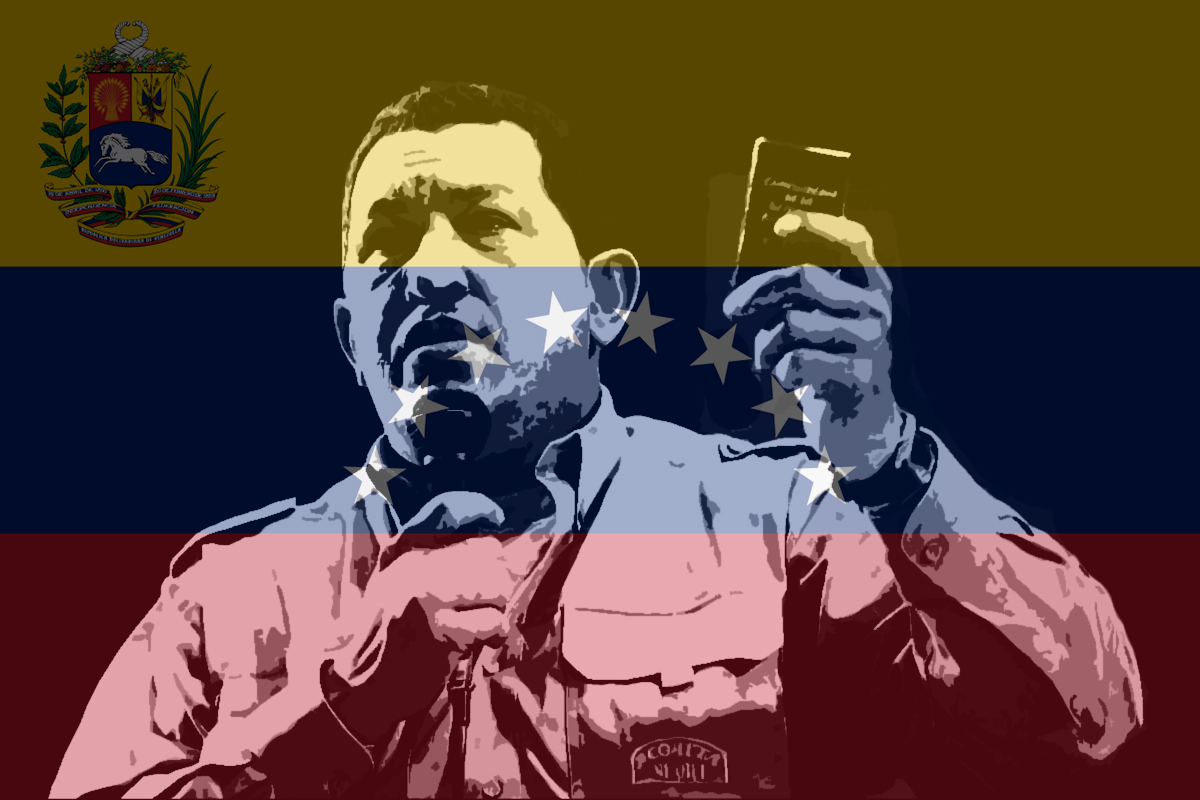
Guyana’s government remains unconvinced. In July, Guyana President Irfaan Ali welcomed US Secretary of State Antony Blinken. On September 5th, the US Embassy in Guyana announced that a team from the United States Army 1st Security Force Assistance Brigade (SFAB) were working with Guyanese military forces to increase military readiness. Then, on November 3rd, the US ambassador to Guyana, Nicole Theriot, vowed to work with the former British colony to “support our bilateral defense partnership that will enhance our mutual security goals, address cross-cutting threats, and advance regional security.” Four days after the referendum, the American embassy in Guyana released a statement, which read in part: “In collaboration with the Guyana Defence Force, the U.S. Southern Command will conduct flight operations within Guyana on December 7th.”
Caracas responded to these developments by alleging a “threat to the stability of Latin America and the Caribbean.” Guyana’s government believes that statements like these are simply a pretext for annexation, designed to invert the roles of aggressor and victim. On November 9th, Venezuelan Foreign Affairs Minister Yván Gil issued a communique, affirming that his country would not participate in “direct dialogue” with an ally of the United States, “the most aggressive military power in the history of mankind.” Guyana’s Foreign Affairs Minister Hugh Todd responded by accusing Venezuela of spreading disinformation: “[Guyana] flatly denies Venezuela’s claim that Guyana has granted permission to the United States to establish a military base in Esequibo.”
#Comunicado | Venezuela rechaza anuncio de Guyana y EEUU que confirma aumento de presencia militar en la región (+Detalles) 👇https://t.co/zkIXE6cLb9
— Cancillería Venezuela 🇻🇪 (@CancilleriaVE) November 8, 2023
#UnidadNacionalPorElEsequibo pic.twitter.com/xyXxIVDhnf
Keep reading
How France Lost Control of Its Streets
How to Suppress Men’s Writing
Back to the Dark Ages

Prison or Peer Review

France’s Imaginary Austerity