Recommended
The Bolivarian God That Failed
The available scientific and statistical evidence (not to mention common sense) weighs strongly against belief in bodily resurrection from the dead.
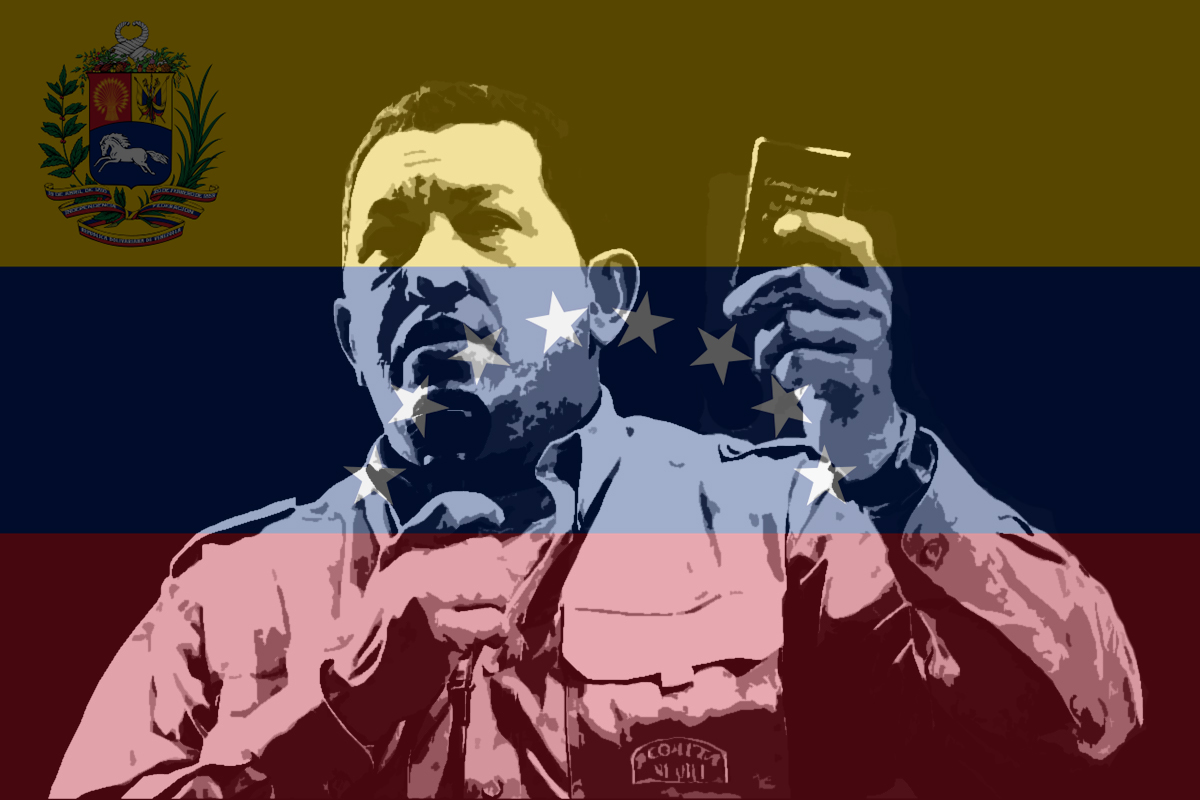

The day after Venezuela’s National Assembly voted to declare its president, Juan Guaidó, interim President of the Republic, I received a text from a former friend. “If the U.S. topples Vz [Venezuela],” he wrote, “I will hold you responsible.” I would have been happy to accept this responsibility had I done anything important enough to deserve it. But the idea was absurd and he knew it. If the Venezuelan regime falls—and I hope that it does—it won’t even be possible to credit (or blame) the United States. It is the Venezuelan people who finally are taking their destiny in hand and rejecting an intolerable status quo.
The message was not a serious attempt to apportion responsibility for Venezuela’s current upheaval; it was an attempt to shame me for my treacherous betrayal of the Bolivarian cause. An early supporter of the Revolution, I had traveled to Venezuela in 2013 to cover the April presidential elections. By the time I returned to the US, I was disillusioned and depressed. I decided I needed to start writing and speaking about what I had seen there. In an article I wrote for the radical magazine Counterpunch around that time, I argued that “the so-called ‘Bolivarian Revolution’ is bankrupt: morally, ideologically, and economically,” and I asked what we, as leftist solidarity activists, should do in response. “Should we continue to make excuses for incompetence, corruption, and irresponsibility and thereby make ourselves accomplices?” I asked. “Or should we tell the truth?”
I had resolved to tell the truth. Having been so wrong about something so consequential, I felt it was the least I could do. By then, Venezuela was already in a terrible mess. Many of those I had helped to convince of the possibilities offered by Bolivarian socialism were deeply suspicious of the mainstream media and deserved to hear what was going on from a writer they trusted. But, as it turned out, the people I wanted to reach didn’t want to hear such things. And the people I asked to publish my articles didn’t much want me to write about them either. As a result of my voltafaccia, former comrades and friends contacted my editors and publishers in (occasionally successful) attempts to have my articles spiked. I was denounced and slandered online and in print. Phone calls and emails to people I had thought of as friends now went unanswered. On those occasions when I encountered one of them in public, they looked the other way. Abruptly, I found myself excommunicated, and people I’d known for 30 or 40 years made it clear that they no longer wanted to be part of my life.
I’d originally come to California from the Bible Belt in the mid-’70s in search of enlightened neighbors. I knew what it was to live an isolated life. It had been lonely on my father’s farm in Southern Oklahoma. I had endured farm life for five years but, having grown up in the military, I longed for the company of diverse, worldly-wise people one often found among military brats. Having become a Christian a few years before, I hoped Berkeley would offer a deeper faith than I’d found in fundamentalist churches.
I hitchhiked west and in Berkeley I joined the “radical Christian” community of the House Church of Berkeley that had grown out of Christian World Liberation Front (CWLF). From the margins of that community I gradually found my way, through liberation theology, into the secular Left. For nearly a decade I did solidarity work with the Sandinista Revolution until that process came to a halt when its “vanguard” Sandinista National Liberation Front (FSLN) was removed from power in the elections of 1990.
Following the collapse of communism, I ended up with the other “dead-enders” in Berkeley, scratching around in the depleted soil of radical politics for any worm of hope that might emerge. Those were desperate years. I soon hitched a ride on the Redwood Summer bandwagon, the joint IWW (Industrial Workers of the World, “Wobblies”) and Earth First! project to protect the last stands of old growth redwoods in Northern California from logging companies. I played a very minor role in that campaign, printing the flyers announcing the actions, but I was quickly drawn into working in the IWW. I was briefly an editor for the Bay Area Branch Bulletin and a co-editor of the Industrial Worker, and then I spent ten years in an IWW union job shop (New Earth Press) where my partner and I did a lot of ecological printing for local community organizations.
After we sold the business, I went to graduate school at San Francisco State University for a couple of very dismal years in academia. Then, after graduation, I spent the summer of 2004 in Nicaragua interviewing ex-Sandinistas who were now in opposition to the FSLN, the “glorious revolutionary vanguard,” which had been reduced over time to the status of a populist party serving the caudillo (strongman) Daniel Ortega. During the years of the Nicaraguan Revolution (1979-1990), I had translated and published the revolutionary poetry and writings of Sandinista militants—mostly farmers, low-ranking militia members, and even young children. As I was a poet, it seemed appropriate work to help spread the word about a process I found hopeful, and endangered by the hostile policies of the Reagan administration. I knew very little at the time of the Sandinistas’ responsibility for generating the war that would eventually tear their country apart. Most of us on the radical Left distrusted the media, and it was only recently that I returned to that period (in Chapter 11 of my 2016 memoir) to uncover details I had ignored during the years of that brutal civil conflict.
 Alexander Blum
Foremost among the poets I’d translated during the years of the Sandinista Revolution was Ernesto Cardenal, a revolutionary priest and the Sandinista Minister of Culture. Cardenal and other “liberation theologians” were preaching a synthesis of Marxist revolutionary ideology and Christian theology, and they were my inspiration back then. By 2004, I no longer identified with Christianity, and my faith in Marxism was also in doubt. Nevertheless, I still considered myself some kind of socialist, and I thought Cardenal might be able to reassure me that there were embers of socialism still burning somewhere in Latin America. He duly obliged. Towards the end of our interview, when I asked him to name the projects in Latin America today which gave him hope, he didn’t mention (as I thought he would) the Zapatistas. “The Bolivarian Revolution,” he announced. President Hugo Chávez was doing some very interesting things down in Venezuela, he thought, and he encouraged me to visit and see for myself.
So, that December, eager to learn more, I flew down to Venezuela on Christmas break from Berkeley City College where I had been working as an adjunct English instructor. I immediately fell in with like-minded leftists in the small Andrean city of Mérida, who introduced me to a good part of the Bolivarian community there. I was so inspired by what I found that I decided to take a year off from teaching so I could follow the Bolivarian process first-hand.
It is as difficult as it is uncomfortable to enter into a previous state of mind from a later, more “evolved” or developed state. I don’t like to admit that I once believed Jesus rose from the dead, but I did. I also believed that socialism would make everyone brothers and sisters and end what my comrades and I called “capitalist oppression.”1 The available scientific and statistical evidence (not to mention common sense) weighs strongly against belief in bodily resurrection from the dead. History has delivered a verdict of comparable finality about socialism. This verdict is routinely dismissed on the grounds that only corrupted iterations of socialism have been tried; if socialism is designed to unite mankind, but all previous versions of socialism have failed to do so, then it follows that true socialism has yet to be successfully attempted.
Rarely do true believers stop to consider that there may be something wrong with the logic of socialism itself. In his 1993 book Post-Liberalism: Studies in Political Thought, the English philosopher John Gray wrote that Soviet socialism forced its subjects into a “vast Prisoner’s Dilemma, with each being constrained to act against his own interest and, thereby, directly or indirectly, to reproduce the order (or chaos) in which he is imprisoned. Thus Soviet subjects are compelled to compete with each other in climbing the rungs of the nomenklatura, pursuing the ordinary goods of life by party activism or, in extremis, by informing or denouncing one another, and so renewing daily the system that keeps them all captive.” These are not exactly optimal conditions for building community.
By 2004, I was already well aware of what Marxist-Leninist socialism had done to the twentieth century. So why did I fall for the socialism that Hugo Chávez proposed in Venezuela? The reasons were part push, part pull. The push came from the American invasion of Iraq less than two years earlier. After a rapid battlefield victory, the news from the Middle East seemed to be growing more dire by the day. A little over a month before I left for Venezuela, allegations began to emerge that the US military were committing war crimes in Fallujah. Surely a better way than this remained possible? As I wandered around Venezuela that December I was desperate for an alternative I could believe in, no matter how fragile.
The pull was what Hugo Chávez was proposing. He acknowledged the problems of twentieth century socialism, and claimed to be offering something different—the Bolivarian version of “twenty-first century socialism.” This would be the “socialism with a human face” and quite unlike the repressive, totalitarian bureaucratic behemoth of Marxist-Leninism. As Chavista Gregory Wilpert insisted in his 2007 book Changing Venezuela by Taking Power, under Bolivarian socialism “ownership and control of the means of production must be collective and democratic.” Cooperatives were to play a large part in this and, after 2006, so would the local communal councils.
The money from the 2004 oil boom had saved Chávez from a recall referendum as he distributed the revenue flooding into the country among his followers. In this way, Chávez was able to fund his “revolution” from 2005 onwards. He ensured that the oil wealth would bypass the government, which he characterized as “corrupt” and (naturally) “counter-revolutionary.” Instead, money would be funnelled directly into a non-state-controlled corporate entity known as Fonden, the National Development Fund, over which, of course, Chávez personally presided. Fonden then parceled money out to cooperatives and the so-called “Missions” to the poor. During the oil boom, petroleum prices went from $10 a barrel to $100 and peaked at around $150 over the course of a decade. Given the astonishing amount of wealth generated, Chávez had a lot of money to throw at his pet projects. And, predictably, as the wealth trickled down, corruption increased since everyone had to get his or her piece of the patronage.
The cooperatives and community councils were among the many promising and inspiring initiatives dreamed up by Chávez in the early years of the boom. I witnessed these developments and documented them in my feature film, Venezuela: Revolution from the Inside Out. There really did appear to be great enthusiasm for these initiatives at the grassroots, especially as Hugo Chávez pushed them forward with massive funding. I quickly joined the chorus of supporters, first as invited poet to the Second World Poetry Festival of Venezuela in July 2005, then as a freelance (that is, unpaid) journalist for various left-leaning websites. When Chávez appeared on the scene, there were under 2000 cooperatives in the country. Once he came to power, that number skyrocketed to nearly 200,000, and I was there to document their ups and downs. I attended a few community council meetings and “political formation” training sessions, as well as a number of oil-funded projects like community kitchens, cultural events, and community development programs. It felt like something was really happening and that a fairer society was being built.
After the year I spent living in Venezuela (2005-2006), I returned as frequently as my schedule would allow, sometimes twice a year. Between 2008 and 2011, however, I became preoccupied with traveling across Latin America and conducting interviews with social movement activists for a book entitled Until the Rulers Obey that would be published in 2014. During that time, I was forced to become a “generalist” and didn’t have much time available to keep a close eye on what was happening in Venezuela. Nevertheless, from people who were watching, and from what I saw on my two visits there in 2011, I gathered that the situation was taking a bad turn. As even supporters were pointing out a few years later, by 2007 only about 15 percent of the 184,000 remaining cooperatives were active. If the distinction between earlier socialism and the Bolivarian version was that in the latter the “ownership and control of the means of production must be collective and democratic,” the new version wasn’t faring well at all.
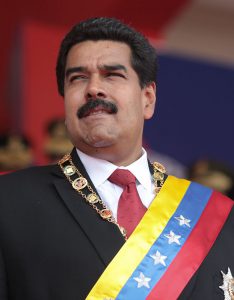
Big questions began to arise about the financing of the community councils. Critics charged that these organizations were simply instruments that Chávez (and then Maduro) used to fund their supporters while denying access to the opposition. It was classic populism in the style of the Mexican PRI, which Mario Vargas Llosa once called “the perfect dictatorship.” By 2008, Chávez had suffered his first electoral defeat in a referendum that he had hoped would drive his socialist agenda forward. In response, he adopted a new approach to building twenty-first century socialism, and it looked very much like the twentieth century variety: nationalization of industries followed by the expropriation and redistribution of wealth and property. The “Bolivarian Revolution” was starting to look like any other rentier or petro-state—burgeoning corruption, a politics of clientelism, and a growing gap between the elite in control of the state (and, of course, the oil revenues) and the increasingly desperate mass of people at the bottom.
When the Arab Spring swept Gaddafi from power, I argued with my Venezuelan friends and felt the beginnings of a great divide opening up between us. I didn’t like the company Chávez was keeping—Gaddafi, Putin, Hezbollah, etc.—but neither was I ready to denounce him and his project as a fraud. Meanwhile, as my wife and I compiled the interviews with the social movement activists in Latin America, we began to notice themes and threads that confirmed what Raul Zibechi had told us when we visited him in Montevideo, Uruguay in the spring of 2012.
Zibechi was an astute analyst of Latin American politics with a focus on social movements. He explained that the so-called “Pink Tide” of leftwing governments that had risen to power on the wave of the commodities boom were in fact following the prescription of Robert McNamara, the former president of the World Bank and architect of the Vietnam War under Lyndon Johnson. In this scenario, moderately progressive governments were far more useful than their rightwing homologues to the world elite, because they provided a buffer between the transnational corporations and the social movements protesting the impact of resource extraction on communities and the environment. The testimony of our interviewees seemed to bear out Zibechi’s thesis. But surely this couldn’t be true of the more “radical” processes, like the one unfolding in Venezuela?
As I was writing the introductions to the Nicaraguan and Venezuelan chapters of our book, I investigated further, and what I discovered in the academic literature and reports by investigative journalists on both countries confirmed my doubts. By the mid-1990s, I’d already given up on the FSLN reforming itself. When I met Ernesto Cardenal again in 2004, he argued that there was no hope of any positive change from the “Ortega dictatorship.” My introduction to the Nicaragua chapter of our book was therefore fairly easy to write, since the direction the country was going under the Ortega mafia seemed clear. I quoted Dennis Rogers’s description of the Somoza dictatorship the FSLN had overthrown and remarked that it also described the present Ortega regime quite well: “A venal oligarchy run by a small elite satisfied to promote a form of what might be termed ‘hacienda feudalism.’” But Venezuela? Chávez? I had grown more critical, but I still believed in Chávez. As so many Chavistas in Venezuela had reassured me, “Chávez is clean, but all those surrounding him are corrupt.” This was a cult of personality—a One Man faith.
On the afternoon of March 5, 2013, I’d just finished another draft of my introduction to the Venezuela chapter when the phone rang and a friend told me that Hugo Chávez had died. I wrote a eulogy for Counterpunch that now, nearly six years later, I find embarrassing. I then decided to go back down to Venezuela for the elections. On the flight I caught up on my reading, including a fascinating biography of Hugo Chávez written by two well-known Venezuelan journalists, and some analyses of the massive problems in the Venezuelan economy, including the missing $29 billion dollars from the Fonden budget over which Chávez had presided.
Chávez, in the style of Latin American autocrats from time immemorial, had hand-picked his successor, Nicolás Maduro. Maduro was a fairly hard-core Leninist with a soft spot in his heart for Sai Baba, the Hindu guru-huckster accused of child molestation before he died in 2011. Compared to Chávez, Maduro is wooden and utterly lacking in the warmth and charm of his political “father.” But he had close relations with Cuba and was part of Chávez’s trusted inner circle and, most importantly, he was Chávez’s choice. Y punto, end of discussion.
Of the difficulties I faced over the next few days attempting to enter the country and cover the April 2013 presidential election between Maduro and Henrique Capriles, I have written elsewhere. Suffice it to say that I wasn’t granted entry until the day after the elections. Even then, due to the massive nationwide protests, I only managed to get to Mérida thanks to the generosity of oppositionists who gave me a ride. Over the course of the trip, they filled me in on the details of why Maduro had only won the elections by only slightly more than a single percentage point. This was despite using all the state resources at his disposal to (illegally) pay for and promote his campaign, including the state oil company PDVSA’s buses which drove state employees to the polls to vote for him. Chavistas simply hadn’t come out in large numbers to vote for him, and clearly many of the faithful had already gone over to the opposition.
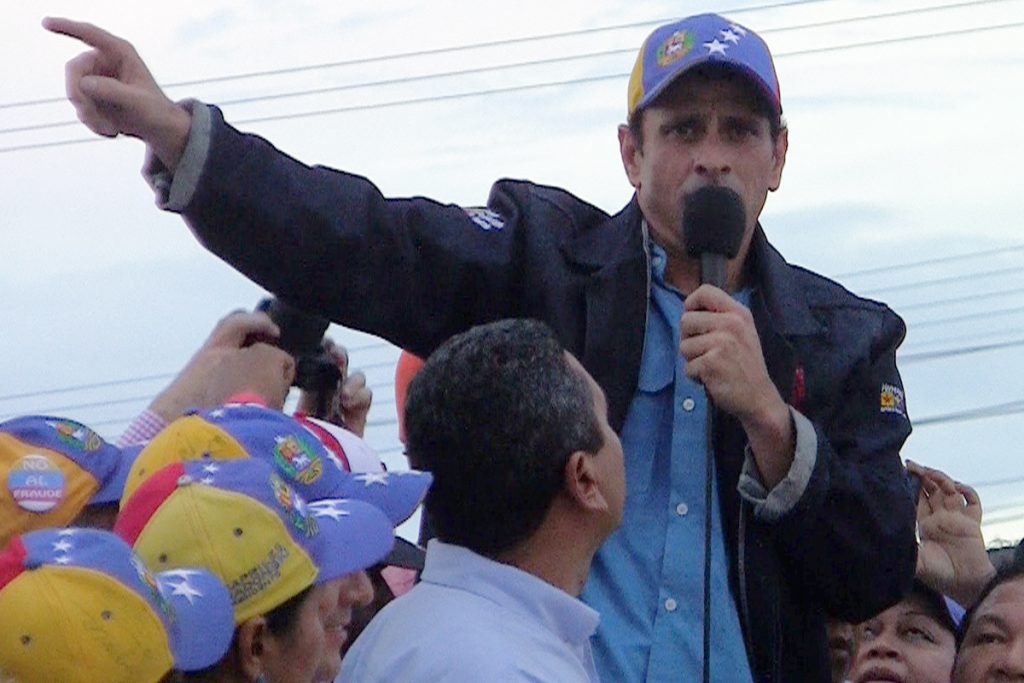
Over the next few days and weeks, as I traveled through Venezuela, I began talking to the “counter-revolutionaries” and they offered evidence of their country’s deep problems to which my Chavista friends could only respond with rhetoric. In the industrial region of Guayana in the state of Bolívar, I interviewed union workers in the nationalized industries about the collapse of those industries. I was able to confirm their claims with secret footage shot for me by a worker using my own video camera, which showed the ruined interior of an enormous state factory where not a soul was to be seen on this particular work day.
In Caracas, I met with opposition human rights activists, union leaders, and leftwing academics for interviews. As the missing pieces of the puzzle began to fall into place, the reality of the Bolivarian catastrophe overwhelmed my resistance. Emilio Campos, then Secretary General of Carbonorca, the nationalized industrial coke plant, described the Bolivarian Revolution as nothing more than “a media show.” He called himself “a revolutionary for a plurality of ideas where a country seeks balance, not just for a party, or one sector of society. I believe in freedom of thought, in a diversity of ideas. But the hegemony of power makes you narrow-minded.”
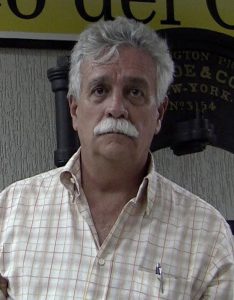
The real turning point for me, however, was the interview I conducted with labor journalist Damian Prat, whose extraordinary book Guayana: El milagro al revés (Guayana: The Reversed Miracle) I had read over the two or three days it took me to get to Guayana from Merida by bus. The interview took place within a day or two of the shocking beatings of several prominent opposition National Assembly deputies by Chavista deputies during an official session. The state television cameras were turned off during the violence and afterwards, as the wounded were taken to the hospital. I was still shaken by the footage some brave parliamentarians had captured on their cell phones and leaked to the press.
I met Prat at his office at the Correo del Caroní, the Guayanesa daily paper. As I turned on my video camera, Prat smiled wryly. “Some of you in the critical, intellectual circles of Europe and the United States seem to think it’s fine that in the countries of our Latin America there are arbitrary governments and processes full of abuses that in your countries you wouldn’t consider allowing for a minute. No, in your own country you’d militantly reject the same things you seem to feel are perfectly fine to take place down here, so far away, where it’s exotic and interesting…” I felt my face redden with shame, and I suddenly felt my whole world capsize.
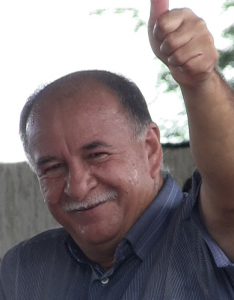
It would be months before I was able to return to Guayana to interview Rubén González, the former Chavista and Secretary General of Iron Mine Workers Union of the Orinoco (Sintra Ferrominera del Orinoco) about his own experience of imprisonment without trial “just for doing my job in the union and defending the rights of workers.” Referring to the claims of “sabotage” as the reason the industries were failing in the country, González told me that those in government “never thought of governing, but rather of enriching their little group in power. They never invested in these businesses, but totally bled them dry. They themselves are the saboteurs.” At the time of this writing, González is back in jail for organizing on behalf of workers in the state ironworks.
All of a sudden, I found myself in a strange world. I had drifted—at first gradually, but then definitively—into the camp of my former “enemies,” persuaded by their narrative and by the evidence before my own eyes. And, as I did so, I discovered that the editors of the news sites where I’d published my passionate defenses of the Bolivarian project for the past few years no longer responded to my pitches or my queries or my emails. As Venezuela disintegrated, I was lost and confused and alone.
And then, while I was grieving the loss of my innocent old life and its many friendships, something curious and unexpected began to happen. I discovered a great sense of excitement as I investigated “new” ideas for which I’d previously had nothing but contempt. I found myself reminded of Herbert Spencer’s quote at the end of the Alcoholics Anonymous Big Book: “There is a principle which is a bar against all information, which is proof against all arguments, and which cannot fail to keep a man in everlasting ignorance—that principle is contempt prior to investigation.”
Keep reading
How to Suppress Men’s Writing
Back to the Dark Ages

Prison or Peer Review
France’s Imaginary Austerity
The Limits of Perfectionism