Science / Tech
Misunderstanding Equality
If confusion between moral and empirical claims persists, we will find ourselves asked to choose between the truth and our ethical preferences.
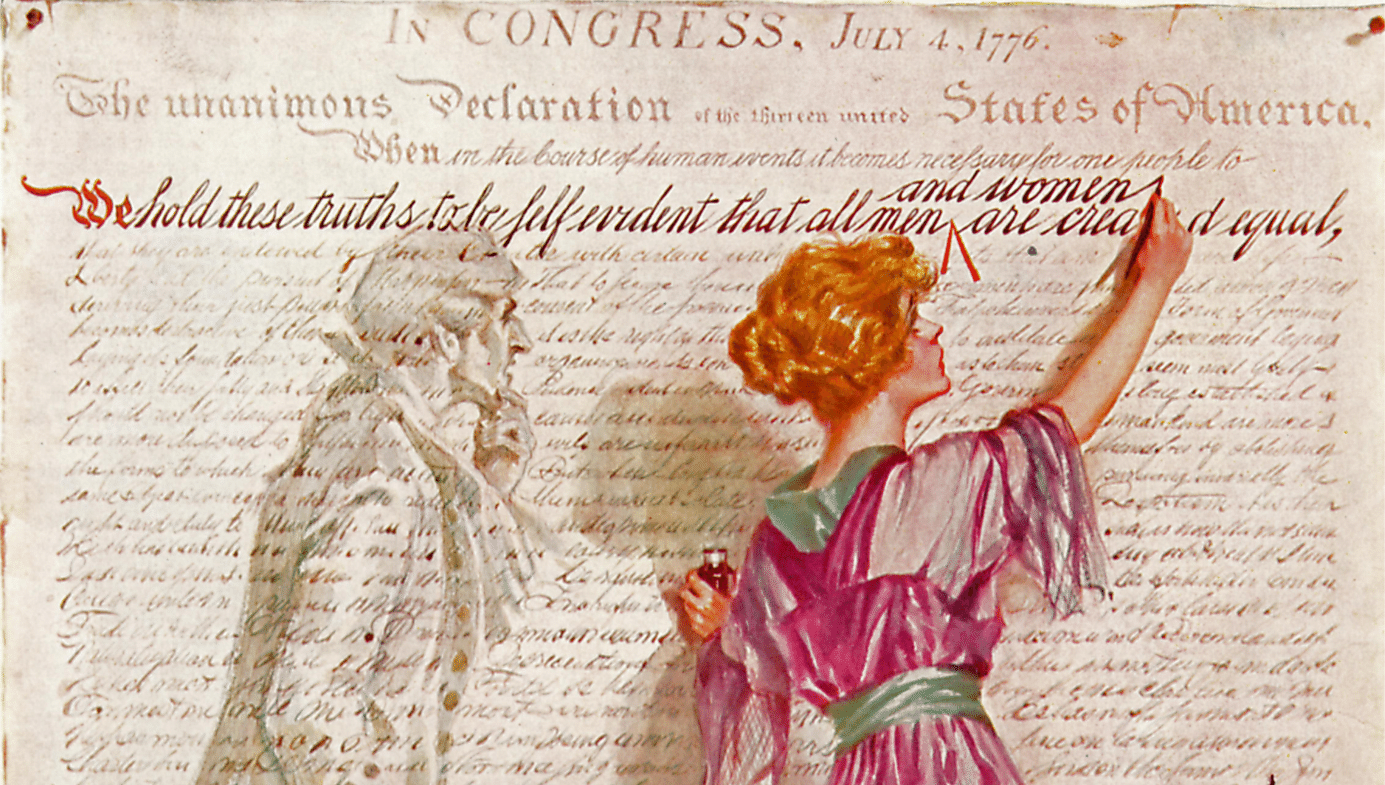

All men may have been created equal; most certainly they are not all alike.
~Theodosius Dobzhansky
“We hold these truths to be self-evident, that all men are created equal, that they are endowed by their Creator with certain unalienable Rights, that among these are Life, Liberty and the pursuit of Happiness” is perhaps the most venerated sentence in American history. And for good reason. The sentiments it expresses are a triumph of Enlightenment philosophy, and they still resonate hundreds of years later. However, a confusion about their meaning and significance has pervaded popular discourse, muddying moral thinking and leading to extravagant and implausible claims about human sameness. In extreme cases, this muddled thinking has motivated calls to suppress science that supposedly threatens “the dignity and rights of all humans.”
This might seem hyperbolic. It is difficult to believe that a misinterpretation of such a morally uplifting sentence could lead, however circuitously, to the suppression of academic freedom. And certainly, it is true that most people who want to limit academic freedom are not directly motivated by a misreading of the Declaration of Independence. However, they are motivated by a misunderstanding of the fundamental moral value it expresses. They have conflated the laudable ethical claim that all humans deserve dignity, respect, and equal moral consideration with the implausible empirical claim that humans are born with roughly the same characteristics and capabilities. This conflation has led to fear, antipathy, and even censorship of writings that examine human variation on socially valued traits because it has encouraged the erroneous idea that human variation is a threat to moral equality.
The far-Left, of course, has long been attracted to a view of humans as malleable and almost biologically interchangeable. And it has long argued that the contrary view—that humans are biologically limited creatures who vary widely in potential—is primarily an ideological weapon used to defend the status quo by arguing that inequality is natural and inevitable. Therefore, the moral misunderstandings and confusions that arise from the conflation of “created equal” with “created the same” are not new. Indeed, they have a long history and have inspired furious denunciations of sociobiology, evolutionary psychology, and behavioral genetics (as well as thoughtful and ethically insightful responses).
But this denial of biology, and confusion of the moral and the empirical that it requires, has become more ambitious and imperial. It is no longer a fringe ideology, and it is no longer content to attack conservatives or moderates, but also those remaining leftists who believe that we should take genetics seriously. Last year, for example, Dr. Kathryn Paige Harden’s book, The Genetic Lottery, was vehemently denounced by many left-leaning outlets for arguing that genes play a causal role in social inequalities. The New York Review of Books ran an essay which accused Harden of a series of scientific sins, including biological essentialism. Any fair-minded person who has read Harden’s book will struggle to discover the supposed sins the review describes, but the only novelty of such misleading reviews is that they target a left-leaning scholar. Similar reviews were routinely published in prestigious outlets about Charles Murray, Nicholas Wade, and David Geary, among others.
Yet this is not a trivial novelty. It suggests that the ideology of egalitarianism has become more pervasive, powerful, and reluctant to concede or compromise. Harden was so eager to avoid charges of “biological essentialism” that she casually accused right-leaning scholars of advocating white supremacy and eugenics while reassuring readers that she remained committed to progressive notions of social justice. If her book nevertheless provoked denunciations from disconcerted reviewers, one can only imagine the chorus of complaint and condemnation that a similar book written from a different political perspective would produce.
A recent editorial in Nature Human Behaviour further illustrates the ascendancy of this misguided strand of egalitarianism. Titled, “Science must respect the dignity and rights of all humans,” it argues that editors should (and will) be empowered to reject articles that contradict progressive political views about race, sex, and gender identity. Although this constitutes an appalling attack on the dispassionate pursuit of scientific truth, it is merely a public confession of the private practices of many journals. (Many scholars responded with forceful rebuttals, which is heartening.)
For present purposes, the important thing about the editorial is its consistent confusion of empirical and moral claims. This is evident throughout, but is made especially obvious when it contends, “Racism is scientifically unfounded and ethically untenable [italics added].” For this seems to suggest that some set of facts about the world would or could justify racism, which is not only morally abhorrent, but also a category error. It would be like writing, “Claiming that T. S. Eliot is a great poet is scientifically unfounded.” Or “Loving dogs is scientifically unfounded.” Neither moral equality nor racism nor any other value judgement is an empirical claim.
Many scholars—including Ernst Mayr, Theodosius Dobzhansky, Noah Carl, Steve Pinker, Arthur Jensen, Charles Murray, David Reich, and Kathryn Paige Harden—have forwarded some variant of the point that moral commitments are not directly dependent on empirical claims. When I say, “One should not confuse equality with sameness,” my interlocutor frequently responds that such a banal truism is unworthy of articulation. I wish this were true, and that this moral principle were self-evident. But it is not.
Just a few days ago, the Atlantic published an essay skeptical of sex segregation in sports which concluded with the assertion that, “…as long as laws and general practice of youth sports remain rooted in the idea that one sex is inherently inferior, young athletes will continue to learn and internalize that harmful lesson.” The unstated premise of this argument is that empirical claims about differences between men and women are also moral claims about the relative value (inferior vs superior) of men and women.
It is therefore worth repeating that created equal does not mean created the same on all socially valued traits. For science will continue to reveal genetically caused differences among individuals, groups, and sexes. And if confusion between the moral and the empirical persists, we will find ourselves asked to choose between the truth and our ethical preferences. The good news in this otherwise gloomy scenario is that no such choice is required. Moral equality is not premised on physical or psychological sameness; it is premised on a commitment to human dignity. And no discovery about humans today, tomorrow, or a hundred years hence will refute Jefferson’s justly celebrated sentence.
Scholars should assert and defend the following basic truths and principles and reject the misguided notion of egalitarianism that currently prevails in many mainstream journals and outlets.
1. Humans are not (and will never be) the same on socially valued traits
This might seem painfully obvious. Albert Einstein was never as athletic as Roger Federer, and Federer was never as intellectually gifted as Einstein. Few people, even avowed Marxists, would deny this. Nevertheless, despite the obvious fact of human variation, both the amount and the causes of such variation are fiercely contested. Writers in mainstream outlets still appear to deny obvious biological differences. For example, in the Atlantic piece cited above, the author writes, “And though sex differences in sports show advantages for men, researchers today still don’t know how much of this to attribute to biological difference versus the lack of support provided to women athletes to reach their full potential.”
Most people are willing to grant that humans vary on many traits, from height to body mass to skin color, because of a combination of genes and environment. However, when addressing more socially consequential traits such as intelligence or criminal propensities, they demur. It seems indecent—perhaps even immoral—to suggest that some humans are smarter or more law-abiding than others because of a random shuffle of genes. But the data are overwhelming—almost every human trait of significance is heritable, meaning that variation in each is partially explained by variation in genes. Of course, heritable does not mean intractable or unchangeable. A heritable trait like myopia can be changed (rectified) quite quickly with simple technological interventions.
|
TRAIT/OUTCOME |
HERITABILITY ESTIMATE |
|
General Intelligence |
|
|
Conscientiousness |
|
|
Self-control |
|
|
School Achievement |
|
|
Aggression/Rule-breaking |
The approximate heritability estimates of some socially consequential traits
However, the high heritability of many traits in affluent societies does suggest that human variation will be with us into the foreseeable future. The only way to equalize humans is through intolerably coercive means (or handicaps), such as those humorously depicted in Kurt Vonnegut’s sardonic short story, Harrison Bergeron. The same almost certainly applies to demographic differences. Just as human individuals vary because of environmental and genetic causes, so do demographic groups. About sex, this is uncontroversial in the relevant literature, and David Geary’s erudite and comprehensive Male, Female remains the best overview. About other demographic categories, the literature is more ambiguous and contentious. The point here is not to forward confident opinions about controversial topics. Rather, it is to note that human variation is a basic, irreducible, and permanent fact of social existence. Literal equality is impossible.
2. Differences do not imply inferiority
Keep reading
Anti-Catholic Social Panics, Then and Now
A Dishonest (and Dangerous) Nobel Laureate

Common People

How Genetics Rewrote History
Equal Pay, Unequal Work