Education
The Disgraceful Firing of Joshua T. Katz
Joshua Katz knew it was dangerous to go public with his objections to a Princeton faculty letter, but he did so because his conscience demanded it. For this, he has paid an intolerable price.
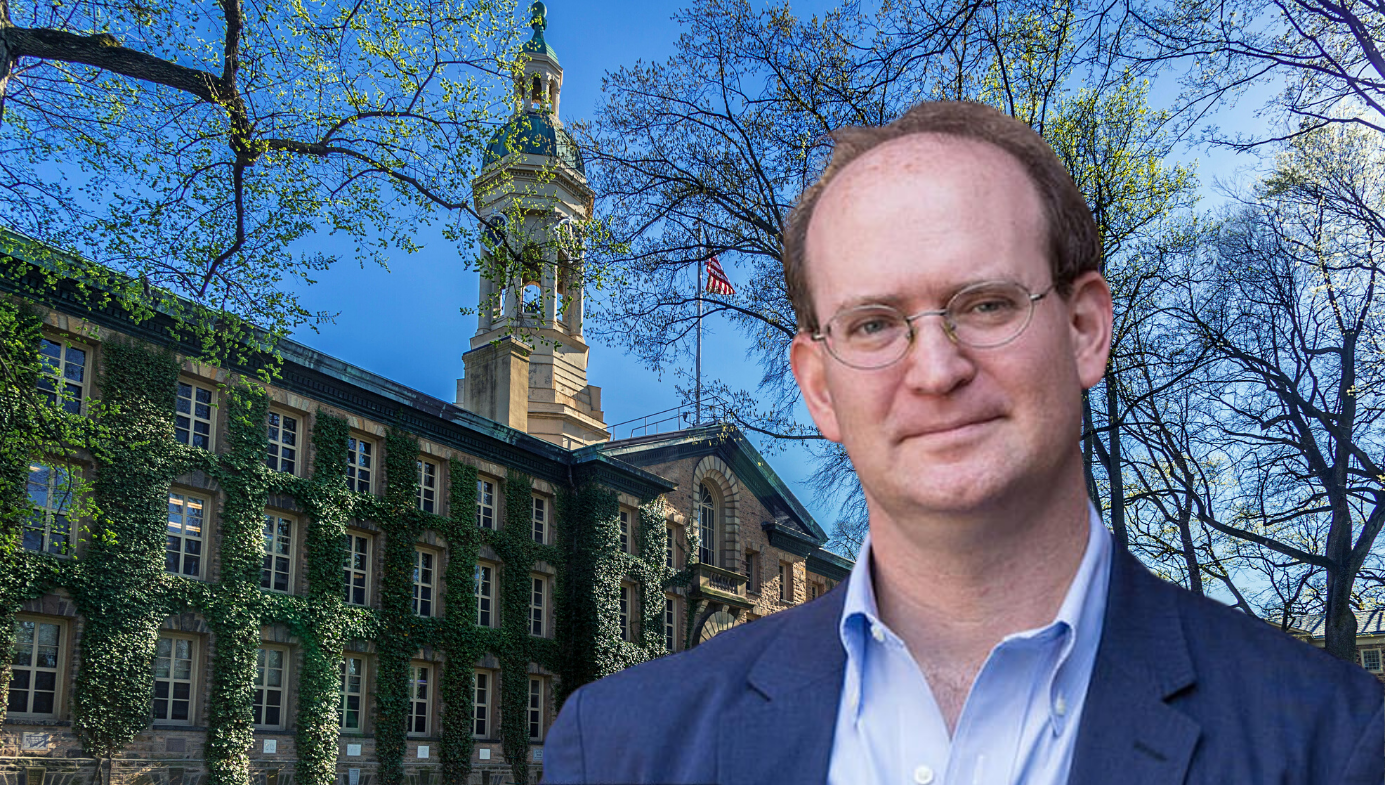

In the mid-2000s, Joshua Katz, a tenured Princeton professor and distinguished classicist, engaged in a consensual affair with a 21-year-old student in violation of university policy. When this matter was brought to the attention of college administrators in late 2017, Katz was disciplined following an internal inquiry and handed a year’s suspension without pay, which he accepted without complaint. But in late 2021, two new investigations into the affair were opened by the university’s Dean of Faculty and by the Office of Gender Equity and Title IX Administration, respectively.
As Aaron Sibarium reported in an article for the Washington Free Beacon, the Title IX investigation dismissed the charges of sexual harassment it had been asked to evaluate. “Conduct must, among other things, be ‘unwelcome’ in order to constitute sexual harassment,” explained Michele Minter, Princeton’s Title IX coordinator, and Katz and his student “were willing and active participants” in a consensual relationship. However, the 10-page report by Faculty dean Gene A. Jarrett recommended that Katz’s employment be terminated. On May 10th, 2022, Princeton’s president, Christopher L. Eisgruber, wrote to the university’s board of trustees also recommending dismissal, and on May 23rd, Katz was formally stripped of his tenure and fired.
So, what happened between 2019, when Katz completed his suspension, and late 2021 to justify the reinvestigation of a professor over a matter for which he had already been punished? The university claims that administrators were made aware of new allegations following a lengthy exposé published in February 2021 by the campus newspaper, the Daily Princetonian. According to the New York Times:
The woman in the sexual relationship did not cooperate with the original Princeton investigation. But after the Princetonian report, she filed a formal complaint that led the administration to open a new investigation, which it said was looking at new issues rather than revisiting old violations, according to the university report.
Princeton asserted that Dr. Katz had discouraged the woman from seeking mental health treatment while they were together, for fear of disclosing their relationship; that he had pressured her not to cooperate with the investigation in 2018; and that he had hindered that investigation by not being totally honest and forthcoming, according to the report.
This version of events seems perfectly straightforward, but it omits a number of developments that cast a rather different light on the story.
On July 4th, 2020, while America was in the throes of the “racial reckoning” precipitated by the murder of George Floyd, a long and jargony open letter addressed to the university president and senior administrators was published, signed by over 350 Princeton faculty, staff, and students. “Anti-Blackness,” the letter began, “is foundational to America.” It went on to allege that “anti-Black racism has a visible bearing upon Princeton’s campus makeup and its hiring practices,” and summarized the remedial action required as follows:
Give seats at your decision-making table to people of color who are actively anti-racist and inclusive in their practices. Diagnose the problem of racism through transparent demographic reporting. Redress the demographic disparity on Princeton’s faculty immediately and exponentially by hiring more faculty of color. Acknowledge the invisible work that faculty of color are compelled to do. Elevate faculty of color to prominent leadership positions. Educate the Princeton University community about the legacy of slavery and white supremacy. Continue to actively confront Princeton’s ties to and culpability in slavery and white supremacy. Use admissions as a tool of anti-racism. Invest in the pipeline to make lasting demographic change in the graduate and undergraduate bodies. Listen to and support Princeton’s faculty, preceptors, postdocs, staff, and students of color through open conversation and sustained mentoring programs. Above all, lead. Show our peer institutions, and the world, that genuine service to humanity begins with dismantling the unnatural and immoral hierarchies that universities have long perpetuated, both actively and in their inaction.
There followed a list of 48 itemized demands, many of which constituted a heavily illiberal warrant for ideological indoctrination and social engineering.
Joshua Katz responded to this letter with an article in this magazine on July 8th, titled “A Declaration of Independence by a Princeton Professor.” He pointed out that he was then “friends with many people who signed the Princeton letter,” and that “plenty of ideas in the letter are ones I support”:
 Joshua T. Katz
It is reasonable to “[g]ive new assistant professors summer move-in allowances on July 1” and to “make [admissions] fee waivers transparent, easy to use, and well-advertised.” “Accord[ing] greater importance to service as part of annual salary reviews” and “[i]mplement[ing] transparent annual reporting of demographic data on hiring, promotion, tenuring, and retention” seem unobjectionable. And I will cheerfully join the push for a “substantial expansion” of the Mellon Mays Undergraduate Fellowship Program, which encourages underrepresented minorities to enter PhD programs and strive to join the professoriate.
However, many of the letter’s other demands left Katz aghast, and he warned that, “if implemented, [they] would lead to civil war on campus and erode even further public confidence in how elite institutions of higher education operate.” Inter alia, he took exception to the idea that faculty of color deserved “course relief and summer salary,” an “additional semester of sabbatical,” and “additional human resources”; he objected to the removal of statues justified by a kind of moral presentism; and he worried that the proposal to establish a “committee composed entirely of faculty that would oversee the investigation and discipline of racist behaviors, incidents, research, and publication on the part of faculty” would result in a “star chamber with a low bar for cancellation, punishment, suspension, even dismissal.”
So egregious was the manifesto’s assault on its signatories’ own academic liberty that Katz devoted some space to trying to understand why on Earth they had signed it. Some, he reasoned, were no doubt true believers. Others, he speculated, may not have bothered to read the document in its entirety. Still others might be displaying preference falsification as a result of peer pressure or because they wanted to be seen to agree with the spirit of the letter even if they disagreed with its specifics. In any event, whether they were motivated by moral cowardice or ideological zealotry, these turkeys had been persuaded to vote for an early Christmas.
The blowback to Katz’s letter was immediate and ferocious. Critics were particularly enraged by the following passage, which they claimed exposed Katz’s racist agenda:
The Black Justice League, which was active on campus from 2014 until 2016, was a small local terrorist organization that made life miserable for the many (including the many black students) who did not agree with its members’ demands. Recently I watched an “Instagram Live” of one of its alumni leaders, who—emboldened by recent events and egged on by over 200 supporters who were baying for blood—presided over what was effectively a Struggle Session against one of his former classmates. It was one of the most evil things I have ever witnessed, and I do not say this lightly.
Five years earlier, on November 18th, 2015, the BJL had led a march of nearly 200 Princeton students to Nassau Hall and occupied President Eisgruber’s office. “We are tired of talking to people,” BJL member Asanni York told the Daily Princetonian. “It’s conversation, conversation, conversation. We try and protest; we meet with the administration every other week. We’re done talking. We’re going to be here until he signs this paper. We’re going to be here until things are met.” They remained in Eisgruber’s office for 33 hours until the president agreed to a revised list of their original demands.
It is plainly to this kind of coercive intimidation that Katz was referring when he described the BJL as “a local terrorist organization” and not to the race of its members. No fair-minded reading of his essay could conclude otherwise—one of his principal objections to the faculty letter was that its demands would balkanize the university community by treating students and faculty differently on account of their skin color. Nevertheless, in a letter to the Daily Princetonian, one of Katz’s colleagues in the Classics department accused him of “flagrant racism."
Four days after Katz’s Quillette article appeared, Eisgruber gave the following statement to the Daily Princetonian: “While free speech permits students and faculty to make arguments that are bold, provocative, or even offensive, we all have an obligation to exercise that right responsibly. Joshua Katz has failed to do so, and I object personally and strongly to his false description of a Princeton student group as a ‘local terrorist organization.’” To seize on those three words to the exclusion of every other concern expressed in Katz’s article was at best obtuse. More plausibly, it was an act of craven appeasement, given Eisgruber’s professed belief in the fundamental importance of academic freedom.
On April 6th, 2015, Eisgruber oversaw the adoption by Princeton faculty of “the major portion of a freedom of expression statement that a University of Chicago faculty committee issued in January.” An accompanying statement on the Princeton University site bylined “by the Office of Communications,” read in part:
Of course, the ideas of different members of the University community will often and quite naturally conflict. But it is not the proper role of the University to attempt to shield individuals from ideas and opinions they find unwelcome, disagreeable, or even deeply offensive. Although the University greatly values civility, and although all members of the University community share in the responsibility for maintaining a climate of mutual respect, concerns about civility and mutual respect can never be used as a justification for closing off discussion of ideas, however offensive or disagreeable those ideas may be to some members of our community.
These noble sentiments notwithstanding, Eisgruber evidently decided his condemnation of Katz had been insufficient. So, he sought to fortify his anti-racist bona fides in an open letter to “members of the Princeton community” on September 2nd, 2020, in which he pledged “to develop plans to combat systemic racism at Princeton.” That absurd and fantastically irresponsible statement led the Trump administration to announce that it would be investigating the university to determine whether or not it was in violation of civil rights law. Were such an admission to be taken literally rather than as an empty rhetorical sop, it would surely impact enrollment, particularly by students of color—who, after all, wants to attend a systemically racist institution?
On July 13th, 2020, five days after Katz’s Quillette article appeared, four administrators in Princeton’s Classics department posted a public message denouncing Katz and his article, which they described as “fundamentally incompatible with our mission and values as educators.” Katz, they added, “does not speak for the Department. The views expressed are his and his alone.” Most disgracefully of all, Katz found his name added to a list on the university website itemizing “racist statements and actions” at Princeton dating back to 1886.
But for all the sound and fury from students and faculty, and an announcement from administrators that the university would be conducting an investigation into Katz’s article, Princeton must have known that it could not possibly discipline, still less fire, a tenured professor on the basis of the views he expressed in his Quillette essay. By the end of July, Katz had been notified that he was no longer under investigation. He responded with an op-ed for the Wall Street Journal prematurely titled “I Survived Cancellation at Princeton.” As he ruefully admitted in a second article for the Journal following his defenestration:
There are at least five things of which I was unaware. First, I didn’t yet know that one of my colleagues had, in her official capacity as director of graduate studies, written an individual letter to every graduate student in the classics department about the “pain” I had caused. Second, I didn’t yet know that, in a Zoom session about “equity” only a couple of days later, students and colleagues would badger me to apologize. (For what exactly, they did not say, and I refused—which was absolutely the right thing to do.) Third, I didn’t yet know that, with only a handful of exceptions, almost none of my colleagues would ever speak to me again. Fourth, I didn’t yet know that the university would make an example of me to the entire incoming freshman class in August 2021, singling me out among sitting faculty as a virulent racist, in part by doctoring a quotation from my article—a move that has brought widespread condemnation.
Most important of all, Katz did not know that “since early July 2020, only days, if not hours” after the publication of his Quilllette essay, the Daily Princetonian had begun its investigation into the circumstances surrounding his 2018–19 leave of absence. The results were published on February 4th, 2021, and were co-bylined by Marie-Rose Sheinerman who had been responsible for many of the articles critical of Katz’s Quillette piece. It’s a wretched piece of journalism—a tissue of anonymous hearsay, speculation, and innuendo concerning a 15-year-distant relationship about which neither participant had agreed to comment. Nevertheless, it resulted in a petition authored by Princeton Students for Title IX Reform (PIXR) and the Organizing Committee of Princeton Graduate Students United (PGSU), which read in part:
Keep reading
The Radicalisation of Tucker Carlson
A Pop Fiction Master and Monster
Australia’s Coming Censorship Machine

Anatomy of a Book Promotion

They Walked in Line