Feminism
I’m Being Investigated by the British Columbia College of Nurses Because I Believe Biological Sex Is Real
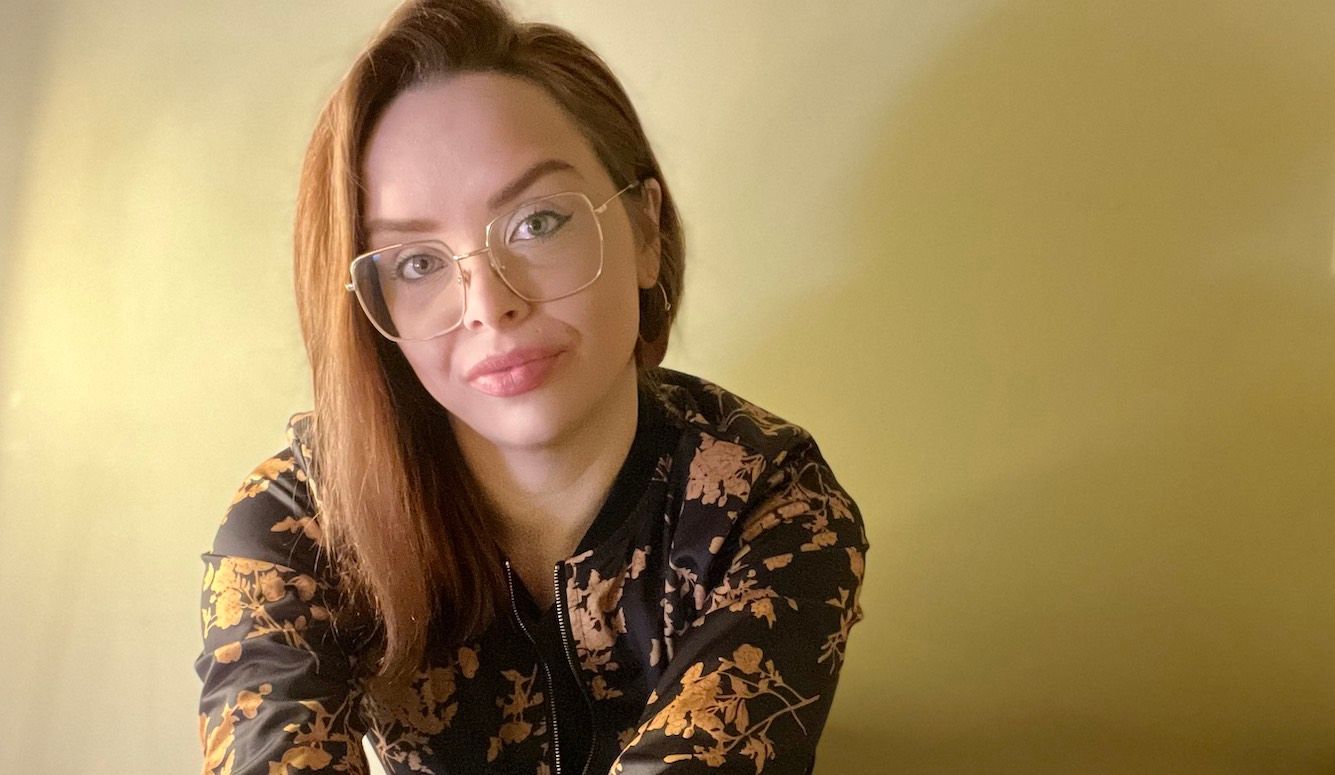

In November 2020, the British Columbia College of Nurses and Midwives (BCCNM) informed me that I was under investigation for my “off-duty conduct.” My disciplinary hearing is scheduled to take place from May 30th through June 3rd, and my career as a nurse hangs in the balance. I have been working throughout, apart from a stress leave and various sick days that I have taken to protect my mental health.
The BCCNM is a regulatory body whose stated purpose is to protect the public from harm, and to ensure that nurses and midwives meet defined standards of care and professional responsibilities. It issues a license to practice; and without it, you can’t work as a nurse in British Columbia. I’d never thought too much about the BCCNM before this investigation was announced. I did my job, and believe I did it well. I paid my license fees each year—that was it.
My troubles started when the BCCNM informed me that two members of the public had complained to the organization, to the effect that I am transphobic and so might be incapable of “provid[ing] safe, non-judgemental care to transgender and gender diverse patients.” One of the complainants is a social worker named Alex Turriff, who self-describes as “a passionate social justice advocate … interested in structural violence and oppression [and] influenced politically by Marxism.” The other has been awarded the privilege of remaining anonymous, even as he or she has attempted to ruin my career: The BCCNM apparently agreed with the anonymous person’s belief that I might “retaliate” if I knew who they were.
In my decade-long nursing career, I have never had a patient complaint, or otherwise received any type of workplace discipline. To the contrary, I loved my job and worked my way into leadership roles. I have worked with countless transgender patients. I am not transphobic by any reasonable or defensible definition of that word. Yet I now could lose my job because activists claim that I am a bigot.
About six years ago, I became interested in what some call gender-identity ideology—which is centred on the claim that one’s self-asserted gender identity should trump biological sex in all areas of service provision and policy-making. As many have observed (including here at Quillette), there’s been an ideological creep from niche Internet communities and academic faculties to the real world of bathrooms, prisons, and sports teams. I date my own publicly stated concern about this phenomenon to the first time I was denounced with the slur “TERF” (trans-exclusionary radical feminist), which was in 2016.
Before this happened, I did not self-identify as any kind of active feminist, let alone the “radical” kind. However, I could not ignore the harms that gender-identity ideology was inflicting on women and children. And over the last six years, I’ve written and spoken on the issue of gender; organized large events about gender-identity ideology; hired lawyers to prevent the Vancouver Public Library from cancelling one such event; attended a human-rights tribunal and court hearings involving the notorious grifter formerly known as Jonathan Yaniv; been investigated and threatened with arrest by police when the aforementioned grifter falsely accused me of rape and voyeurism in a courthouse bathroom; faced hundreds of protesters—some of them former friends—chanting at me and my six-week-old infant, “Save the baby from the TERF”; received threats of death and sexual violence; had my Member of Parliament refuse to speak to me; and, with a former friend, helped erect a Vancouver billboard expressing support for my fellow “TERF,” J.K. Rowling.
The second #GIDYVR Still Talking Series event was another success, with more than 250 coming out for a civil discussion. Everyone who came was brave—because they had to face down ~150 (at the peak) verbally abusive protesters. I want to do a thread about the protesters.
— Amy Eileen Hamm (@preta_6) May 10, 2019
It was this last bit, the billboard, which triggered trans activists to attempt to get me fired. And when that happened, I engaged a lawyer, Lisa Bildy, then with Canada’s Justice Centre for Constitutional Freedoms, as I had no assurances that my union-provided legal representative wouldn’t be ideologically sympathetic with my accusers. And as it turned out, this was a good call: My province’s nurses’ union has since lobbied the Canadian government (without, to my knowledge, consulting members) to pass a controversial bill that threatens healthcare workers with prison time if they do not immediately “affirm” the stated gender of any patient, no matter how young.
Nearly six months after the original BCCNM message to me—indicating “concern” that I “share the same transphobic views as J.K. Rowling”—I was sent 300-plus pages of “investigation materials,” comprised mainly of my published articles and social-media posts, along with a set of questions I was directed to answer. The college never responded to my lawyer when she wrote to the BCCNM’s in-house lawyer, Aisha Ohene-Asante, to inquire as to whether “the characterization of J.K. Rowling’s alleged views as ‘transphobic’ are the words of the complainant, and not yours as a representative of the College.” Ohene-Asante did not respond to this, nor pass the file along to anyone else, so we are left with the possibility that the BCCNM has already tipped its bias.
I had no intention of recanting my views, which, as my lawyer described them to the BCCNM, are as follows:
Men are not women. Humans are a dimorphic species. Women and men are biologically different from one another. Women and girls have sex-based rights as a result of those differences. Those rights are under threat. This is the truth. It has always been the truth. Speaking the truth should not be a punishable offense.
Likewise, when asked to “describe any lessons learned” thus far, I wrote that
I have learned that the BCCNM does not stand up for women or their Charter [of Rights]-protected, sex-based rights. While I am being accused of potentially bringing my profession into disrepute, I believe it is the College—with [its] science denialism and bullying of women like myself—that brings the profession into disrepute. I hope you know how many members of the BCCNM I have met who stand with me, and stand with other women fighting to maintain our sex-based rights. While most women are cowed into silence by fear of harassment and personal or professional consequences (such as what the BCCNM is subjecting me to with this investigation), we are not a minority. I am being punished by this process, although I have done nothing wrong … My employer and regulatory body should take pride in those who advocate for women and children. Instead, they persecute and bully them. All of this is particularly disheartening in light of the fact that nursing is a female-dominated profession. Yet the BCCNM fails to grasp that women who stand up for their sex-based rights are not transphobic, we are pro-women—as you should be.
The BCCNM attempted to prevent me from speaking out about its investigation by asserting that I had a legal duty of confidentiality. My lawyer advised that the cited legal provisions didn’t apply to me. The BCCNM never responded to us on this issue, either. And so we decided to go public with a press release. I received an enormous amount of support from people around the world, and continue to get positive messages to this day—albeit with the occasional nasty online message from trolls mixed in.
After I’d gone public, the BCCNM attempted to get me to sign a consent agreement, which would have ended the investigation. But I refused. The proposed agreement involved me receiving a public reprimand, signing a statement of facts agreeing that I’d made transphobic comments online, getting a two-week suspension that would remain permanently on my record, pledging never to discuss gender identity while mentioning that I am a nurse, and other assorted items (such as “education” in regard to the use of social media). The BCCNM wanted me to agree that I had breached my professional standards “related to Ethical Practice, Professional Responsibility and Accountability, and Client-Focused Provision of Service.” But they weren’t able to articulate the manner in which I’d breached any of these standards; nor could they back up their more recent claim that I’d made “medically inaccurate statements.” The reason they haven’t done so is because they can’t.
I mentioned earlier how I “loved” my job. Past tense. I don’t anymore, because of everything I’ve described. I am a single mother with two young boys, and my job is something I do to pay the bills. I care about the patients I see, and I still do my best. But these events have taken their toll in regard to the way I view the profession. And unless the ideological climate changes, I may have to find a new career (a move that, hopefully, won’t negatively affect my ability to provide for my children).
Keep reading
How to Suppress Men’s Writing
Back to the Dark Ages

Prison or Peer Review
France’s Imaginary Austerity


The Limits of Perfectionism