Politics
Taiwan, Ukraine, and Huntington’s Clash of Civilisations Revisited
Putin believes that the current crisis puts principled opposition to authoritarian empire-building at odds with the imperatives of faith and history, as well as the pragmatic imperative of keeping Germans supplied with energy.
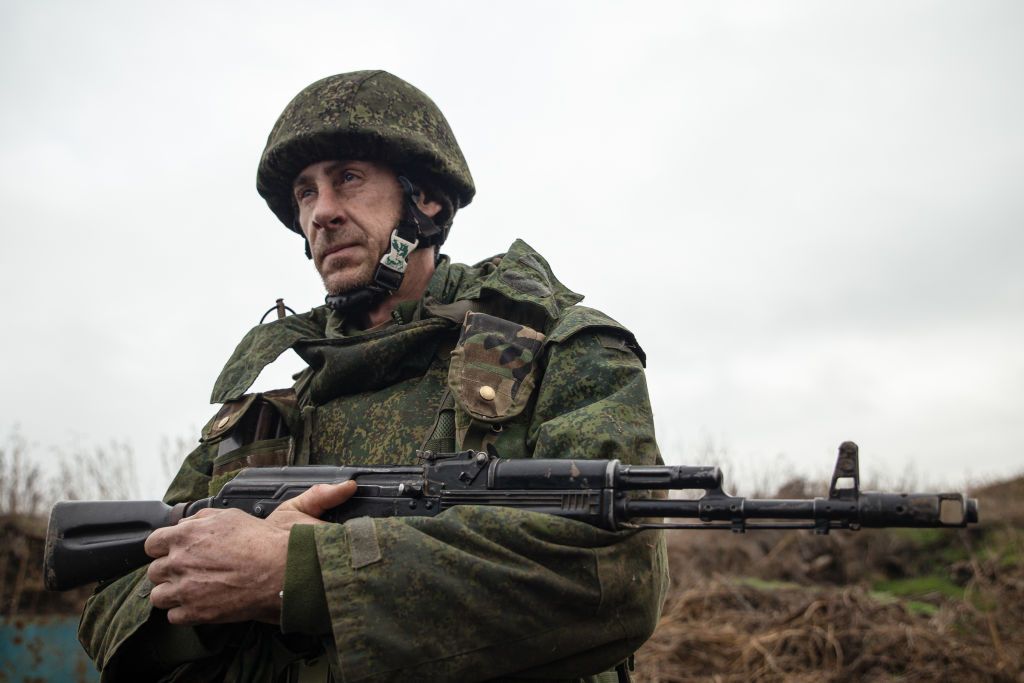

An attack on Ukraine by the Russian forces massed on its eastern border would nakedly demonstrate the nature of President Vladimir Putin’s authoritarianism and, by extension, the nature of authoritarianism itself. The Russian state seeks control of Ukraine for reasons of power, and to assuage a Russian population taught to measure greatness on the basis of territorial aggrandisement—a salve to the still-painful loss of its status as a superpower 30 years ago. That the population of Ukraine will resist such a land-grab is of little concern in Russia (so long as not many Russian lives are lost), except among a small-if-growing minority of those (usually referred to as “liberals”) who have embraced some or all of the main elements of post-colonial democratic government.
Only authoritarian states still have the confidence and the will to mount an attack on an independent state they believe to be theirs, invariably arguing that history has given annexation its blessing. This claim is usually bolstered by another—that the conduct of Western powers, in their colonial period and now, has ensured that the state dismemberment they caused or encouraged would continue. As Western states have retreated from imperialism and turned inward to agonise about their colonial sins, authoritarian powers have seized the opportunity to expand and dominate. And so, history executes a u-turn to revisit old battlegrounds.
Russia’s aggressive neo-colonialism is mirrored by that of China, another police state with which it enjoys increasingly warm relations. In the joint 1984 declaration that handed Hong Kong back to China after a century-and-a-half of UK ownership, China agreed to refrain from imposing communist rule in favour of a “one country, two systems” approach. This included—or was supposed to include—the retention of many of the institutions of democracy and civil society developed in the latter years of British rule.
That agreement has now largely been breached: only those political figures which have shown allegiance to Beijing are allowed to stand for office. The new basic law in the territory, and a security law rendering most protest illegal, have not brought acquiescence, even if the large protests of 2014 and 2019 have been suppressed. An election of carefully vetted candidates a few days before Christmas produced a turnout of only 30 percent—a result which showed opposition to the external power running at roughly the same level as in Ukraine.
Chinese policy most closely resembles that of Russia in its threats to invade Taiwan. The island was occupied and ruled by the losing side in the 1949 Chinese civil war; its one-party rule was reformed in the late eighties, and a lively democratic system developed. The People’s Republic of China has never accepted its separate status, and penalises other states which do. It has recently stepped up military overflights and belligerent rhetoric, and raised the possibility of an invasion to secure what it regards as its property—including the 23.5m population.
Taiwan’s President, Tsai Ing-wen, has responded by launching a military modernisation programme, with $9bn spent largely on naval weapons, including missiles and warships. She seems determined to repel boarders, and shows more confidence than the Ukrainian leadership that she can. A report by the country’s Defence Ministry claims that “the nation’s military strongly defends ports and airports, and they will not be easy to occupy in a short time. Landing operations will face extremely high risks. … The nation's military has the advantage of the Taiwan Strait being a natural moat and can use joint intercept operations, cutting off the Communist military’s supplies, severely reducing the combat effectiveness and endurance of the landing forces.”
Yet in both the Chinese and the Russian cases, the forces and technology available to the threatened are far inferior to those possessed by those making the threats. The latter can also choose the size of the attack they decide to undertake. China may use missiles and aerial bombardment to reduce the effectiveness of Taiwanese ground forces, perhaps with such effectiveness as to force surrender without an invasion.
Nothing is certain in either of these possible theatres of war, but the Russian threat appears, for the moment, to be the more immediate. More alarming still, if either of these looming invasions does occur and succeed, the other will be greatly encouraged.
That Ukraine will fight any future invasion seems certain—during the six years since the occupation of the Donbass, Russian aggression has increased the loyalty of the population to the state. The military is much better trained and equipped than it was when Russia first sponsored the rebellion of the Russian-speaking population in the eastern Donbas region in 2014. And while Ukrainian President Volodymyr Zelensky initially sought to negotiate with Putin, he has now concluded that the Russian president is set on conquest, and the Ukrainian military has pledged its support for resistance, should it come to that.
 Jonathan Kay
Western intelligence services now estimate that Russian military personnel on the Ukrainian border number around 100,000, and the reserves needed to support an invasion are being redeployed to build the force to around 175,000. A comparison between the two states gives Russia a clear advantage. Ukraine has 255,000 active personnel, while Russia has just over a million. Further, Ukraine’s air force is relatively small and its missile stock is limited. Like China, Russia can also inflict enormous damage from its own side of the border, an onslaught from ordnance to which Ukraine could hardly respond.
Putin has set out his thinking on Ukraine in two forms: first, he has demanded a guarantee from the West that Ukraine will not be allowed to join NATO; and second, he has written a lengthy essay on the background to Russian-Ukrainian relations, which allegedly supports his repeated belief that the two are, in fact, one country.
Putin’s essay bears some remarkable similarities to a 1993 essay for Foreign Affairs entitled “The Clash of Civilizations?” by the late American international relations scholar and foreign policy realist, Samuel Huntington. Huntington’s argument was complex, but shrunk to its barest bones, it held that the world was not becoming more similar and Western, but remained split into a series of civilisations “defined both by common objective elements, such as language, history, religion, customs, institutions, and by the subjective self-identification of people.” He believed that “the world will be shaped in large measure by the interactions among seven or eight major civilizations. These include Western, Confucian, Japanese, Islamic, Hindu, Slavic-Orthodox, Latin American and possibly African civilizations. The most important conflicts of the future will occur along the cultural fault lines separating these civilizations from one another.”
Conflicts, he continued, will become more common not less, because civilisations are older, more fundamental, and more powerful than nations and have greater cultural power. Greater interaction would therefore not produce more similarity, but a growing awareness of difference. Technological and social change pushes people to find their identity in tradition and, in many cases, in religion; other civilisations may copy the West in some ways, but they will also strive to remain distinct and true to their civilisational roots. Huntington therefore concluded that the West’s efforts to promote democracy and civic values, retain its military edge, and grow its economy would meet greater resistance.
Putin’s essay was written in July, and begins with the bald assertion that for centuries “Russians and Ukrainians were one people—a single whole.” Russians, Ukrainians, and Belorussians are “all descendants of Ancient Rus … bound together by one language (which we now refer to as Old Russian), economic ties, the rule of the princes of the Rurik dynasty, and—after the baptism of Rus—the Orthodox faith.” Language, economy, common rulers, and shared religion, he contends, remain the dominant forces determining the commonality of three peoples split into three nation states (Russia, Ukraine, and Belarus) comprising what Huntington would have called a single civilisation.
Ukraine, Putin argues, is pulling away from Russia and attempting to strengthen its independence because it is “under the protection and control of the Western powers … not just complete dependence but direct external control, including the supervision of the Ukrainian authorities, security services and armed forces by foreign advisers, military ‘development’ of the territory of Ukraine and deployment of NATO infrastructure.” Consolidation of Western control over Ukraine and hostility to Russia is now a nightly theme of Russian TV news and chat shows, as well as the pro-Kremlin newspapers, magazines, and websites.
Keep reading
What the Navigators Knew
Gemma Tognini on Australia’s Political Revolt
Rubio in Athens
How France Lost Control of Its Streets