Podcast
Podcast #292: Social Work Without Stereotypes
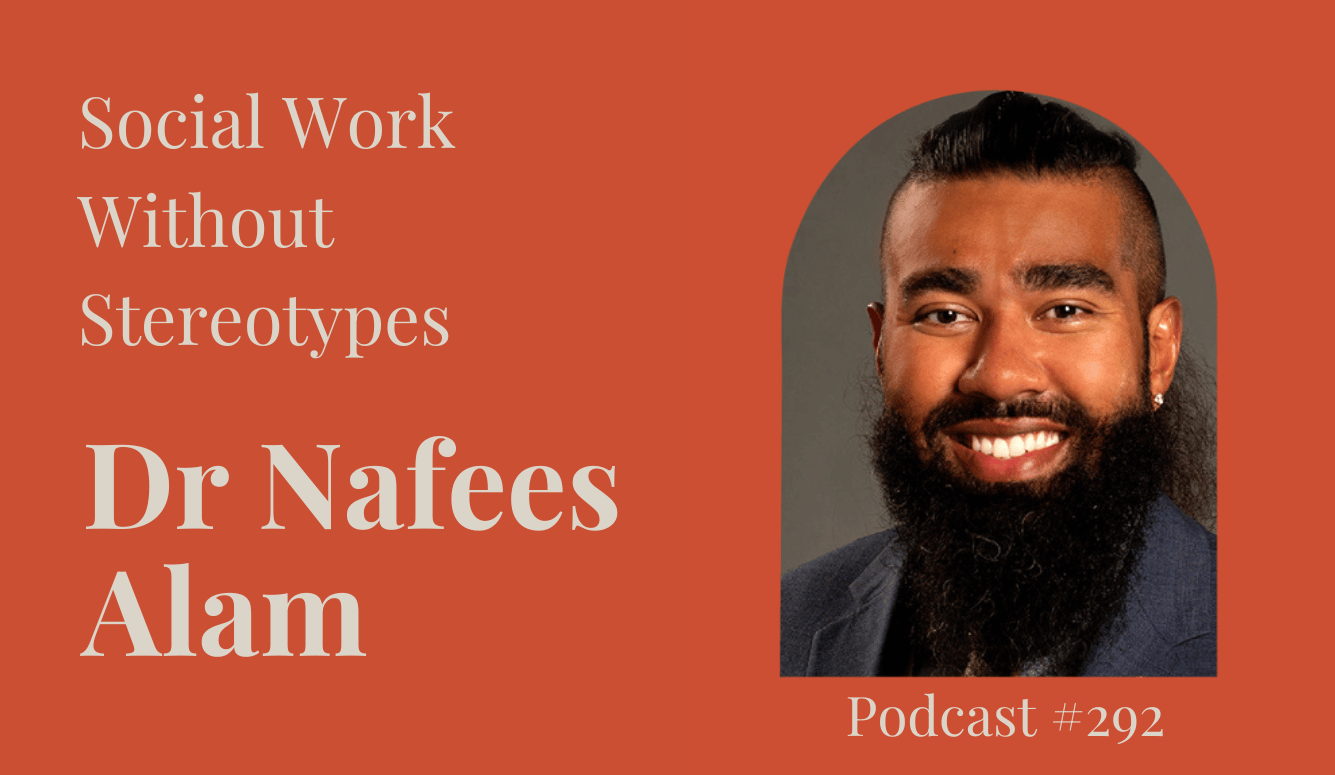
Quillette podcast host Jonathan Kay talks to Heterodox Academy scholar Nafees Alam about the need to challenge political orthodoxies in the field of social work

Introduction: Welcome to the Quillette podcast. I’m Jonathan Kay just back from a week in Brooklyn, where I attended the Heterodox Academy annual conference. Heterodox Academy, as many of you know, is a non-partisan organisation for academics who want to protect open inquiry, intellectual pluralism, viewpoint diversity, and a spirit of constructive debate on university campuses. Among its original creators was Jonathan Haidt, who many of you will know as the co-author of the famous book, The Coddling of the American Mind.
In past years, Heterodox Academy conferences have examined the question of how to push back effectively against demands for ideological conformity from dogmatic progressives, but more recently, as many speakers in Brooklyn took pains to emphasise, we’re starting to see illiberal pressures coming from the right side of the political spectrum. In part, this is simply because the culture war is cyclical and left-wing overreach on issues related to race and gender were bound to eventually awaken a vigorous counterattack from conservatives and principled classical liberals, but of course the phenomenon is also tied up with the election of Donald Trump, who’s used his federal government powers to pressure—some would say bully—universities to ally their DEI policies with his demands.
Another notable development at Heterodox Academy in recent years has been the emergence of different sub-communities that correspond to different areas and academic specialties. These have names like HxAnthropology, HxCanada, and HxPhilosophy, and, in my opinion, the conference sessions devoted to these specialties were some of the most interesting events that I attended. This included a session dedicated to scholars in the field of social work, which is how I met this week’s guest, Dr Nafees Alam, an associate professor in the field of social work at the University of Nebraska at Kearney.
As Dr Alam told the audience in Brooklyn—and as he’ll discuss in more detail in our conversation—the field of social work is full of well-intentioned professionals, trying to do the right thing, often in difficult circumstances and with limited resources. Unfortunately, the definition of what constitutes the right thing can easily be distorted by political and ideological factors, including a fixation on markers of group identity, which, as Professor Alam stresses, often has little to do with the individual circumstances of the people in need whom social workers are mandated to assist. Over time, Professor Alam has become concerned about the intrusion of ideological dogmas into the social work education field, which is why he’s taken on a leadership role in creating the Heterodox Academy social work community. He’s also recently committed his views to a scholarly paper published in the journal Research on Social Work Practice, co-authored with his University of Nebraska colleague, Heidi Rueda. That paper is entitled Heterodox Social Work: Advancing Viewpoint Diversity, Constructive Disagreement and Open Enquiry.
And just one editorial note: during our discussion, you’ll hear me make reference to remarks delivered by one of Professor Alam’s co-panellists in Brooklyn, but without naming her. That scholar is Tiffanie Jones, a quantitative research specialist who lectures on social work at Howard University.
And now, my interview with Nafees Alam, associate professor in the department of social work at the University of Nebraska at Kearney.
The following transcript has been lightly edited for concision and readability.
Jonathan Kay: Nafees Alam, thank you so much for joining the Quillette podcast.
Dr Nafees Alam: Thank you for having me. I appreciate it.
JK: I have to admit, this is the first podcast we’ve done on the field of social work—never mind heterodox social work. We haven’t even done orthodox social work, so we’re playing catch-up here. I think a lot of people know of social work as a government service. They don’t know a lot about the academic aspect of it. Would it be fair to say that most people enrolled in social work programmes at universities are destined to work for government at some level?
NA: Either directly or indirectly, yes. There are many private agencies as well as public ones that employ social workers. Hospitals employ social workers. And in fact, social work is bleeding over into the corporate space. My research speciality is sports social work, so we work with athletes and use sport as social work interventions. There are a number of areas social workers can go into.
JK: What would a sports social work context look like?
NA: Well, it’s about working with athletes. It differs from sports psychology in that sports psychology focuses the athlete being the best athlete they can be. Sports social work focuses on the athlete being the best person they can be. That includes family therapy, group counselling—we’re not as concerned with their sport of choice, but rather making sure they’re living the best version of their lives, whatever that means to them.
JK: Does this blur into psychology or what’s often called life coaching?
NA: I wouldn’t say so. Sports psychology is about how to be the best athlete. Sports social work isn’t necessarily about that—though of course, if things are good at home, performance on the field or court should also be better. But we focus specifically on societal issues.
JK: What percentage of a typical graduating class would get a job with the government, assisting families in need, people experiencing poverty or marginalisation, child services, that sort of thing?
NA: I don’t know the exact percentages, but I would say the majority of graduates don’t go into sports social work—it’s a very niche area. Most would end up working for a hospital, a public organisation, or a private one in areas such as child welfare, elderly care, or respite care. That would cover the majority of social work graduates, yes.
Keep reading
The Genetics of Crime and Punishment


Jerry Kaplan on AI Doomers

Payback Time for Steven Galloway