Religion
The Purposeless Society
Without faith or nation, there is no greater whole beyond the individual.

Humans are wired to think in terms of purposeful social agents and their objectives, and to tell themselves stories. In every culture, there are myths that tell its members who they are and how they relate to one another, that help to structure life and give it order. The idea that there is a crisis facing the West is by no means unique to conservatives. Classical liberals and technocrats lament the rise of populism and the loss of faith in their policy prescriptions, while progressives claim that the societies in which they live are built on foundations of violence, and must therefore be destroyed and remade.
Conservatives place the genesis of the problem further back. Where others see systems and structures that must be dismantled or that are under attack, conservatives believe that the dismantling has already occurred and that we are now suffering the consequences. The destruction of traditional social structures with their strictures and obligations divides the world into two groups. The first experience it as a liberation of the individual, and use their newfound freedom to pursue their desires. But for those who needed the guidance such structures provided to steer them into useful and fulfilled lives, it is a disaster. The idea that we do not find happiness by pursuing it may be old, but it is not always untrue. Hedonism is a poor substitute for purpose beyond the individual.
This listlessness manifests itself in an array of symptoms that speak to the absence of a narrative that can bring order to life. The phenomenon known as “deaths of despair” can just as accurately be described as deaths from lack of purpose. When life is principally about individual fulfilment and consumption, and one’s value is defined by the ability to produce and consume, there is very little reason to continue once it ceases to be pleasurable. Hedonism may be the one cause for which it makes no sense to give one’s life, but it takes its toll regardless. In the end, man can be made to serve Mammon, but never the other way round.
A healthy culture is one that is first and foremost able to sustain itself. The man who builds a cathedral does so with no hope of seeing it completed because he understands that he occupies a place within a civilisation with both a past and a future. Just as those who came before built for him, he builds for those not yet born. This altruism rests on the assumption that there will be such a continuation, that there will be people who think like him in the future to appreciate and benefit from his work, and in doing so, justify it.
Across the West, fertility rates have fallen far below replacement levels. To the extent that people are aware of this, they tend to see it as a good thing. After all, how could something bad have come from people’s freely executed choices? That those choices were made in an environment antithetical to the raising of families does not register. Nor does the pressure people feel to see economic production as their first and foremost duty, rather than building a family. Kept in an unending whirl of short-term career objectives and periods of consumption, it is easy to be lulled into a state where the future is disregarded entirely, until one day you finally look up to see that it’s arrived.
When a person is left without children through infertility or poor romantic timing, they can fall into despair at the thought that their life will end without someone to carry on their legacy. What happens to an entire culture when it finds itself staring at a future without continuity? Attempting to solve this question by replenishing populations through immigration can work only to the degree that the newcomers will buy into your way of life. What do we have to offer them that should persuade them to give up their traditions in favour of ours?
A similar lassitude comes from the belief that greatness is somehow beyond us, and that when it is not, it is undesirable or unseemly to reach for it. Whenever the idea of doing something spectacular is raised—reaching for the stars, exploring the depths of the ocean, building gleaming cities or trans-continental transport systems—the objection is the same: the money could be better spent on benefits, or healthcare, or some other form of consumption. The ideas of building a legacy, of creating things which are beautiful for the sake of it, or of inspiring a sense of something greater than oneself are left unconsidered. While poverty exists, every cathedral must be made of cinderblocks. That programmes to eliminate misery are pits into which you could shovel banknotes for millennia without even beginning to shallow their depths is quietly forgotten. Decline is a choice, and some people positively embrace it.
 Ben Sixsmith
The dominance of utility over aesthetics is a similar indicator that something is awry. The idea that a house is nothing more than a machine in which to live is reasonable only until you think about it for the briefest moment. Reducing human concepts to their function and stripping them of their non-essential elements—building a home, a space of one’s own to take pride in and pleasure from dwelling in—is deeply counterproductive. In a society obsessed with economic facets of life, however, measurable outputs are the dominant concern. And ugly is cheap and easy.
That people still object to this—stubbornly insisting on being human rather than machines—seems to underlie the aggrieved tone of articles about selfish people enjoying meat and gardens instead of spending their lives in a pod subsisting on bugs. The idea that it is better to have a large population of miserable but barely positive utility people is a function and indeed criticism of a certain form of utilitarianism. But any society with no more to offer than hedonism might be expected to offer better than to flirt with embracing this “repugnant conclusion.”
We cannot make something of ourselves alone. We need a context against which to define ourselves, and ours offers us little meaning beyond the individual, leaving us to approach life with no more purpose than the day that is lived because it is there. We need myths that give us guidance, and we need a purpose beyond the self—spreading the gospel, living within the faith, continuing the tribe, building for the glory of the country—to give us meaning. In short, we need narratives, collectively and individually.
From this perspective, the American Left’s denial that it holds cultural power looks like an attempt to construct one. The progressive answer is that you should find purpose in politics, dedicating yourself to the great project of individual liberation in the face of the menacing edifice of the Right, joining the plucky rebel alliance, aided only by capital, academia, the arts, the press, the government bureaucracy, the White House, both houses of Congress, and a significant body of Supreme Court rulings. For the rest of the world, it is too much to hope that this project will confine itself to the United States: there is no “bright line between foreign and domestic policy,” after all.
Whether this project can succeed in providing purpose over a longer horizon is doubtful, and it still leaves us with the question of what conservatives should be doing. The diagnosis that we need a narrative—or at least an alternative to the bright-eyed fervour of America’s new progressive preachers—does not directly indicate a course of action. As the economist Albert O. Hirschman argued in Exit, Voice, and Loyalty, there are two possible responses to a deteriorating organisation: withdraw from it or attempt reformation.
The first option is to become a group within a group, and cling to your own internal sense of purpose. Those looking to exit society have plenty of examples to draw upon, from pilgrim fathers and Irish monks to the modern-day practices of minority social groups and faiths. The options, briefly, are to build communities which interact minimally with the rest of the world, to leave for a country more to your liking, or to attempt to retreat into your conscience in a world increasingly opposed to it.
But none of these options will arrest the decline of the wider society, or provide certainty of success. A group within a society will be left alone only so long as there is something to restrain interference in their affairs. A man attempting to live within his conscience will eventually be compelled to comply or face sanctions. For those leaving altogether, foreign policy remains an extension of domestic concerns. Anyone who has observed the tensions building between the Visegrád Group and the broader West can be under no illusion that those countries currently amenable to the former’s views will necessarily be left alone to be so.
Action, then, is preferable both pragmatically and out of a sense of obligation for the wellbeing of the wider world. The conservative movement must provide an alternative narrative, and one that is realistic. Too many proposals in their current form are doomed to fail, not because the march of the progressive Left is unstoppable, but because they do not offer in themselves a coherent ideology beyond a vague desire to “return” to some unspecified point in the past, without any sense of which changes can be undone. They are defined in opposition to a structure, and in their analysis and acceptance of constraints, they unconsciously retain much of that which they purport to reject.
Keep reading
Gemma Tognini on Australia’s Political Revolt
Rubio in Athens
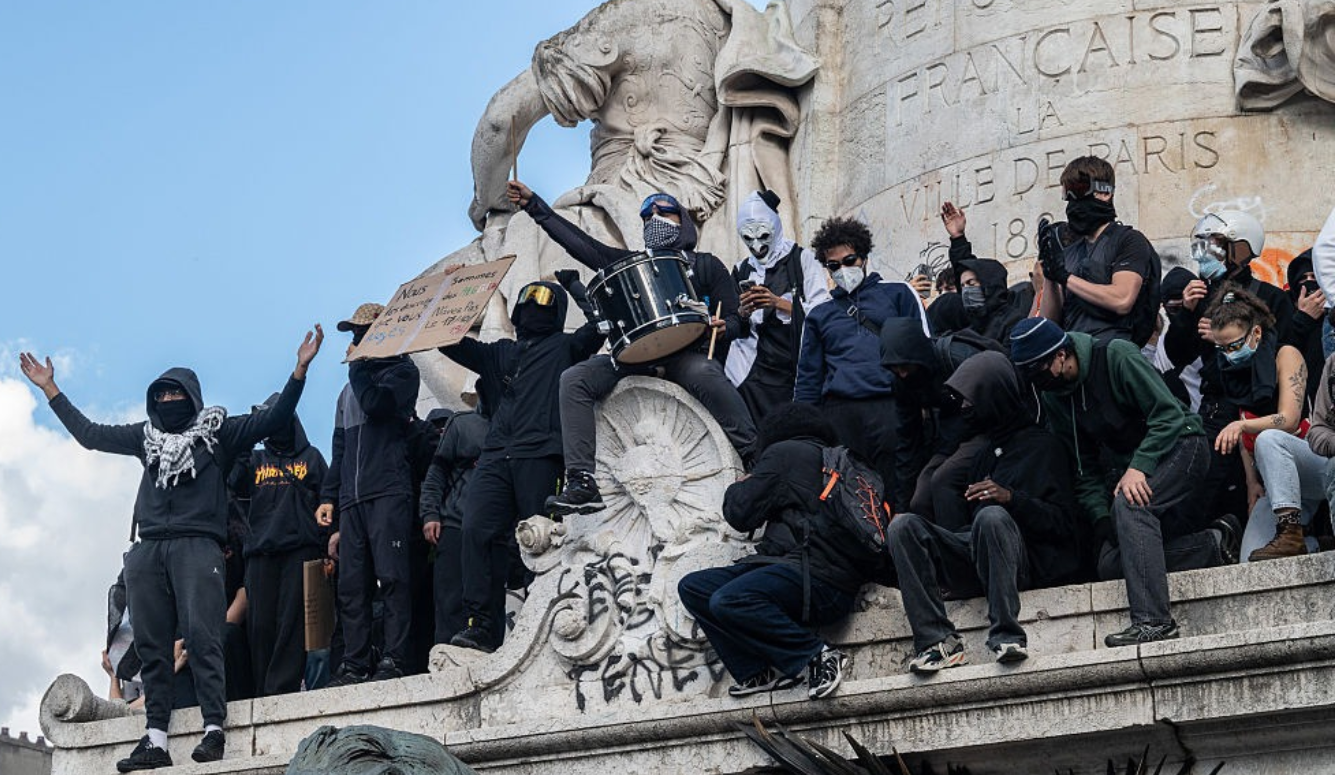
How France Lost Control of Its Streets
How to Suppress Men’s Writing

Back to the Dark Ages