Editorial
With a Star Science Reporter's Purging, Mob Culture at The New York Times Enters a Strange New Phase
But since these same Times managers had already shown staff they can be bullied by office mobs, it was predictable that McNeil eventually would be thrown beneath the Times bus (an increasingly crowded place), which is why he now finds himself unemployed and begging for forgiveness.

Speaking recently at a Quillette Free Thought Lives event, Columbia University professor John McWhorter expounded on his thesis that social justice comprises an ersatz religion, complete with rites of confession and penance. It’s a compelling metaphor, especially in the way it helps explain adherents’ overwrought professions of faith and demands for the persecution of heretics.
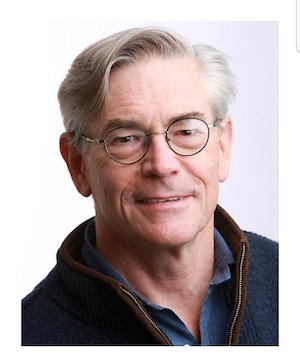
Donald McNeil Jr.
But when it comes to the New York Times’ recent firing of reporter Donald G. McNeil Jr., the metaphor falters. The Times management dismissed McNeil because he was caught instructing a student about racism in 2019; and, in so doing, said the N-word as an example of a gravely racist term. The Times management had initially concluded that McNeil showed “poor judgment” by uttering these two forbidden syllables, but also that he hadn’t harbored any “hateful or malicious” intent. That last part certainly seems sensible, given that McNeil wasn’t actually directing the N-word at another human being or using it to describe a third party. But since these same Times managers had already shown staff they can be bullied by office mobs, it was predictable that McNeil eventually would be thrown beneath the Times bus (an increasingly crowded place), which is why he now finds himself unemployed and begging for forgiveness.
Consistent with the pattern set by similar controversies, it is vaguely claimed that this incident was indicative of a broader pattern of insensitive behaviour on McNeil’s part. But apart from the allegation that McNeil once announced himself skeptical of the concept of “white privilege,” no damning particulars have been offered publicly outside of his non-hateful, non-malicious use of the N-word. So what we’re left with is the spectacle of an acclaimed reporter being purged not for malevolent actions, nor even malevolent intent, but rather for making a certain kind of sound. This is an important departure from ordinary mobbings because, even in their most dogmatic form, theories of social justice generally are at least nominally concerned with the improvement of human morality, which, crucially, is inseparable from the question of intent. McNeil, on the other hand, is being judged according to a theory of wrongdoing that presents certain words or phrases as evil by their mere utterance, as with a Harry Potter spell.
In discussing the threat to rationalism from progressive mystics, the difference between religion and magic may seem an obscure fine point. But it gets at an important category distinction. Until the Protestant Reformation, it was common for Christians to promote (or at least tolerate) the idea that certain rituals or words could act as blessings or curses in their own right, regardless of a person’s underlying piety or state of mind. As historian Keith Thomas wrote in his classic text, Religion and the Decline of Magic: Studies in Popular Beliefs in Sixteenth and Seventeenth Century England, many of the reforms that began during the Tudor period were aimed at taking “the magical elements out of religion, to eliminate the idea that the rituals of the Church had about them a mechanical efficacy, and to abandon the effort to endow physical objects with supernatural qualities by special formulae of consecration and exorcism.” (Even criminals, Thomas noted, often would say special prayers to assure themselves of God’s blessing as they set out for an evening of burglary.) Seen by these lights, the decision to punish McNeil for mere sounds, as opposed to moral intent, isn’t just (as with social-justice ideology more generally) a woke adaptation of Victorian moralism: It goes all the way back to folk superstitions that were regarded as backwards even by many Elizabethan Christians. Were these 16th-century English villagers among us, even they would know that Times reporters don’t live at Hogwarts, and so saying Voldemort’s name won’t make him appear.
As Thomas noted, the distinction between magic and religion can be a blurry one. And there are mixed elements of both in the campaign of vilification whipped up against McNeil by Times staff (not to mention the more general trend to medicalize speech by branding certain words as inherently “unsafe”). As we know from similar social panics, these mob attacks exhibit dynamics associated with inquisitions and religious manias: Signing a petition denouncing a heretic such as McNeil marks a signatory as virtuous, and thus helps protect him or her from future mob attacks. So there is a built-in incentive to join in, regardless of whether one actually believes (or even understands) the underlying claims. If one were to examine the list of roughly 150 Times staff who signed the petition against McNeil, and then remove the name of everyone who secretly knew that the case against him was bunk, or who had themselves used the N-word under roughly similar circumstances, we suspect, the number of remaining names would be reduced to the low single digits. Our best estimate, in fact, would be zero.
We do not mean to underplay the offensive nature of the N-word, whose long and ugly history is intermingled with slavery and white supremacy—which is why we’ve made the choice to mostly avoid its use here. But it’s one thing to make that kind of editorial decision in regard to an essay, and another thing to denounce the use of the word in private conversations or appropriately contextualized professional or academic discourse.
 Jonathan Kay
Consider, for instance, American composer Mary Jane Leach, who was publicly humiliated by the organizers of the (aptly named) OBEY music convention in Halifax, because her appreciative talk on the legacy of groundbreaking black minimalist composer Julius Eastman (1940–1990) contained a reference to his albums Evil Nigger and Crazy Nigger. Eastman suffered racism all of his life and knew better than most how shocking and wounding that word could be. It was his choice as an artist to choose those album names, and he likely would be surprised to know that Leach—who has done more than anyone to keep his legacy alive as biographer and archivist over the last 30 years—would be attacked for speaking them out loud.
In 2020, a similar controversy erupted at the University of Ottawa when a professor used the word. This was just after the CBC went out of its way to shame veteran newscaster Wendy Mesley after she’d used the N-word in directly quoting one of her black TV guests during a private editorial meeting. Five months ago, the University of Southern California replaced a professor of business communication because he had used Chinese words that, when uttered in a certain order, sounded roughly like the N-word. And while it once was the case that black people were able to use the N-word with relative impunity, that no longer seems to be the case. At a high school in Wisconsin, a black security guard was fired after using the N-word in the course of telling black students not to call him the N-word.
Keep reading
How France Lost Control of Its Streets
How to Suppress Men’s Writing
Back to the Dark Ages
Prison or Peer Review
France’s Imaginary Austerity