Human Rights
The West's Betrayal of Iranian Dissidents
Iranians who yearn for democracy and an open, prosperous society at peace with the world are met with overwhelming indifference from the West’s media and political leaders.
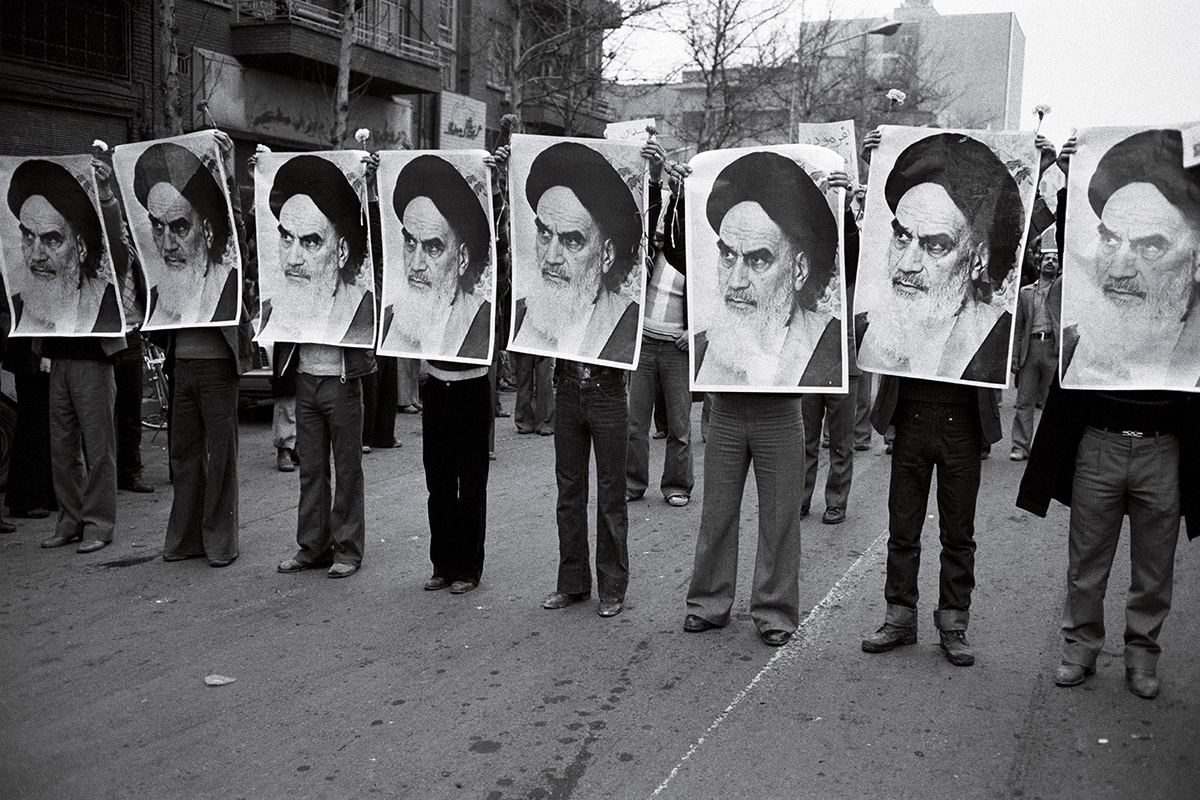

Next month, Ayatollah Khamenei’s theocracy will stage celebrations commemorating 40 years of revolutionary power. It will do so amidst widespread acts of civil disobedience, street protests, labor strikes, and ubiquitous resentment produced by a collapsed economy and grotesque corruption. Even prominent regime insiders are now openly proclaiming the emptiness of the regime’s authority, with critiques resembling late analysis from the Soviet nomenklatura as it was confronted by cascading legitimacy crises manifested by the primordial contradictions of an ideological state.
When the Iranian people rose up against an authoritarian dictator four decades ago, they were rewarded with one of the most politically ruthless and socially backward totalitarian regimes the world has known. Falling for the siren song of populist Islamist rule, they failed to win the justice or the freedoms they had been demanding, and instead lost everything they had taken for granted under secular, modernizing rule: personal liberties, social progress, and economic opportunities that had birthed a middle class. South Korea and other countries economically inferior to Iran before the revolution are now towering over it, despite Iran’s vast oil wealth. Iran, like Venezuela, has fallen precipitously into a wasteland of severe government mismanagement and unaccountability, environmental apocalypse, brain drain, and social malaise. Today, the country is beset by poverty, child exploitation, drug addiction, suicide, prostitution, human trafficking, and a profound lack of trust, the full truth of which no one dares bring to light for fear of deadly repression.
Even before they had managed to unseat the Shah, Iranian revolutionaries—a coalition of leftists and Islamists that ultimately galvanized the masses behind the radical cleric Ayatollah Khomeini—had captured the world’s attention. Ordinary Americans still share memories of Iranian students demonstrating on American college campuses. The irony of US educated Iranians rising up not only against a Shah that gave them scholarships to study abroad but also against “The Great Satan” that had welcomed them into its liberal and democratic society may be lost on American progressives. But it stands in bold relief for a generation of young Iranian liberals who reject a revolution predicated on hatred for America and the West, Israel, modernity, and a free, pluralist conception of the Iranian nation with ancient roots in the egalitarian, secular rule of Cyrus the Great and his declaration of human rights.
 Michael Bonner
Now, Iranian protestors chant the name of Reza Shah, Iran’s early twentieth century nation builder, an authoritarian patriarch who nevertheless restrained the clergy and helped usher in a robust public sphere with a modern judiciary, schools and universities, industry, and urban infrastructure. He was the first Persian monarch in over 1,400 years to worship alongside Jews in the synagogue of Isfahan, a symbolic move that hearkened back to the Persian Empire’s religious freedom. His unveiling of women and his desire to see them educated empowered the nation’s workforce and catalysed a rapid advancement in women’s rights.
Reza Shah was certainly no Jeffersonian democrat. He ruled with an iron fist. But there is no question that the revolutionary tyranny that replaced his son Mohammad Reza Shah has been infinitely worse. Now boasting a “moderate” president, it recently blocked a bill to raise the minimum age of “marriage” for girls from nine to 13. Every night in Iran now, masked men (and even a cleric in broad daylight) brave security forces and cameras to spraypaint Javid Shah (“Long Live the Shah”) on street signs, city walls, and billboards. Acts of civil disobedience like these have arisen amidst an existing campaign by Iranian women who remove the hijab forced on them for the last four decades and post videos of their hopeful defiance to social media.
People in #Iran are asking for the whereabouts of the woman who took off her #hijab to protest the mandatory Islamic dress code using the hashtags #دختر_خیابان_انقلاب_کجاست and #Where_Is_She
She was reportedly arrested shortly after. #IranProtestspic.twitter.com/G6oKHIPA68
— Armin Navabi (@ArminNavabi) January 18, 2018
These, and other personalized acts of resistance toward corrupt clerical rule, have emerged alongside sustained protests against the regime’s totalitarianism by farmers, factory workers, pensioners, truckers, teachers, students, rights advocates, and more. Every day, Iranians’ social media feeds are filled with videos of fresh protests, as the constituency for Iran’s democratic breakthrough expands across the whole of the country, to encompass a full spectrum of employment sectors, lifestyles, and worldviews.
Yet today’s Iranian liberals, unlike the anti-American supporters of the 1979 revolution, are largely ignored in the West. Though their values are no different from those expressed by Solidarity in Poland or the anti-apartheid movement in South Africa, Iranians who yearn for democracy and an open, prosperous society at peace with the world are met with overwhelming indifference from the West’s media and political leaders, not to mention its universities, unions, civic groups, churches, and celebrities—the very people and institutions that historically have lent their empathy, solidarity, and concrete assistance to the cause of freedom across the world.
On the occasions when outlets like the New York Times, for example, deign to cover the country’s disastrous economic mismanagement, they seem reluctant to acknowledge the widespread dissent and labor organizing that it has produced. Nor do they bring much attention to bear on the robust social media scrutiny Iranians exert on the ruling mafia that robs an educated but hungry people to fund its own hedonistic lifestyle and to finance terror abroad, all in the name of God. For years now, self-censorship has been rampant among Tehran-based correspondents and commentators including those filing with prestigious outlets like PBS NewsHour and the Financial Times and other outlets generally assumed to be professional and fair-minded. Even when interviewing regime officials in the safety and freedom of the West, journalists will pander with soft questions and even by donning the hijab, the regime’s most coveted symbol of its power:
And if the attention of a progressive journalist does occasionally linger on Iran’s parlous economic state, it is safe to assume they will find a way to blame the West rather than hold Iran’s own regime accountable for decades of theocratic misrule:
Iranians are as normal as any other people. If Brits rushed to get Irish and EU passports after Brexit, Iranians seeking asylum abroad is just a similar survival tactic in the light of destructive policy of economic strangulation of Iran in the form of sanctions for 40 years.
— Saeed Kamali Dehghan (@SaeedKD) December 31, 2018
Minding the red lines keeps these journalists’ visas and prestigious beats safe from regime interference and disincentivises criticism. Rather than expose regime disinformation, these reporters frequently recycle it in their articles and tweets:
The recent focus on the murder of Khashoggi offers an instructive example. The Iranian regime has bombed and assassinated countless innocents abroad, including former Prime Minister Shahpour Bakhtiar, and it continues to plot foreign assassinations and torture activists in Iranian prisons to death. But Western journalists whose responsibility it is to report on Iran have preferred to turn their attention to the Saudi regime’s horrifying murder of one man, replicating the Iranian regime’s diversionary condemnations of the killing as it escalates its own domestic repression.
Kaveh Shahrooz
Angry Iranians want to know why relatives of high ranking regime officials and former regime officials themselves are granted permission to live in The Great Satan while they are denied entry. Hossein Mousavian, for instance, the regime’s ambassador to Germany during the Mykonos terror attack, is now a fellow at Princeton University and widely cited by the media and think tanks as an Iran expert. But the West’s reporters have not pursued this scandal or others like it, and appear to be content to leave the topic in the purview of the State Department:
Keep reading
How France Lost Control of Its Streets
How to Suppress Men’s Writing
Back to the Dark Ages

Prison or Peer Review
France’s Imaginary Austerity