COVID-19 Science Update for March 29th: Keep Your Voice Down
The latest research on COVID-19 tells us that “the major transmission mechanisms are not fine aerosols but large droplets.”


The latest research on COVID-19 tells us that “the major transmission mechanisms are not fine aerosols but large droplets.”
On an annualized basis, the last three weeks in Lombardy correspond to a regional per-capita death rate of 0.72 percent—or, put another way, the death of one person out of every 140 residents.
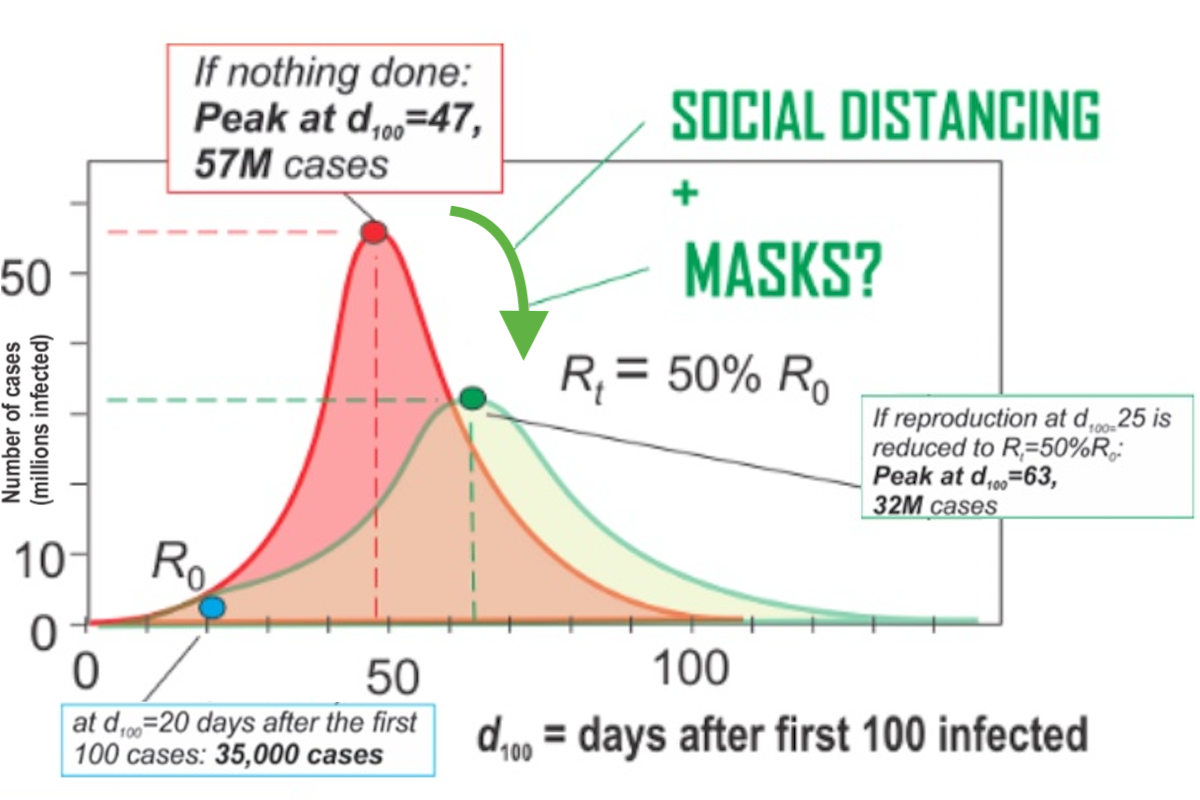
Absent isolation or other precautionary measures, the average socially active COVID-19 infectee will transmit the disease to an average of about 2.4 people. i.e., the R0 value is 2.4. But super-spreaders can spread a disease to dozens or hundreds.
Even if a COVID-19 vaccine were invented tomorrow (it won’t be), our experience with the virus shows how underprepared we are for this kind of public-health emergency.
This clustering phenomenon explains why the COVID-19 policy debate among politicians, doctors, and pundits now has become somewhat surreal, with world-class experts telling us either that we are facing an “apocalypse,” or that the pandemic will fizzle and we’re all “going to be fine.”
The analysis here is complicated, because a massive testing regime doesn’t seem to be a necessary component of COVID-19 suppression.
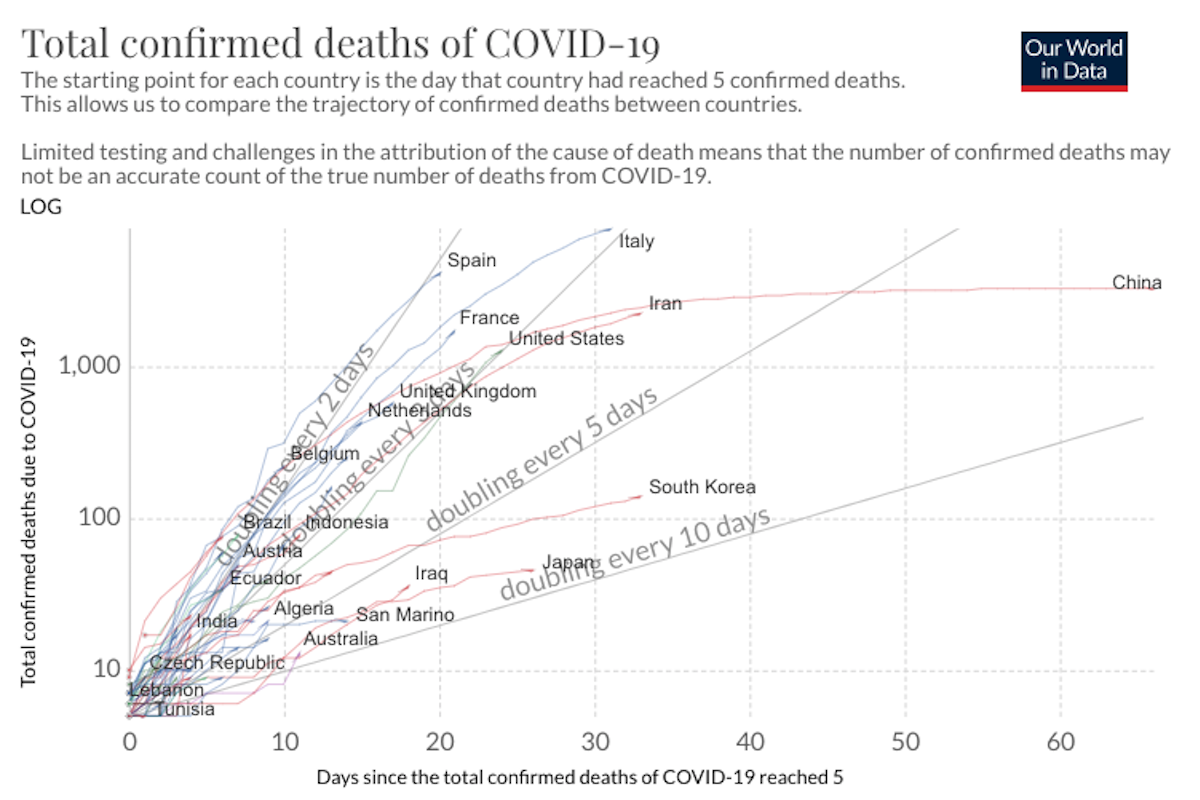
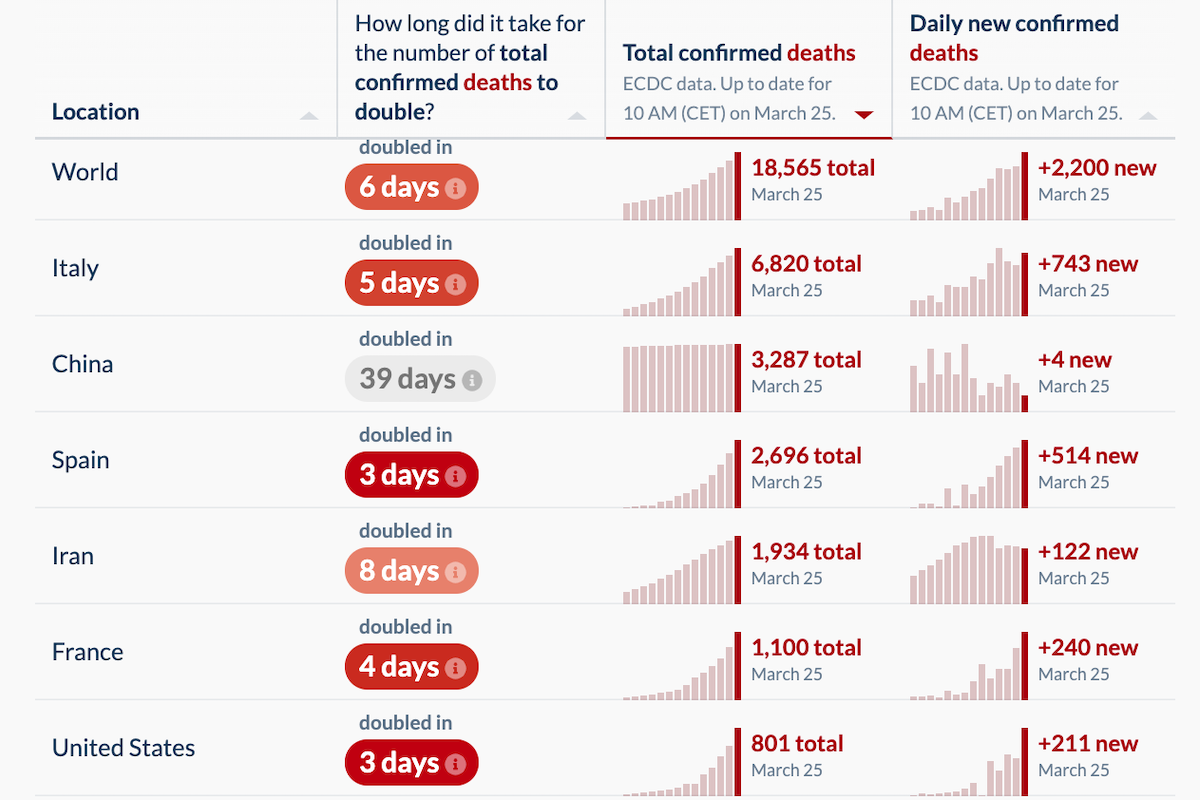
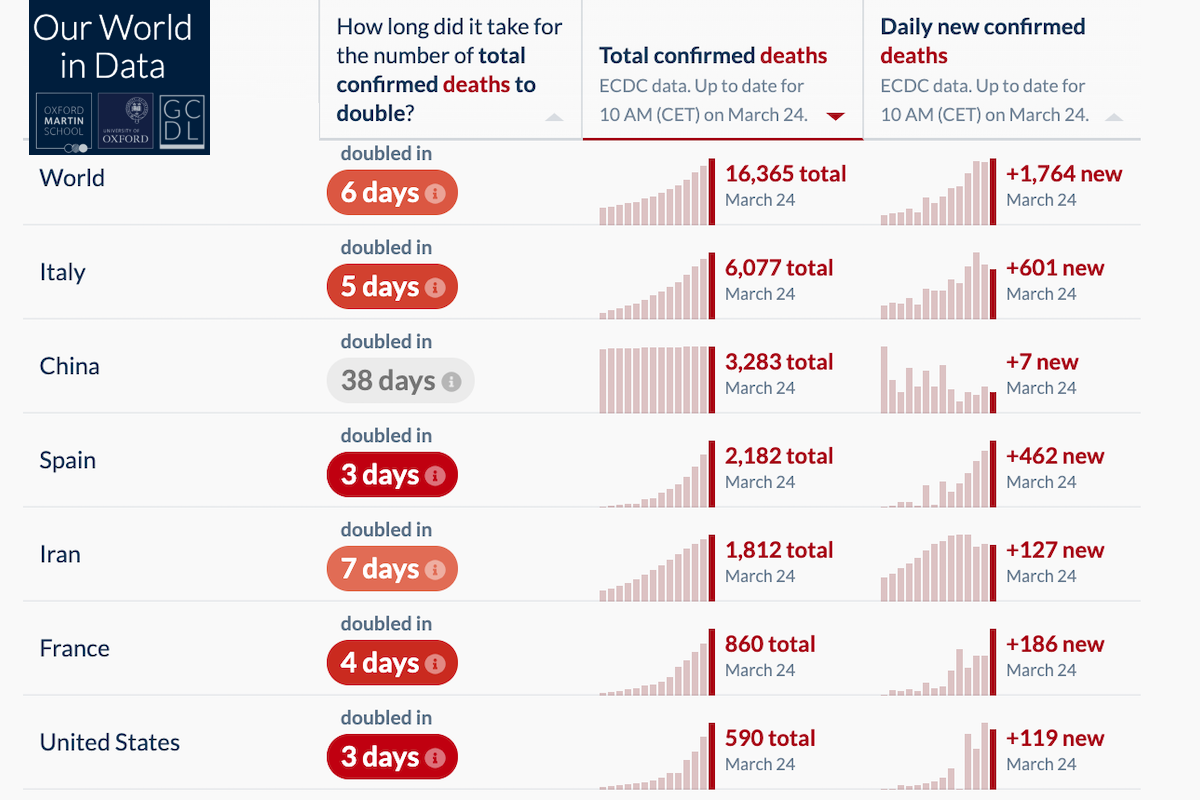
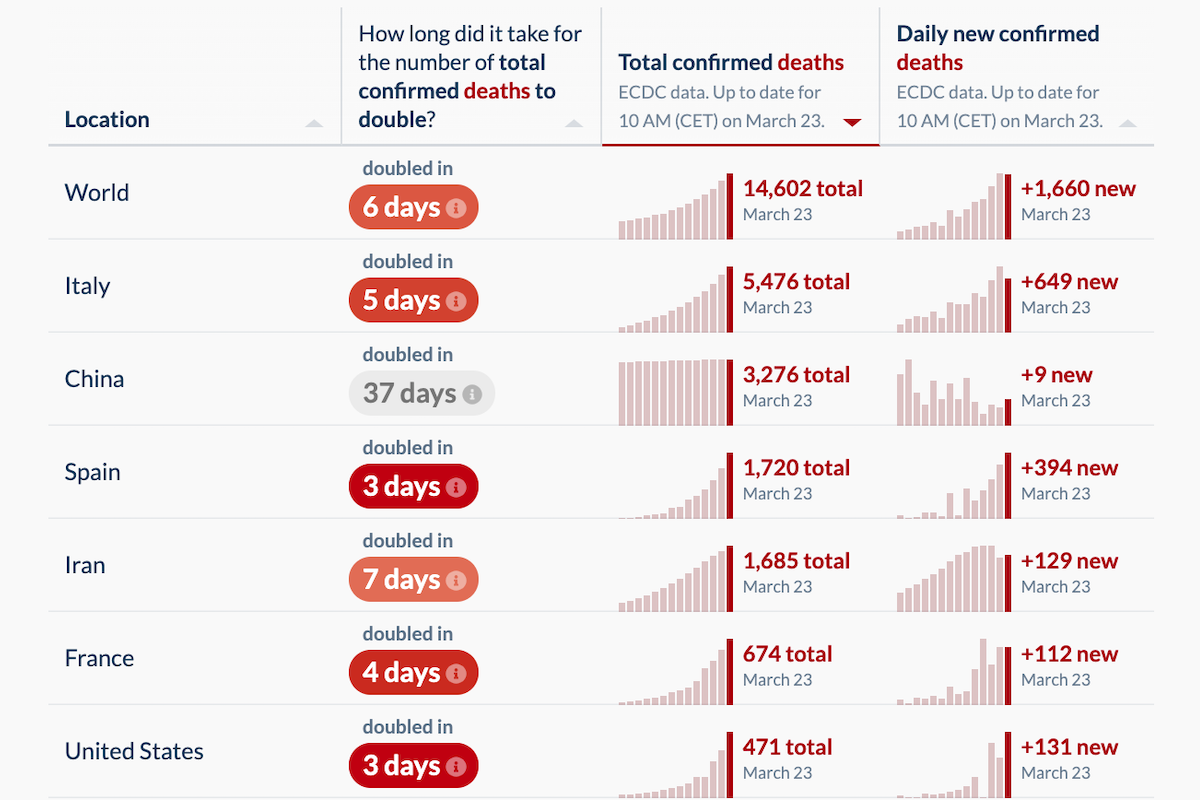
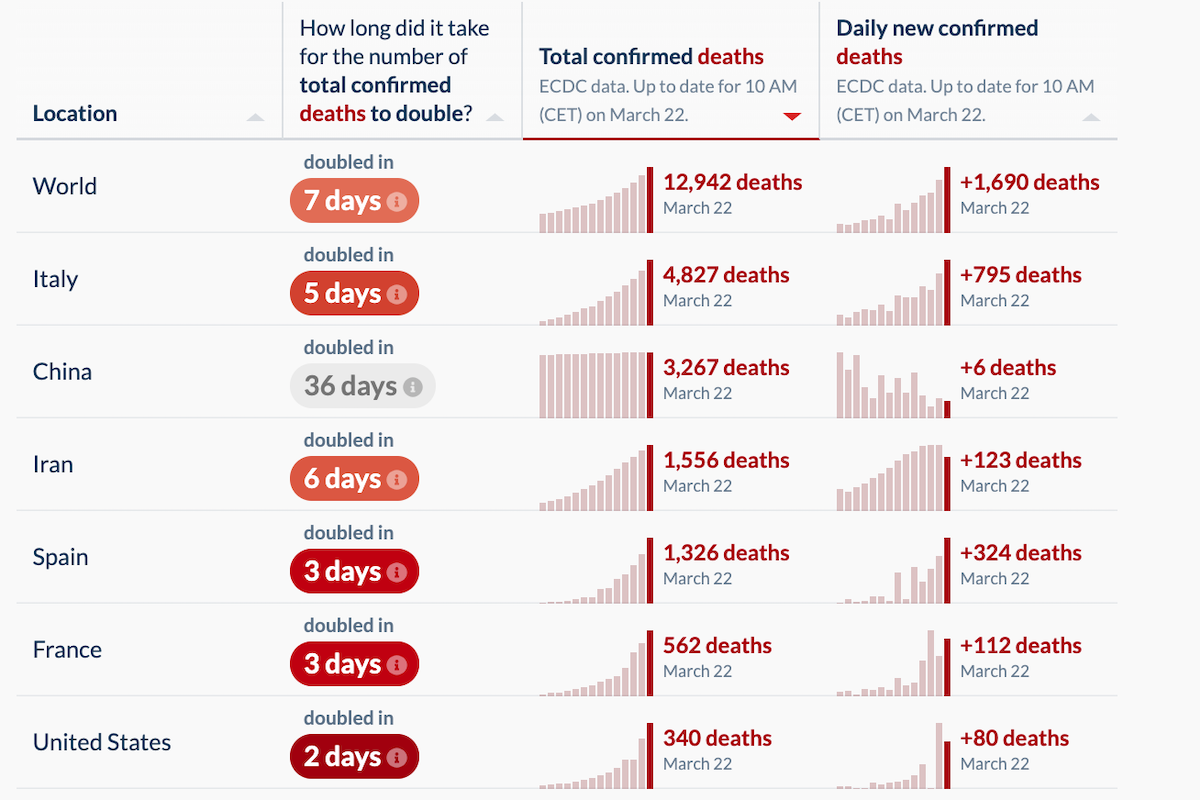
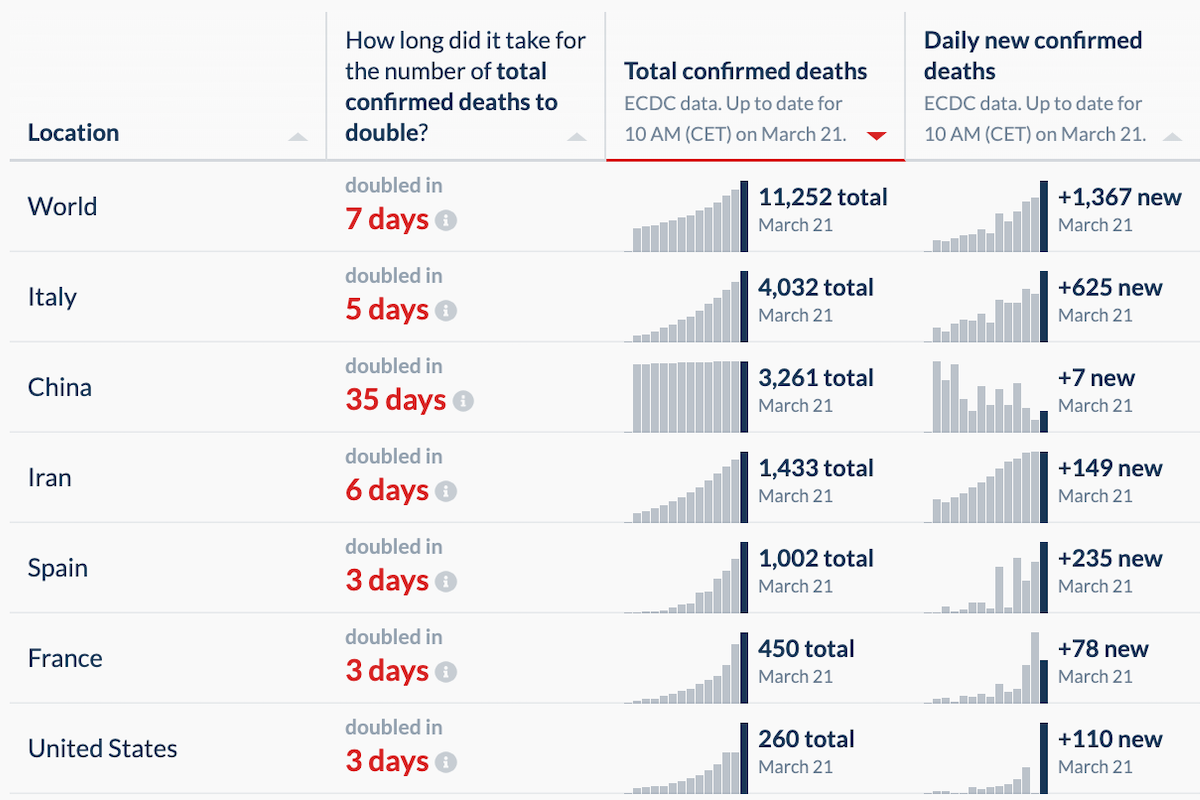
For the first time in a week, the daily number of new global confirmed COVID-19 deaths has dropped—from 1,690 to 1,660. That’s a small drop, but it’s important.
The problem isn’t just the number of ventilators and ICU beds, but also the limited number of staff who can operate such equipment.
There are reports of ventilator shortages, and the possibility of an Italian-style horror show, with doctors deciding whose parents live and whose parents die, seems real.
But what’s now clear is that these strict interventions are necessary both for our health and our economy: Without decisive action, the pandemic will linger on, suffocating our economies week by week amid a climate of fear.
COVID-19 is going to send them crashing through it. And the challenge of how to help them rebuild their lives will be with us long after the pandemic itself has been tamed.
By way of aspirational example, consider the 12th-century case of Hildegard von Bingen‚ whose epic transformation during her own lengthy isolation paved the way to sainthood.