Science / Tech
Myths and Illusions of the Digital Age
The digital revolution is not remaking the world as the industrial one did.
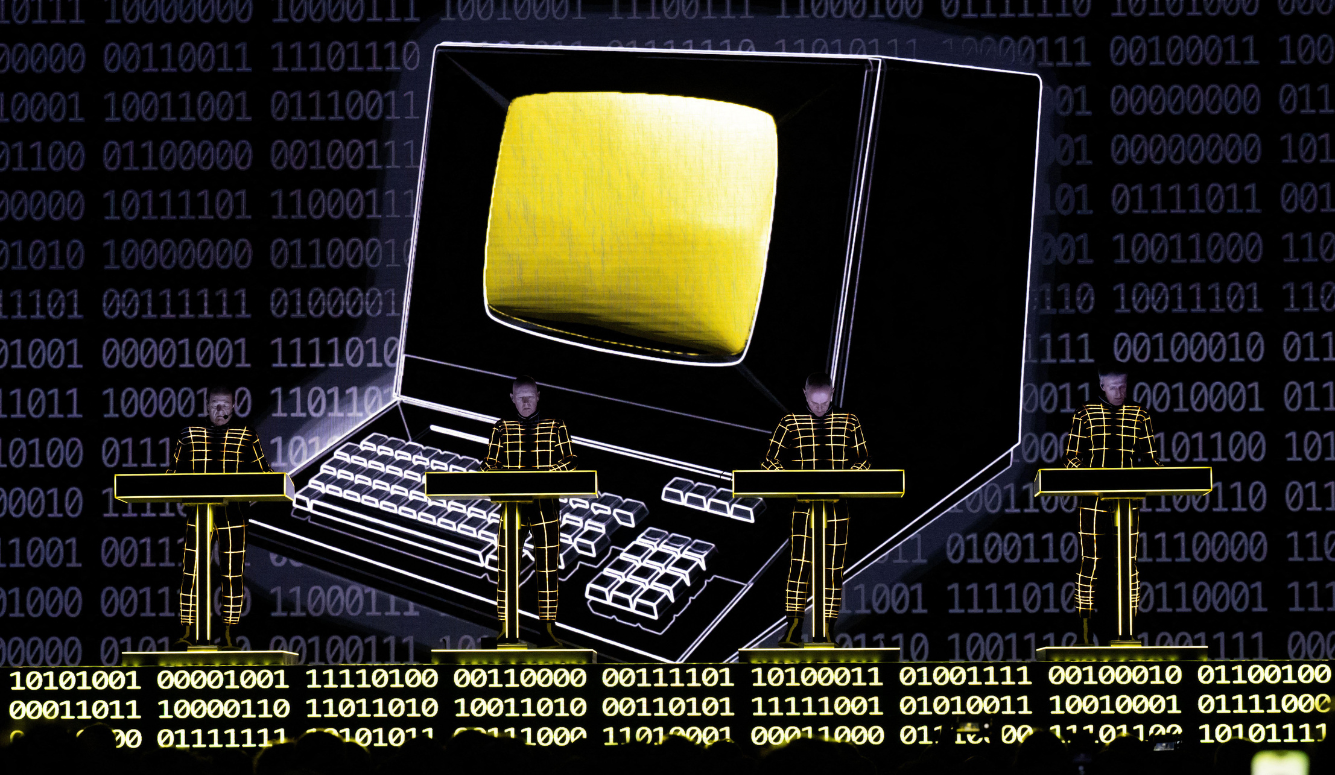

By transforming the way in which information is encoded, communicated, and accessed, the digital revolution has produced rapid and destabilising technological change. This has facilitated large-scale automation in a variety of applications across the global economy. It has also opened up pervasive forums for sharing mass-produced digital content, much of which is now generated by artificial agents. This is having a substantial and often destructive effect on political discourse, social interaction, journalism, scientific research, education, and the arts. The emergence of powerful AI systems in the form of large language models (LLMs) has greatly intensified these processes.
An ongoing debate has been raging between “techno-believers” and “techno-sceptics” about the nature and significance of this change. The believers are subdivided into optimists—who believe that AI could produce a utopia of material wealth, greatly improved health, and social cohesion—and pessimists, who warn of an apocalypse in which superintelligent artificial agents endanger human survival. The sceptics, on the other hand, doubt that AI will have the far-reaching effects that the believers claim it will. They point to the modest economic benefits of the first phase of the internet in the dot-com era of the 1990s, and they regard the AI revolution as restricted in scope, and far more gradual in impact than the absolutists proclaim.
In his interview with Zanny Minton Beddoes, the editor of The Economist, on 20 July, Elon Musk provides an extreme instance of tech-optimist belief. He imagines an economy so abundant that “Money won’t matter in 2036.” This cornucopia will be produced by AI-driven robotics, where AI agents “surpass human intelligence in every domain” within five years. Musk had no serious answers to questions about the nature of the economic system that will sustain production and consumption in this new order. Nor could he give a substantive indication, grounded in the engineering capabilities of current AI and robotic technologies, of how this order will emerge in the brief time frame that his prophecies predict. Setting these difficulties aside, his comments reflect the feverish excitement that infects much discussion of AI these days, particularly among many tech company executives, and the journalists who cover their industries.
The economist Paul Krugman offered a tech-sceptical view of AI in his interview with the Financial Times’ chief economic commentator, Martin Wolf, on 20 June last year. He observes that current and recent AI systems have not had a substantial effect on productivity, nor is he persuaded that they will do so in the near future. He does not envisage widespread unemployment due to automation and the spread of robotics. Instead, he foresees a shift in employment patterns more closely resembling that generated by previous periods of technological innovation.
To evaluate these competing approaches, it is useful to adopt a longer historical perspective that compares the digital revolution with the pre-digital technological change that preceded it. Robert Gordon does pioneering work on this comparison in his comprehensive 2016 study The Rise and Fall of American Growth. Gordon provides an economic history of the dramatic effects on the American standard of living during the second phase of the industrial revolution in the post-Civil War period between 1870 and 1970. He describes in detail the explosion in productivity and the rise of US living standards generated by the inventions of the latter half of the 19th century and the first half of the 20th.
Gordon goes on to track a decline in productivity, and income stagnation for large sections of the American wage-earning population, in the decades after 1970. He attributes this decline to three main factors. The first is the sharp increase in inequality of income distribution, which has produced a steadily widening gap between the proportion of national earning enjoyed by the top one percent of the population, and the rest. The second factor is the reduction in educational achievement in the years following 1970, after a previous century of significant improvement. Finally, he sees the expanding national debt as an increasing drag on investment, both public and private, as it consumes a growing proportion of the country’s GDP.
Gordon regards the century between 1870 and 1970 as unique due to the wave of technological innovations and the attendant rise in the quality of life that these innovations generated. He treats these as sui generis events that have not occurred prior to this period or since. He acknowledges the importance of the digital revolution, but he argues that its impact has been limited, primarily encompassing the communication and entertainment industries.
Gordon’s study is impressive in its historical scope, and in the volume of economic data it considers. It is limited by its exclusive focus on the American economy, and by its appearance several years before the emergence of LLMs and the rise of AI as an economic juggernaut. To better appreciate the implications of Gordon’s study for the current debate between techno believers and sceptics, it is worth adjusting the time periods of comparison to 1850–1950 for the pre-digital industrial revolution, and 1950–2026 for the digital revolution. The first includes the decades when most of the inventions that Gordon cites first appeared. The second starts with the dawn of the computing age and extends into the age of LLMs. It is also important to consider this comparison from an international perspective, rather than a narrowly American view, as these are global issues.
Here is a brief survey, by domain, of some of the major inventions of the 1850–1950 century. It is not intended to be in any sense complete, but it is representative of the seminal innovations of this period.
Agriculture
Keep reading
Jerry Kaplan on AI Doomers

Payback Time for Steven Galloway

War Stories

Life in The Grim Old Days