Books
War Stories
Yonah Jeremy Bob and Elliot Kaufman’s account of the 7 October massacre and its aftermath is a triumph of dogged reporting and shrewd analysis.
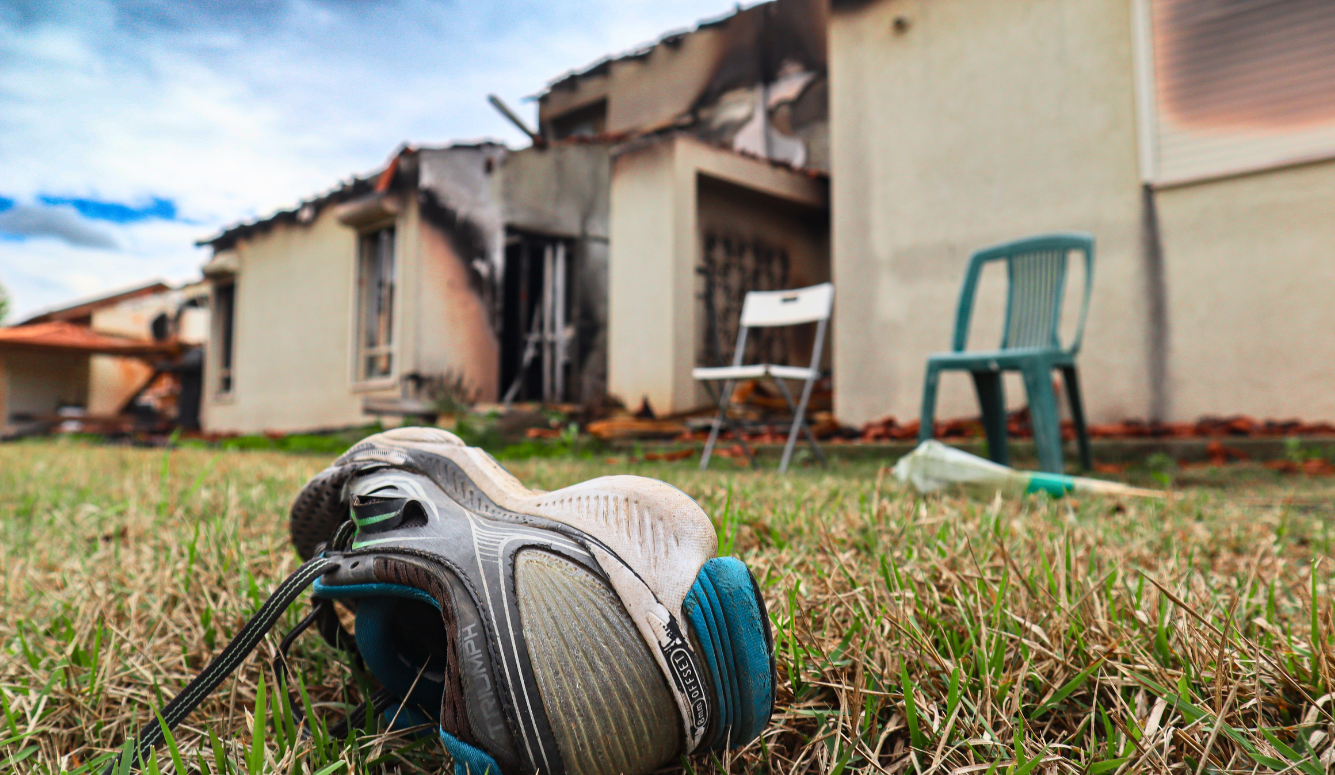

A review of In the War Room: The Inside Story of Israel’s Fight Against Hamas and the Iranian Axis by Yonah Jeremy Bob and Elliot Kaufman; 352 pages; Wicked Son (September 2026)
In early September, the Israeli political scene ignited after two Haaretz journalists reported that the president of the United Arab Emirates had warned Israeli prime minister Benjamin Netanyahu about an imminent Hamas attack ten days before 7 October. The allegation rocketed around an already fraught society preparing for its first election since the most destructive day in Jewish history since the Holocaust.
Netanyahu furiously denied the report and threatened to sue for libel, while the opposition declared it further evidence of the prime minister’s unfitness for office. In the end, though, the alleged UAE warning only underlined the key truth that all Israelis of good faith have come to embrace, three years after that black day: the Hamas invasion resulted from a systematic failure at all military and political levels in the Jewish state, including ground troops and intelligence officers, their immediate superiors, the heads of Israel’s security apparatus, and yes, the prime minister himself. The so-called conceptzia that Hamas had been successfully deterred permeated Israeli strategic doctrine.
This axiom forms the cornerstone of In the War Room, Yonah Jeremy Bob and Elliot Kaufman’s extraordinary investigation of the run-up to 7 October and the response that followed. It is a meticulously sourced and researched study destined to become the definitive English-language account of Israel’s abject failure to prevent Hamas’s brutal attack, and its considerable successes responding to it. Bob and Kaufman—journalists with the Jerusalem Post and the Wall Street Journal, respectively—deliver original reporting and conduct incisive interviews with the key players in Israel and elsewhere, ultimately rendering an unvarnished judgment on them all. (Bob also embeds with Israeli forces in Gaza, Lebanon, and Syria.)
“Israel’s war room,” they write, “was dynamic, which is a polite way to say that it was fractious and unstable, deeply divided on matters of principle and strategy, and torn by political interest and personal animosity.” The war room itself comprised an assemblage of military and political leaders with overlapping but distinct interests, including the prime minister, his strategic affairs minister and trusted adviser Ron Dermer, defence minister Yoav Gallant, and former opposition leaders Benny Gantz and Gadi Eisenkot, both of whom had previously served as IDF chiefs.
But years before that war room coalesced, the 7 October attack was being prepared in Gaza, where Hamas leader Yahya Sinwar patiently and covertly amassed a powerful army on the Israeli border, right under the nose of Israel’s leaders. “Israel misread Hamas,” the authors state flatly. Netanyahu, the Mossad spy agency, the Shin Bet internal security service, and military intelligence all believed the terror group now just wanted stability in Gaza. Human intelligence-gathering in the coastal enclave had ceased a decade earlier, Bibi and the army allowed Qatari cash to flow freely into Hamas’s coffers to prevent its economic collapse, and Israel quelled occasional outbursts of violence with concessions designed to buy quiet.
Keep reading
Gemma Tognini on Australia’s Political Revolt

Rubio in Athens

How France Lost Control of Its Streets
How to Suppress Men’s Writing

Back to the Dark Ages