History
The Left Has a Problem with the American Revolution
Essays in the New Yorker, the NYRB, and the Atlantic make one worry about the kind of nation they might urge the United States to become.
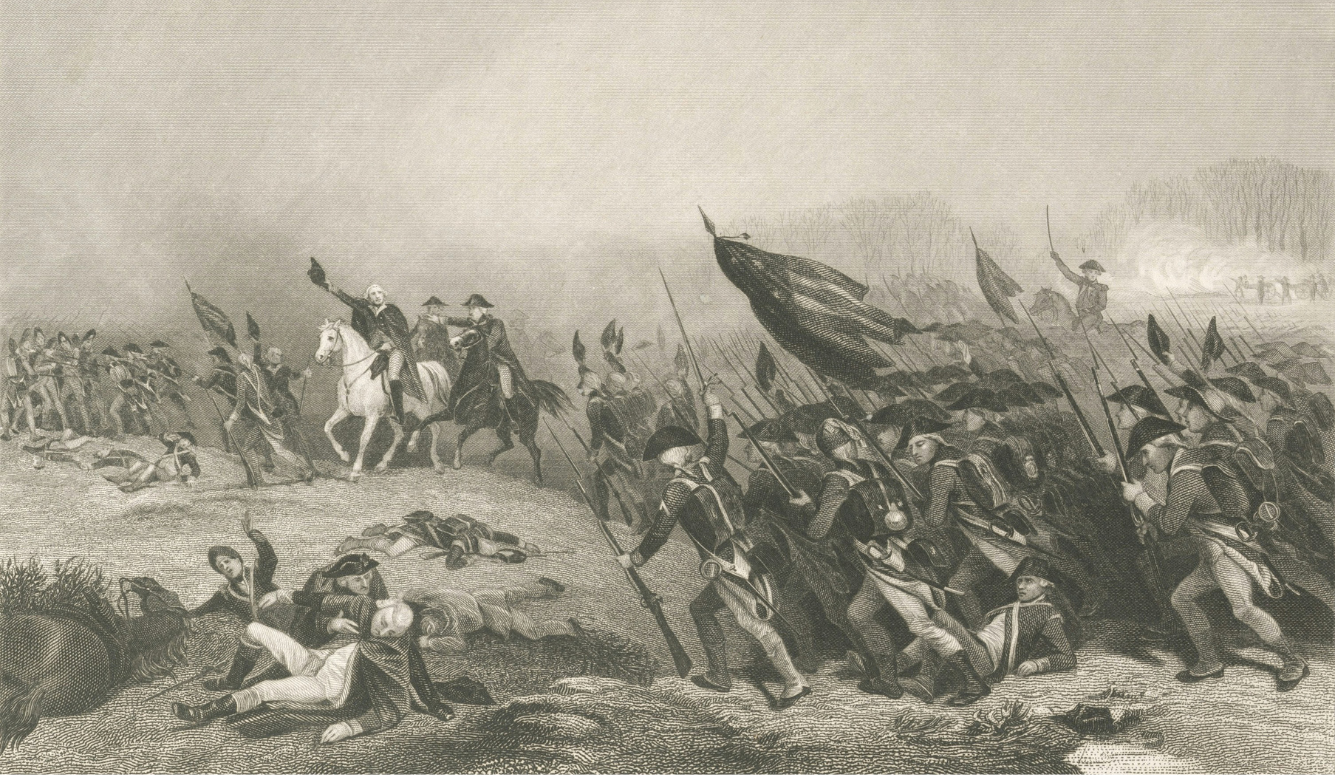

The 250th anniversary of the birth of the United States has come and gone. For the American Left, this milestone was not a cause for celebration. The problem was not just the Trump administration’s skewed and occasionally gross displays of patriotism (e.g. the UFC cage fights staged on the White House lawn on 14 June); it was also the commemoration of the American Revolution itself. Three leading left-liberal magazines—the New York Review of Books, the New Yorker, and the Atlantic—all treated the Revolution as a subject best avoided entirely, or at least cut down to size.
The NYRB’s coverage is the easiest to characterise. The magazine’s five issues from 28 May to 20 August contained not a single essay on the Revolution among its 88 articles. Only two came close. In a review of a book about the 1876 Centennial, Brenda Wineapple remarked, “then as now, not everyone believed that the US had come close to realizing its glorious ideals.” Reviewing two books on the broad subject of America’s national identity, David W. Blight struck an equally sceptical note by beginning his essay with American theologian Reinhold Niebuhr’s judgement that “so many dreams of our nation have been so cruelly refuted by history.” The founding era’s values of freedom and self-governance, with their enduring challenge to social deference, are scarcely mentioned, and in any case, appear to have been doomed by endemic political division and by “the national ruin that may lie ahead.”
The New Yorker ran two substantive book-review essays on the American Revolution. The punctuation at the end of the title of the first (in the print edition), by Daniel Immerwahr, alerted readers to what was to come: “The Shot Heard Round the World?” The article’s subtitle explained: “The American Revolution was just one front in a vast global war. Which went rather well for the Brits.” Online, Immerwahr’s essay was retitled “The American Revolution Wasn’t the Main Event,” and the subhead reads: “Americans have long imagined that they set off a global age of revolt. Seen within the era’s wider wars of empire, the story looks rather different.” The Revolution, in other words, held little global significance, and contrary to the common wisdom of most modern-day Americans, its outcome may have turned out better for the British than for those who formed the new nation. How does Immerwahr defend such a negative perspective?
The thirteen colonies, he argues, weren’t so badly treated, especially compared to other outposts of the 18th-century British Empire. In fact, they took umbrage at British tax increases precisely because they expected to maintain their privileged colonial position. Nor were the colonists any more deeply attached to liberty than the Empire’s other inhabitants, who also undertook occasional rebellions at that time. Indeed, the thirteen colonies weren’t all that important to British fortunes in the first place, which explains why the British more or less let them win by diverting much of their fleet and soldiers to threats to their holdings elsewhere. This version of events, however, ignores the tens of thousands of American men and women who endured hardship and loss—about 25,000 of whom died—over the course of the revolutionary war’s eight long years.
We shouldn’t imagine that the Revolution’s ideas carried much weight either, according to Immerwahr. He quotes Hannah Arendt approvingly, when she wrote “that France’s revolution ‘made world history,’ whereas America’s was ‘of little more than local importance.’” France’s revolution, Immerwahr acknowledges, descended into a populist nightmare, as the revolutionaries “sought to remake their society, executing tens of thousands of those who stood in their way.” Yet when an American leader like John Adams succinctly distinguished what the Americans had accomplished from those horrifying French results, Immerwahr can only observe contemptuously, “The difference between the American and French Revolutions, John Adams huffed, is ‘the difference between right and wrong.’”
“Had that even been a revolution?” Immerwahr asks sardonically of the American war for independence. Few blacks or Native Americans would have thought so, he suggests, neglecting to mention that the Revolution started the new northern states on the road to emancipation. How could that have been the case if personal liberty had really meant so little to the new nation’s citizens? The same goes for the great burst of market-driven economic growth that emerged just a few decades later, setting the United States on a course that would see it eventually outstrip Great Britain in wealth and power. Millions of newcomers were also drawn to the new nation by the very same promises of freedom and opportunity that had originally motivated the rebellious colonists. Immerwahr is too knowledgeable a historian to have overlooked these larger contexts to the Revolution’s significance. He is wilfully missing the forest for the trees. Today, he concludes, the Revolution looks “less transcendent, more scuffed by historical forces. Maybe that’s all right. … One could be forgiven, these days, for wishing that the United States were a little less central in world affairs. That its inhabitants were one people among many, just like everyone else.”
Keep reading
Jerry Kaplan on AI Doomers


Payback Time for Steven Galloway

War Stories

Life in The Grim Old Days