CanLit
Payback Time for Steven Galloway
As the former UBC professor exacts apologies and legal settlements from his accusers, Brad Cran offers a personal account of the collateral damage that the decade-long saga inflicted on the Canadian literary community.
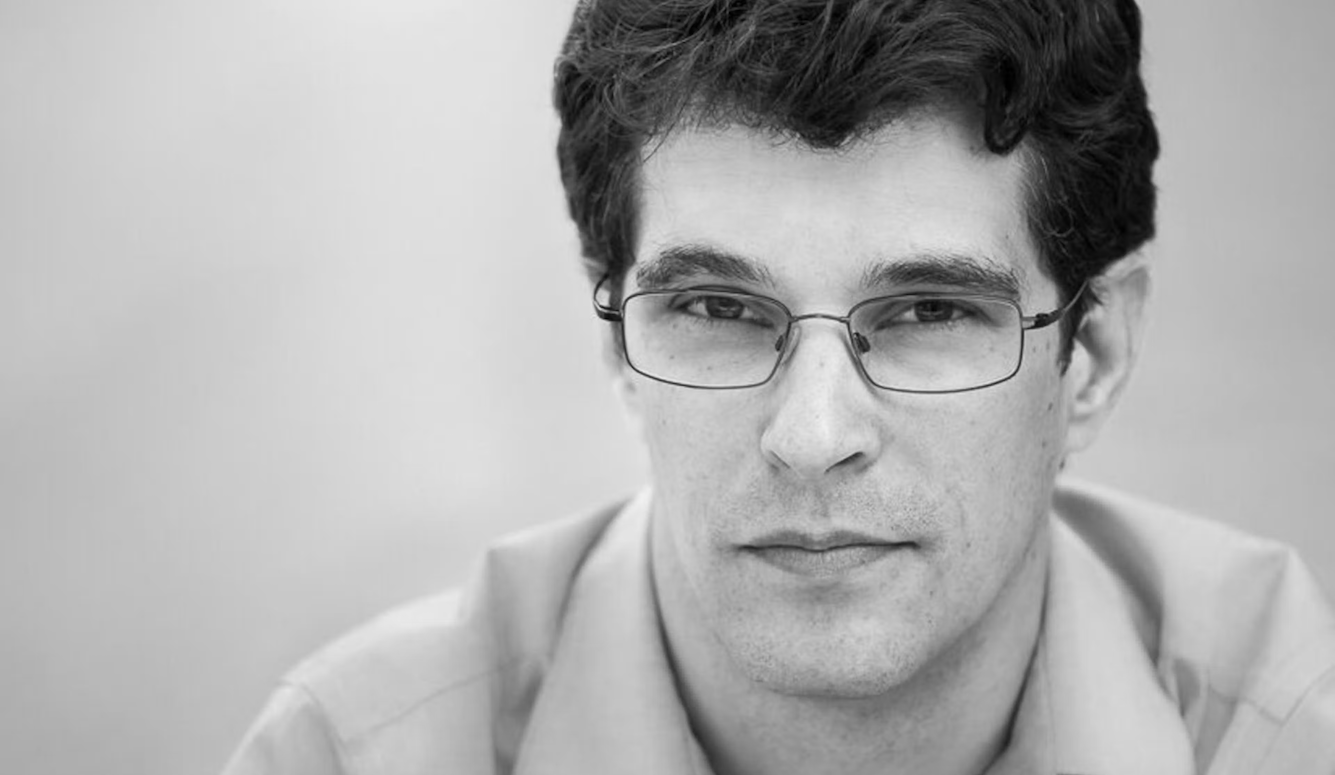

On 21 June 2018, I published an article at Quillette titled A Literary Inquisition—How Steven Galloway Was Smeared as a Rapist. It told the story of how Galloway—the bestselling Canadian author of The Cellist of Sarajevo, who then ran the Creative Writing program at the University of British Columbia (UBC)—had been condemned as a sex criminal by his UBC colleagues and a small group of former students in late 2015. I also described how his accusers continued to repeat these accusations publicly in 2016 and thereafter, even as the case against the former star professor fell apart. At the high point of the campus social panic, it was claimed that as many as nineteen other women had complaints against Galloway.
 Brad Cran
In fact, an investigation conducted by a former B.C. Supreme Court justice found that the only serious allegations against him originated with one woman: a middle-aged student in the Creative Writing program identified in court documents as “A.B.,” with whom Galloway once had a consensual affair. The investigator described these allegations as unsubstantiated.
Notwithstanding these findings, UBC found a pretext to fire Galloway anyway (more on this below). But even before any investigation was commissioned, the university disgraced itself by inviting the public to view Galloway as a menace to women.
A (since deleted) 18 November 2015 UBC memo announcing his suspension, written by Dean of Arts Gage Averill, indicated that Galloway was the subject of “serious allegations,” while giving no hint of what they were. But the very fact that the school was putting out a public alert suggested it was something dangerous.
Averill added that UBC’s priority was “attending to the safety, health, and well-being of all members of our community,” an ominous reference that wasn’t lost on the local media.
Since 2018, Galloway has been fighting to win back his reputation through legal channels. Several defendants have chosen to settle, and nine have published apologies, which are catalogued at gallowayapologies.com. This week, Galloway’s defamation case against four others—including A.B. herself—began in B.C. Supreme Court. It’s a remarkable denouement for the legion of literary figures who not only imagined that Galloway was a rapist, but also proved willing to tear the Canadian writing community apart in a bid to punish anyone who dared suggest otherwise.
Jonathan Kay
Two weeks before my 2018 article ran, an arbitrator had ordered UBC to pay Galloway C$167,000 in damages for violating his privacy and harming his reputation. The writer A.H. Reaume, who by then had emerged as a mid-level ideological enforcer in the collective CanLit campaign against A.B.’s doubters, responded to this development by tweeting, “Some people will take today’s news as proof of something. I won’t. I hope you won’t either. I believe women.”
Then she added, “If anyone in Vancouver needs a safe place to digest this news, DM me. I will organise something at my place this weekend if there is a need.”
I quote Reaume here not because there was anything exceptional about her comment, but rather because it was typical of the sentiment being expressed by a certain kind of ideologically orthodox late-2010s CanLit Twitter activist: Every step Galloway took to restore his rights and reputation was greeted as a collective trauma inflicted on womankind. When none other than Margaret Atwood added her voice to those seeking due process for Galloway, she was reviled as a “bad feminist.”
Here is the @rak_dr “gloves are off” poster. It’s unclear if she debated an empty chair or Margaret in effigy. 😂 pic.twitter.com/ntaOIZoeQ7
— Brad Cran (@bradcran) July 7, 2018
This is the overheated milieu into which my 2018 Quillette article landed. While it was greeted with sullen hostility within the tiny fishbowl of CanLit, it went viral among ordinary readers—not only in Canada, but in other parts of the English-speaking world. The backlash against this kind of “cancel-culture” mob was just picking up steam at the time, and readers were both fascinated and horrified by this Salem-witch-trials-like story of a celebrated world-class Canadian writer suddenly being denounced as a dangerous rapist by an entire national literary community.
Crucially, I reported in detail on the otherwise confidential investigation conducted by the aforementioned former B.C. Supreme Court judge, Mary Ellen Boyd. Her evaluation of Galloway’s accusers, which hadn’t yet been made public, was scathing—especially in regard to the confidante of A.B. who was officially deputised by the university administration to dig up dirt on Galloway, a first-time novelist named Chelsea Rooney.
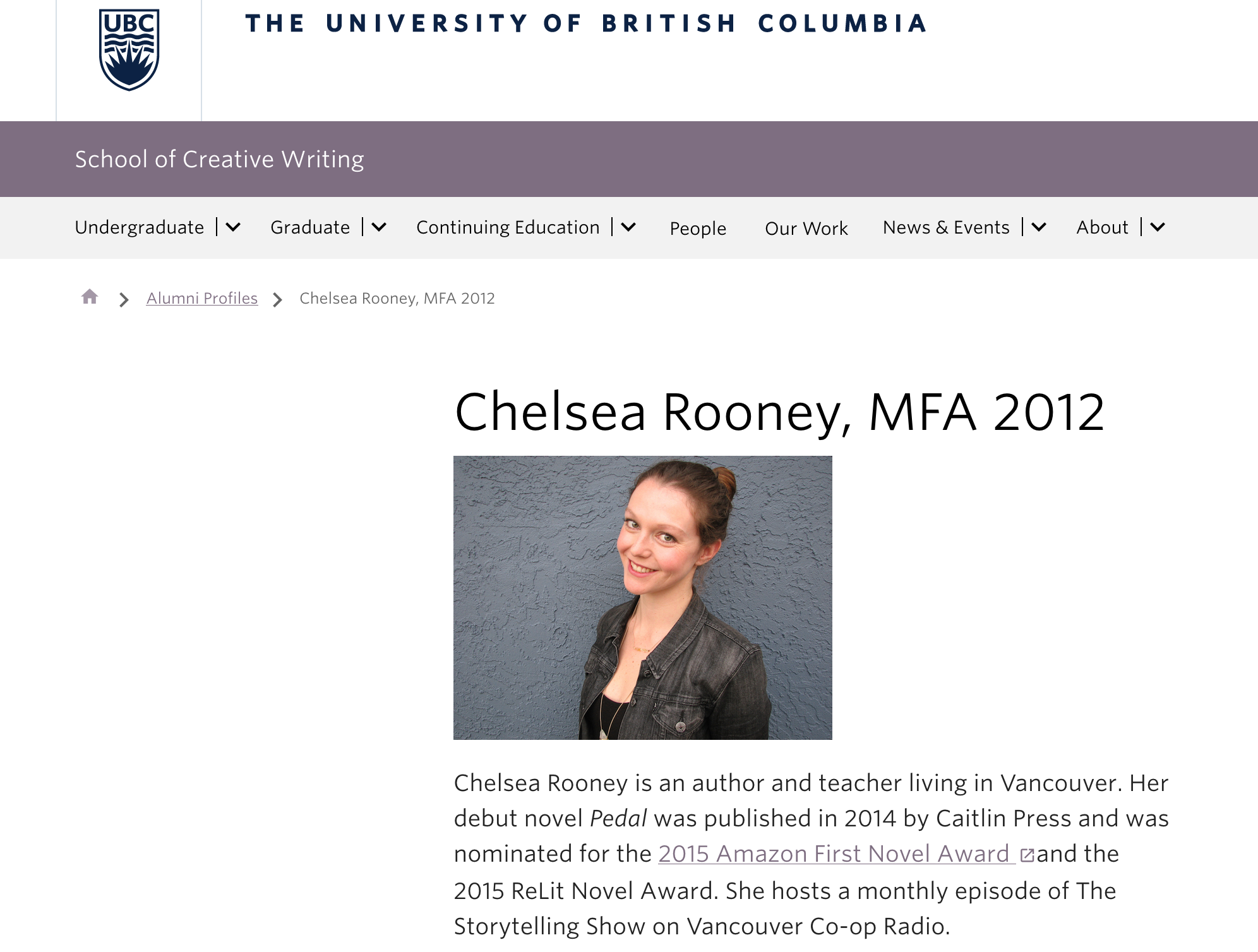
Rooney’s name is now in the news again after all these years, as she’s just published a detailed apology to Galloway. This was done as part of the legal settlement of his claims against her, along with what Galloway calls a “very substantial cash settlement.”
Boyd did make one negative finding against Galloway in her 2016 report: that he had breached UBC’s policies on discrimination and harassment. She concluded that over several months in late 2010 and early 2011, before he and A.B. commenced their affair, Galloway had made “increasingly inappropriate sexual comments and advances” toward A.B., who was then an undergraduate he taught and advised.
A.B. hadn’t objected at the time. And UBC had no blanket policy forbidding professors from dating students. But Boyd classified the conduct as unwelcome nonetheless, attributing A.B.’s silence to the power differential between professor and student. That, she ruled, was sexual harassment under the school’s policy.
However, the applicable UBC policy requires complaints to be made within a year; whereas A.B.’s came more than four years after the conduct ended. UBC simply waived the deadline for A.B.—and, while they were at it, for every one of the ancillary complainants whom Rooney was trying to recruit.
Rooney’s original claim that she’d found nineteen people to step forward with damning allegations proved to be nonsense. Only eight individuals came forward with complaints. And Boyd determined that none of these had anything to do with alleged sexual harassment or assault. These people had just taken the opportunity to vent about Galloway allegedly being rude or dismissive.
If it sounds like Boyd’s findings didn’t give UBC the grounds they needed to fire Galloway, you’d be right. But by the time UBC officials terminated him, they’d conducted a second process. Having evidently been unsatisfied with Boyd’s largely exculpatory conclusions, they decided that the follow-up would weigh allegations beyond those Boyd had considered.
A month after my article ran, Galloway published his own account of the campaign he’d endured in the National Post, a Toronto-based newspaper. Shortly thereafter, in October 2018, he commenced the defamation suit that, following eight years of stalling tactics from the defendants, began being heard in court on Monday. (The proceedings are open. And yes, I’ll be in attendance.)
UBC responded to these developments with a statement claiming that “the faculty and staff charged with management of this matter were professional and principled in all of their dealings and were guided throughout by the relevant policies and prescribed processes.”
As readers will learn from the material below, this description was farcically inaccurate. And as public relations go, it backfired: The university was later ordered by an arbitrator to pay a further $75,000 over that statement.
Back in 2018, I’d hoped that my Quillette coverage would help educate readers about what happened to Steven Galloway. And it did. But what I did not expect was how much the piece would change my own life.
Keep reading
Payback Time for Steven Galloway
War Stories
Life in The Grim Old Days
In Defence of Academic Standards
Letters to the Editor