Nations of Canada
‘This Country Is But One Scene of Massacre’
In the 31st instalment of ‘Nations of Canada,’ Greg Koabel describes the violent provocations that tipped the St. Lawrence region into all out war in the late 1640s.
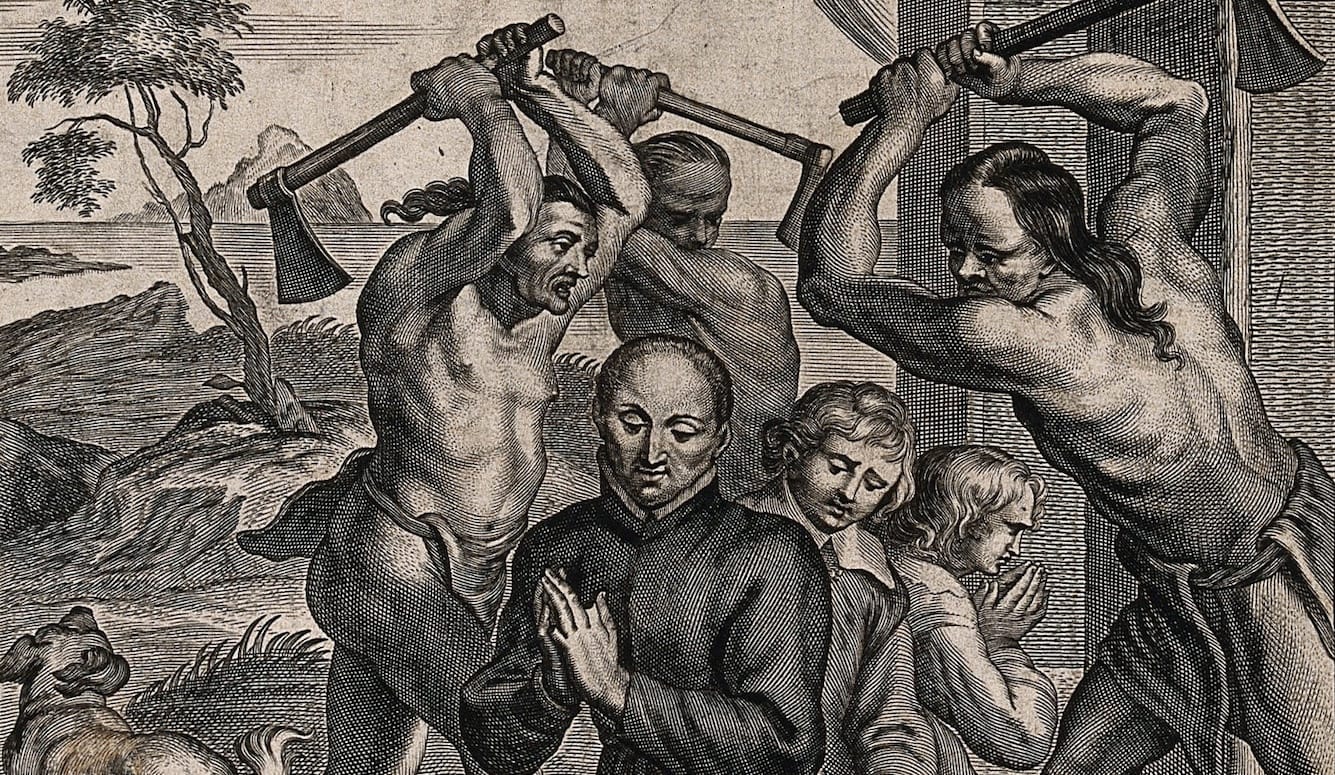

What follows is the 31st instalment of The Nations of Canada, a serialised Quillette project adapted from Greg Koabel’s ongoing podcast of the same name.
In the early 1640s, the Indigenous peoples of the Great Lakes and St. Lawrence region—what we would now call southern Ontario and Quebec—faced overlapping crises, sparked by warfare and European-borne disease. These cataclysms have been detailed in our recent instalments, along with a discussion of the new forms of Indigenous Christianity that emerged during this period.
In the Wendat Confederacy, located near Georgian Bay, the northeastern portion of Lake Huron, the regional upheaval included a conflict with the Haudenosaunee Confederacy to the south. For this community, war and religion were linked in a complicated way: The resident Jesuit priests, and the French military presence that went with them, were seen as necessary to Wendat self-preservation. But the cultural changes these missionaries brought with them inspired a far more ambivalent response. Some Wendat had come to see Christianity as a unifying force in the ongoing conflict, while others (correctly) saw the European faith as a threat to traditional life.
 Greg Koabel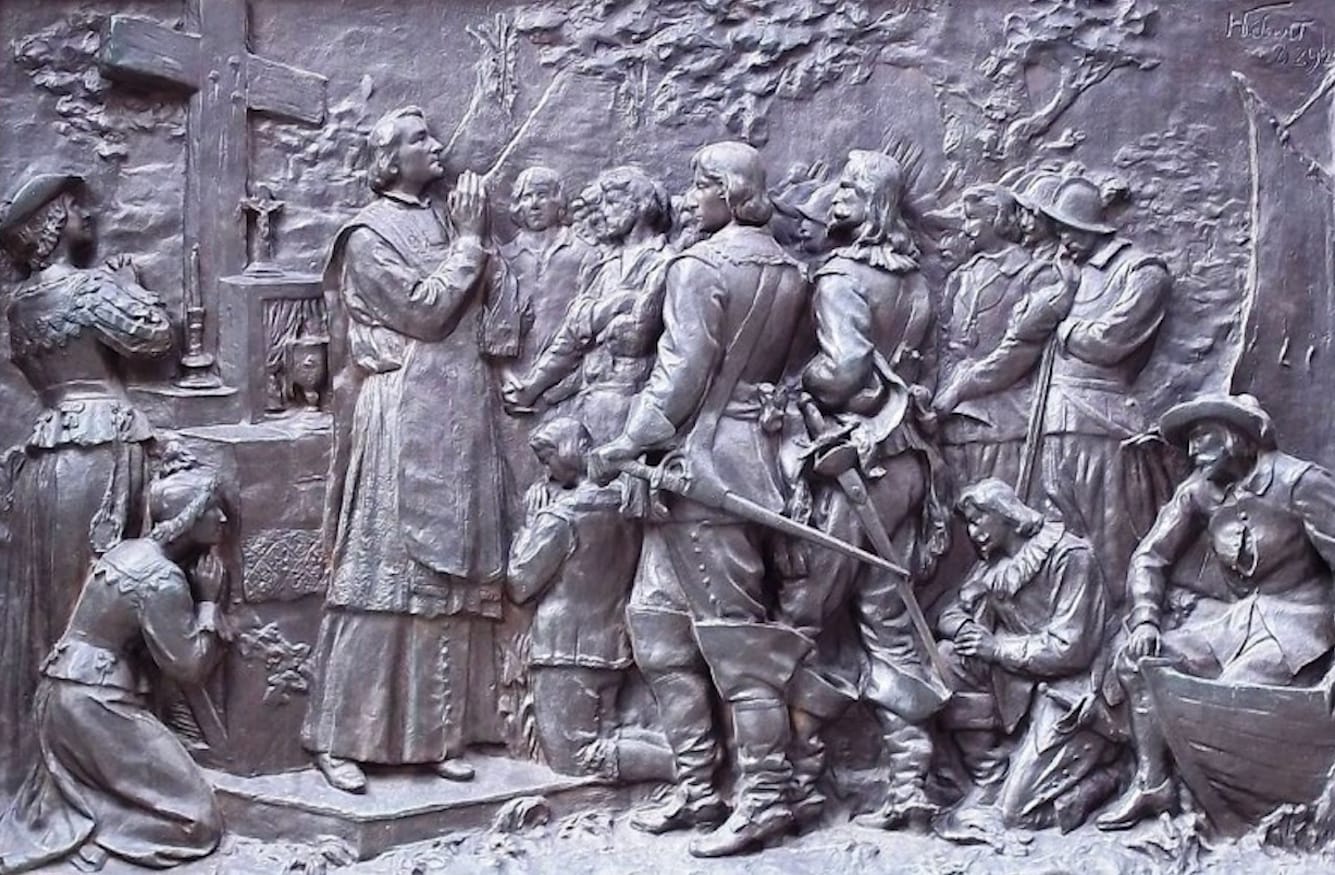
The Algonquin speakers who inhabited the region to the east, within the Ottawa River drainage basin, faced an even greater threat. Unlike the Wendat Confederacy, these smaller groups didn’t have the political institutions capable of addressing regional disruptions on this scale. In the past, an Algonquin band that had suffered through a bad year might be able to rely on the support of a neighbouring group with which it had a kinship or marriage connection. But the sustained suffering now being endured went far beyond that.
Many extended Algonquin family groups lost so many members that they became demographically unsustainable; and survivors had to attach themselves to other groups, or to newly formed European-style Indigenous settlements, such as the Quebec City satellite community of Sillery. New identities were being formed out of the traumatic collapse of the old world, a development that would have significant consequences for broader North American geopolitics.
Keep reading
Jerry Kaplan on AI Doomers
Payback Time for Steven Galloway
War Stories
Life in The Grim Old Days
In Defence of Academic Standards