Nations of Canada
A Tale of Two Settlements
In the 29th instalment of ‘Nations of Canada,’ Greg Koabel describes the birth of Montreal in 1642; and the Indigenous town of Sillery, where a new kind of native-born Christianity took root.
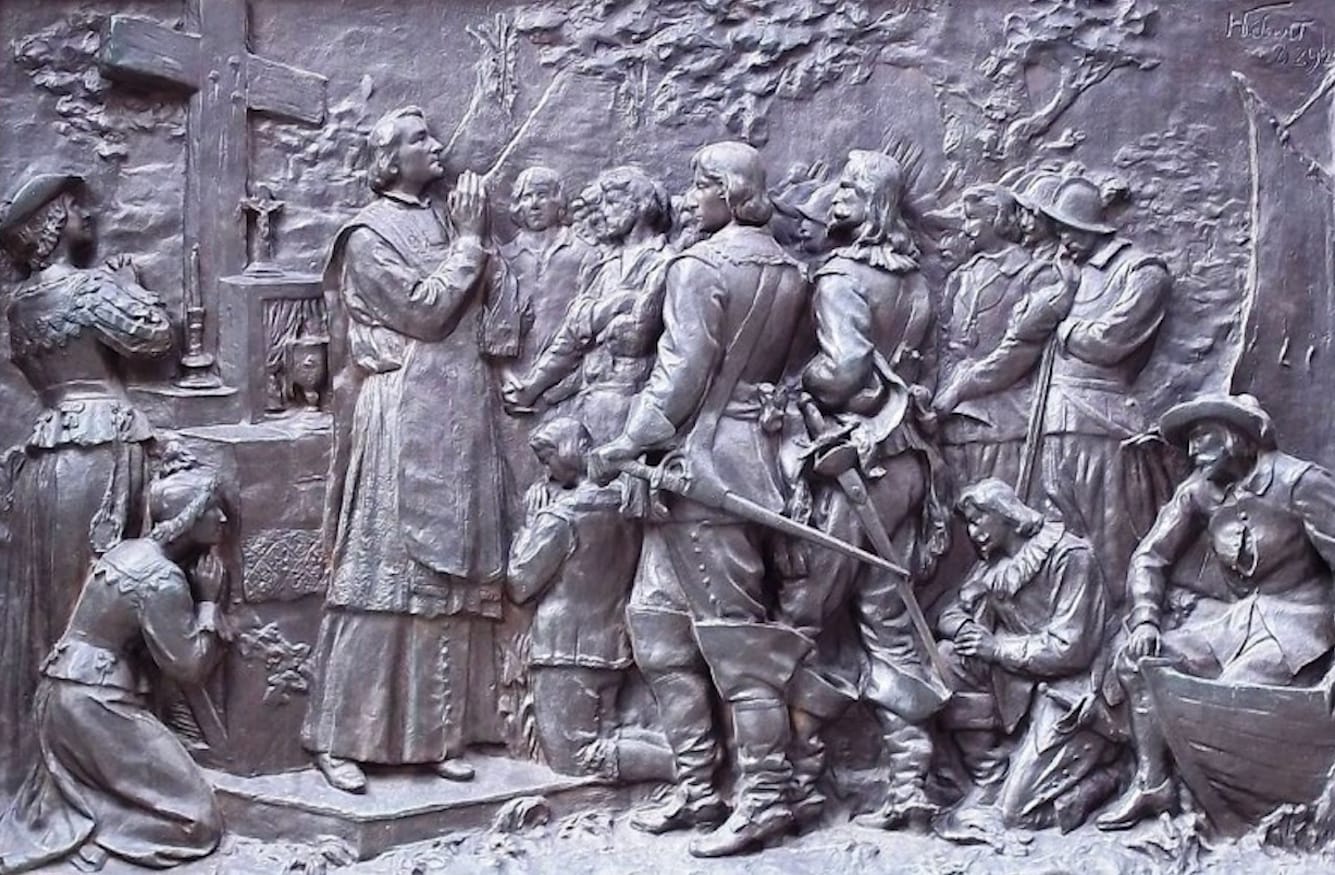

What follows is the twenty-ninth instalment of The Nations of Canada, a serialised Quillette project adapted from Greg Koabel’s ongoing podcast of the same name.
In recent instalments of this series, I’ve made reference to the French settlement at Quebec (which would become modern Quebec City) as having finally transitioned from trading post to colony during the early seventeenth century. This attempt at narrative progression on my part, however, can be misleading. The historical facts on the ground were complex, and defied any definitive categorical description of what the French had built on the St. Lawrence River.
The first real, organized moves toward creating farms around Quebec started in 1634, when an initial wave of settlers arrived in the area, with more following in the following years. Until that point, France’s Quebec economy had been almost entirely centred on fur.
But the numbers were still small at this point. In total, around 200 migrants may have arrived between 1634 and 1640. And even these early arrivals wouldn’t be harvesting crops any time soon: It could take as long as a decade to clear enough forest to establish a self-sufficient family-run farming operation.
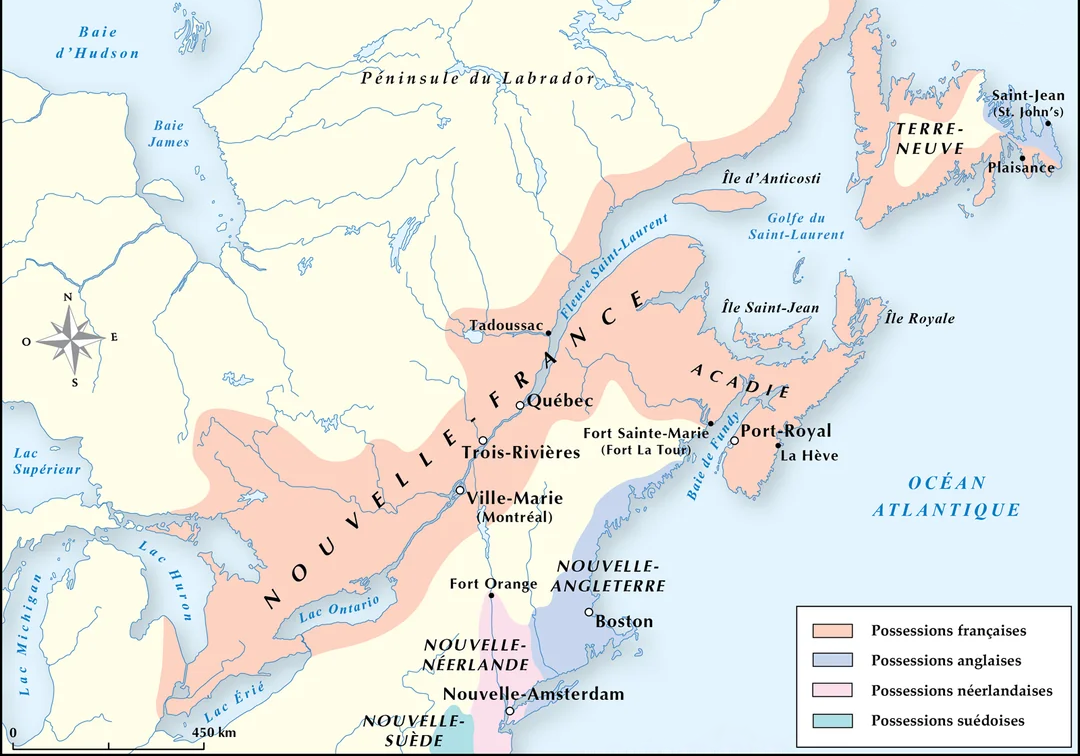
A handful of the new arrivals set up shop at Trois-Rivières, about 120 km halfway upriver, a site where the French traditionally met with Wendat fur traders. But again, it would be quite some time before this turned into anything resembling a thriving agricultural colony. In the meantime, Quebec remained dependent on annual supply runs from Europe—despite the fact that it had, by now, been more than thirty years since Samuel de Champlain established Quebec.
In 1640, when smallpox was ravaging the Wendat homeland of Huronia (in what is now southern Ontario) there were just over 300 Europeans living in French Canada. And about 10% of them were directly involved in the Jesuit mission. The colony was part trading post, part missionary base, and part agricultural settlement, with the farmers coming in a distant third place in terms of importance.
But two significant developments emerged in the late 1630s and early 1640s that would eventually nudge New France toward becoming a fully realized economically productive colony.
The first was the long-envisioned push to incorporate an Indigenous population into the colony.
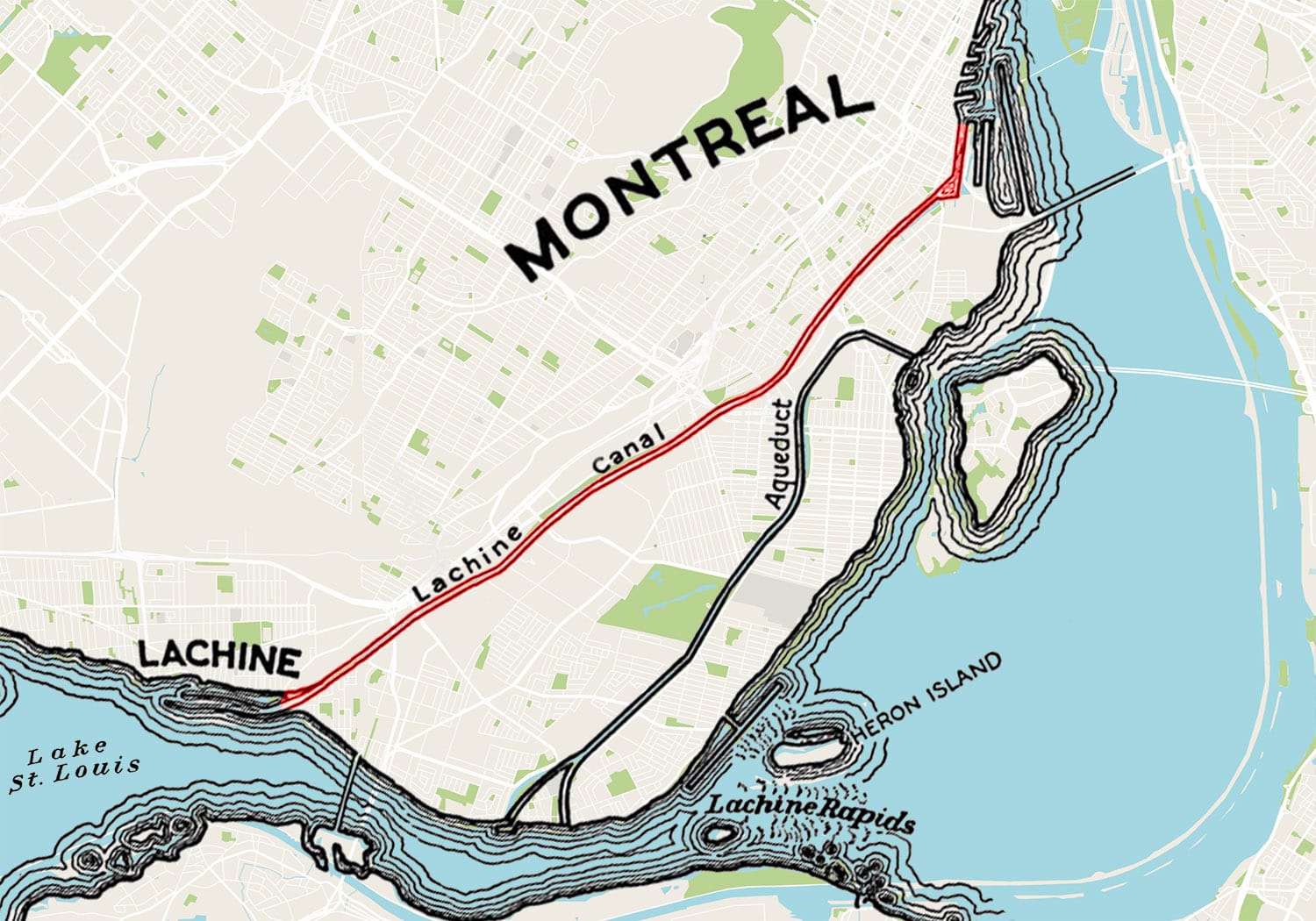
The second came in response to repeated requests from Wendat traders for a permanent French presence at what is today known as the Lachine Rapids—i.e. modern Montreal, where the Ottawa and St. Lawrence Rivers meet—to strengthen security in anticipation of conflict with Haudenosaunee raiders attacking from the south.
The groups driving these two projects were, respectively, Jesuit missionaries looking to spread the word of God, and Indigenous leaders. It’s notable that the royally chartered trading company that supposedly led French operations in the area—the Company of One Hundred Associates, or Compagnie de la Nouvelle-France—wasn’t the proactive party. The Company’s merchants were there to make money, not save souls or set up military bases. And they preferred to have the local Indigenous population trapping fur for shipment back to Europe, not attending church services or learning farming techniques.
Initial French efforts to attract Indigenous people into settled full-time European-style farming had failed, in part because it was alien to the way of life that the Wendat and other eastern Canadian Indigenous groups had known. But the widespread death and economic collapse wrought by smallpox and other French-borne diseases had made the old way of life unsustainable. In this climate of desperation, some imagined that imitating the Europeans might be their only hope.
 Greg Koabel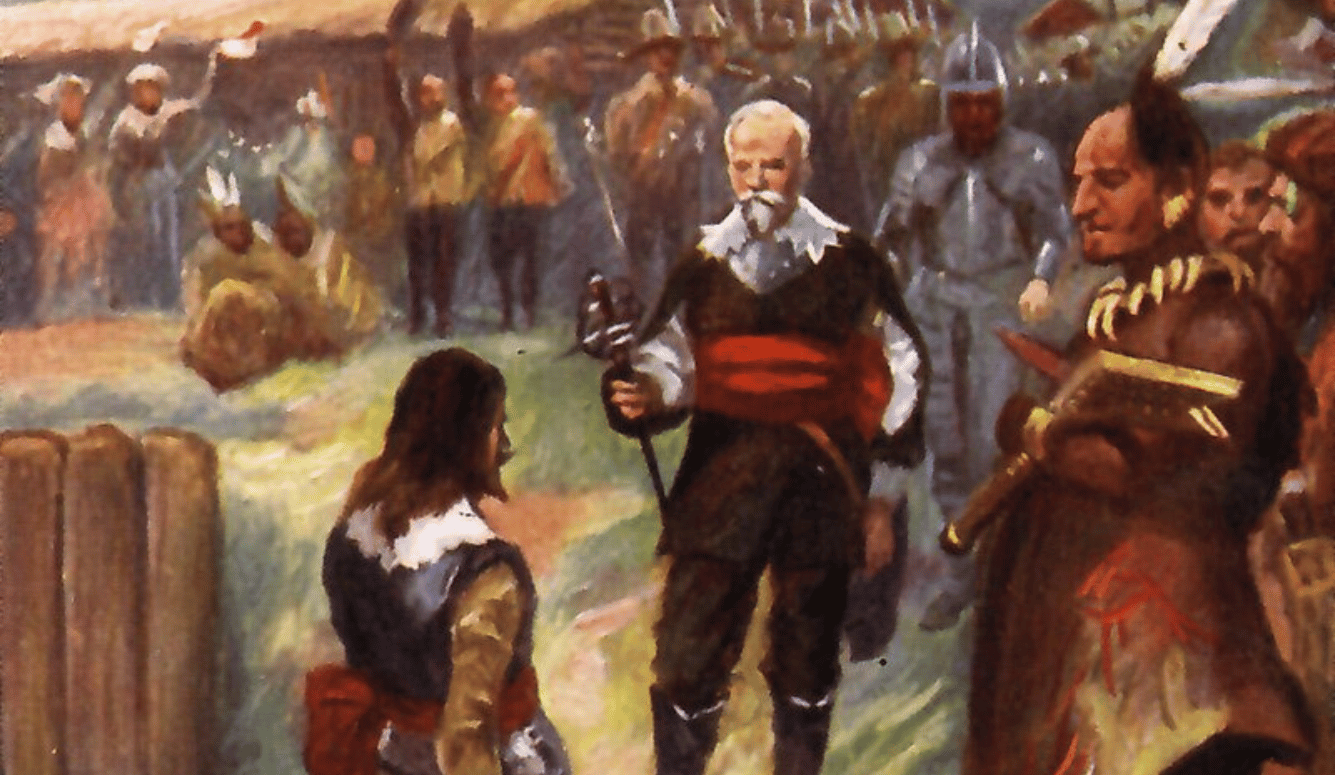
The leader of this movement was an Innu man named Negabamat, who’d settled at Trois-Rivières. During the English assault on Quebec in the 1620s (which we covered back in the 24th instalment), Champlain had reached out to Negabamat’s brother, Chomina, a reliably pro-French voice within Innu politics, to mobilize Innu support against the Anglo invaders. Ultimately, that diplomatic campaign failed, and Chomina himself died during the subsequent English occupation. But Negabamat became a fixture at Trois-Rivières after the French returned, having embraced both Christianity and farming as answers to the crisis his people were facing.
As I’ve noted in the past, however, the European doctrine of cuius regio, eius religio—“whose realm, his religion”—didn’t apply in the Indigenous world, where important decision were made by consensus, not decree. Negabamat made his case at a series of councils held throughout the 1630s , but failed to convince his neighbours. The Indigenous community at Trois-Rivières, which contained exiles from beleaguered disease-stricken communities throughout the region, remained focused on the immediate concerns of survival and security, rather than forging a new kind of society.
Keep reading

The Insight Trap

Cornell and Consent

Robert Lynch on Status, Humour and the Apes We Pretend Not to Be | Quillette Cetera Episode 74

The Radicalisation of Tucker Carlson