Evolution & Human Nature
This Is the Way the World Ends
Sex is declining because the options seem endless. This is counter-intuitive, but biologically it makes sense.
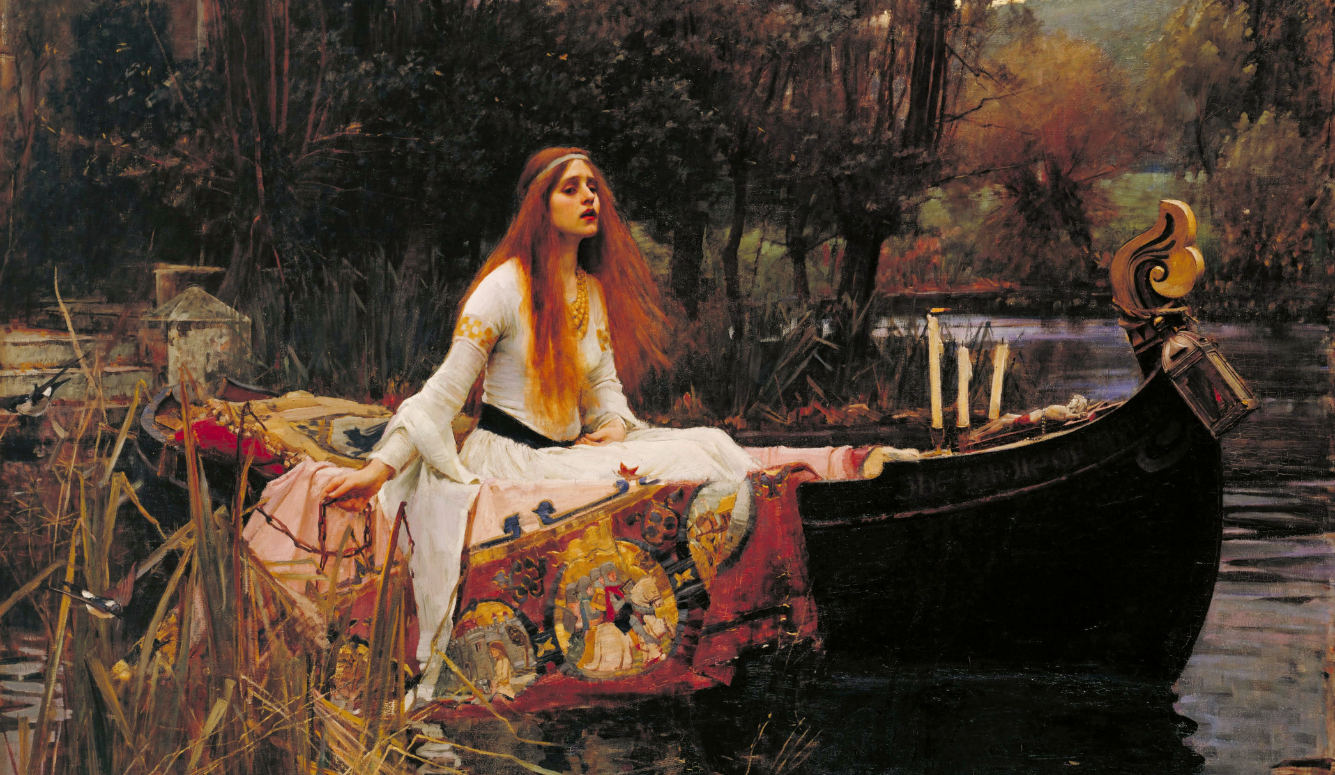

A review of Sextinction: The Decline of Sex and the Future of Intimacy by Debra Soh; 336 pages; Threshold Editions, New York (February 2026)
Indulge me by considering a painting for a minute. The Lady of Shalott, by the Pre-Raphaelite John William Waterhouse, is one of the most beloved works in Tate Britain. Few people know the curiously up-to-date fable it depicts. It illustrates the Tennyson poem of the same name, and features some of the favourite themes of the Victorians: beautiful consumptive women going to their watery graves in magical landscapes.
But why is Elaine of Astolat, as the lady is more properly known, dying? (Those three candles signify life, and two are already snuffed out.) And why is she dragging what appears to be an old carpet around in her boat?
She is under a curse. Forbidden to look at the world directly, she has been magically commanded to see it only in a mirror opposite the window of her tower—you knew there would be a tower, didn't you?—and she has spent her whole life copying that mirror world onto an enormous tapestry, the "carpet" now lying in the boat with her. Then she caught sight of the irresistible Sir Launcelot, presumably fresh from ruining the married life of King Arthur and Queen Guinevere—the man was a romantic menace—and felt compelled to look out of the window into raw reality for the first time. The mirror cracked. The curse fell.
So the painting depicts a tragically isolated woman, burdened with a thoroughly distorted view of the world, unable to survive contact with reality when love strikes for real, and doomed to die alone.
Which brings me neatly to the matter of modern dating. Or rather, the stark lack of dating, or sex, or babies.
Debra Soh's Sextinction takes on the reproduction crisis by way of the sex drought, and for the most part it does a good job. Soh is a scientist who understands both the field and how to weigh up evidence, and she writes engagingly and entertainingly. Most of her claims—although, tellingly, not all, and we will come to that presently—have checkable footnote back-ups, though the lack of an index is mildly irritating. Female relationships and reproductive delusions, at least as detached from reality as Lady Elaine's, loom large in the book, as do male delusions. But with women being the sexual gatekeepers in our species, their recent parting of company with reality by way of the internet matters more. Men's affinity with the realities of sex and babies was always tenuous to start with. Paternity uncertainty exists; maternity uncertainty cannot.
As an overview of modern relationship trends, Sextinction works well. As a prescription for how to turn things around, I found it less satisfying. The patterns of modernity and technology Soh identifies are real enough, but they do not seem to fully account for our current maladies.
The dependency ratio
Before we get to her diagnosis, it is worth being clear about the size of the thing being diagnosed.
Keep reading

The Insight Trap
Cornell and Consent

Robert Lynch on Status, Humour and the Apes We Pretend Not to Be | Quillette Cetera Episode 74
The Radicalisation of Tucker Carlson