Art & Culture
The Truth Does Not Belong to Eight Billion People
Total disclosure, as Spielberg imagines it, is a beautiful thing to watch. It is also a fantasy.
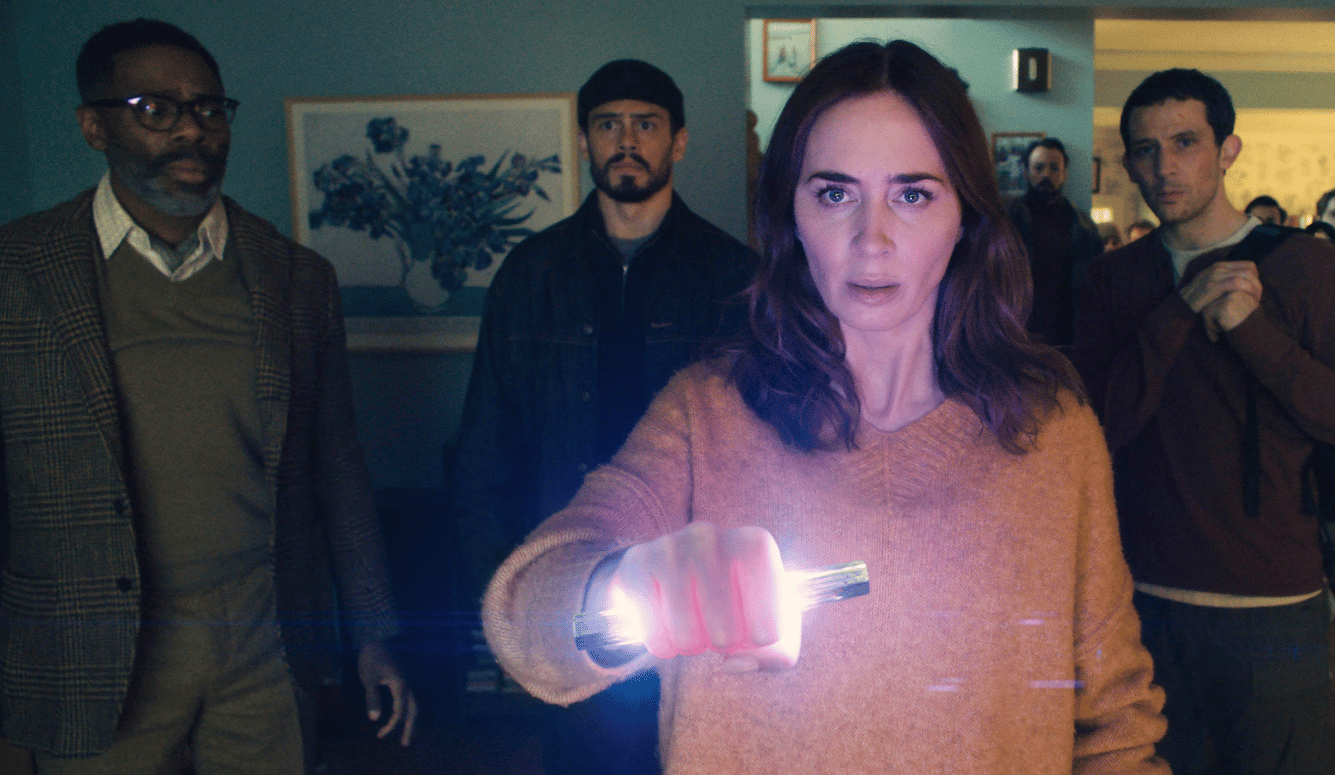

In the climax of Steven Spielberg’s new film, Disclosure Day, a Kansas City weatherwoman played by Emily Blunt seizes control of her local news broadcast and tells eight billion people the truth at once. The aliens are real. The government always knew. Here is the proof. By the time she finishes, a war between nuclear powers has gone quiet, strangers are weeping in the street, and a lifelong cynic has been moved to something like grace. This is total disclosure as Spielberg imagines it, and it is a beautiful thing to watch: clarifying, unifying, almost holy.
It is also a fantasy. You cannot simply deliver the unmediated truth to the whole of humanity and watch comprehension follow as a matter of course. That conceit is not Spielberg’s invention. It is the governing assumption of our actual politics of transparency, which is why the film is worth taking seriously as something more than a summer spectacle. It shows us, in its most flattering light, the thing we keep telling ourselves disclosure will do. Watch closely enough and you can see why it never does.
Keep reading
Jerry Kaplan on AI Doomers

Payback Time for Steven Galloway

War Stories

Life in The Grim Old Days

In Defence of Academic Standards