Iran
The Battle for the Strait
After the failure of ceasefire talks in Islamabad, the United States remains at war with Iran and Trump’s priority is to liberate the Strait of Hormuz for international shipping.
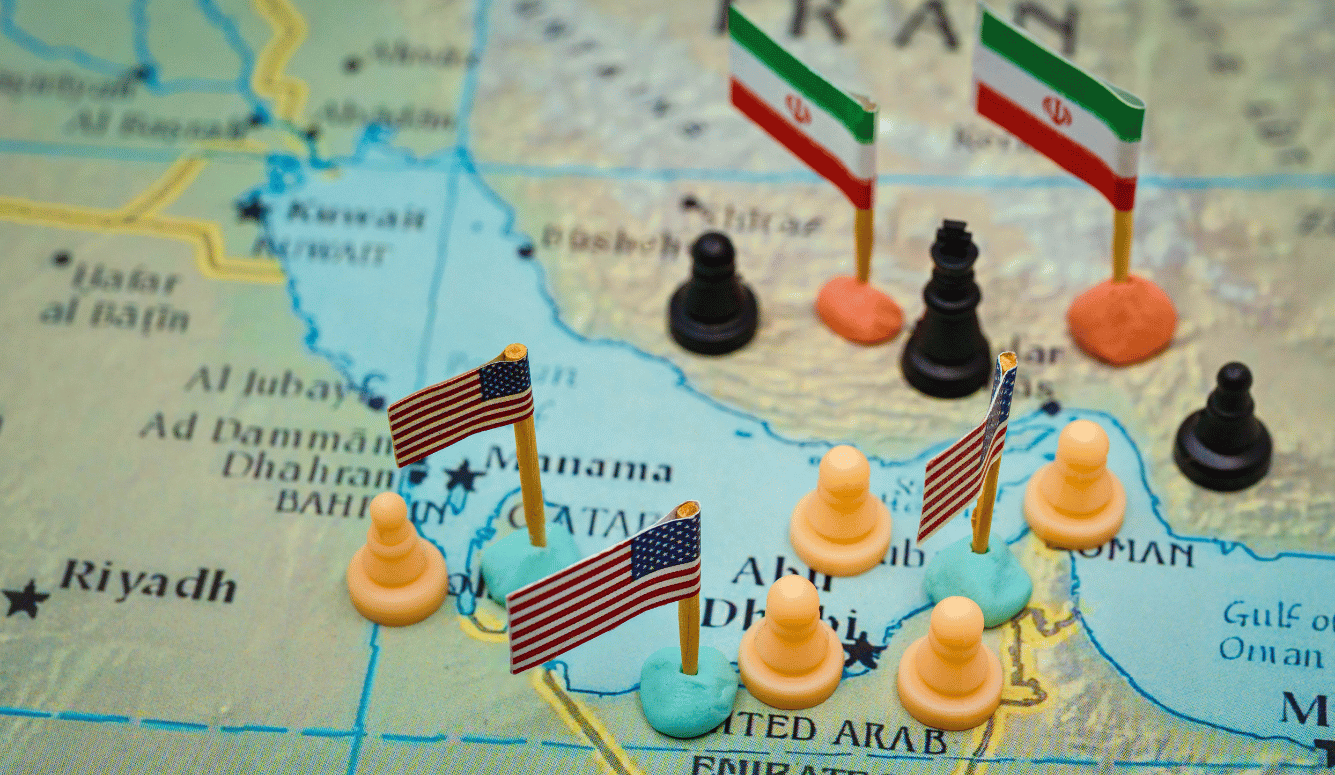

This week’s Economist defined the current two-week ceasefire in the American/Israeli–Iranian war that began on 28 February as a “whimper”—and if the hostilities have indeed permanently ended in a compromise that leaves Tehran’s Islamist regime in power, the Iranian nuclear program alive, and the Strait of Hormuz under the ayatollahs’ control then that is an apt description.
On 1 April, Donald Trump threatened to create a cataclysmic “bang,” “blasting Iran into oblivion and back to the Stone Ages!!!” and on the morning of 7 April, he fulminated on Truth Social that “a whole civilization will die tonight.” Then, just before midnight in Washington DC that same day, to the surprise of many, the American president agreed to halt the American and Israeli bombing campaign in exchange for a vague Iranian promise to reopen the strait, which Iran had blockaded with missiles, drones, and mines. The strait is crucial to the world energy market, as some twenty per cent of the planet’s oil and gas imports pass through it and its closure over the past few weeks has caused a major global surge in oil and gas prices.
Meanwhile, the shooting war between Israel and the Lebanese Islamist militia, Hezbollah—Iran’s main Middle Eastern proxy—continues unabated. Hezbollah rockets and drones have been relentlessly striking Israel’s northern border settlements and IDF positions, while Israeli jets have been bombing targets in Hezbollah strongholds in southern Lebanon, Beirut, and Lebanon’s eastern Beqaa Valley, killing hundreds. The Iranians and the Pakistani peace mediators claim that the ceasefire encompasses the Lebanon–Israel conflict. But Trump and Israel insist that deal does not cover the clashes between Hezbollah and the Jewish state.
While Israeli Prime Minister Benjamin Netanyahu reluctantly agreed to halt Israel’s air war against Iran, mere hours before unleashing a planned assault on that country’s power grid plants and oil-and-gas production installations, most Israeli observers saw Trump’s agreement to cease fire as marking an American–Israeli defeat.
The Israeli–American air campaign, which included some 21,000 strikes on Iran’s military and paramilitary formations and installations, as well as its military-industrial production facilities, especially of ballistic missiles, its steel-manufacturing and petrochemical industries, and residual nuclear program sites in Natanz, Isfahan, and Fordow, which had already been devastated by the Israeli–American attacks during June’s Twelve Day War, has severely weakened Iran. But none of the strategic Israeli and American war aims have actually been achieved. They have neither toppled the Islamist regime—the war’s main, though unofficial, objective—nor ended either Iran’s nuclear project or its ballistic missile program—though the bombings have certainly severely curtailed the latter. Nor have the two allies managed to end Tehran’s backing and activation of its region-wide proxy forces.
 Skip to content
Iranian and American negotiators started talks to end the conflict in Islamabad on Saturday. (The US delegation was led by Vice-President JD Vance.) But the Iranian position, as broadcast by various regime spokesmen, included the demand that America pay compensation for “damage” caused by the war—a demand in which they seem to be steadfast and uncompromising. The Iranians continue to assert their “right” to enrich uranium, which they claim is for a civilian nuclear energy program, and to control the Strait of Hormuz. Indeed, the Iranians have hinted that if no agreement is reached, they will also activate their Islamist Houthi militia proxy in Yemen to renew the blockade of the Bab al Mandab Strait, another major international maritime artery, connecting the Indian Ocean and the Gulf of Aden to the Red Sea, and thence to the Suez Canal. (The Houthis prevented ninety percent of international container ships from passing through that strait between November 2023 and February 2024 and continued to launch regular attacks on shipping in the region until early 2025, attacking over a hundred vessels. The current threat to renew that blockade no doubt emanated from Tehran—as did the barely reported launch a few days ago of a number of ballistic missiles aimed at Tel Aviv and Eilat.)
The conflict with Iran marks the first time Israel and the US have ever embarked on a war together, an act that firmed up the five-decades-old special relationship between the two democracies. But the war has left Israel in the position of a client state, mortally dependent on American munitions—extravagantly expended in the current war—armaments, and political backing. While Trump takes advice from Netanyahu, he is clearly the one calling the shots and—whatever Bibi’s actual wishes might be—the Israeli Prime Minister has almost automatically assented to all the President’s proposals. In Israel, people fear that this war has contributed to the erosion of public support for Israel in the US and Europe—a loss of support that paradoxically began on 7 October 2023, when the Palestinian Islamist group Hamas attacked southern Israel and Israel retaliated by using its ground forces to gradually occupy much of Hamas’s home base in the Gaza Strip and by killing some 70,000 Gazans, mainly in air strikes, most of them civilians. Many Israelis fear that the American public, and their political representatives, both Democrat and Republican, will now blame Israel for dragging Trump into a war that they feel America should not have embarked upon and that the US has apparently lost.
Keep reading
The Battle for the Strait
Germany’s Cozy Catastrophe
AI and the Wiki Wars

Foreign Power, Local Politics

Podcast #333: The Search for Truth