economics
Germany’s Cozy Catastrophe
The German state has been generous to its beneficiaries—but that largesse is becoming increasingly unsustainable.

In early March 2026, Germany’s four leading business associations—representing employers, industry, trade, and crafts—issued a joint warning to Chancellor Friedrich Merz. “As a place to do business, Germany is under greater pressure than it has experienced since the postwar period,” they wrote. After three years without growth, they said, the economy is approaching a “tipping point.” It was the third such warning in as many years, but almost nobody who doesn’t read the business pages noticed.
Germany’s official public debt stands at roughly 62 percent of GDP—above the Maastricht limit, but far from alarming by the standards of France, Italy, or the United States. But despite the German government’s confident assertions, this figure is misleading. According to the Stiftung Marktwirtschaft and the University of Freiburg’s Research Center on Generational Contracts, Germany’s total sustainability gap—explicit plus implicit liabilities—reached 19.5 trillion euros in 2025, or 454 percent of GDP. Explicit debt accounts for only 2.7 trillion of this. The remaining 16.8 trillion—more than six-sevenths of the total—consists of implicit obligations: future pension commitments, retirement entitlements for civil servants, and healthcare liabilities, all of which are real, binding, and generally go completely unmentioned in budget debates.
Germany’s implicit liabilities extend beyond its own borders. The euro crisis of 2010–12 was not resolved; it was frozen. Mario Draghi’s “whatever it takes” and the subsequent programme of ECB bond purchases halted the immediate contagion, but the structural imbalances that produced the crisis—divergent unit labour costs, persistent current account deficits in southern Europe, sovereign debt levels that remain unreduced—remain in place. Since 2022, rising interest rates have begun to defrost what monetary policy suspended. The refinancing costs of Italy, Greece, and Spain are rising again. Germany, as the eurozone’s largest economy and the implicit guarantor of last resort for its currency union, carries contingent liabilities for this exposure that appear in no federal budget line and are mentioned in no coalition agreement. The sustainability gap of 454 percent of GDP already excludes them.
The pension liabilities of Germany’s federal and state governments alone are substantial. Federal pension reserves for civil servants and their surviving relatives reached 902.95 billion euros in 2024, according to the government’s own accounts—up 36 billion from the previous year. The ifo Institut—the Munich-based Leibniz Institute for Economic Research, one of Germany’s most respected and widely cited independent research bodies—estimates the pension liabilities of Germany’s sixteen state governments at over one trillion euros. In some states—North Rhine-Westphalia, Baden-Württemberg—pension payments already consume 20–25 percent of the entire state budget.
Germany has borrowed from tomorrow by making promises it did not fund and has kept the borrowing out of the ledger by calling it something other than debt. The Rentenpaket (“pension package”) 2025, the pension stabilisation package passed last year, will add a further 17.7 percent of GDP to the implicit liabilities. The headline debt ratio has barely moved.
Germany has borrowed from tomorrow by making promises it did not fund and has kept the borrowing out of the ledger by calling it something other than debt.
The ratio of visible to total debt is not the only number that has been quietly worsening. Germany’s Staatsquote (“state quota”), the share of government expenditure in GDP, reached 49.5 percent in 2024 and is projected by the ifo Institut to exceed 51 percent by 2026. For context: in 2019, before the pandemic, it stood at 45 percent. The state now commands more than half the country’s economic output. The ifo Institut identifies the drivers as rising social transfers, mounting interest costs, and the structural consequences of economic stagnation. The problem is self-reinforcing: a shrinking productive base means lower tax revenues, which require the state to either borrow more or set higher tax rates, both of which suppress the growth needed to close the gap.
The pattern extends to healthcare. Germany’s statutory health insurance system—the GKV, which covers roughly ninety percent of the population—receives an annual federal subsidy of 14.5 billion euros. Without it, the system’s finances would not balance. The subsidy has become structural: not a response to a temporary shortfall but a permanent line item that acknowledges, without stating openly, that contribution revenues no longer cover obligations. Citizens insured through the Bürgergeld welfare programme add a further distortion: the federal government covers only roughly one third of their actual insurance costs, with the remainder transferred silently to the contribution-paying workforce. The state purchases social peace with money it does not have, and distributes the cost in ways that do not appear in any headline figure.
The Federal Finance Ministry’s February 2026 monthly report provides real-time confirmation of this. In January 2026, federal revenues fell by 11.8 percent compared to the same month in 2025, while expenditures rose by 12.5 percent—creating a financing deficit of 28.3 billion euros in a single month. Corporate tax receipts, the most direct indicator of industrial profitability, have collapsed by 79 percent year-on-year. The Finance Ministry has attributed the decline in part to accounting timing effects, but acknowledges that it is partly due to “the weak cyclical development, particularly in industry.” Planned net new borrowing for the full year 2026 stands at 98 billion euros—the highest in the history of the Federal Republic outside the pandemic years—while forecasted tax revenues are projected to fall slightly below 2025 levels. Germany is borrowing its way through a structural decline while calling it fiscal policy. It is like a household that reports its mortgage on the balance sheet but not its unfunded pension promise to three adult children—and that has recently decided to manage the shortfall by spending more on administration.
The difference between Germany’s pension system and those of comparable economies is not simply that Germany is more generous. It is a matter of capital formation—and it is a consequence of a choice made amid the ruins of a different world.
When Konrad Adenauer’s government introduced the Umlagesystem (“pay-as-you-go system”) in 1957, the rationale was defensible. Financial markets had been destroyed twice in a generation. Savings had been wiped out by hyperinflation and war. A funded system built on capital accumulation would have required Germans to trust markets and institutions that had failed them catastrophically. The Umlage offered a simpler contract: workers pay in today, retirees collect today, the state guarantees the transfer. For a country rapidly rebuilding social cohesion, it made a kind of political sense.
What followed over the next seven decades was less defensible. As Germany’s demographics shifted, as the baby-boom cohort grew and the birth rate fell, the structural limits of pay-as-you-go became evidence to every demographer and to most economists. The system required either a growing working population, rising productivity per worker, rising contributions, benefit cuts, or some combination of all four. Instead, successive governments extended entitlements, added the Mütterrente (three years’ parental allowance), stabilised the replacement rate, and avoided the politically costly conversation about structural reform. When the Riester reform of 2001 attempted to nudge Germans toward supplementary funded pensions, uptake was limited, the products were often poor, and the political will to make the shift mandatory—as Sweden did in the 1990s—was never found.
The United States operates a funded retirement system alongside its public social security floor. American workers contribute to 401(k) plans and Individual Retirement Accounts in which roughly 60–80 percent of assets are invested in equities. Total US retirement assets reached 48.1 trillion dollars in the third quarter of 2025—approximately 37 percent of the total financial assets held by American households. North America holds over 70 percent of all pension assets globally. Every month, those contributions flow into equity markets: financing start-ups, expanding companies, and driving productivity growth.
Germany’s Umlagesystem accumulates no capital. Every Euro paid in is spent that same quarter. The OECD has found that private pension provision replaces 42.4 percent of average earnings in the United States but only 14.1 percent in Germany—a gap that reflects not just the German state’s generosity but the absence of funded savings. Only around 17 percent of Germany’s adult population invest in stocks or equity funds, while in the United States, it’s 55 percent. One survey shows that 44 percent of Germans describe equity investment as unsafe and risky and 55 percent say they would invest nothing in equities even given a 25-year time horizon—compared with only ten percent in the United States and seven percent in the United Kingdom. This is not a matter of culture but of economic structure: when the pension system absorbs the savings that might otherwise flow into markets, a culture of equity ownership never develops. Given current demographics, the deficit problem is becoming acute. The baby boomers are now entering retirement and the German state does not have the funds to fulfil its promises to them.
The problems that arise when the state creates a dependency that makes reform politically impossible can be illustrated by the woes of the farming sector, a branch I know well. In the early 2000s, Renate Künast, then Federal Minister of Agriculture, commissioned the agricultural university of Triesdorf—a specialist institution in Bavaria—to calculate what level of the guaranteed feed-in tariff under the Erneuerbare-Energien-Gesetz (EEG, the “Renewable Energy Act”) would make biogas plants economically attractive to farmers. The university calculated a minimum price and added a negotiating buffer on top, as is standard practice. Künast accepted the first offer.
The tariff was set so generously that biogas plants were not merely viable—they were enormously profitable. Land rents in the villages of Lower Saxony and Bavaria exploded, because biogas operators could outbid dairy, pig, and arable farmers. What was intended as an instrument of agricultural transition became a redistribution engine within the farming sector.
The paradox that resulted is characteristic of German political architecture. The same men who denounced the Greens at farmers’ association meetings were collecting EEG payments—the state-guaranteed feed-in tariffs that made their plants profitable. Those men were, overwhelmingly, CDU voters. The CDU—the party of Konrad Adenauer, Helmut Kohl, and Angela Merkel, which has governed the Federal Republic for most of its existence and embodies its mainstream conservative tradition—has made itself comfortable inside the subsidy net created by its ideological opponent. And in doing so has ensured that the net can never be pulled in again.
Germany now has approximately 9,600 biogas installations producing more than 5,600 megawatts of electrical capacity—enough to supply over nine million households with electricity, covering roughly 5.4 percent of Germany’s total power consumption. The operators, bankers, suppliers, employees, and local politicians who profit from this form a constituency united in their resistance to reform.
A similar story is repeated at the national level. The number of civil service positions in Germany’s federal ministries has risen by 47 percent since 2013, according to a study by economists Bernd Raffelhüschen and the Bavarian business association VBW. According to Germany’s Federal Statistical Office (Destatis), total public sector employment across federal, state, and municipal governments reached 5.4 million in 2024—up from approximately 4.25 million in 2013, an increase of roughly 27 percent. Nearly twelve percent of all German workers are now employed by the state. Federal and state governments spend over 400 billion euros annually on personnel, according to the Cologne Institute for Economic Research (IW Köln), Germany’s leading independent economic think tank. Civil service positions do not disappear in downturns. Government institutions do not close when export markets weaken—on the contrary, they proliferate.
Meanwhile, the productive base is contracting. Germany’s automotive industry—for decades one of the most important sectors of the economy—shed approximately 51,500 jobs in the twelve months to June 2025, according to EY analysis of Destatis data. That figure represents close to seven percent of the sector’s workforce. Nearly half of all German industrial job losses in that period came from that single industry. Volkswagen is cutting 35,000 positions—one in four jobs—in Germany, including 15,000 in Wolfsburg alone. Its operating profits fell 37 percent in the first quarter of 2025. By January 2026, national unemployment had risen to 2.976 million—92,000 more than a year earlier—while the total number of employed persons fell for the second year running, according to the Federal Finance Ministry’s own economic data.
The chemical industry, Germany’s third-largest industrial sector, is in retreat. Chemical production has fallen 19.5 percent since Russia’s invasion of Ukraine in February 2022—roughly double the decline of German manufacturing as a whole. Plant capacity utilisation stood at 70 percent in the third quarter of 2025, a historic low, far below the 80 percent threshold for profitable operation. As the president of the VCI (Verband der Chemischen Industrie, Germany’s chemical industry association) bluntly put it, “What is gone, stays gone.” New investment flows to the United States and Asia.
The industry’s decline runs deeper than energy costs alone. For 150 years, coal provided not only fuel but feedstock: tar, benzene, ammonia—the raw material base of organic chemistry. The phaseout of coal and steel did not merely remove an energy source; it severed an upstream supply chain that had no replacement. In the large chemical parks of the Rhine and Ruhr, the interdependencies are intimate: when a key producer—a cracker, a feedstock supplier—closes or relocates, the neighbouring operations that depend on its by-products lose their economic foundation. The VCI president’s assessment—“What is gone, stays gone”—is not rhetoric. It is a description of how complex industrial ecosystems collapse: not all at once, but sequentially, each departure making the next more likely.
To understand this, it is necessary to understand the path Germany chose—and the alternatives it foreclosed. Germany’s Energiewende (“energy turning point”), launched in earnest in the early 2000s, entailed two decisive choices: a phaseout of nuclear power (completed in April 2023) and an aggressive transition to renewables, funded by guaranteed feed-in tariffs. The nuclear phaseout was accelerated in 2011, after Fukushima, under a CDU-led government—a striking reversal by a conservative chancellor who had extended nuclear licences only the year before. In abandoning nuclear power, Germany eliminated its largest source of dispatchable, low-carbon, low-cost baseload electricity.
 Lea Booth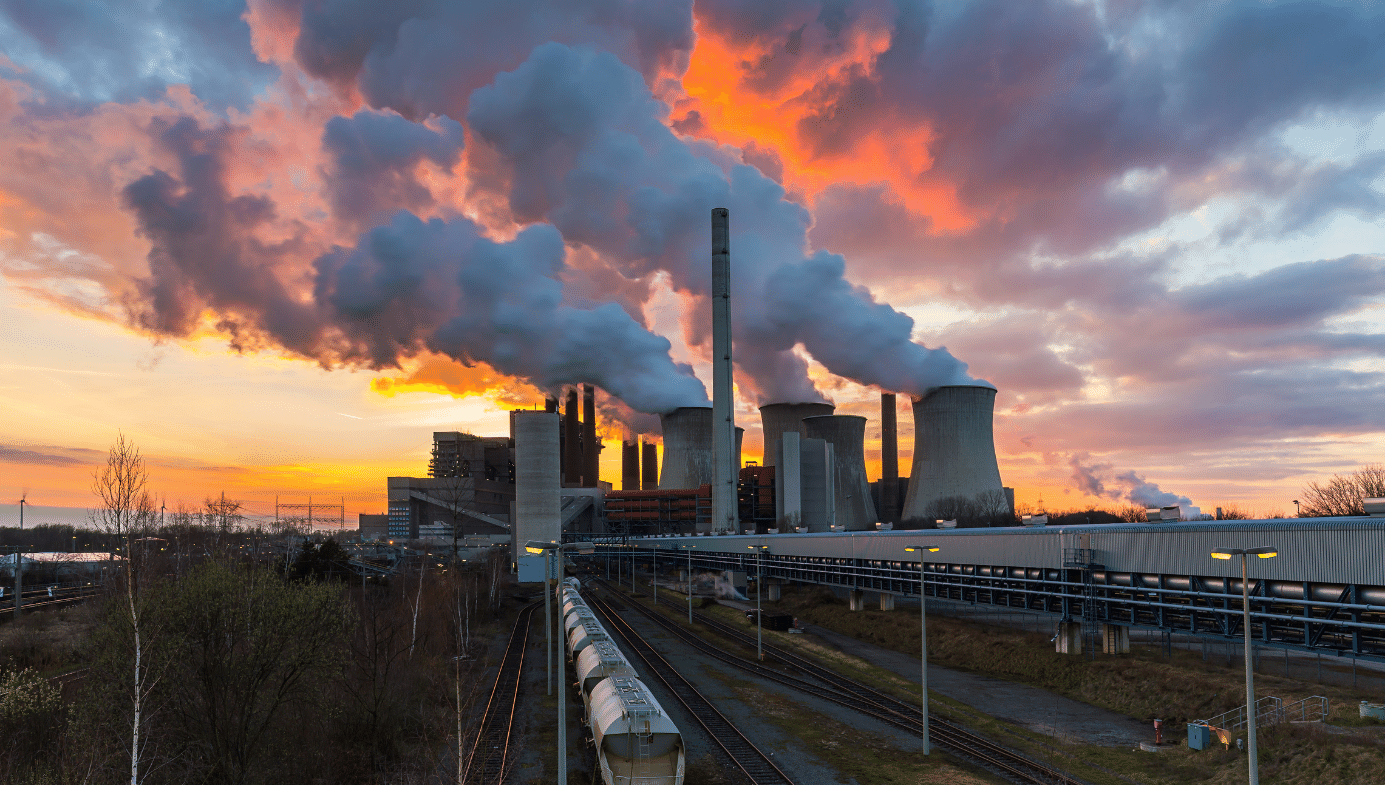
This decision intersected badly with Germany’s existing energy structure. Germany has minimal domestic fossil fuel resources: domestic natural gas production covers only about five percent of national demand. Before February 2022, roughly 55 percent of German gas imports came from Russia via pipeline—a dependency deliberately engineered over decades as an instrument of Ostpolitik (“east politics”), the policy of engagement with the Soviet bloc through economic interdependence. When Russia invaded Ukraine, Germany simultaneously lost both its energy supplier and the diplomatic theory underpinning its relationship with Russia. Germany had rejected the idea of fracking for political reasons, although the country possesses substantial unconventional gas reserves, particularly in Lower Saxony and North Rhine-Westphalia, which experts estimate could cover up to a quarter of national demand if developed. Now Germany found itself paying for liquefied natural gas from the United States at prices two to three times higher than the pipeline gas it replaced.
This vulnerability to energy price shocks increases in conditions of geopolitical instability. Any crisis along the arc from the Persian Gulf to Central Asia has direct consequences for German industrial competitiveness. When tensions involving Iran escalate—threatening the Strait of Hormuz through which roughly a fifth of global oil trade passes—German industry faces cost spikes that American competitors, increasingly energy-self-sufficient, do not. The United States achieved net energy exporter status in 2019 through the shale revolution and has maintained it ever since, recording the largest ever surplus of energy exports over imports in 2024, according to the US Energy Information Administration. Germany, by contrast, replaced one dependency with another: from Russian pipeline gas to American LNG and Norwegian imports, with global commodity markets setting the price at every crisis point.
Germany now has the highest industrial electricity prices in Europe: roughly forty euro cents per kilowatt-hour for households in 2024, against an EU average of 29 cents. The gas-fired backup plants that the grid requires during dark and windless periods—the Dunkelflauten (“dark lulls”) that Germany’s weather produces with regularity—can command prices many times higher. Germany has built a renewable energy infrastructure that produces energy cheaply when conditions are favourable and imposes severe costs when they are not. Those costs disproportionately fall on energy-intensive industries—the very industries upon which Germany built its postwar prosperity.
In 2024, McKinsey estimated that Germany’s productivity—measured as GDP per hour worked—is thirty percent below that of the United States. The country’s rank in the IMD World Competitiveness Yearbook has fallen from 10th place in 2015 to 24th in 2024, recovering only partially to 19th in 2025—still far below its earlier standing. Germany has 24 start-ups per 10,000 inhabitants while the United States has 116. Corporate insolvencies have reached a ten-year high.
Germany was once the world’s leading scientific nation. Between 1901 and 1933, German researchers accounted for 38 percent of all Nobel Prize nominees in physics and chemistry, according to a 2025 study published in PLOS ONE. The Humboldt University of Berlin was regarded as the world’s preeminent institution for the natural sciences in the nineteenth and early twentieth centuries. Stanford University, now ranked among the world’s top three, was explicitly modelled on the German research university.
In the Times Higher Education World University Rankings 2026, three German universities appear in the top fifty: the Technical University of Munich at 27th place, LMU Munich at 34th, and Heidelberg at 49th. No German institution ranks in the top twenty, though the QS ranking places the TU Munich at 22nd place—but, while this is the highest it has ever ranked and the highest score achieved by any EU university, it is outranked by universities in the US, UK, Switzerland, Singapore, Hong Kong, China, and Australia.
Germany retains some genuine strengths. Its dual apprenticeship system—combining workplace training with vocational schooling across more than 320 recognised trades—remains one of the most effective systems of occupational qualification in the world. Its Fachhochschulen—technical universities with strong links with industry—produce engineers and applied-science researchers of consistent quality. These are real assets, and they are not mirrored elsewhere.
At the school level, however, things are deteriorating. The PISA 2022 study recorded the lowest scores ever measured for German fifteen-year-olds across all three tested domains. In mathematics, Germany fell from 500 points in 2018 to 475—a decline of 25 points, roughly 1.7 times the average OECD deterioration. Thirty percent of German fifteen-year-olds now fail to meet the minimum standard in mathematics. The decline began before the Covid-19 pandemic of 2020 and has not been reversed. Paradoxically, Abitur (the school-leaving certificate required for university entrance, roughly equivalent to A Levels, the baccalaureate, or ATAR) grades have been rising steadily across all sixteen German states, even as student competence declines. The state is disguising its own mediocrity through grade inflation.
In late 2025, Lower Saxony’s education ministry announced that written long division would no longer be a required primary school competency. The ministry cited teacher shortages and resource constraints as contributing factors to the change. Lower Saxony is not an isolated case: it follows 2022 guidelines adopted by the Kultusministerkonferenz (KMK) (“association of cultural affairs ministries”), the body that coordinates educational standards across all sixteen German states, and at least five other states have moved in the same direction. When a country that gave the world Carl Friedrich Gauss removes written long division from its primary school requirements because it cannot staff its classrooms adequately, that says something about its priorities.
The question is not whether Germany knows what is going wrong. It does. The debate about deregulation, about the cost of doing business, about pension sustainability, about energy costs, is conducted openly—in business associations, in newspaper editorials, in parliamentary committees. The knowledge is there—what’s lacking is the political will.
Every reform creates both winners and losers. In Germany, those who stand to lose from financial reform are well organised. The civil servants’ federation represents 1.3 million members. The public sector unions are the strongest in the country. The generation that built the system now constitutes its most powerful electoral constituency.
The only recent chancellor to break the resistance was Gerhard Schröder—with the Agenda 2010 reforms, which he pushed through against the determined opposition of his own party. At that time, nearly five million Germans were unemployed—that hit hard enough to generate the necessary political will to pass the reforms. But Schröder was punished by the electorate and lost his chancellorship. The lesson his successors drew from this was not that reform is possible given sufficient economic pressure; it was that reform is electorally fatal.
The question is not whether Germany knows what is going wrong. It does. The debate about deregulation, about the cost of doing business, about pension sustainability, about energy costs, is conducted openly—in business associations, in newspaper editorials, in parliamentary committees. The knowledge is there—what’s lacking is the political will.
The political scientist Francis Fukuyama has described how democracies decline not because of attacks from external enemies but because of internal capture, when organised interest groups have penetrated state institutions so thoroughly that reform becomes arithmetically impossible. He called this “political decay.” Germany is not a textbook case of this, but it does provide a useful illustration.
The Sondervermögen (“special assets”)—a 500-billion-Euro, off-balance-sheet special fund passed by parliament in the spring of 2025 to rebuild infrastructure without breaching the constitutional debt brake—was the largest single fiscal intervention in postwar German history. According to an IW Köln analysis published on 17 March 2026, within months 86 percent of the fund’s disbursements had been diverted away from additional investment and used to cover expenditures that would otherwise have come from the regular budget. A parallel study by the ifo Institut found that Germany borrowed an additional 24.3 billion euros from the fund in 2025—and that federal investment still fell compared to 2024. Though new debt was incurred, investment declined. The ifo authors identified a structural defect at the heart of the mechanism: the legal requirement to maintain a minimum investment ratio only applies to planned expenditure, not to actual outlays. There is no enforceable correction when the target is missed. The IW Köln concluded: “Union and SPD had the opportunity to clear the investment backlog. They have not yet seized it.”
In 2020, Elon Musk decided to build his European Gigafactory in Grünheide, outside Berlin. It took more than two years for him to be granted a final construction permit. By contrast, in Texas, Tesla broke ground in the summer of 2020 and was delivering vehicles by the summer of 2021.
Musk went ahead and built the plant anyway, before the final permit had been granted, betting that Germany would not stop him retroactively. He was right. But then he had to reckon with another law, the Betriebsverfassungsgesetz (“Works Constitution Act”). Tesla had followed the American model: no union, no works council, no collective bargaining. In Germany, that is not an option. Once a workforce reaches a certain size, employees have the legal right to elect a works council, regardless of the employer’s preferences. The Grünheide workforce exercised that right. The company that had reorganised the global automotive industry was hamstrung by a German labour law from 1952.
The Halle Institute for Economic Research recently asked whether Germany needs an Elon Musk. The more pertinent question, however, is why Germany has yet to produce one. In twenty years, the country has not created a single world-class technology company—not in software, not in artificial intelligence, not in electric vehicles, even though the country had been leading the world in science, engineering, industrial chemistry, and theoretical physics since Konrad Zuse built the world’s first functional programmable computer in Berlin in 1941. Yet Germany has produced none of the companies that define the current technological moment.
The standard explanations for this—risk aversion, regulatory burden, underdeveloped venture capital, preference for certainty over disruption—are all accurate. But all these things are symptoms of the same underlying issue: the state has made dependence comfortable, and discomfort is the precondition for entrepreneurial risk.
Germany has shown before that less regulation can work. When Ludwig Erhard unilaterally abolished price controls in 1948—against the explicit wishes of the occupying Allied authorities, who would have preferred a more managed transition—the result surprised even the Americans. Within months, goods reappeared on shelves that had been empty for years. The market did what the planners had not. It was perhaps the only moment in postwar German history when a politician trusted the individual more than the institution. The country has not repeated the experiment since.
The capability has not disappeared. The European Service Module powering NASA’s Artemis 2 mission was assembled in Bremen, by Airbus engineers. It was so precise that no correction manoeuvre was needed after the translunar injection burn. The module provides propulsion, power, water, oxygen, and nitrogen for the Orion capsule. Without it, there could be no Moon mission. The country that cannot staff its primary school classrooms adequately, that has removed long division from the curriculum, and has not produced a single world-class technology company in twenty years, put NASA on course for the Moon. The question is not whether the capability exists. It is why it requires outside intervention.
Elon Musk has bet on Germany three times. In Prüm, Tesla acquired Grohmann Engineering for its automation know-how. Musk built his factory in Grünheide before receiving the final permit. And in January 2026, his company launched Germany’s first approved FSD-supervised public shuttle service in the Eifelkreis Bitburg-Prüm.
Germany does produce disruptors—though they are rare and the system does not reward them. David Reger is one example. He founded Neura Robotics in 2019. He left school with a Hauptschulabschluss (a leaving certificate that does not qualify the holder for university) and trained as a pattern-maker in a foundry. He built two companies while employed at a Swiss machine-tool manufacturer, then founded Neura Robotics to produce cognitive humanoid robots for industrial and care applications.
Reger’s diagnosis of Germany’s position is astute. “The reason we had peace and prosperity was that the world was technologically dependent on us,” he said in a recent interview. “The reason our politicians no longer have any power is that Germany no longer has any power or relevance. We have become irrelevant.” He is not wrong.
The German state provides guaranteed prices, civil service positions, and pension entitlements—all of which create dependencies. By 2026, the state will command more than half of Germany’s entire economic output. Meanwhile, the country’s industrial base is contracting and the productivity gap between Germany and the United States is thirty percent and growing. The education system that produced the twentieth century’s greatest scientists is now removing written long division from primary schools because it cannot adequately staff its classrooms. The chemical companies that once supplied the world are now building their plants in Texas and Jiangsu.
The question facing Germany is not whether to reform its economic system—that’s inevitable. The country will eventually have to reform, like it or not. The question is how much of its productive base—how many factories, research institutes, engineers, and entrepreneurs will have relocated by the time those reforms are implemented. Meanwhile, the world is rapidly changing. Technological development is accelerating, driven by artificial intelligence and the restructuring of global supply chains. New competitors are rising up to take Germany’s place on the world’s markets. Right now, Germans feel comfortable—but that is only because they have mistaken decline for stability.
Quillette invites thoughtful responses to its essays.
Selected responses are published once per week as part of a curated Letters to the Editor feature. If selected, letters appear under the contributor’s real name and may be edited for clarity and length.
To submit a letter for consideration, please email [email protected].
Keep reading
Germany’s Cozy Catastrophe
AI and the Wiki Wars
Foreign Power, Local Politics

Podcast #333: The Search for Truth

A Costly Misconception