Politics
Foreign Power, Local Politics
Where local collaboration is absent, foreign intervention imposes enormous costs or simply stalls. Where it exists, intervention can succeed with surprising velocity.
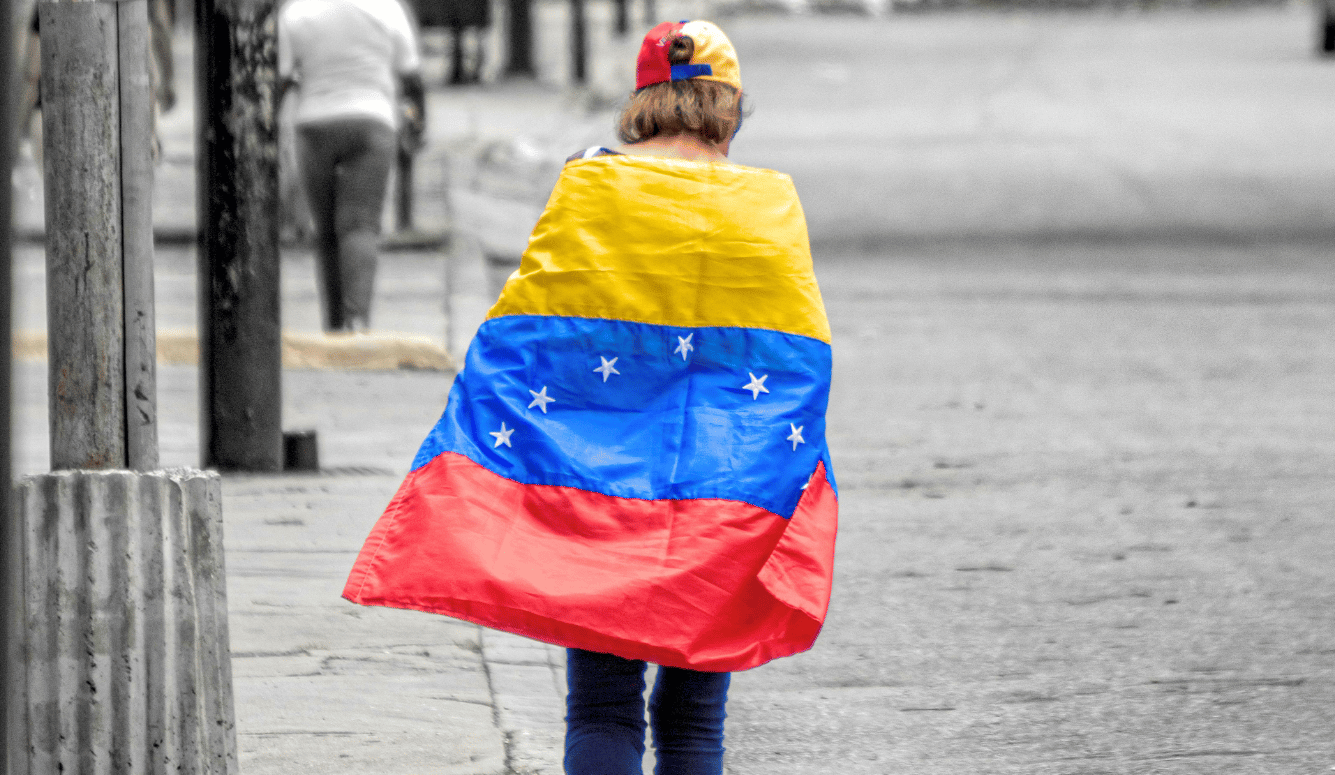

One of the most striking features of Nicolás Maduro’s removal from Venezuela on 3 January was not the role played by the United States, it was the role played by Venezuelans themselves. A pattern of internal complicity emerged almost immediately. Political rivals, military figures, and regime insiders coordinated with Washington to dethrone a leader they could not defeat on their own. This was not an instance of foreign pressure overwhelming a passive society. It was a domestic power struggle in which external backing was deliberately sought and strategically used.
The current struggle for domination in Venezuela did not begin with the events of January 2026. It dates back to the death of Hugo Chávez in 2013. Chávez had held together a fractious ruling coalition through the force of his personal authority. When he named Maduro as his successor, powerful figures within Chavismo—most notably Diosdado Cabello—immediately interpreted the decision as a slight. This planted the seeds of a succession rivalry that would shape the regime in subsequent years.
Although the dying president’s wishes initially compelled a public show of support for his chosen successor, the struggle that ensued soon hardened into deep structural distrust. For several years, the regime projected an appearance of unity, but factional rivalries continued to simmer beneath the surface as Chávez’s personal authority gradually faded from the system he had built. Maduro lacked Chávez’s charisma and political acumen, and he came to be seen as a liability for the ruling elite. His leadership became an obstacle that delimited access to oil rents and no longer guaranteed the coalition’s political survival. This erosion of support created an opening, and more pragmatic factions of the regime began quietly exploring cooperation with Washington.
US sanctions imposed between 2019 and 2022 intensified internal tensions. As the economy deteriorated, Maduro’s continued presence restricted access to oil revenues and deepened international isolation. The defection of intelligence chief Manuel Christopher Figuera in 2019 exposed just how fragile the regime’s internal cohesion had become. By 2023–24, the balance of power had shifted further. Delcy Rodríguez and her brother Jorge consolidated control, sidelining rivals like oil minister Tarek El-Aissami and tightening their grip over the state oil company, Petróleos de Venezuela, S.A. (PdVSA). What began as technocratic management evolved into strategic repositioning.
The turning point arrived in 2025. Public negotiations between Washington—now under Trump—and Maduro stalled, while the Rodríguez faction opened a parallel channel with US officials. Washington began probing “alternative currents” within Chavismo. For the Rodríguez siblings, Maduro had become politically toxic. For Washington, he was no longer a credible partner. An understanding took shape designed to ensure a measure of continuity: remove the leader, but preserve the system. The 3 January 2026 operation depended on that alignment. More than 150 US aircraft operated in Venezuelan airspace without encountering coordinated resistance. Defence minister Vladimir Padrino López later acknowledged American military “supremacy,” yet the absence of even limited defensive measures suggests stand-down orders were issued. A potential confrontation gave way to a controlled extraction.
This is why Washington shunned the democratic opposition led by María Corina Machado, and worked instead with regime insiders who controlled the security apparatus. That strategic choice was partly shaped by Ali Moshiri, a former Chevron executive with decades of ties to Venezuela’s ruling establishment. Moshiri advised the CIA that installing Machado would risk another Iraq-style quagmire. Whatever Machado’s democratic legitimacy, Trump concluded, she lacked the institutional leverage to guarantee a stable transition. Within days of Maduro’s ouster, the interim government under Delcy Rodríguez agreed to transfer tens of millions of barrels of crude oil to the United States to stabilise energy markets. Chevron, whose executive had helped shape Washington’s choice of partners, was positioned to benefit. Elite control remained intact. Power shifted, but the governing structure endured.
Since assuming power, Rodríguez has moved to normalise relations with Washington. US officials have met with her government in Caracas to coordinate on security and economic cooperation, and both sides have begun to explore the restoration of diplomatic ties. The arrangement is unapologetically pragmatic and transactional: Washington gains access and stability, while Venezuela’s ruling elite retains control. Venezuelan actors treated American power as a political resource. The episode therefore belongs as much to Venezuela’s internal political history as to the history of US intervention.
Framing Venezuela solely as a victim of imperial pressure obscures that dynamic. It leaves little room to explain why some sanctions regimes topple governments while others entrench them, or why certain interventions succeed where others fail. It also quietly removes responsibility from domestic actors, as if their political choices cease to matter once a great power enters the scene.
Acknowledging all this requires reconsideration of a reflexive assumption. The standard narrative of US intervention in Latin America casts Washington as the protagonist—the force that sets events in motion, determines outcomes, and bears responsibility for what follows. Local actors appear in this account mainly as victims or collaborators, their choices shaped entirely by the pressures bearing down upon them from outside. This narrative is coherent, but it offers an incomplete explanation of how power actually works.
When explanation collapses into a simple binary of oppressors acting upon victims, politics disappears, and with it any clear account of how outcomes occur.
As African political philosopher Olúfẹ́mi Táíwò argues in his 2022 book Against Decolonisation, denying agency to postcolonial societies in the name of critique does not challenge domination, it merely reproduces it. The intention may be benign, but the effect is to treat entire societies as incapable of genuine political action—as if their leaders, factions, and competing interests were merely reflections of external forces rather than causes in their own right. Power asymmetries matter, but they do not obviate the capacity to make consequential political decisions. When explanation collapses into a simple binary of oppressors acting upon victims, politics disappears, and with it goes any clear account of what produces outcomes.
This distinction is crucial. External power can legitimate and amplify, and it can make certain outcomes more likely or preclude others. What it cannot do is substitute for local actors willing to act. The Venezuelan insiders who opened back channels to Washington were not responding to an irresistible force. They were making a calculated bet on who would control the country’s oil wealth and political future. Where collaboration is absent, intervention imposes enormous costs or simply stalls. Where it exists, intervention can succeed with surprising velocity—not because external power has grown stronger, but because domestic actors have decided to use it.
 Lachlan Peters
Seen in this light, Venezuela is not an anomaly, it is part of a pattern. Across Latin American history, foreign intervention has rarely succeeded on its own. Empires do not usually impose outcomes by sheer force, they exploit preexisting fractures. They align with local factions, and the members of these factions retain their own interests, fears, and ambitions. Time and again, the decisive variable has been internal division rather than external omnipotence.
The most decisive challenge to the empire-only narratives lies at the very beginning of the region’s colonial history. As historian Matthew Restall shows in his 2003 work Seven Myths of the Spanish Conquest (updated in 2021), Hernán Cortés did not overthrow the Mexica Empire with Spanish force alone in 1521. His campaign depended upon alliances with indigenous enemies of the Mexica, above all the Tlaxcalans, who saw the Spaniards as a tool for overturning an imperial order that had long dominated central Mexico. Tens of thousands of indigenous fighters ultimately joined the assault on Tenochtitlán.
A similar dynamic unfolded in the Andes a decade later. When Francisco Pizarro entered the Inca world in the 1530s, the empire had already been destabilised by a civil war between rival claimants to the throne. Indigenous groups resentful of Inca rule—and factions aligned against the victorious emperor Atahualpa—provided the Spaniards with crucial support, intelligence, and manpower. Spanish numbers were small; local alliances proved decisive.
These episodes are not minor historical footnotes. Without indigenous allies, the Spanish conquests would almost certainly have failed. Their advantage lay less in battlefield superiority than in the political divisions they encountered and then exploited. This history sits uneasily with frameworks that imagine a unified indigenous subject confronting a singular coloniser. The messy reality actually involved factional rivalries, strategic calculation, and catastrophic misjudgment. Indigenous actors were not passive victims awaiting conquest, they were political actors navigating a violent world and making choices, the consequences of which they could not fully foresee.
Chile provides a clear example of this dynamic in the modern era. The 1973 coup that overthrew Salvador Allende is often presented as the archetypal case of US-engineered regime change. In fact, while Washington’s hostility toward Allende was real and consequential, it was not sufficient to effect a change of government. As I argue in my book The Rise and Fall of Repression in Chile, the ’73 coup was planned and executed by Chileans. Senior officers in the armed forces, business elites, conservative politicians, and influential media figures all played decisive roles. The generals who ultimately installed Augusto Pinochet in power were not marionettes operated by foreign string-pullers. They were people worried that their country was slipping beyond their control.
By the early 1970s, Chile was deeply polarised. Economic elites feared the expropriation of their wealth, middle-class support for Allende had eroded as shortages mounted, and the armed forces were internally divided. US pressure exploited these conditions, but it did not create them. Without some degree of domestic consent—uneven, contested, and often reluctant—external influence alone could not have produced a coup. Once Chilean agency is removed from the story, the outcome becomes difficult to explain. Why did the coup occur when it did rather than earlier? And why did regime change succeed in Chile but fail in, say, Cuba, where US hostility was at least as strong? An externalist account cannot answer these questions because it treats internal politics as secondary rather than causally decisive.
The same analytical problems appear in debates over US military involvement in Latin America during the Cold War, particularly around the School of the Americas. Critics like Lesley Gill have long argued that US training programs bear significant responsibility for the region’s repression. The moral charge is powerful, but the causal story is less straightforward. Accounts often drift between incompatible claims. Sometimes, Latin American officers are presented as little more than conduits for American doctrine and policy, absorbing techniques and attitudes they simply implemented in campaigns of repression in their home countries. At other times, those same officers are described as powerful political actors Washington could not fully control but whose cooperation it actively sought.
Each of these claims carries different implications for agency and responsibility, but they are frequently blended together. If Latin American officers were merely following orders from abroad, their behaviour becomes inexplicable once US preferences shifted. If they were independent actors, their relationship with the United States must be understood as strategic rather than subservient. One cannot have it both ways.
Once this pattern is acknowledged, other cases start to make more sense. Cuban independence leaders welcomed US intervention in 1898 to break a war with Spain that had reached a strategic stalemate. American military action quickly tipped the balance in favour of the rebels, though it also ensured that the island’s postwar order would unfold under heavy US influence. Panamanian separatists pursued a similar strategy in 1903. As Ovidio Diaz Espino details in How Wall Street Created a Nation, local elites seeking independence from Colombia coordinated with Washington and promised support for a US-controlled canal in return. When the revolt began, American naval forces prevented Colombian troops from suppressing it, ensuring the success of the separatist movement.
Michel Gobat’s 2005 book Confronting the American Dream shows how conservative factions in Nicaragua during the early 20th century repeatedly aligned with US marines to defeat liberal rivals and rural insurgents. American support didn’t just stabilise friendly governments, it also enabled local elites to consolidate power on terms they could not have achieved alone. This pattern appeared again in the Dominican Republic in 1965. During a civil war between constitutionalist and conservative factions, elements of the Dominican elite supported US intervention to prevent what they feared would become a revolutionary takeover. American troops helped to defeat their domestic rivals and shape the political settlement that followed.
In each of these cases, external power mattered but it did not operate alone. This is not an apology for empire. It is a call for a proper understanding of causation in history and politics. External powers are responsible for what they do, but responsibility does not require omnipotence, and moral condemnation does not require a denial of agency to other participants. Refusing to acknowledge that agency produces its own distortions. Latin Americans become objects rather than people capable of exercising power and making consequential choices, including unwise ones. Explanation gives way to moral reassurance, and under the banner of critique, a quietly paternalistic view of history is reproduced.
The analytical cost is equally serious: without domestic actors, we cannot explain why Maduro fell when he did, why the coup in Chile succeeded where others failed, or why the Tlaxcalans made the choices they did. The analysis becomes a morality play, which produces poor predictions. The practical cost follows. Frameworks that reduce intervention to external imposition systematically misread the political landscape, overlooking factions that can be pressured, coalitions that are fracturing, and those insiders already looking for a way out. For policymakers trying to navigate these situations, this framework produces bad decisions.
Power asymmetries are real. They constrain choices and shape outcomes. But they do not abolish politics, and treating them as if they do is just condescension with better intentions. Latin America’s history is not a simple record of domination and resistance. It is a record of internal conflicts, strategic alliances, occasionally catastrophic bets, and foreign powers exploiting openings that locals have helped to create. Empire has done real and lasting harm. What is harder to acknowledge, and more important to understand, is how often that harm has moved through local politics rather than around them.
Quillette invites thoughtful responses to its essays.
Selected responses are published once per week as part of a curated Letters to the Editor feature. If selected, letters appear under the contributor’s real name and may be edited for clarity and length.
To submit a letter for consideration, please email [email protected].
Keep reading
Foreign Power, Local Politics
Podcast #333: The Search for Truth
A Costly Misconception
Addressing the Academic Skew
Letters to the Editor