Education
Francesca Albanese and the Perversion of Academia
Three Flemish universities are about to convey the sanction of university-recognised expertise to a deeply dishonest and fraudulent individual.
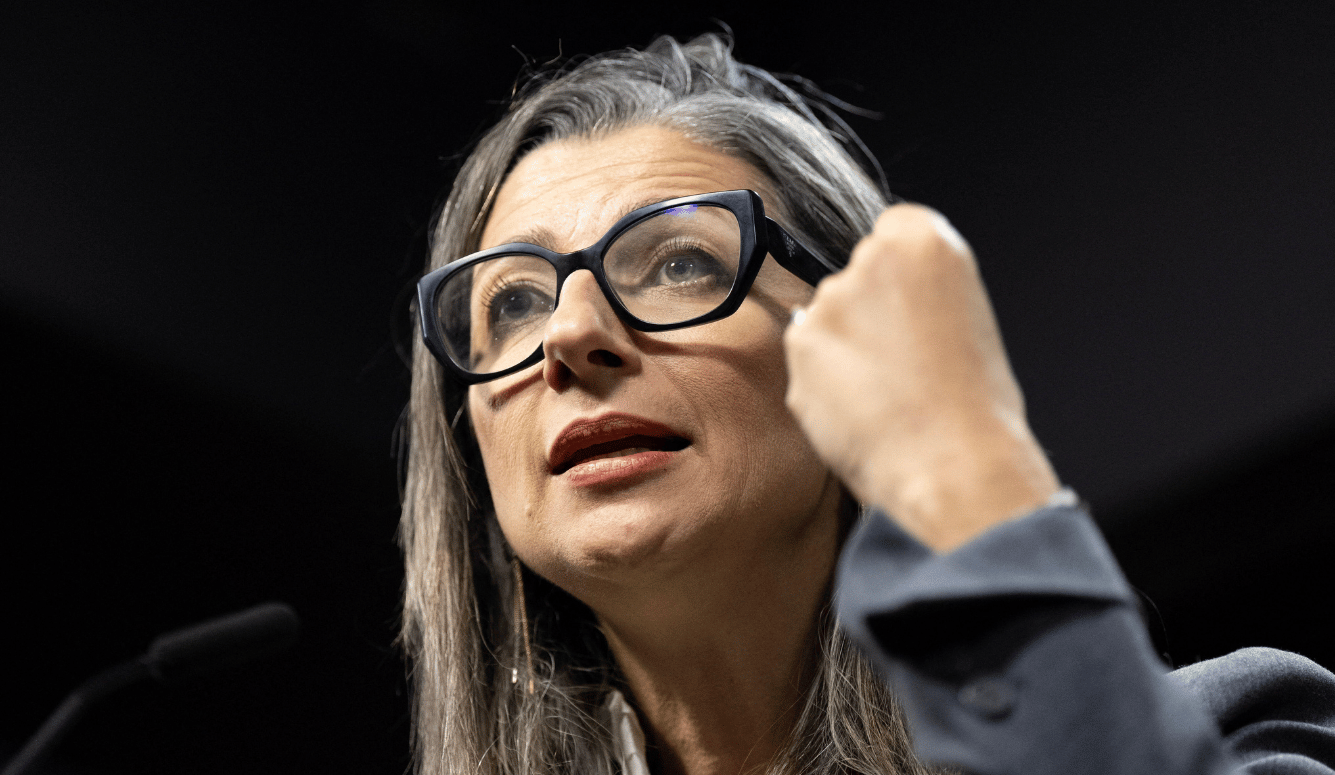

It is not normal to hear objections raised when universities award honorary doctoral degrees. The distinction, often conferred at happy graduation ceremonies, brings attention to exemplary achievement by the recipient. The aim is to nominate recipients who, in the tradition of the university, elevate all of us. This is true with academic recipients who represent the best of scholarly inquiry, but also with popular figures who represent universalist aspirations.
Francesca Albanese has been the UN Human Rights Council’s special rapporteur for occupied Palestinian territories since 2022. In every medium, she leads the accusation that Israel has been committing genocide in the Gaza Strip since Hamas’s 7 October 2023 massacre. And on 2 April, in Antwerp’s Queen Elisabeth Concert Hall, Albanese will receive an honorary doctorate from not one, but three Flemish institutions in Belgium: the University of Antwerp, the University of Ghent, and the Free University of Brussels. The universities say they wish to honour Albanese’s “outstanding commitment to human rights and international justice.”
It is the first time that universities have jointly conferred such an honour, and this curious event will overshadow simultaneous awards by the University of Antwerp to a pulmonologist, a toxicologist, and a scientist of learning. But the illusion of unanimous acclaim has been punctured already. The Catholic University of Leuven, Belgium’s highest ranked university, rejected an invitation to join the others. “The stance of KU Leuven at this moment is sickening,” wrote a professor emeritus at the university’s faculty of law and criminology in response. “It is a direct mockery of the calls from the International Court of Justice to do everything possible to end the genocide in Gaza. It makes KU Leuven complicit in this mass murder.” Not only did Leuven not wish to honour Albanese; it had also awarded research grants to Israeli scholars engaged in academic work.
Jewish groups in Belgium have registered their dismay about the decision to honour Albanese. Twelve years ago, she made antisemitic statements about the subjugation of the US and Europe governments by Jewish lobbies and Holocaust guilt. At an Al Jazeera-sponsored event in Doha in February, she declared that “we as humanity have a common enemy.” She subsequently insisted that she had been talking about a global “system” of oppression rather than about Israel as such. But the stampede by Albanese’s allies in the UN and NGO complex to impugn the motives of European ministers and Jewish groups calling for her dismissal only shows how poisonous her discourse is.
The Doha flap provided cover—sort of—for the Flemish university rectors who personally nominated Albanese for the award. A statement issued in late February began:
Let us state clearly, first and foremost, that this honorary doctorate is not directed against the Jewish community, nor against any Jewish organisation or institution. It is an honorary doctorate awarded to a United Nations Special Rapporteur who, despite considerable personal pressure, continues to carry out her mandate.
This odd passage implicitly dismisses the allegations of antisemitism as meritless. And it is not a good look in a country where antisemitic acts since 7 October have ranged from the desecration of Jewish gravestones in Charleroi in November 2023 to the bombing of a Liège synagogue in March 2026, the latter helping to trigger the deployment of troops to protect Belgium’s Jewish community, including in Antwerp itself.
Unlike most of those with whom she will share the stage in Antwerp, Albanese stands against everything a serious university is supposed to represent: rigorous inquiry, painstaking research, sound argumentation, and serious debate. She is a polemicist posing as an academic, and her idolisation in anti-Zionist and antisemitic circles has made many institutions of higher learning accessories to the fraud. The Flemish universities’ announcement of Albanese’s doctorate pretends that she is “an internationally-renowned lawyer and human rights expert,” that “her book” on Palestinian refugees is considered a “standard work,” and that she is known for “legally sound judgments.” None of this is true.
When Albanese applied to the UN Human Rights Council in 2021 to become the eighth special rapporteur for Palestine, she claimed: “I am an international lawyer.” She and her admirers still represent her as such. She earned a Bachelor’s degree from the University of Pisa Faculty of Law in 2001 and a one-year Master of Laws degree in 2006 from the University of London’s School of Oriental and African Studies (SOAS). But she is not a licensed attorney. For more than two decades, she has been eligible to sit the qualifying exams, but she has never done so. The SOAS program, moreover, takes a peculiar “Third-World approach” to international law, according to which international jurisprudence serves Western colonial interests. In 2024, Albanese thanked SOAS faculty for providing her “with the foundational knowledge to comprehend the original sin of international law and its use as a tool of colonisation and imperialism.”
After 2006, Albanese worked with the UN Human Rights Council and with UNRWA (United Nations Relief and Works Agency for Palestine Refugees in the Near East). To enhance her credentials, she pretended to be a research scholar. Albanese was affiliated with Georgetown university from 2015–25, during which time she published essays in publications like the anti-Zionist blog Mondoweiss, where she wrote about the allegedly peaceful intentions of Hamas and what she called the “right” of more than six million descendants of Palestinian refugees to return to Israel. The 2020 book she co-wrote with former UNRWA official Lex Takkenberg is an updated version of a work that was first published in 1998 under Takkenberg’s name alone.
Since the other applicants for the position of rapporteur for the Palestinian territories in 2021 had more impressive credentials than Albanese, it is possible to infer that the Human Rights Council simply selected her for her radical anti-Zionist views. Indeed, her first report to the Human Rights Council in September 2022 was less a human-rights assessment based on the Geneva Conventions than it was a manifesto that called for “resetting the mind.” The problem, Albanese said when she introduced her report, was not “an ‘intractable’ conflict” between Israelis and Palestinians. It was rather “the very system.” Here she borrowed the popular academic concept of settler colonialism which inevitably eliminates indigenous peoples over time. This variety of “genocide” has nothing in common with the 1948 genocide convention by which perpetrators from various states have been tried; it is formulated as a long-term structural process rather than a crime of particular intent. Settler-colonial theorists reserve a particular hatred for Israel, because its citizens and many others have the gall to see Jews as indigenous to the region.
Albanese’s September 2022 report obliquely called for Israel’s end. The world, she said, “must address the experience of the Palestinian people in its entirety” and their “well established rights to return.” She echoed the major condition under which Hamas—which had ruled the Gaza Strip as a dictatorship since 2007—would consider, not peace, but a ten-year truce. In search of a legal basis for her claims, she pointed to UN General Assembly discussions from 1974, a year in which numerous states saluted Yasser Arafat’s PLO and called for the dismantling of Israel, labelling it a genocidal state. Albanese pretended that General Assembly discussions and resolutions carry legal force as she cited skewed histories of the Israeli–Palestinian conflict and human-rights NGOs with which she agreed.
And then Hamas’s 7 October 2023 attacks and Israel’s military response transformed Albanese into the world’s chief prosecutor. Initially cautious, she and seven other UN special rapporteurs—all deemed “experts” by the same Human Rights Council that appointed them—warned that “the Palestinian people are at grave risk of genocide.” They stopped short of proclaiming a genocide-in-progress. “We are not a judicial body,” Albanese said on French television in early December 2023, “so it is not up to us to make conclusions.”
Albanese changed her mind after the International Court of Justice (ICJ) responded to South Africa’s December 2023 genocide allegations against Israel. The Global South had charged the North, hoping that the ICJ would delegitimise Israel entirely. But the court’s January 2024 opinion omitted most of South Africa’s polemic disguised as evidence. Though the ICJ ordered Israel to undertake provisional measures, these were not the measures for which the South Africans hoped, namely a ceasefire and an order that Israel desist from what the South Africans insisted was genocide. Israel was instead to take preventative measures against the possibility of that crime. Even Israeli prime minister Benjamin Netanyahu could find no cause for complaint.
 Norman J.W. Goda
Albanese, on the other hand, was disappointed. As a UN official, she could not openly accuse the ICJ of colonialism. So she said the court was ill-equipped instead. Israel’s incursion into Gaza, she insisted later, was “the first settler-colonial genocide brought before the court.” Even though South Africa’s legal team had done a “splendid job,” she noted that there was no “existing jurisprudence which the court might rely upon … because the court has never dealt with a case of settler colonial genocide.” It did not occur to Albanese that “settler colonial genocide” had never been a legal category because even to those who invented the idea, it was a structure and not a crime.
Albanese’s signature UN report, “Anatomy of a Genocide,” appeared in draft form during a highly publicised Human Rights Council meeting in March 2024. Circumventing the world’s highest court, she announced that “the only inference [that] can reasonably be drawn is a state policy of genocidal violence against the Palestinians.” Her language was not incidental. The controlling case on establishing genocidal motive from patterns of behaviour was the 2007 ICJ ruling in Bosnia and Herzegovina v. Serbia and Montenegro, which established that for a pattern of conduct to be ruled as indicating genocidal intent, the pattern “would have to be such that it could only point to the existence of such intent.” Quite on her own, Albanese rejected that Israel’s aims could possibly have been the destruction of Hamas and the recovery of hostages.
Like the South Africans, Albanese relied for her fatality figures upon one-page “impact snapshots” from the UN’s Office of Coordination of Humanitarian Affairs (OCHA). These relied heavily, in turn, on statistics from the Gaza Ministry of Health and the Gaza Government Office of Information, both of which are Hamas-controlled. On this basis, Albanese argued that seventy percent of fatalities in Gaza had been women and children, which would form a genocidal pattern. The figure was soon debunked. In May 2024, OCHA quietly dropped the Office of Information figures and revised its estimates. Regardless, Albanese kept the seventy percent figure when submitting the final draft of her Anatomy report in July, and she continued to cite the figure in public lectures.
Albanese also claimed in her Anatomy report that Israel deployed “deliberate starvation” in Gaza, “especially among children.” She ignored the complexity of the issue, as discussed in the UN itself. The World Food Programme (WFP), the largest organisation fighting world hunger since the UN created it in 1961, was active in Gaza. In February 2024, its deputy executive officer Carl Skau reported to the UN Security Council that while the south had sufficient food, there was a risk of famine in the north by May. Quantities moving into Gaza through the southern crossings had to rise, he said. But the most immediate problem was ensuring the safety of convoys as they moved from southern Gaza through combat zones to Gaza City in the north. The Israelis coordinated routes and began escorting WFP convoys, which helped alleviate emergency conditions by mid-March. In May, the Israelis opened two freight crossings in the north, where none had existed before, and allowed deliveries from abroad to enter the Ashdod port, sixteen miles from northern Gaza.
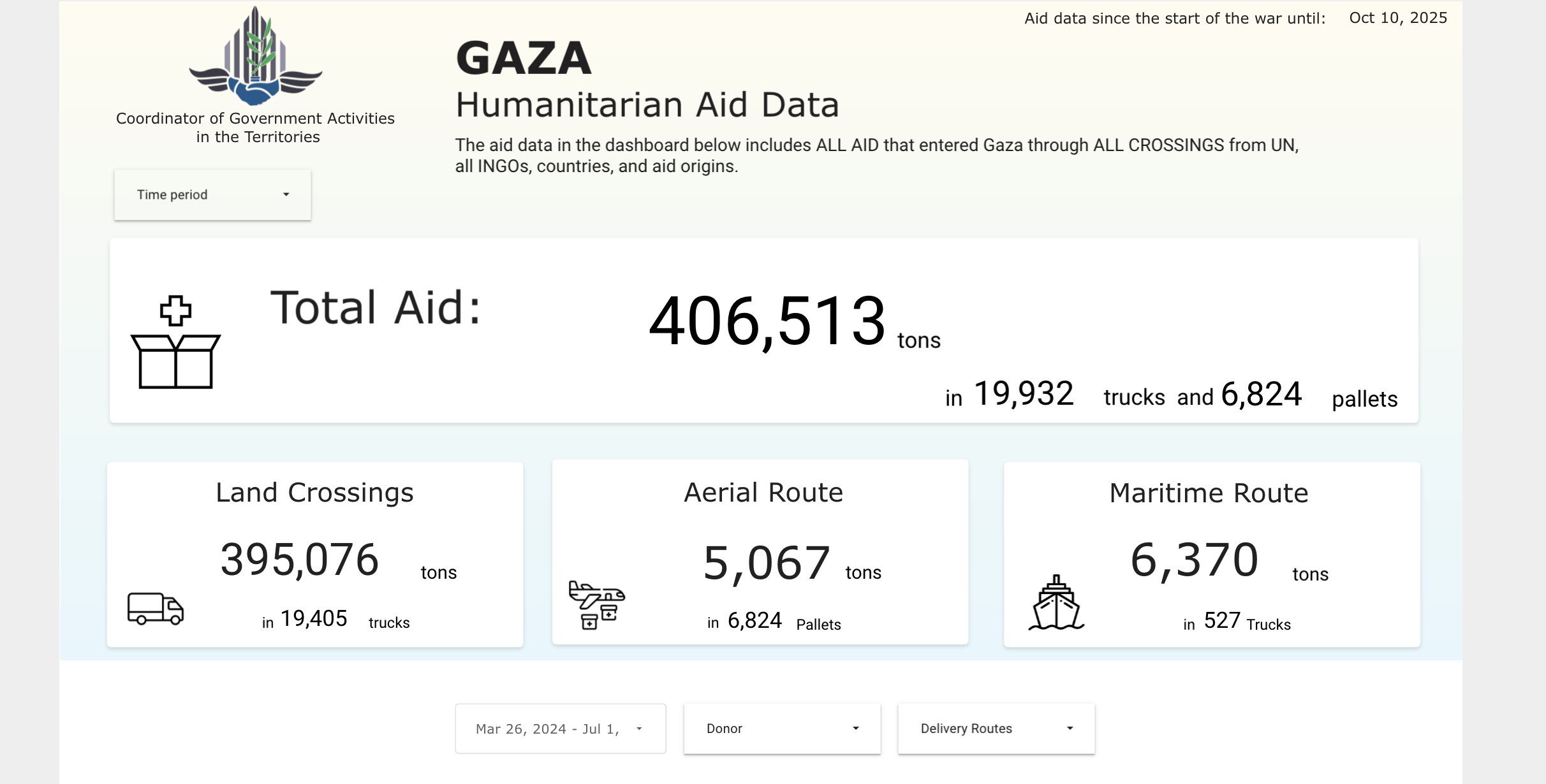
Between 26 March (the date of her report presentation) and 1 July (the date her final report was submitted), 19,405 trucks entered Gaza carrying 395,076 tonnes of food, medical supplies, and shelter equipment.
Albanese’s audience would not have known that the WFP existed. Instead, she cited Michael Fakri, the UN special rapporteur for the right to food and a fellow UN “expert” charging genocide. In March 2024, Fakri told Mondoweiss, “It’s hard to determine the degree of how many people are actually dying from malnutrition and disease and hunger versus bombs and bullets,” and “We’ve never seen a civilian population made to go hungry so completely and so quickly. Never in modern history. We’ve never seen children pushed into malnutrition so quickly. Never.” Fakri’s stunning ignorance of 20th-century siege warfare aside, it is not hard to distinguish war fatalities from malnutrition-related fatalities. The Ministry of Health reported that 27 children had died of malnutrition-related illnesses by 21 March 2024. Albanese did not include this figure in her report.
Albanese hoped to impress the legal community with what she called “one of my key findings.” It was not a research finding so much as an assertion that Israel deployed something called “humanitarian camouflage.” With professors Luigi Daniele and Nicola Perugini, Albanese published a 35-page booklet in October 2024 titled Humanitarian Camouflage: Israel Rewrites the Laws of War to Legitimize Genocide in Gaza. The authors alleged an “unprecedented” global deception. By using evacuation warnings to civilians and safe zones, Israel purportedly hid genocide beneath apparent adherence to the Geneva Conventions. This breathtaking reasoning was contrived to make every Israeli action to spare civilians part of a broader plan to kill them.
Brian Stewart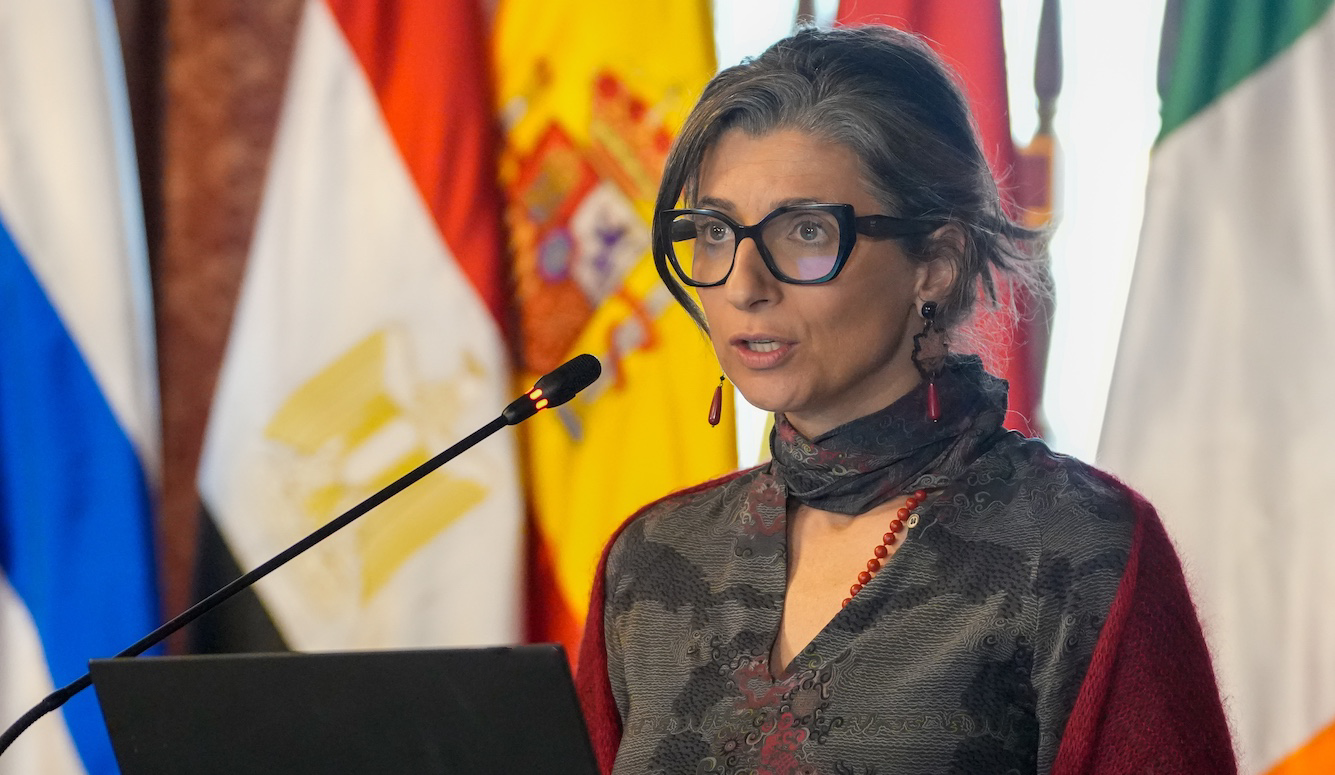
Albanese represents herself as “a reluctant chronicler of genocide,” and this reluctance has swept her around the globe to prestigious speaking engagements, mostly at major universities. Her stops have included Princeton University, Georgetown University, the University of Toronto, Queen’s University Canada, Erasmus University Rotterdam, the University of London’s SOAS, and others. Universities provide Albanese with the imprimatur of scholarly legitimacy, and they also draw enthusiastic audiences of anti-Israel faculty and students.
The lecture hall at University of Toronto, bedecked in Palestinian flags, gave Albanese a rapturous welcome when she entered on 7 November 2024. Such acclaim is unprecedented for a UN official, and the sheer joy expressed for a speaker discussing the solemn topic of genocide is weird. The frankly embarrassing tribute by Hamid Dabashi of Columbia University might explain it. Albanese, he wrote, “is the voice of the global conscience speaking truth to the vulgar warmongers. … [Her] bold, brilliant, and thoroughly researched report … has inspired much admiration around the globe … but also horror and fury among Zionists who do not want Israel’s genocide in Palestine to have such an eloquent, precise and detailed account.” She was, Dabashi enthused, taking on “genocidal Zionists” who were “fooled and deluded by the Israel lobby in the US, and by western media propaganda.” Dabashi grasped the baton of Albanese’s earlier antisemitic remarks in order to certify her views.
For despite the serious flaws of her reporting, Albanese has become for many not simply the Savonarola of Israel-hatred, but the legal expert on the Gaza war. Her hosts at Princeton’s School of International and Public Affairs hailed her as a “leading international lawyer.” Her hosts at Erasmus University said that her reporting was “meticulously grounded in international law and empirical evidence.” SOAS, per its mission, did not even profess academic objectivity. They claimed to “stand in solidarity with Rapporteur Albanese in the face of attempts to silence her powerful and courageous voice.” She answered “smears, slurs, [and] accusations of antisemitism,” they said, with “vigour and moral clarity.”
On 12 February 2025, a week before Albanese was scheduled to speak at the Free University of Berlin, the university’s president Günter M. Ziegler noted, “We do not provide a platform for antisemitism...” But he did not cancel Albanese’s talk as was later claimed; he offered university-sponsored virtual space instead as a result of recent violence in Germany by activist groups and concern for the safety of those in the lecture hall. But Ziegler also pointed out that a university’s task is to provide spaces for “scientifically sound [wissenschaftlich fundierte] discussions.” This phrasing finally raised the critical question of whether or not Albanese’s work was actually empirical and therefore worthy of presentation at a serious university. Neither Albanese nor her supporters engaged with this point. They invoked her status as an “international lawyer,” and argued that Ziegler’s allegations of antisemitism had been “instrumentalised.” It was far simpler to represent the issue as one of free speech versus oppression.
An honest debate about the issues raised by the Free University could have been productive. It was the perfect moment, because from 19 January to 1 March 2025 there was a ceasefire in Gaza. The 25,200 trucks that entered the strip in that period with 448,482 tonnes of aid (338,676 tonnes of which were food) could traverse the strip without crossing combat zones. Maybe it would reveal to everyone that while the war had been devastating, there had not been a genocide in Gaza after all.
In the meantime, the Berlin episode raises critical questions that the Flemish universities so eager to bestow accolades on Albanese should be asked to confront. Is a triple honorary doctorate in keeping with these universities’ missions of sound inquiry? Or is the doctorate an act of political theatre intended to grant the imprimatur of higher learning to the ideologically correct but academically undeserving? Albanese is not the first propagandist allowed to speak at a major university at the behest of this or that student group. But she is the first to receive an honorary doctorate at the insistence of three separate rectors. As it stands, the Flemish universities, whether they admit it or not, will convey the sanction of university-recognised expertise to a deeply dishonest and fraudulent individual who has vilified an entire society as well as those persons, including many in Belgium who view themselves as connected to it.
Quillette invites thoughtful responses to its essays.
Selected responses are published once per week as part of a curated Letters to the Editor feature. If selected, letters appear under the contributor’s real name and may be edited for clarity and length.
To submit a letter for consideration, please email [email protected].
Keep reading
Doomscrolling into Adulthood

Podcast #331: The Ayatollahs’ Assassins
The Disgrace of Tariq Ramadan
Apocalypse ’92