Politics
The First Post-Ideological Bedouin State
Why the misunderstood sovereign UAE thrives, and why ideologues—from the Islamic Republic to the Muslim Brotherhood—are invested in its demise.
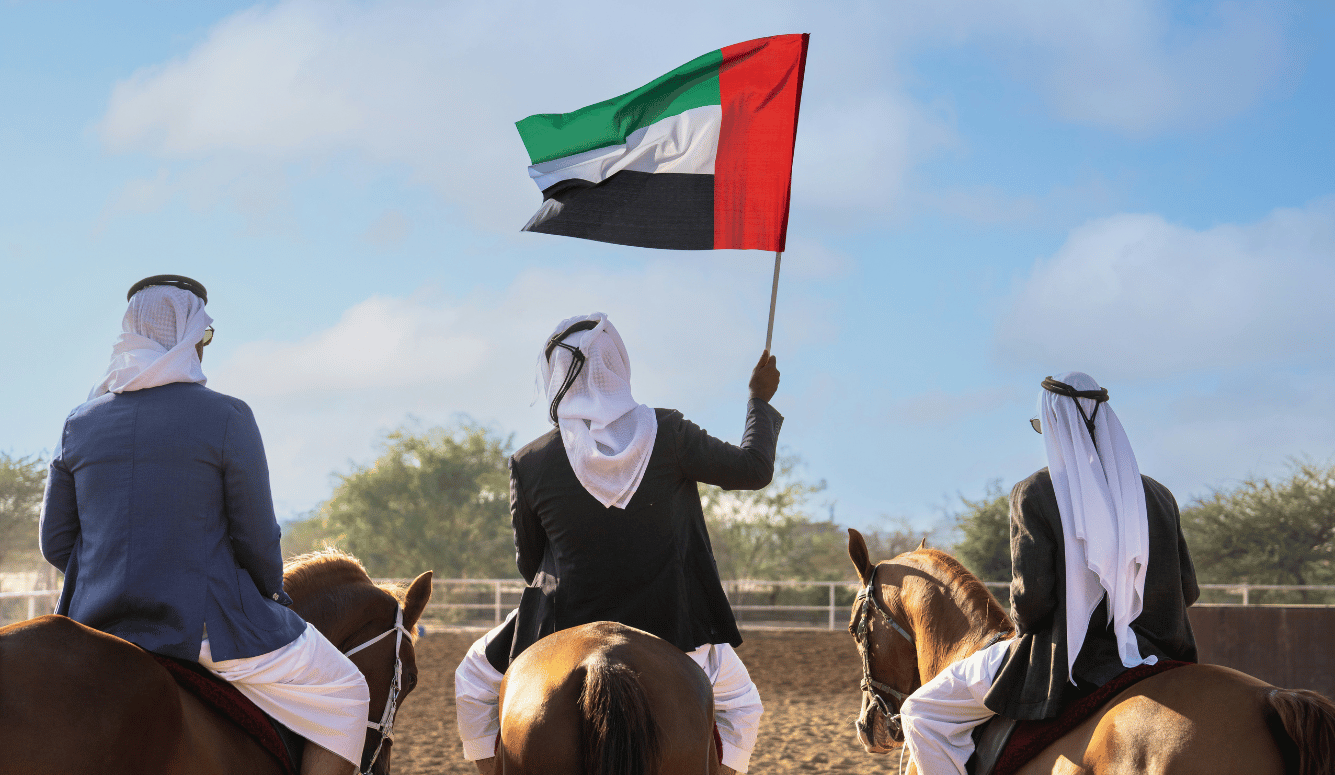

In 2016, I mistook a fortress for a prison. When I first moved to the United Arab Emirates, I believed I was arriving in a country that feared freedom. My suspicion felt principled. I had been shaped within American liberal-arts institutions that trained students to view the Middle East through a woke-progressive lens, where distrust of petro-states signalled intellectual sophistication. I had internalised the assumption that nationalism was always a façade, a polished surface concealing exploitation and the machinery of the military-industrial complex. Years later, I realised I had misunderstood something fundamental: the difference between regimes that censor to protect ideology and states that constrain ideology to protect the nation.
Several months before I relocated, one of my paintings was confiscated in Morocco. The artwork argued that the country’s national flag was incomplete without its Amazigh and Jewish components, and the Muslim Brotherhood–affiliated Party of Justice and Development, which rose to power during the Arab Spring, sent officials from the Ministry of the Interior to censor my exhibition and threaten me with jail. I had cited Morocco’s constitution, which explicitly affirms that Amazigh and Hebraic identities are integral to the national fabric. It did not matter. Ideology does not argue. It may perform concern for minority rights, only to weaponise them for identity politics, converting grievance into unrest and unrest into political power.
A few weeks after moving to Dubai in 2016, I watched a security officer remove an Egyptian piece of art that read, “Be with the Revolution,” from an exhibition before it opened. I instinctively interpreted the act through the Moroccan precedent and filed it under repression. It took years to understand that I had collapsed two fundamentally different political logics into one. What I had mistaken for state violence was, in fact, an exercise in sovereignty, and the latter is the precondition for pluralism. I had confused repression in the service of ideology with discipline in the service of statehood.
Across much of the Middle East over the past century, revolution has rarely meant institutional renewal. More often, it has meant mobilisation toward absolutism and transnational movements untethered from territorial responsibility. Pan-Arabism promised unity but crushed indigenous people and particularities. Political Islam promised justice but asserted theological supremacy. Third Worldism promised solidarity but glorified confrontation with Israel and the West. The rhetoric of liberation, deployed during the Islamic Revolution and then the Arab Spring, sought to sacrifice civic sovereignty in pursuit of a divine or historical mission. In 1958, Gamal Abdel Nasser declared that the borders separating Arab states were colonial inventions. In his 1964 religious tract Milestones, Sayyid Qutb dismissed nationalism as jahiliyyah (pre-Islamic ignorance) and insisted that Islam recognised no geographical boundaries. Under Islamist rule, sovereignty belongs to God alone and the nation-state is provisional—a vessel to be transcended once the higher destiny is achieved.
When allegiance shifts from law to mission, and from specific territory to transnational abstraction, conflict ceases to be political and becomes existential and irresolvable.
Thomas Hobbes, writing amid the wreckage of the English Civil War, understood what modern ideological movements continue to ignore: without a sovereign authority capable of enforcing limits, the promise of moral transcendence collapses into the brutality of competing absolutes. When allegiance shifts from law to mission, and from specific territory to transnational abstraction, conflict ceases to be political and becomes existential and irresolvable. Over the last century, much of the Middle East has been animated by this passion, giving rise to failed states and fragmentation, proxy warfare, and societies steeped in narratives of victimhood and conspiracy.
This moral vocabulary is no longer confined to the Middle East. In the United States, the progressive wing of American politics—represented by figures like Alexandria Ocasio-Cortez and the “free Palestine” campus ecosystem—speak of America as the “belly of the beast,” unfit to exist except as material for redemptive upheaval. In the name of democracy and universal human rights, national belonging is reframed as complicity, and the state becomes an obstacle to redemption, something to be dismantled through the erosion of borders, institutions, and national identity.
It was against a century of radical internationalism that the United Arab Emirates emerged in 1971 under the leadership of Sheikh Zayed bin Sultan Al Nahyan. Founded after the decline of Pan-Arabism and the failure of the United Arab Republic but before the 1979 Iranian Revolution intensified Islamist insurgency, the UAE built an indigenous sovereign nation-state without anchoring legitimacy in any particular ideology. Emirati founders designed a constitutional order that united the seven emirates through institutions while preserving their distinctions, drawing on Bedouin moral premises in which authority is earned through stewardship and reciprocal obligation, values that for the most part predated Islam.
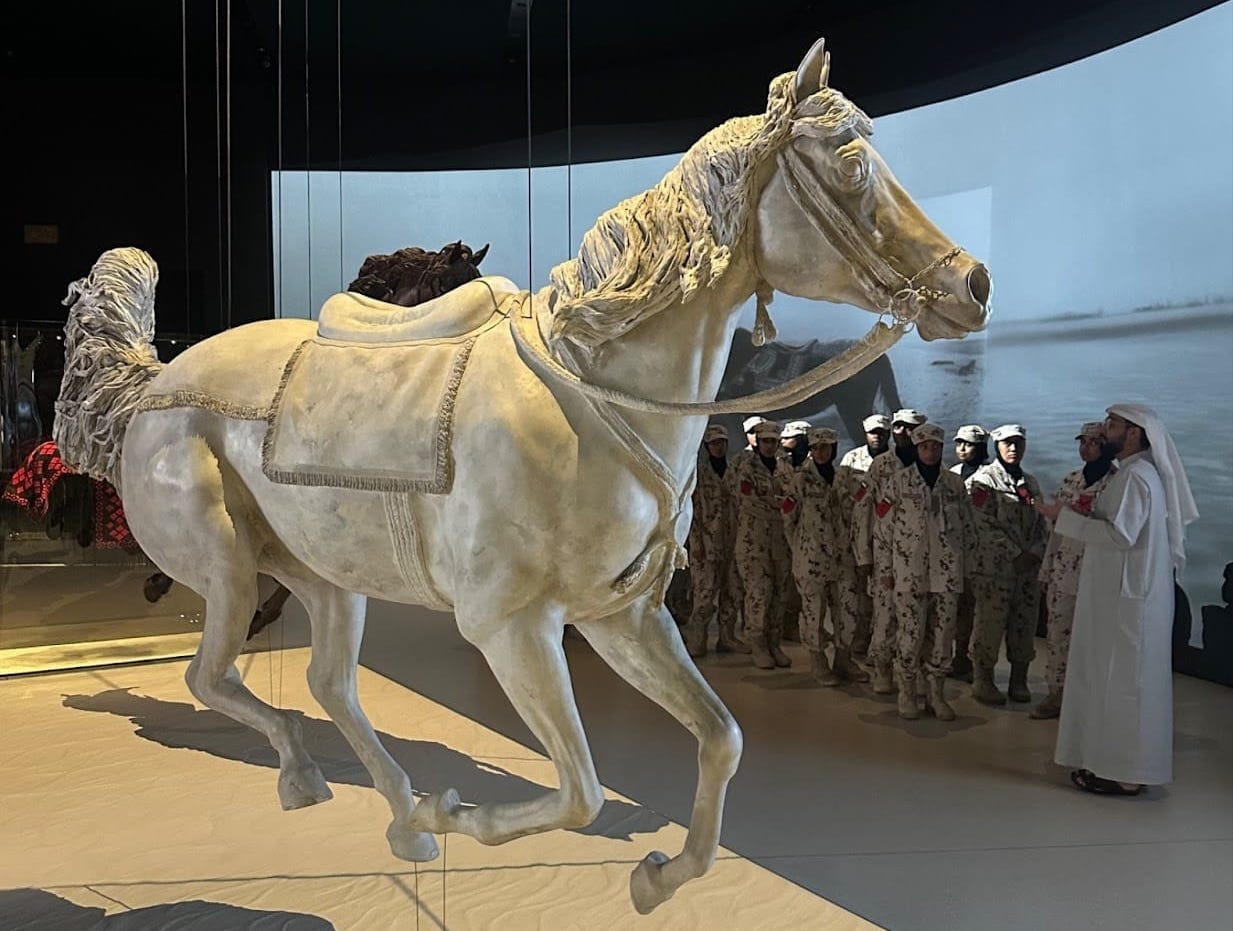
The Federal Supreme Council preserved local authority within a coherent federal framework. Governance was not framed as imported modernity, but rather presented as a sovereign rebirth, a continuation of indigenous rule. The majlis, recognised by UNESCO as a space of deliberation and social cohesion, embodied consultation as a living guarantor of the social contract. Shura councils formalised this ethic within institutional structures, embedding dialogue into governance and ensuring that authority remained both anchored and accountable. The UAE also marries two civilisational instincts: the liberal cosmopolitan pragmatism of port cities like Dubai and the more conservative sensibilities of desert fortresses like Abu Dhabi. Together, they produce a political culture that balances openness with order, mobility with rootedness.
Such equilibrium requires vigilance. The refusal to host revolutionary language was not fear of dissent but judgement shaped by regional memory. Islamist capture in Lebanon, Yemen, or Sudan did not begin as an insurgency. It advanced quietly through curricula, charities, media, and moral vocabulary until allegiance shifted from state to revolution. By the time collapse became apparent, sovereignty had already eroded from within. The most consequential breaches were not those that stormed the gates but those that migrated into consciousness. It is along this frontier that a new field has emerged in the UAE, often described as “intellectual security”: “the safeguarding of societies against ideological manipulation, misinformation, and extremist rhetoric through the cultivation of critical thinking, social resilience, and digital literacy.”
The most obvious critique of the Emirati model remains the absence of electoral democracy. Yet recent regional history complicates the assumption that ballots alone safeguard pluralism. Elections, in some political environments, can empower movements fundamentally hostile to liberal order. In Germany, the Nazi Party received 37.3 percent of the vote in the July 1932 elections, becoming the largest party in parliament. Democratic procedures did not prevent catastrophe; they accelerated it. The modern Arab world offers its own examples of this danger. In environments where radical movements have spent decades cultivating loyalty through parallel institutions, elections can consolidate forces already committed to ideological supremacy. Gaza offers a stark illustration. Israelis often lament that Gaza could have become another Dubai. The comparison obscures a prior choice. The Muslim Brotherhood in Gaza, operating as Hamas, did not invest in desalination, diversified trade, or institutional accountability. Palestinian radicals destroyed the agricultural greenhouses left after Israel’s disengagement in 2005, voted Hamas in, and constructed hundreds of miles of terror tunnels. This trajectory culminated in the massacre of 7 October and the devastating war that followed, leaving much of the Gaza Strip in ruins.
 Chama Mechtaly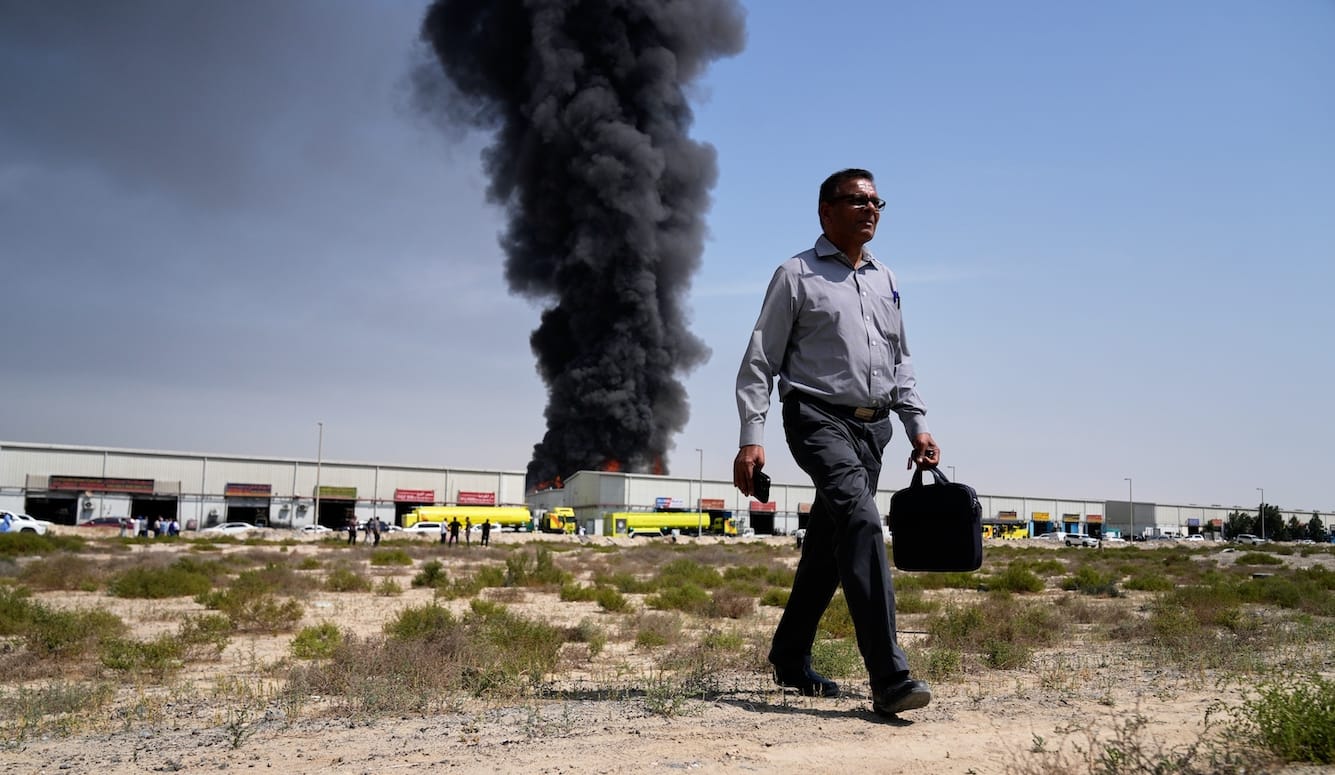
No movement has reacted more aggressively to the Emirati model than the forces of political Islam, particularly the Muslim Brotherhood and the Islamic Republic of Iran. The hostility is structural. The Brotherhood is a transnational extremist enterprise that depends on instability to erode national legitimacy. It cannot coexist with a functioning sovereign Arabic-speaking Muslim state that offers order without ideological mobilisation. Iran’s revolutionary regime perceives an even deeper threat. Since the US–Israel joint operation to dismantle the Islamic Republic began, the UAE has intercepted nearly two thousand Iranian missiles and drones directed at its territory and regional infrastructure, evidence that Tehran recognises in the Emirates something far more dangerous than a rival power; it sees a successful post-ideological state. A prosperous Muslim country aligned with global commerce, technological ambition, and peaceful regional integration undermines the ideological foundation upon which Iran’s revolutionary project rests. That is why Emirati voices who defend sovereignty and the Emirati peace with Israel are routinely dehumanised and attacked online. Amjad Taha, a prominent Emirati commentator and critic of political Islam, was recently depicted in antisemitic caricatures portraying him as a Zionist rat.
A book should be written about why the Islamist regime in Iran hates the UAE the most. Perhaps glamorous Dubai and the Emirati good life remind Tehran of the failure of its Islamic government model? pic.twitter.com/0Z63rzCy7Y
— Hussain Abdul-Hussain (@hahussain) March 13, 2026
But the UAE is not an accident of geography or oil. It is the cumulative result of prioritising state-building over grievance, commerce over ideology, permanence over martyrdom, nationalism over transnationalism. The difference becomes sharper when set against the dominant economic doctrine of the 20th-century Middle East. Arab socialism—institutionalised under Nasser, and later replicated in Syria, Iraq, Libya, Yemen, and Algeria—cast the state as the redeemer and employer. Nationalisation was framed as liberation; central planning as justice. In practice, it often produced bureaucratic stagnation, entrenched patronage networks, systemic corruption, and private sectors too weak to generate independent growth.
While political Islam wages war on women, indigenous people, and religious minorities, the UAE has carefully crafted a path for the prosperity of all three.
The United Arab Emirates chose capitalism and channelled oil revenues into infrastructure, education, and healthcare. Infant mortality fell sharply. Literacy approached universality. Women now constitute the majority in federal higher education (almost two-thirds of university graduates) and hold leadership roles across sectors. Figures like Reem Al Hashimy and Lana Nusseibeh command complex diplomatic and economic portfolios on the global stage. The UAE is even working to get female astronauts sent to space. While political Islam wages war on women, indigenous people, and religious minorities, the UAE has carefully crafted a path for the prosperity of all three.
This success has turned the Emirates into a magnet for those seeking stability amid regional turmoil. Critics will highlight restrictions on free speech and the right to protest. Yet the UAE has become a refuge for millions of Arabs and Muslims fleeing religious extremism and persecution in countries like Syria, Yemen, Lebanon, Iraq, and Iran, where Islamist movements or revolutionary regimes have crushed moderate voices and minorities. Just as the United States historically offered sanctuary to those escaping ideological or religious persecution, the UAE attracts expats, builders, and entrepreneurs who choose the rule of law, opportunity, and coexistence over chaos and uncertainty.
The governing principle for diplomacy in the 21st-century Middle East is simple: sovereignty must precede integration. Without that foundation, negotiation dissolves into doctrinal contestation. Israel remains a revealing measure of political maturity. For decades, opposition to Jewish statehood anchored regional narratives, and the Palestinian cause served as organising grievance, incitement, and revolutionary principle for both pan-Arabism and pan-Islamism. Only consolidated sovereignty can be cashed for normalisation. Not every country in the post-Arabised and Islamised Middle East and North Africa can afford to have peace with Israel because most are still paralysed by domestic factions that are more loyal to ideology than to their own states.
Strip Palestinian and Arab identity of its revolutionary, rejectionist charge and what remains are Bedouin or Levantine traditions.
Through the Abraham Accords, the UAE converted institutional stability into integration, decoupling Arab identity from its political reactionary charge and making way for a renewed embrace of Bedouin roots, even cooperation with Bedouins in Israel. A Gazan woman living in the Negev told me last year that her community only began identifying primarily as Palestinian during the first and second intifadas. Before that, she said, they identified as Bedouin. Political identity hardened in moments of mobilisation. Strip Palestinian and Arab identity of its revolutionary, rejectionist charge and what remains are Bedouin or Levantine traditions. Historically, Bedouin tribes across Arabia maintained defined territorial ranges, cultivated oases, managed pearling and caravan trade networks, and governed themselves through customary law and negotiated alliances long before the consolidation of modern nation-states. Mobility functioned as ecological adaptation, not as absence of rooted sovereignty.
The stakes, then, are civilisational. The UAE demonstrates something that 20th-century ideologies worked hard to erase: that Bedouin sovereignty can exist without ideological absolutism. Long before pan-Arabism or political Islam promised redemption through revolution, tribes across Arabia governed territory, managed trade routes, negotiated alliances, and maintained order through customary law. Sovereignty was practical rather than messianic. If Europe required denazification to dismantle totalitarian hate, much of the Arab world requires a comparable reckoning with movements that subordinated nationhood to ideological missions. Precisely because the Emirati state draws legitimacy from indigenous tradition rather than imported doctrine, it is uniquely positioned to lead such a recalibration.
And here a parallel emerges. Only one other state in the region was built explicitly on indigenous nationhood rooted in particularity and pluralism: Israel. The UAE and Israel both defend bounded statehood in an environment hostile to it. Both are dismissed as artificial foreign implants, pressured to dissolve into transnational visions that deny their legitimacy and permanence.
And the criticism from neighbouring ideologues is getting louder. Saudi Arabia’s Vision 2030 projected transformation was meant to rival Dubai’s ascent, yet recent budgetary recalibrations have made the leadership keenly aware of competitive realities. Disciplined statehood disrupts systems accustomed to ideological passion. The numbers don’t lie. The UAE just exceeded US$1 trillion in non-oil foreign trade (five years ahead of schedule) and its GDP per capita exceeds that of Saudi Arabia, reflecting the fruits of a decades-long diversification strategy.
The conclusion is simple: in volatile environments, integrated sovereignty has proven morally and strategically superior to radical mobilisation. This is not a rejection of democratic process. It is recognition that sovereignty comes first. The UAE’s experiment suggests that Bedouin sovereignty, rooted in indigenous inheritance yet open to global exchange, offers a more durable path to pluralism and prosperity than any revolutionary movement.
When I search for an analogy, I think of Granada, which is small in territory yet immense in civilisational density; luminous without being imperial. Its existence unsettled absolutism because it demonstrated sovereignty without conquest, cultivation without universal mission. The 14th-century Nasrid inscription across the Alhambra, Wa La Ghalib Illa Allah (“There Is No Victor but God”), denied the finality of earthly triumph. Ideology insists it will win history. Granada suggested, with beauty and humility, that no ruler does.
The United Arab Emirates advances a similar model. It asserts sovereignty without claiming to be the end of history or a manifestation of apocalyptic, imperial transcendence like the dying Islamic Republic. It invests in scientific ambition, interfaith architecture, artificial intelligence, and institutional efficiency while resisting extremism and absolutism. A clear line divides Middle Eastern geopolitics, and it’s not just resistance versus integration, but transnational ideology versus sovereignty. In an age of competing ideological empires, survival will belong to those who refuse to construct one.
This essay is part of a series by the author. The next instalment will be about Saudi Arabia.
Quillette invites thoughtful responses to its essays.
Selected responses are published once per week as part of a curated Letters to the Editor feature. If selected, letters appear under the contributor’s real name and may be edited for clarity and length.
To submit a letter for consideration, please email [email protected].
Keep reading
The Many Roots of Our Suffering: Reflections on Robert Trivers (1943–2026)

The First Post-Ideological Bedouin State
Trump, Tehran, and the China Calculus

Parallel Kingdom

Meanwhile, in Sudan
The Australian Way of Life