United Nations
Meanwhile, in Sudan
While Iran, Israel, and Gaza have dominated headlines, a bloody power struggle among Sudanese warlords grinds on.
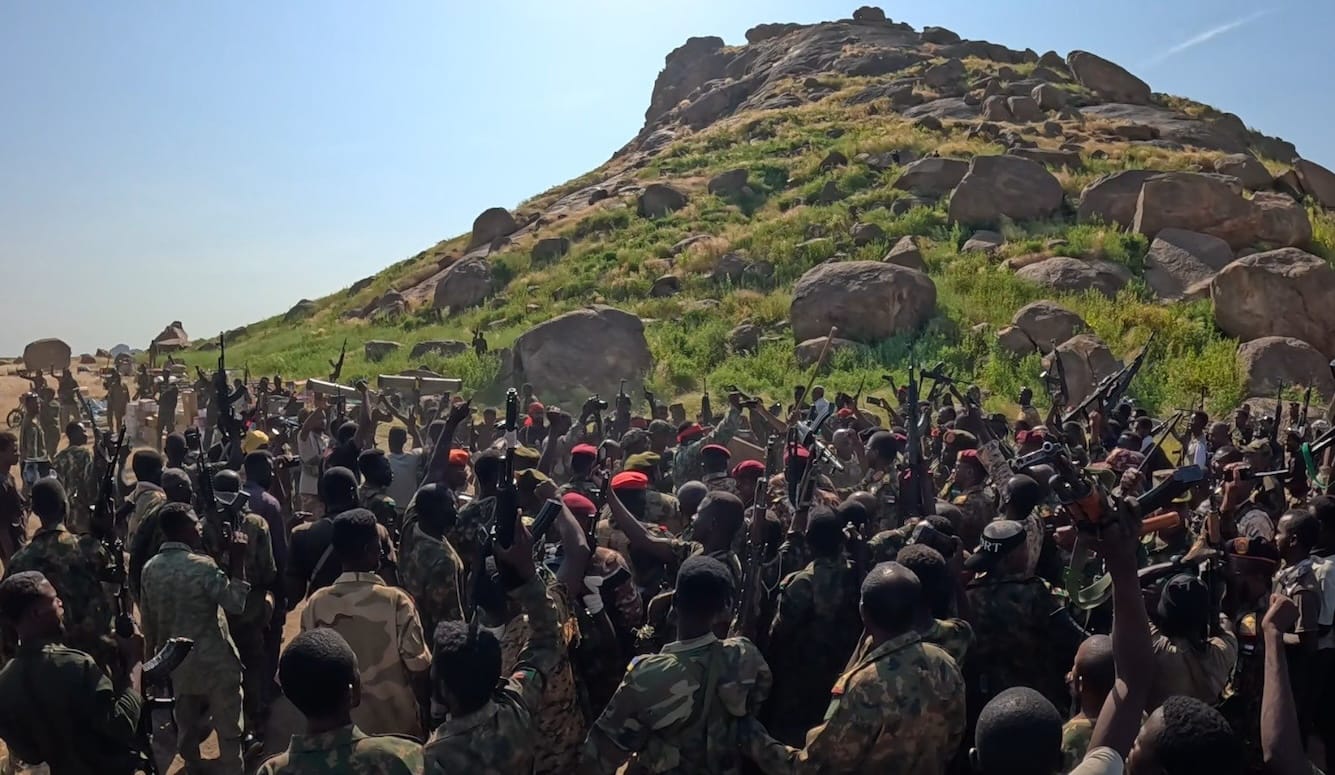

In late February, days before the United States and Israel began bombing Iran, the United Nations Security Council convened to address the world’s worst humanitarian crisis. The members of the Security Council expressed “deep concern over continued violence across Sudan” and “called on the parties to the conflict to immediately halt the fighting.” Not surprisingly, those parties haven’t complied.
By one NGO’s estimate, almost 75 percent of the war-torn African nation’s population is in need of humanitarian assistance. Yet international aid flows have been sparse, in part because the world’s politicians and foreign correspondents are focused on other crises. Even many of the people reading this, I suspect, will be unaware that Sudan has been convulsed by civil war since April 2023, pitting an internationally recognised government controlled by General Abdel Fattah al-Burhan against a paramilitary force known as the Rapid Support Forces (RSF).
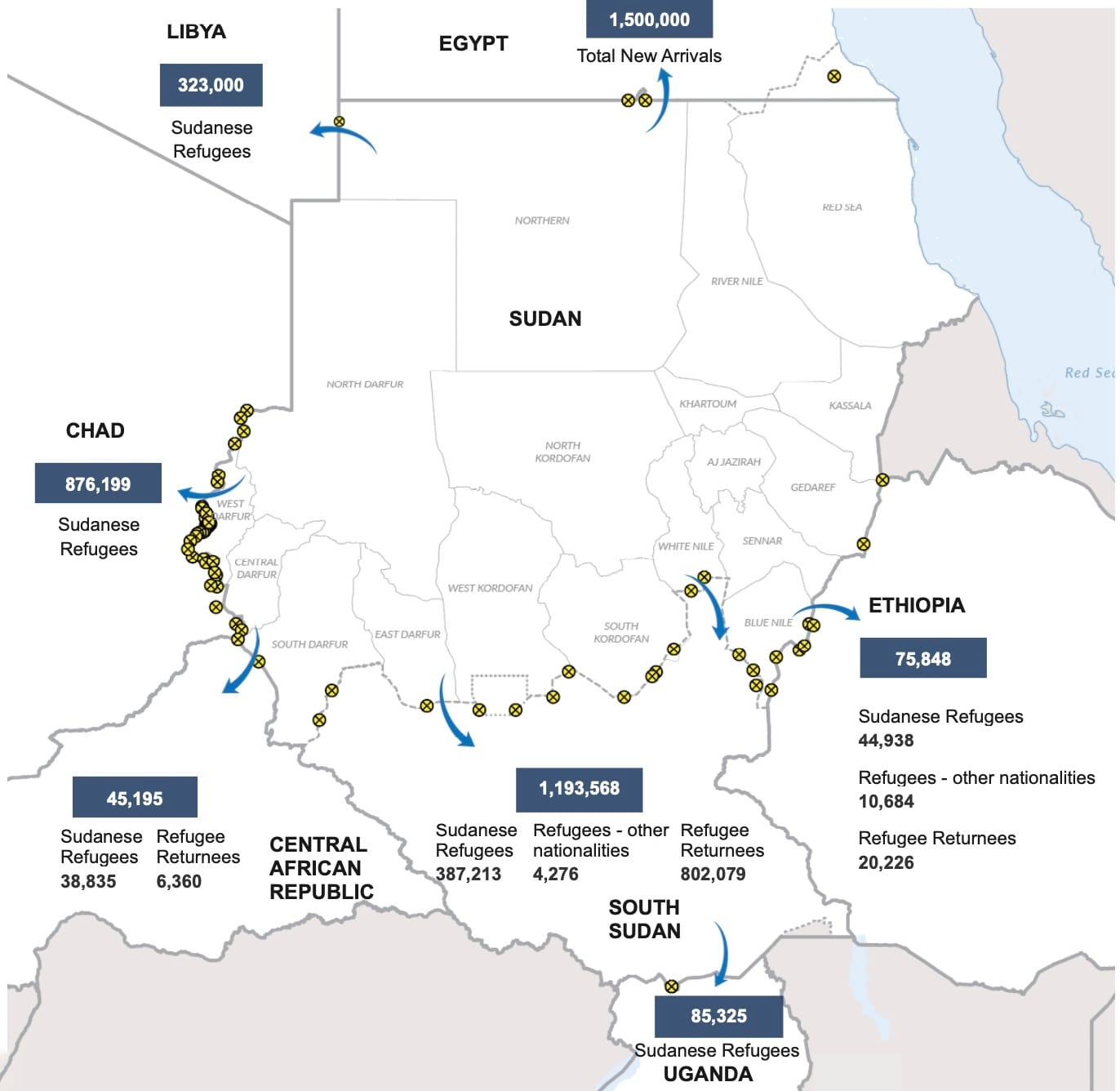
As of early 2025, it was estimated that about 150,000 people had died in the conflict—about double the death tally in Gaza during roughly the same period. (According to Tom Perriello, the former US special envoy for Sudan, the death toll may be over 400,000.) Millions more have been internally displaced, or have fled Sudan as refugees.
Vladimir Putin’s invasion of Ukraine in 2022 diminished the power of the Security Council to address international crises, including this one. Russia is one of five permanent Security Council members, and its belligerence has made it something of a pariah for the first time since the Cold War. As a result, the role of the Security Council as a venue to debate and decide matters of war and peace has been gravely undermined.
On the ground, however, UN officials have done important work chronicling events in a part of the world that many world leaders would prefer to ignore. The Independent International Fact-Finding Mission for the Sudan was created in late 2023 “to investigate and establish the facts, circumstances and root causes of all alleged human rights violations and abuses and violations of international humanitarian law… in the context of the ongoing armed conflict.” Last month, it documented the mass killings conducted by the RSF during its siege of the city of El-Fasher, in Sudan’s Darfur region. “These crimes followed an 18-month siege during which the Rapid Support Forces deliberately imposed conditions of life calculated to bring about the physical destruction of non-Arab communities,” the UN Mission reported.
As those words suggest, the pogroms have an ethnic dimension. Like Sudan’s government, the RSF is dominated by Sudan’s Arab majority; while the victims in El-Fasher (as with Darfur’s killing fields more generally) are primarily indigenous black Africans. The list of horrors they face includes not only malaria, famine, and wanton massacres, but also human trafficking at RSF-run slave markets.
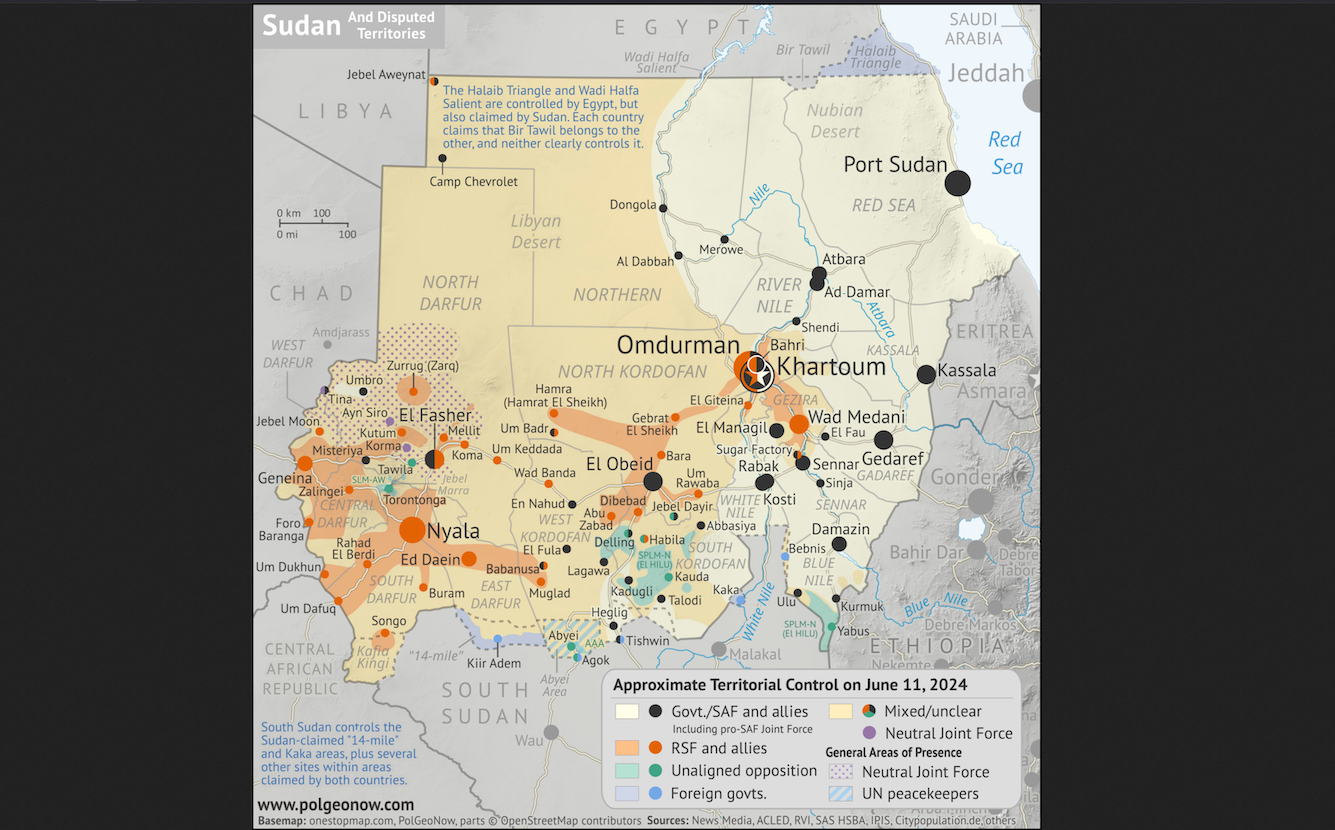
One factor at play here is that Sudan has been suffering so intensely, and for so long, that many observers in the West seem to have grown jaded to its agonies. Sudan’s previous civil war, known as the War in Darfur, began in 2003 and lasted for a decade and a half. It ended with a popular uprising against Islamist dictator Omar al-Bashir, who was deposed in a 2019 coup d’état. Since then, the country has been ruled by a junta headed by the aforementioned al-Burhan.
The current civil war pits al-Burhan’s Sudanese Armed Forces against RSF-led rebels commanded by his former ally, Muhammad Hamdan Dagalo Musa—more commonly known by his nom de guerre, “Hemedti” (“little Mohamed”). Hemedti rose to power as one of the infamous Janjaweed warlords who terrorised Darfurian farmers during Sudan’s previous bout of civil bloodshed. His forces now control most of the country’s populated western areas, including Darfur itself.
The war has reduced much of the capital city of Khartoum to ruins. Al-Burhan’s rump governing faction controls the formal trappings of the state. But his rival Hemedti is the one exercising real control over much of the country through his Janjaweed (an Arabic word meaning “devils on horseback”), allied local militias, and a fleet of Chinese-made drones. Thanks to the assistance he receives from outside actors and his own sprawling Sudanese business network, he’s been able to keep his mercenaries armed and fed.
Like the civil war in Yemen, another failed state in the region, Sudan’s struggle has drawn in outside actors. Saudi Arabia supports Sudan’s recognised government; while the United Arab Emirates, fearing the Islamist tendencies of al-Burhan’s allies, provides essential support to the RSF. Sudan’s government is also supported by Iran, with which al-Burhan restored diplomatic relations in 2023, just days after another Iranian ally, Hamas, launched its terrorist attacks against Israel. In February 2025, Sudan offered Moscow the use of its coastal territory for the purposes of constructing a Russian naval station on the Red Sea. It would be the first such Russian facility ever constructed on African soil.
 Brian Stewart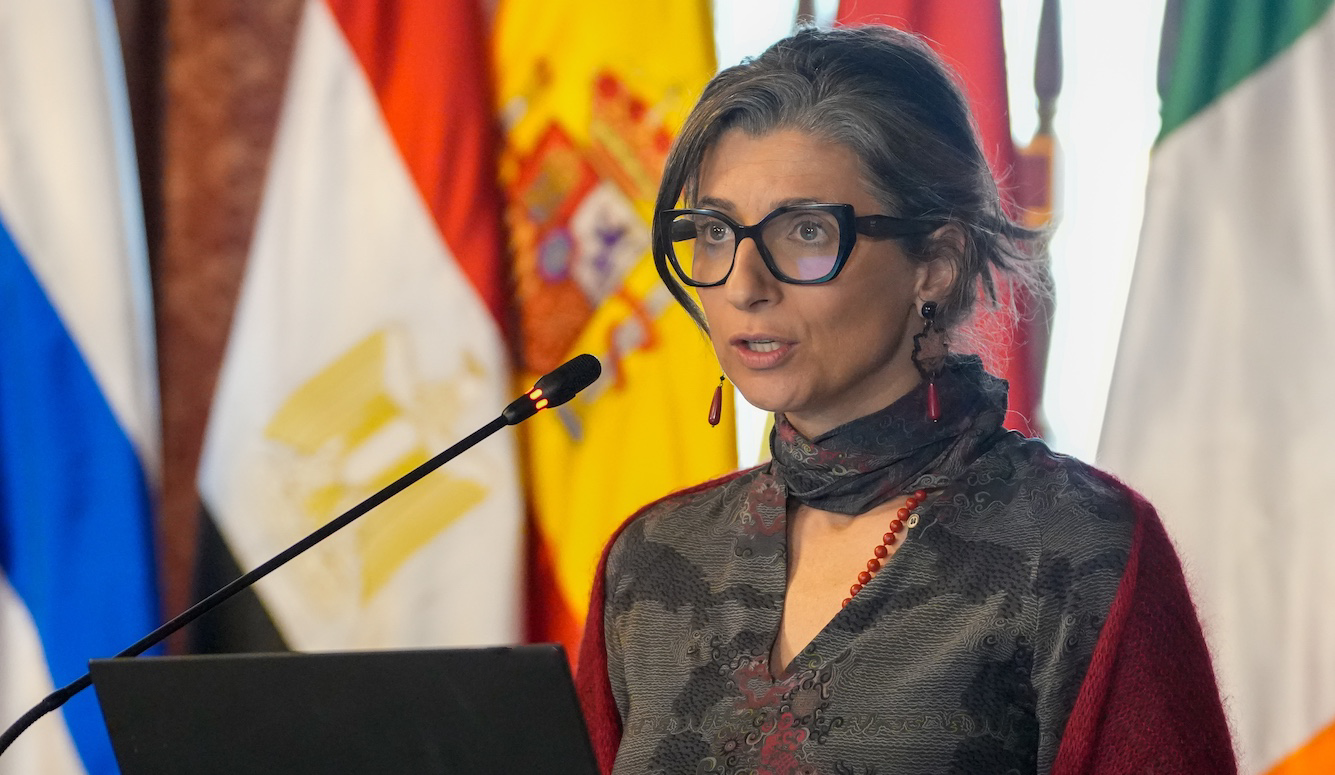
Seven years ago, following the seizure of power by al-Burhan’s junta in April 2019, there’d been some basis for hope that Sudan might have a peaceful future. In June 2020, the United Nations formed an Integrated Transition Assistance Mission in Sudan (not to be confused with the above-referenced Independent International Fact-Finding Mission for the Sudan)—a group mandated to assist members of the country’s (now defunct) Transitional Military Council to set Sudan on a course toward democracy. By 2023, however, these generals had fallen out with one another, and the entity was disbanded.
The RSF’s recent acts of slaughter in El-Fasher represent a dangerous escalation in the conflict. Satellite imagery appears to show mass graves in the city. Nathaniel Raymond, executive director of the Yale Humanitarian Research Lab, estimates that between 30,000 and 100,000 people may have been killed in this area alone during a six-week period in late 2025. That would suggest a rate of killing an order of magnitude higher than what Gaza suffered between late 2023 and late 2025—notwithstanding the almost complete lack of global attention being paid to Sudan. (For its part, the Trump administration has slapped sanctions on RSF leaders, but otherwise has given few indications that the country figures prominently on the US President’s geopolitical radar.)
The United Nations humanitarian chief, Tom Fletcher, has described El-Fasher as “basically a crime scene.” A senior UN official warned that the “mass killing,” “sexual violence on a massive scale,” “torture,” and other abuses in the region indicate possible genocide. The International Rescue Committee notes that such massacres may be repeated in a central Sudanese region known as Kordofan. There is also concern that all of this bloodshed will spill over into South Sudan, which split off from Sudan in 2011, and thereby propel that young country into its own civil war (not its first).
Indeed, there is something positively medieval about the chaos and carnage in Sudan. (This adjective may be taken literally, as the fighting between nomadic Arabic herders and African farmers in Darfur evokes the similar military dynamic that existed a millennium ago when Pechenegs and Seljuk Turks were raiding settled Byzantine farming communities in Thrace and Anatolia.) What’s worse, this Hobbesian dystopia may not comprise a geopolitical aberration, but, as Anne Applebaum wrote in a recent Atlantic essay, an illustration of what we might soon see unfold in any number of other theatres.
“The end of the liberal world order is a phrase that gets thrown around in conference rooms and university lecture halls in Washington and Brussels,” she writes. “But here it is not theoretical… The disappearance of any form of international order has left Sudan as the focus of intense competition among middle powers—countries that send money, weapons, and influence not to stabilize the country, but to shape the outcome of the war.”
“As old rules and norms fall away,” she warns, they aren’t being replaced by some new moral and legal structure. Rather, “they are replaced by nothing.”
Quillette invites thoughtful responses to its essays.
Selected responses are published once per week as part of a curated Letters to the Editor feature. If selected, letters appear under the contributor’s real name and may be edited for clarity and length.
To submit a letter for consideration, please email [email protected].
Keep reading
Meanwhile, in Sudan
The Australian Way of Life

What Makes the West Western?
The State of Grace

Letters to the Editor
Iran’s Revolutionary Regime and the Long War Against the West: Behnam Ben Taleblu