History
What Makes the West Western?
Naoíse Mac Sweeney’s new book tries to convince readers that Western civilisation doesn’t exist.
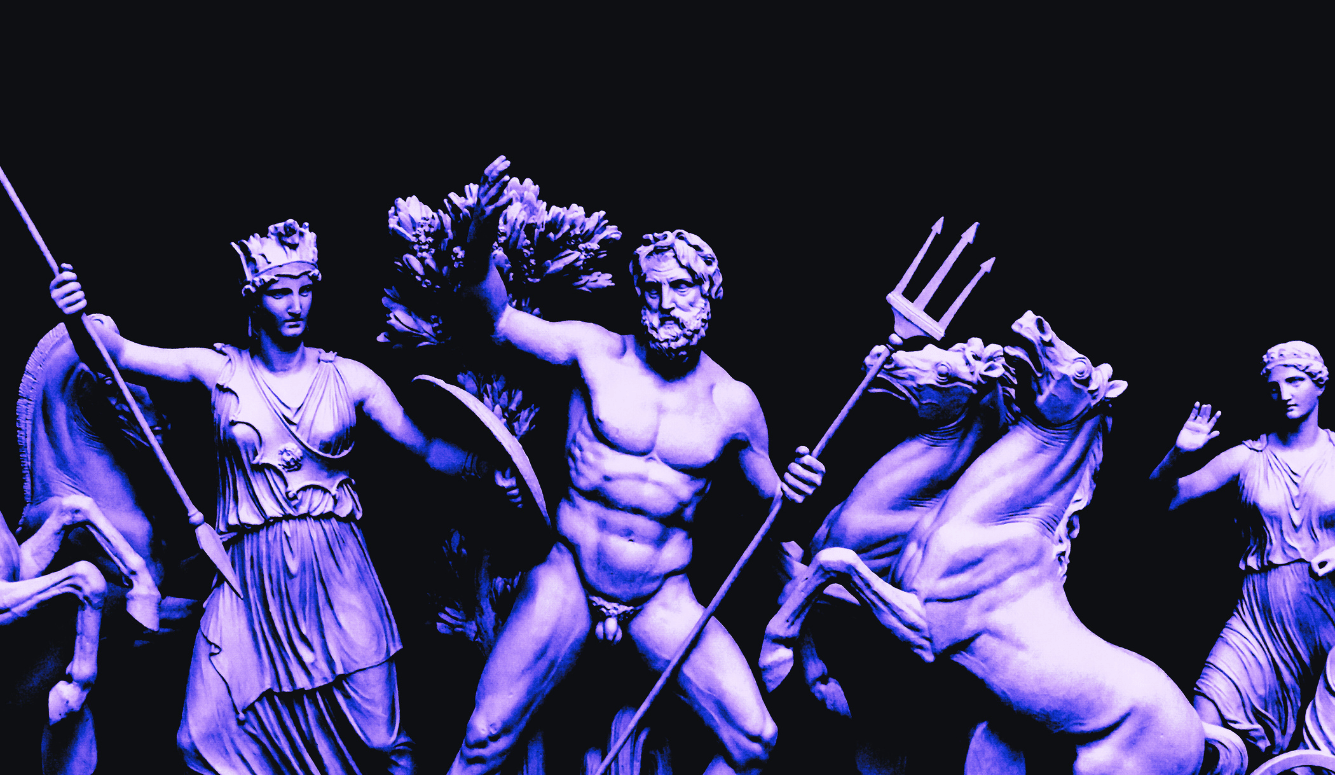

A review of The West: A New History in Fourteen Lives by Naoíse Mac Sweeney, 448 pages, Dutton (May 2023).
At the 2019 Annual Meeting of the Society for Classical Studies in San Diego, California, independent scholar Mary Frances Williams stood up at the end of a panel on “the future of classics,” and suggested that classicists should view their field as the study of the foundations of Western civilisation. Classics “matters,” she went on, “because it’s the West.” Sarah Bond, a professor at the University of Iowa, cut in, declaring that ‘‘Western civilisation is a construct—a complete construction.”
Since then, how one views “Western civilisation” (a phrase now almost invariably accompanied by scare quotes in academic prose) has become a shibboleth for professional classicists, especially at the more prestigious institutions. Defending the record, or even simply the existence, of Western civilisation, is liable to get you tarred with the white supremacism brush, as I discovered after my four-part series on Western civilisation and the classics appeared here in Quillette in early 2019. (“This is how white supremacism perpetuates itself,” Rebecca Futo Kennedy, a professor at Denison University in Ohio, said of my arguments.)
 James Kierstead
Denouncing Western civilisation as the root of all historical evils will likely stand you in good stead on the job market. If you really want to rise to the upper echelons of the field, though, you will have to adopt a more extreme view—one that most people outside of academia would likely dismiss as absurd. This is essentially the view expressed by Sarah Bond above—that Western civilisation is nothing more than “a social construct,” or, to quote the title of a lecture by Kwame Anthony Appiah, that “there is no such thing as Western civilization” and never has been. Every time we talk about “the West” or “Western heritage,” that is, we are behaving like those deluded eighteenth-century scientists who kept banging on about phlogiston.
The hegemonic status that this view has acquired within the upper reaches of academic classics is all the more striking considering that almost all university classics departments, until very recently, advertised themselves as providing a grounding in the foundations of Western civilisation. These days, departments are more likely to post on their websites some version of the Society for Classical Studies’ 2016 statement condemning “the use of the texts, ideals, and images of the Greek and Roman world to promote racism or a view of the Classical world as the unique inheritance of a falsely-imagined and narrowly-conceived western civilization.”
Naoíse Mac Sweeney’s 2023 book The West: A New History in Fourteen Lives, is essentially a re-statement of the new orthodoxy that (to quote David Graeber) “there never was a West.” Instead, Western civilisation is “an invented social construct, one that is extremely powerful and has far-reaching consequences in the real world, but a construct nonetheless.” Mac Sweeney supports this contention through vivid chapter-length pen-portraits of fourteen historical figures.
The points Mac Sweeney calls on her cast of historical characters to make are as different as the characters themselves. Some are called in to undermine the idea of a “Greco-Roman civilization” as the foundation of the West. Herodotus and Livilla (Augustus’s grand-daughter) provide examples of ancient thinkers who did not perceive themselves as part of a specifically Western tradition, while the chronicler Godfrey of Viterbo and the Byzantine emperor Theodore Laskaris call into question the idea that Greece and Rome form a natural pair.
Others illustrate the porousness of the boundaries between the West and the rest. This is the role of the Abbasid polymath al-Kindi, the Renaissance woman Tullia d’Aragona, Safiye Sultan (chief consort to the Ottoman sultan Murad III), and the English philosopher Francis Bacon, each of whom straddle and hence (for Mac Sweeney) unsettle East–West boundaries.
A third category of historical figures teaches us about what Mac Sweeney sees as the “construction” of Western civilisation. The lives of Queen Njinga of Angola and the American slave Phillis Wheatley illustrate the shift from a colourblind to a racist conception of the West, while Joseph Warren shows us how the US founding fathers conceived of their nascent republic as part of a Western cultural narrative stretching back to Greece and Rome. William Gladstone, for his part, shows us how a British prime minister could turn narratives of the West to antisemitic ends.
Mac Sweeney’s final two figures symbolise more recent intellectual trends. Edward Said is Mac Sweeney’s standard-bearer for the contemporary turn against the grand narrative of the West. Carrie Lam, the former chief executive of Hong Kong, serves as a warning about the new brand of “civilizational essentialism” promoted by the Chinese Communist Party.
On one level, then, Mac Sweeney’s book is about what she calls the “grand narrative of the West,” in which Western civilisation began in a hybrid “Greco-Roman antiquity,” was transmitted almost uniquely to Europe, and made the modern West superior to the rest of the world.
But the book also constructs a new narrative of its own, a metanarrative about how this more familiar story was constructed. In this new metanarrative, not everyone thought of Greece and Rome as proto-Western, or of the West as in any sense superior—least of all racially—until very recently. What created the “social construct” of the West was European colonialism, and its need to justify its oppression and dispossession of non-Western “others.” “The West” is thus nothing more than a creation of modern imperial rhetoric.
Helen Pluckrose
Keep reading
Jerry Kaplan on AI Doomers
Payback Time for Steven Galloway
War Stories

Life in The Grim Old Days
In Defence of Academic Standards