Iran
Britain’s Half-Measures on Iran
As Iranian agents surveil London’s Jewish communities and IRGC-backed plots multiply, Britain’s failure to proscribe the Iranian Revolutionary Guard Corps endangers UK citizens.
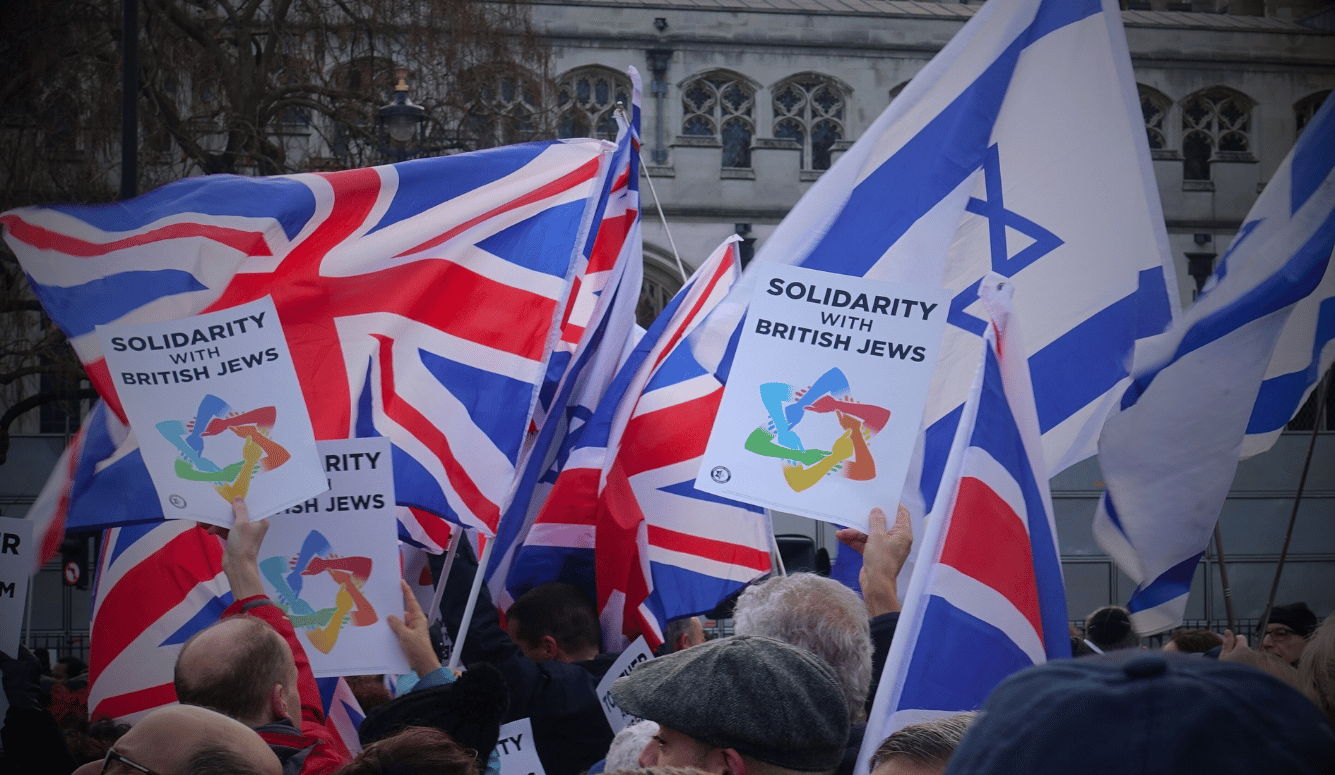

In the early hours of 6 March, British counter-terrorism police arrested four Iranian men suspected of assisting Iranian intelligence services in surveillance operations targeting London’s Jewish community. The arrests took place in Barnet, Harrow, and Watford, boroughs that together are home to roughly 65,000 Jews, one of the largest concentrations of Jewish life anywhere in Europe. Six others were also arrested in connection with the operation. The arrests are not the first indication of Iranian state activity in Britain, nor will they likely be the last. But they raise an obvious question: why does the United Kingdom still refuse to proscribe the IRGC as a terrorist organisation?
Britain has long faced a diverse array of terrorist threats, and it has often responded with makeshift solutions. Tourists who visit London are often surprised to discover that in the heart of one of the world’s busiest cities there are almost no rubbish bins. Most of them were removed after the Irish Republican Army’s bombing campaigns of the early 1990s, when a bomb concealed inside a bin at Victoria Station killed one person and injured dozens. In 2013, when the City of London reintroduced just twenty bins—this time blast-proof—on a “trial basis” along Bishopsgate in response to littering concerns, the decision made national headlines.
Proscription was intended as a step toward severing the military and ideological support networks that terrorist organisations might cultivate within the United Kingdom. The policy was shaped in large part by the Northern Ireland Troubles, a decades-long conflict between the IRA and British police and military authorities. The IRA’s mass-casualty attacks, particularly its bombings of civilian spaces, eroded sympathy for its cause. On “Bloody Friday,” 21 July 1972, the IRA detonated 22 bombs across Belfast, killing nine people and grievously injuring around 130 others. One year later, Parliament enacted the Northern Ireland (Emergency Provisions) Act 1973, expanding powers of search and arrest for anyone suspected of IRA links. Section 10 of the Act, as originally drafted, stated: “Any constable may arrest without warrant any person whom he suspects of being a terrorist.” For the first time in its modern history, Britain had adopted a zero-tolerance stance toward terrorism.
In 2000, Tony Blair’s government enacted a new Terrorism Act. Home Secretary Jack Straw told the House of Commons that its purpose was to help ensure a “safe, just and tolerant society.” The government immediately used it to proscribe twenty-one organisations including al-Qaeda and other jihadist groups. These measures enabled the arrest of many high-profile terrorists. In 2004, police arrested the Egyptian-born cleric Abu Hamza al-Masri, an al-Qaeda supporter whose documented incitements to violence led to his 2006 conviction for encouraging the killing of non-Muslims, promoting racial hatred, and possessing terrorist materials. Al-Masri is now in prison in the US.
Without the Terrorism Act, which allows the government to proscribe any group even indirectly “concerned in terrorism,” individuals like al-Masri would walk the streets of Britain freely, publicly recruiting for Hamas, Hezbollah, ISIS, and the Taliban. Proscription also provides grounds to investigate affiliates, whether they belong to independent militant groups or act as proxies for foreign states.
As the country is a common-law jurisdiction without a written constitution, in Britain definitions are legally important. Lawmakers can spend a lot of time debating the meaning of a single word in a bill. The result is that few words in a statute are ever superfluous—and this is certainly true of the Terrorism Act. In the absence of an internationally agreed definition of terrorism, the Terrorism Act 2000 defines it as the “use or threat of action… designed to influence the [British] government or to intimidate the public or a section of the public, and… made for the purpose of advancing a political, religious, or ideological cause.” The action or threat must involve violence, danger to life, or serious damage, and does not require the perpetrator to be based in the United Kingdom. Under Section 3 of the Act, the Home Secretary can proscribe any organisation that “commits or participates in acts of terrorism, prepares for terrorism, promotes or encourages terrorism, or is otherwise concerned in terrorism.”
There is hardly an organisation on the planet that satisfies these definitions more completely than the IRGC: a quasi-state militia forged in the aftermath of the 1979 Islamic Revolution, answerable only to the Supreme Leader, and animated by a founding ideology steeped in the cult of Khomeinist martyrdom—a global revolutionary project that openly celebrates the prospect of killing all non-believers. Over the span of four decades, the Sepah-e Pasdaran, as it is known in Farsi, has transformed what began as an assortment of bloodthirsty Islamists into one of the most formidable terrorist networks on the planet, with auxiliaries across the globe.
The new chief of the IRGC, Ahmad Vahidi—wanted by Interpol in connection with the 1994 bombing of the AMIA Jewish community centre in Buenos Aires that killed 85 people—previously served as commander of the organisation’s Quds Force, the branch responsible for conducting operations almost entirely outside of Iran. The Quds Force has trained, funded, and directed organisations already proscribed under the Terrorism Act, including Hezbollah, Hamas, and al-Qaeda. It has also paid members of transnational criminal organisations and separatist movements—including the Foxtrot Network, the Mocro Mafia, and the Polisario Front—to assassinate Israeli, Jewish, and Iranian dissidents in Europe and North Africa.
Iran has targeted senior American officials involved in the Abraham Accords. In his book Never Give an Inch, Mike Pompeo writes that an IRGC operative tried to hire a contract killer to target him. Iranian hitmen almost succeeded in killing Pompeo during his visit to Paris in 2022. As of 2025, the persistent threats against his life from the IRGC remained “serious and credible.” These are the methods of a terrorist regime.
Proscribing the IRGC was a manifesto commitment of the present Labour government and a step its members repeatedly criticised the Conservatives for failing to take. Yet, for Keir Starmer’s government, IRGC proscription has become politically tricky. If he forces it through now, Starmer will undoubtedly be lambasted by the radical Left—particularly by people like Jeremy Corbyn, who once described the proscription of Hamas as a “really big, big, historical mistake” and now leads the far-left splinter group, Your Party. Further complicating matters is the meteoric rise of the Green Party, whose press officer has publicly denied that Hamas committed sexual violence on 7 October and whose controversial Urdu-language election campaign included leaflets urging voters to “punish Labour for Gaza.” Starmer’s advisers may feel that proscription is a vote-loser—even though recent polling by J.L. Partners suggests that nearly two-thirds of the country and almost three quarters of Labour voters approve of the policy.
The IRGC’s funds are already designated as illicit and subject to counter-terrorism financing restrictions under the Sanctions and Anti-Money Laundering Act 2018 (SAMLA). Within this framework, the UK has placed over 400 sanctions on Iran, including trade restrictions on materials that the IRGC could use for arms manufacturing. Business Secretary Peter Kyle has argued that given the intensity of existing sanctions, full proscription would be unnecessarily heavy-handed. Critics warn that it could impinge on freedoms of expression and assembly, and might undermine Britain’s ability to maintain diplomatic channels with Tehran’s more “moderate” figures.
These arguments are unconvincing. Sanctions are only as effective as their enforcement by regulators and financial institutions. A 2024 report by Spotlight on Corruption noted that there had been zero fines for breaches of financial sanctions since 2022, zero convictions for sanctions evasion since 2012, and no assets permanently seized through civil or criminal proceedings. Sanctions alone have not prevented two UK-registered companies from running an illicit cryptocurrency exchange that processed nearly US$1 billion in IRGC-linked transactions between 2023 and 2025. Nor have they dissuaded wealthy intermediaries such as Ali Alansari from channelling hundreds of millions of dollars in IRGC-linked funds through British property markets. The £100 million London property network linked to Iran’s reported new Supreme Leader Mojtaba Khamenei suggests that Britain’s sanctions regime is hardly functioning as intended.
The Foreign Office may be blocking IRGC proscription on the grounds that it would force the United Kingdom to sever diplomatic relations with Iran, something the bureaucrats oppose. Indeed, The Telegraph has just revealed that on 12 February, Foreign Office staff attended an event at the Iranian Embassy in celebration of the Islamic Revolution, when the regime had already massacred tens of thousands of its own people.
 Shay Khatiri
There are no moderate power centres within Iran’s political system. Even the most hopeful attempts at gradual reform by the carefully stage-managed “reformist” camp were effectively crushed during the Green Movement of 2009. Masoud Pezeshkian, Iran’s current president, is a former IRGC militiaman who served in the Basij forces enforcing the regime’s surveillance and morality codes—a man who has declared war against the West repeatedly in recent months. If this is the sort of moderate voice with whom Labour hopes to conduct its diplomacy, the prospects are grim.
In addition, the sanctions-only approach designates the regime a terrorist actor abroad while tolerating its agents operating at home. As defence analyst Barak Seener notes in his landmark report on the case for IRGC proscription:
As the IRGC is designated but not proscribed as a terrorist organisation, the absurd scenario has arisen in which one can be convicted for funding the IRGC abroad under the Sanctions and Anti-Money Laundering Act 2018, but cannot be convicted under the Terrorism Act for promoting IRGC initiatives within the UK.
Much of this absurdity, Seener argues, stems from an overly narrow interpretation of the Terrorism Act 2000. Enforcement has focused on offences committed within Britain’s borders rather than those carried out abroad, even though Section 1(4) of the Act clearly allows individuals promoting IRGC-linked terrorist activity to be prosecuted regardless of where the acts occur.
The government’s current position is that while existing procedures allow for the proscription of non-state or sub-state terrorist actors, designating the military arm of a sovereign state as a terrorist organisation would require additional legal scrutiny, and likely further legislation. This argument is based on a January 2023 report by Jonathan Hall KC, the independent reviewer of terrorism legislation. According to Hall, Parliament would need to amend the Terrorism Act 2000 to distinguish between terroristic and lawful state violence before an organisation such as the IRGC could be formally proscribed.
Yet more than three years have elapsed since Hall’s report and his recommendations have yet to be implemented. During a House of Commons debate on 3 March, the Foreign Secretary, Yvette Cooper, was asked by her Labour colleague Mark Sewards whether, in light of Iran’s massacre of its own people and its indiscriminate attacks across the region, the government would move to proscribe the IRGC. Cooper’s reply was evasive: “We keep all proscription decisions under close review.”
Moreover, Hall’s objections had already been undermined when the Wagner Group was proscribed by Rishi Sunak’s government in September 2023. Wagner, a hybrid paramilitary-mercenary organisation with longstanding links to the Russian state, is precisely the sort of state-adjacent structure Hall claimed could not easily be captured under the Terrorism Act. Yet Parliament added Wagner to the list of proscribed organisations, making membership of or support for the group a criminal offence.
If the United Kingdom is ever going to proscribe the IRGC, now is the time to do it. As the Islamic Republic falls into disarray, British military personnel, including at an RAF base in Cyprus, have been targeted in Iranian strikes. The European Union has added the IRGC to its terror list. Australia has listed the IRGC as a state sponsor of terrorism.
In July 2025, a heavily redacted parliamentary report on Iranian state hostility revealed that the IRGC Intelligence Organisation (IRGC-IO)—the same group recently sanctioned by the US Treasury for managing Iran’s “national campaign of mass violence, arbitrary detentions, and intimidation”—maintains undeclared agent networks in the United Kingdom. MI5 Director-General Ken McCallum has warned that, since January 2022, at least twenty Iran-backed plots have posed potentially lethal threats to British citizens and residents. Meanwhile, the Islamic Centre of England in Maida Vale, an IRGC front located a few hundred yards away from a Jewish primary school, openly hosts Hezbollah-themed yard sales. The Ahlulbayt (Shi’a) Islamic Mission—whose senior figures have repeatedly been linked to Iran and which presents itself as a charity despite not being registered as one—nearly succeeded in operating a Khomeinist youth camp. Most recently, twenty-seven Ahlulbayt student societies across Britain issued statements mourning Ali Khamenei.
So long as the government refuses to proscribe the IRGC as a terrorist organisation, the situation will only worsen. Solutions outside of full proscription will do little to prevent Iran from relocating thousands of its most dangerous underground assets within Britain’s borders, where it knows that they cannot be prosecuted for IRGC membership. Should that ever occur, the “safe, just, and tolerant society” Jack Straw once envisioned will have been sacrificed to jihadist thuggery on the altar of political expedience and legal technicality. If the Labour government truly values Britain’s security, it must avoid this.
Quillette invites thoughtful responses to its essays.
Selected responses are published once per week as part of a curated Letters to the Editor feature. If selected, letters appear under the contributor’s real name and may be edited for clarity and length.
To submit a letter for consideration, please email [email protected].
Keep reading
Searching for Structure
Strange Bedfellows
The Axis of Renewal

Doomscrolling into Adulthood