Iran
Toppling a Tyrant
The assassination of Ayatollah Khamenei has opened a narrow window for regime change in Tehran.
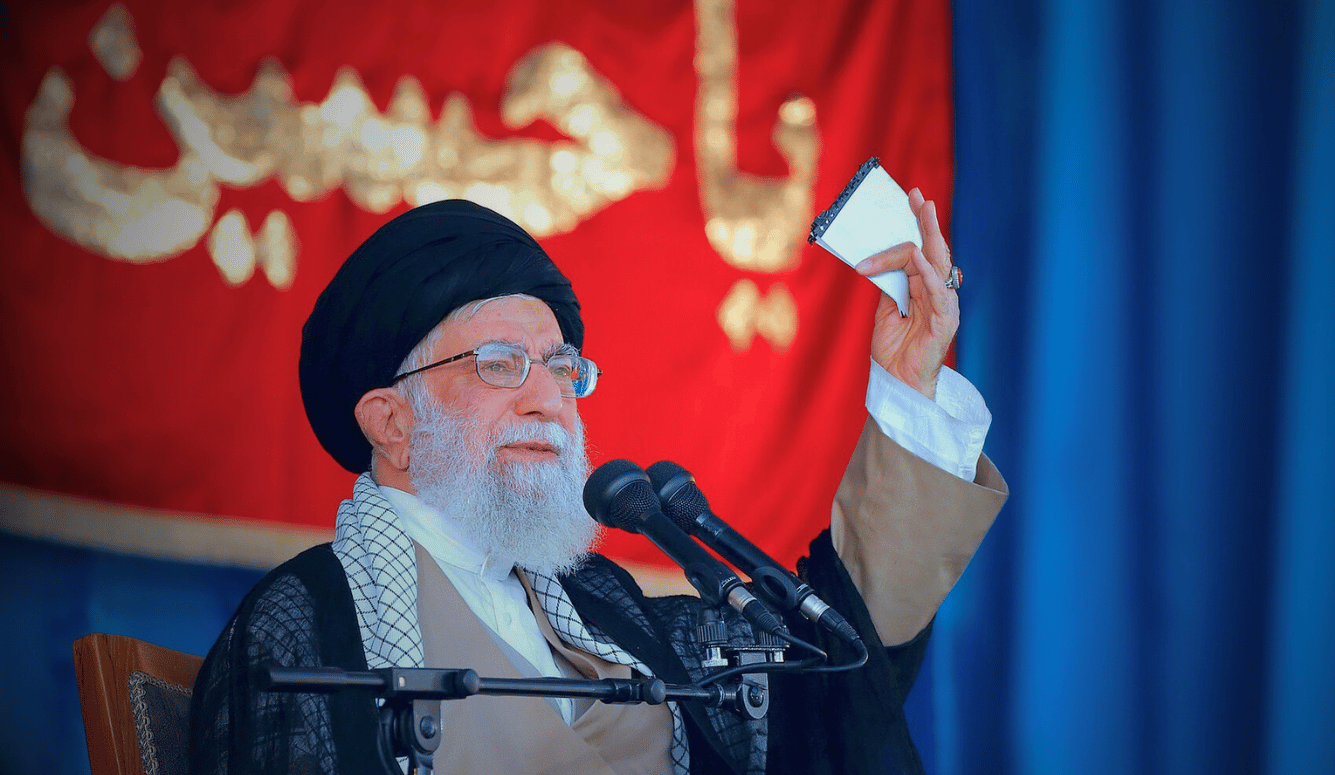

Israel has turned regime decapitation into an art form. Saturday’s targeted assassination of Ayatollah Ali Khamenei, the “Supreme Leader” who ruled Iran with an iron fist for 37 years, was a virtuoso performance. Khamenei died alongside key aides and family members—who reportedly included one of his daughters and a grandson—when thirty bombs were dropped by Israeli Air Force (IAF) jets on his office compound in Tehran, in the first wave of the joint American–Israeli aerial assault on Iran. That assassination was an almost exact replica of Israel’s killing of Hezbollah leader Hassan Nasrallah in September 2024 and of the killing of Mohammed Deif, the commander of Hamas’s military wing, in the southern Gaza Strip in July 2024, during the Israeli–Hamas war triggered by Hamas’s slaughter of 1,200 Israelis on 7 October 2023.
But the killing of Khamenei was different. Nasrallah, for all his wiles and charisma, and Deif, who survived seven Israeli attempts on his life over the previous two decades, were relatively small fry. Khamenei, however, was the Shi’ite world’s most prominent figure and the formidable head of a country much larger than France, Germany, and Britain combined—with ninety million people, a nuclear weapons programme, armed forces with powerful ballistic missile capabilities, and one million troops.
It is unclear why and how Israel was able to accurately target the 86-year-old leader so easily—in his office, no less—after he had been in hiding and moving from place to place for weeks and both Israel and America had repeatedly threatened to assassinate him. Perhaps Khamenei believed that the “infidels” wouldn’t dare; or that Allah would protect him; or perhaps he harboured a wish to depart this world a shahid (martyr), a revered status in Islam.
Khamenei’s assassination had two immediate results on the streets of Tehran: public outpourings of grief by the regime’s supporters; and dancing and jubilation in city squares on the part of its opponents, though the regime’s Basij militiamen quickly poured into the streets on foot and on motorcycles to stifle larger anti-government effusions. But in the long-term, Khamenei’s death will certainly increase Islamists’ anger against Israel and the US and their desire for revenge, which has already been strong since the Israeli and American-assisted assault on Iran in June 2025.
Iranian President Masoud Pezeshkian, who was also targeted by Israel in the attack on Tehran on Saturday, declared that the killing of Khamenei was “a declaration of war” against the world’s Muslims. So far, the most serious eruption outside Iran took place on Sunday night, when Hezbollah launched a salvo of rockets against northern Israel. Hezbollah joined Hamas’s assault on Israel on 8 October 2023 and, after the subsequent pounding by Israel, signed an American- and French-brokered ceasefire in November 2024, in an agreement that stipulated that Hezbollah would disarm. But the terrorist organisation subsequently reneged on that part of the agreement and over the past months Israel has killed some 430 Hezbollah operatives, mainly in southern Lebanon.
Hezbollah’s rocketing of Israel on Sunday has apparently renewed its confrontation with the Jewish state. Israeli jets later bombed Hezbollah targets in Beirut and elsewhere in Lebanon and killed Hezbollah’s second-in-command, Mohammed Ra’ad. The Lebanese government has also announced that 31 Lebanese have been killed. Israel has ordered the inhabitants of 53 south Lebanese villages to evacuate their homes. It appears that Israel now faces a two-front war in the coming months. Israeli officials expect Yemen’s Houthi militia, another Iranian proxy with ballistic missiles, to join the fight.
The killing of Khamenei has also led to serious outbreaks of violence in Pakistan. Mobs attacked the American consulate in Karachi, where Pakistani security men shot dead at least nine men. On Monday, there were massive anti-American and anti-Israel demonstrations in the country’s other cities. Meanwhile, in Austin, Texas, a Senegalese-American, reportedly draped in an Iranian flag, shot up a bar killing two and wounding a dozen others before he was killed by police. American and Israeli officials worry that dormant Iranian or pro-Iranian terrorist cells will attack Israeli, Jewish, or American targets in Europe and Latin America over the coming days.
Khamenei, an antisemite who for decades had vowed to destroy Israel, has now been replaced by a provisional three-man council, while a committee largely composed of clerics, the Assembly of Experts, decides who will succeed him as Supreme Leader. Some Western observers predict a struggle between the extremist, messianic wing of the Iranian leadership, of which Khamenei was a part, and the so-called “reformist camp,” currently represented by Pezeshkian. This apparent split, however, is largely a figment of journalistic imagination; Iran’s establishment is effectively composed only of what normal people would call extremists.
 Roya Hakakian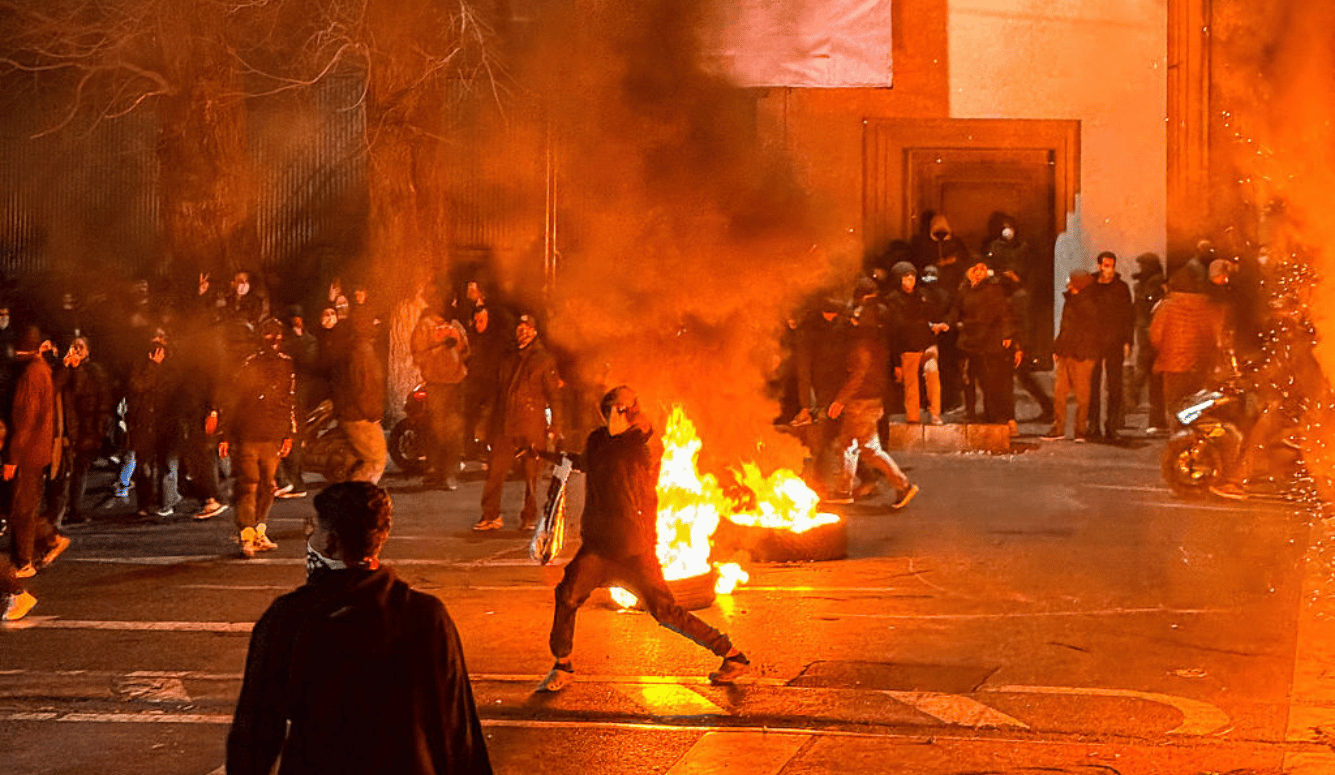
The start of the American–Israeli assault on Iran on Saturday was timed to coincide with two meetings of Iranian military leaders, which Israeli and American intelligence had got wind of: one in Khamenei’s office and the other in a nearby complex. Israeli jets managed to breach Iran’s air defences undetected and struck both meetings simultaneously. In the decapitation operation, the IAF killed the commander of the Iranian Revolutionary Guard Corps (IRGC), Mohammad Pakpour (who had replaced Hossein Salami, assassinated by Israel in the aerial offensive last June); Defence Minister Aziz Nasirzadeh; the commander of the Iranian army, Abdolrahim Mousavi (his predecessor, Mohammad Bagheri, was also assassinated by Israel last June); and Khamenei’s military adviser, Ali Shamkhani, who was severely injured in an Israeli air strike last June.
Keep reading
The Many Roots of Our Suffering: Reflections on Robert Trivers (1943–2026)

The First Post-Ideological Bedouin State
Trump, Tehran, and the China Calculus
Parallel Kingdom
Meanwhile, in Sudan
The Australian Way of Life