Islam
Islamism: Shooting the Messenger
The British establishment tends to deflect attention from the dangers of Islamism by attempting to silence those who point them out.
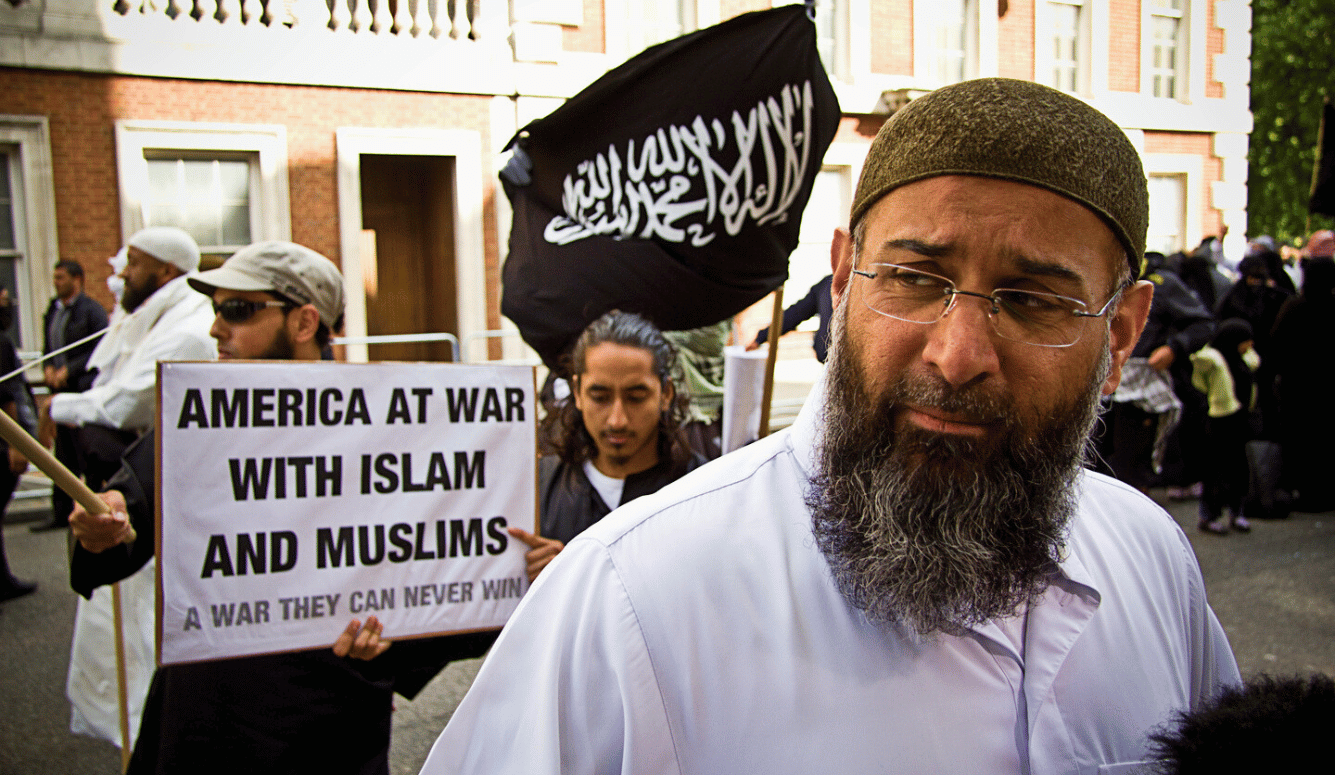
Gorton and Denton is a relatively new British parliamentary seat in Greater Manchester. The constituency stitches together two distinct social landscapes. One part is Gorton in inner-urban Manchester: a location characterised by dense housing, a young and transient population, and the demographic profile of a modern city shaped by high rates of immigration. The other part is Denton, on the more suburban edge of Manchester: a more settled, locally-rooted electorate, with the rhythms and instincts of an older working- and lower-middle-class England. In total, 28 percent of constituents identify as Muslim, while 41 percent identify as Christian.
A by-election, to be held on 26 February 2026, has been triggered by the resignation of the sitting MP, Andrew Gwynne. The issues at stake in this by-election have rapidly transcended local fights about potholes and such like. Rather, it seems to have become a proxy contest over Britain’s broader political trajectory: the far-left eco-socialist Green Party and the right-wing populist Reform UK are two of the three leading parties in the race (the third is the Labour Party).
When asked about the 2017 Manchester Arena bombing, the Green Party candidate Hannah Spencer skipped over details about the perpetrator, his motives, and the ideological ecosystem that produced him. Instead, she turned her fire on those who argue that Britain has an integration problem, that parallel communities exist, and that Islamism is an identifiable ideology rather than a free-floating extremism. “People like you,” she said, alluding to the Reform UK candidate Matt Goodwin and his supporters, “divide people.”
Green candidate Hannah Spencer thinks that those who talk about issues with integration are responsible for the horrific Islamist terror attack at Manchester Arena.
— Lee Harris (@LeeHarris) February 18, 2026
I have never heard something so disgusting in my entire life.
What an absolutely vile thing to say. pic.twitter.com/n1zZAAmt61
If this sounds like a deflection, that’s because it is. It shifts the burden of explanation from the ideology that animates violence to the act of publicly naming that ideology. It makes out that the wrong kind of speech is the cause of murder. The same inversion appears elsewhere in modern Britain: the wrong people are made to carry the moral burden, while the real agents of harm are allowed to fade into the background.
One obvious case is the grooming gangs scandals. For years, the story of industrial-scale exploitation of white girls by gangs of predominantly Muslim men was accompanied by a second, parallel anxiety about what might follow if anyone spoke too plainly about patterns of offending or the backgrounds of offenders. Baroness Louise Casey’s report into the grooming gangs found that there were “examples of organisations avoiding the topic altogether for fear of appearing racist or raising community tensions.” Politicians and officials spoke in the language of “sensitivity,” and Casey’s audit records that agencies “tread carefully” to avoid stirring up “community tensions,” with police reporting that some local authorities discouraged them from publicising successful convictions for fear of “raising tensions.” The public was repeatedly instructed that the real risk was “stoking division.”
A similar pattern was at work after the horrific events at Batley Grammar School in 2021. A teacher showed pupils cartoons of Muhammad in a lesson; protests formed outside the school; the teacher was suspended and forced into hiding. The central fact—that a mob enforced a blasphemy taboo in an English town through threats of violence—was treated as secondary. In the school’s own statement, headteacher Gary Kibble said the school “unequivocally apologises for using a totally inappropriate resource,” adding, “It should not have been used,” and that the staff member had relayed “their most sincere apologies.” During the subsequent Batley and Spen by-election campaign, Labour candidate Kim Leadbeater struck the same note—“We’ve got to have the right to freedom of speech but we should also be really sensitive to other people’s feelings and opinions”—again placing the stress on the speaker’s restraint rather than on the attempt to enforce a blasphemy taboo through public pressure. This is what happens when you are perpetually cowed by the risk of inflaming tensions.
These inversions rest on three linked claims. First: multiculturalism is sacrosanct. Any critique of multiculturalism is a threat to social peace. An illustration of this is that in written evidence to Parliament, the charity HOPE not hate argues that “the narrative that ‘multiculturalism has failed’ presents a huge threat to community cohesion.”