Iran
Trump’s Iranian Dilemma
President Donald Trump must choose between a military strike on Iran, whose consequences no one can predict, and a deal that would leave the Islamic Republic still able to attack its own citizens, menace Israel, and export terrorism worldwide.
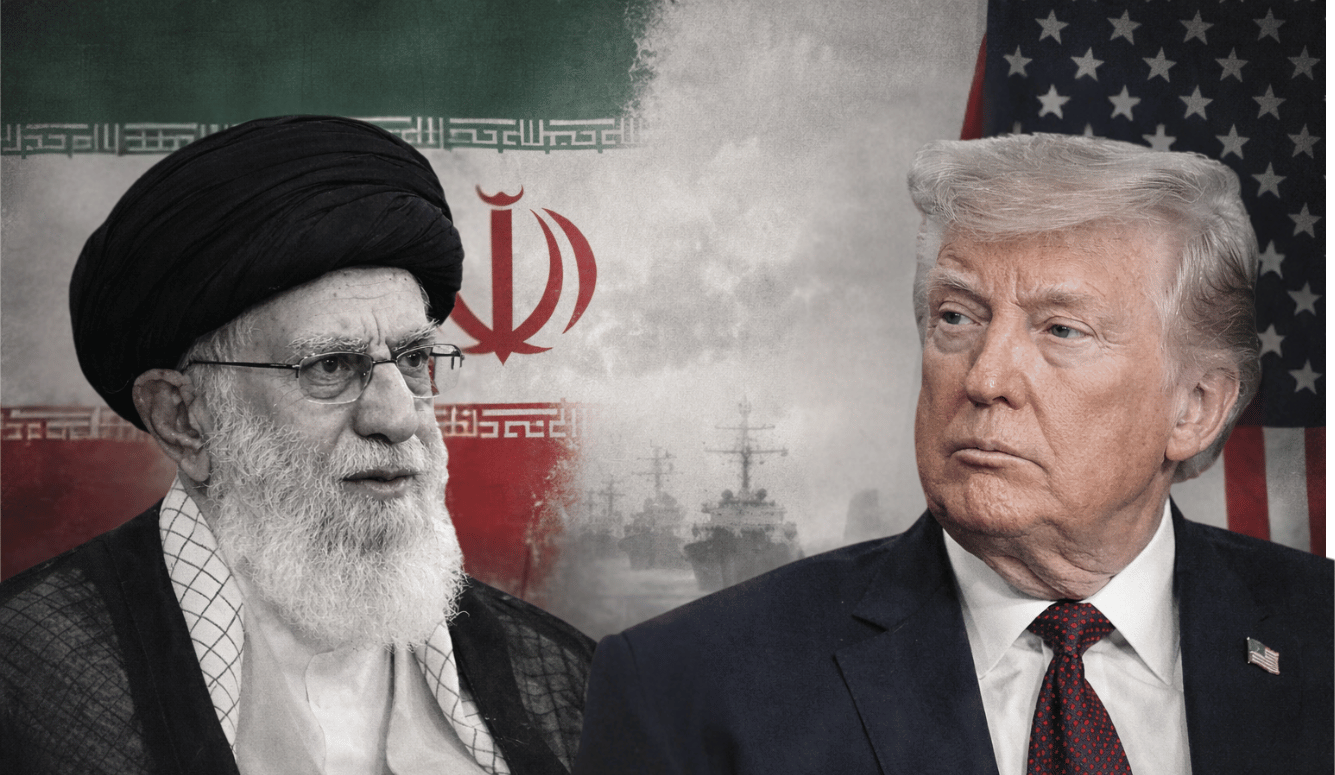

The Middle East—indeed much of the world—is currently waiting with bated breath to see whether the United States will attack Iran or whether it will agree to prolong the negotiations in the hope of achieving a peaceful resolution. Back in early January, President Donald Trump assured the Iranian masses protesting against their totalitarian rulers that help was on the way. But that help was not forthcoming, and, on the orders of Supreme Leader Ayatollah Ali Khamenei, the regime’s security forces, led by the Revolutionary Guard Corps (IRGC) and the Basij militia, proceeded to mow down some 32,000 protesters and arrest and torture tens of thousands, suppressing the incipient revolt.
Since then, Iran and the US have traded threats while Trump has steadily beefed up America’s offensive and defensive capabilities around Iran. This past weekend, the world’s largest aircraft carrier, the USS Gerald Ford, and its attendant battle group, arrived in the eastern Mediterranean, thus completing the planned American deployment. For its part, Iran has carried out large naval and missile exercises around the Straits of Hormuz, implicitly threatening to close the waterway linking the Persian Gulf to the Arabian Sea/Indian Ocean, and hence cutting off the main route for oil and gas exports, should America strike. The Iranians have also threatened to rocket America’s Sunni Arab allies and its bases in Saudi Arabia, the United Arab Emirates, Qatar, Bahrain, and Israel. Meanwhile reports suggest that Khamenei, advised by the Secretary of the Supreme National Security Council, Ali Larijani, has prepared the country for war, naming successors for himself and for the holders of top civilian and military posts in case of their deaths.
The Sunni Arab states abominate the Shi’ite regime in Tehran but fear its wrath and armaments and, at least publicly, they have pleaded with Washington not to loose the dogs of war. The Saudis especially remember Iran’s devastating drone and cruise missile attack on their oil installations in 2019 and the intermittent Iran-backed terrorist attacks on their cities. Iran has explicitly threatened to broaden any clash with America into a regional war. But while a closure of the Hormuz Straits would hurt the revenues of the Arab gulf states and cause a global chain reaction that would result in massive hikes in fuel prices, it would also halt Iranian oil and gas exports and possibly trigger an American or joint American–Israeli bombardment of Iran’s oil installations at Abadan and Kharg Island. Blocking oil exports from the gulf would also badly affect China, which is reliant on Iranian oil, though a hike in oil prices might please Russia, which is itself an oil exporter. But bluster notwithstanding, neither power is likely to come to Iran’s aid should hostilities break out between the Islamic Republic and the US.
Since the twelve-day Israel–Iran war in June 2025, during which the United States bombed key Iranian nuclear installations, Washington has tried to engage Tehran in talks designed to halt the country’s march toward nuclear weaponry. At first, Iran refused to play ball. However, the massive anti-government demonstrations last December and January, coupled with the American threat to intervene, propelled the ayatollahs to begin negotiating with Washington, albeit through Omani mediation. The Iranians refused to meet the lead American negotiators—Stephen Witkoff and Trump’s son-in-law, Jared Kushner—face to face, who both happen to be Jewish.
As Israeli officials feared, the Iranians have succeeded in dragging out the negotiations and have insisted that they be restricted to the nuclear issue. Washington is demanding the complete cessation of uranium enrichment on Iranian soil and has asked the country to relinquish the 400-plus kilogrammes of enriched material it already possesses. For their part, the Iranians have declared that they will never give up uranium enrichment—which they see as a natural right and a matter of national honour and pride—and are demanding the lifting of the American and European economic sanctions as a quid pro quo for whatever concessions they may make. Some of these sanctions were imposed before the multilateral nuclear deal of 2015: the Joint Comprehensive Plan of Action (JCPOA) between Iran and the P5+1 (the five permanent UN Security Council members plus Germany) and the EU, which curbed Iran’s progress toward the Bomb. Further sanctions have been imposed since Trump pulled America out of the JCPOA in May 2018.
Since then, the Iranians have abandoned their JCPOA commitments and upgraded uranium enrichment to sixty percent, close to the levels necessary for nuclear bomb production. These sanctions—together with economic mismanagement and corruption—have crippled the Iranian economy, thus helping to trigger last December’s anti-government protests in Tehran, which were sparked by the steady impoverishment of the merchant class. These economic protests swiftly transformed into nationwide demonstrations against the regime and its oppressive Islamist order. During the last round of talks last week, the Iranians—in a move clearly directed at Trump—proposed that in return for the removal of sanctions, American companies would be allowed to invest in and profit from Iran’s oil and gas industries.
 Shay Khatiri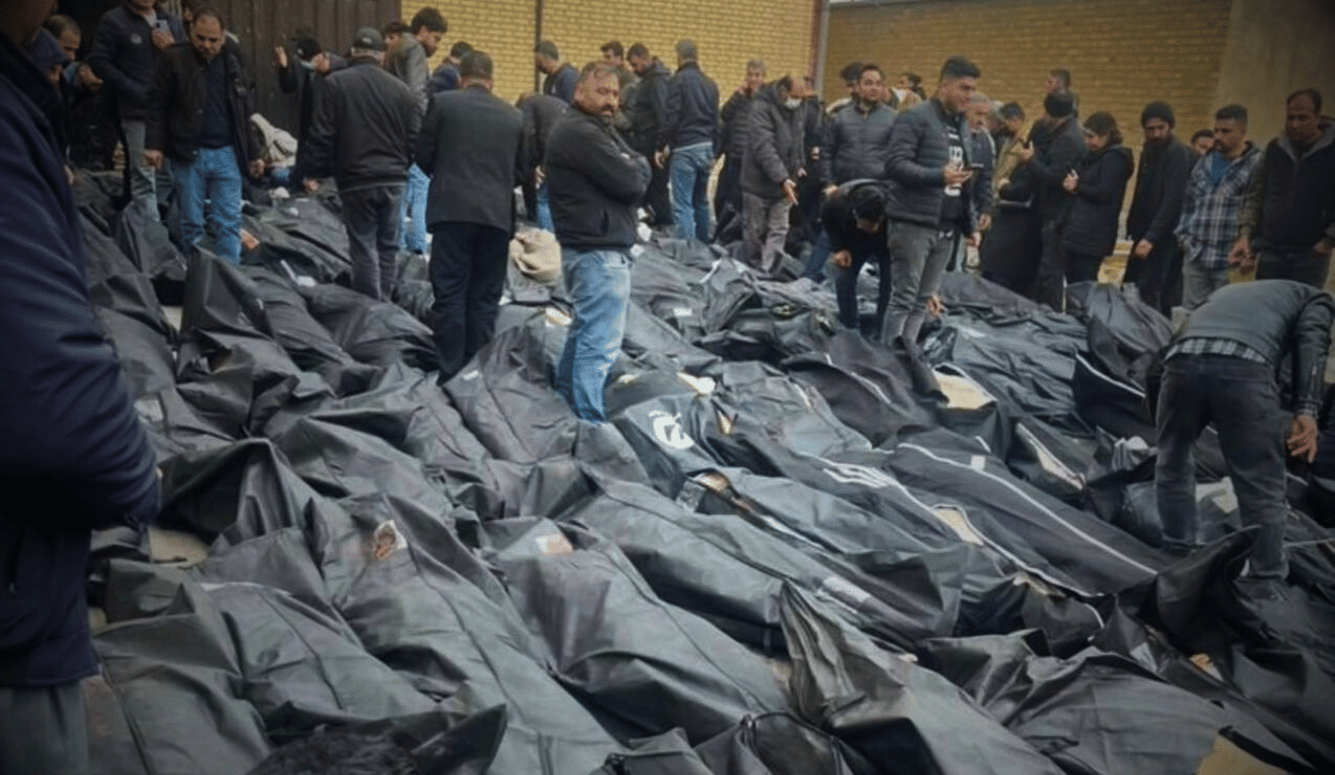
Washington, partly in response to pressure from Jerusalem, has tried—so far unsuccessfully—to expand the negotiations with Iran to cover the country’s ballistic missile program and its financial and political support of proxy terrorist groups, such as Hezbollah in Lebanon, the Houthis in northern Yemen, the Palestinian Islamic Jihad and Hamas in the Gaza Strip, and assorted militias in Iraq, which have destabilised the Middle East for decades—especially during the Hamas-Hezbollah-Houthi attack on Israel that began on 7 October 2023.
Keep reading
Addressing the Academic Skew
Letters to the Editor
Podcast #332: The Historical Case for Israel
The IOC Is Protecting Female Athletics. Canada’s Secretary of State for Sport Isn’t Happy About It

Rohmer at Camelot
Communism’s Obsolescence