interview
Israel’s Ministry of Truth? An Interview with Gadi Taub
Historian Gadi Taub discusses media leaks, military censorship, and the Sde Teiman controversy in Israel—and his defamation suit against Ronen Bergman.
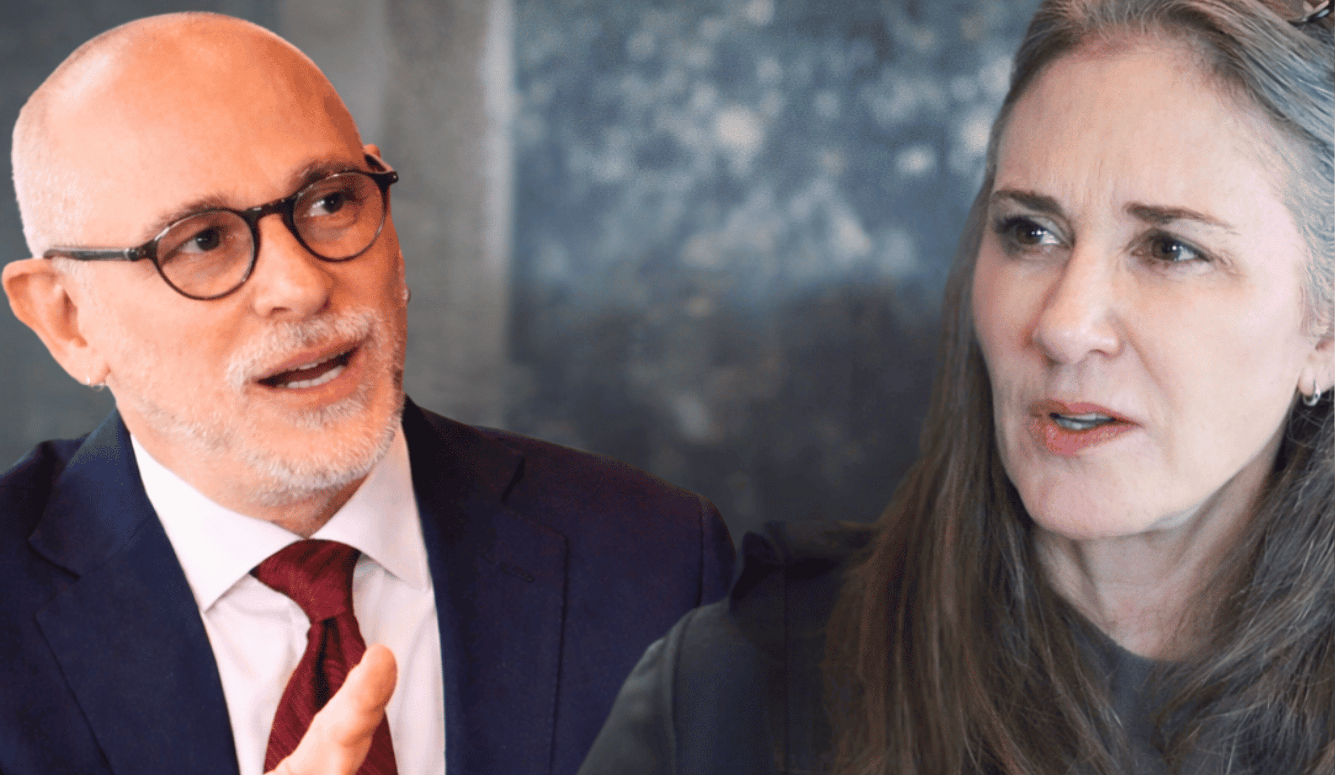

Interview by Pamela Paresky.
In this wide-ranging interview conducted by Pamela Paresky, historian Gadi Taub discusses his legal battle with journalist Ronen Bergman, the controversy surrounding the alleged abuse at the Sde Teiman detention facility, and what he describes as the growing power of Israel’s institutional “deep state.” Taub argues that a leaked and misleading television report—broadcast during wartime—fuelled an international firestorm of rape accusations against Israeli soldiers, despite the absence of sexual charges in the final indictment.
The conversation explores Israel’s military censorship regime, the politics of media leaks, the role of Major General Yifat Tomer-Yerushalmi, and the widening divide between Israel’s progressive establishment and its populist Right. At stake, Taub contends, is not merely a defamation lawsuit but a larger struggle over truth, narrative control, and democratic accountability in a society at war.
This transcript has been lightly edited for readability.
Transcript
Pamela Paresky: Gadi.
Gadi Taub: Long time no see, Pamela.
PP: I know. It’s nice to see you.
GT: Although you’re in Israel a lot.
PP: I have been coming to Israel quite a bit. And speaking of Israel, tell me about what’s going on with you and your—some kind of court case, civil suit, something happening. The Ronen Bergman affair?
GT: The Ronen Bergman affair?
PP: Yes.
GT: Well, there’s a prominent journalist. He works for The New York Times as well. What he does is—since there are censorship laws in Israel—he publishes sensitive information, (allegedly, I should say, now that I’m in court), in The New York Times. And then it appears on the site where he works in Israel, sometimes nine minutes later.
Because of the censorship laws here, you can quote anything from the foreign press. So, you know, Israelis to this day say, “We don’t know if we have nuclear weapons, but according to the foreign press, we do.”
The alleged suspicion is that he launders the information through The New York Times. And then he also publishes a lot of very damaging leaks. These leaks are from the Matkal—the commanding forum of the army—which is, I suppose, something like the Joint Chiefs. Only we don’t have separate services, so these are the high-ranking generals.
They are still trapped in the Oslo frame of mind, and they were lackeys to the Biden administration and shared Biden’s ambition to stop the war.
Now, I don’t know if we should say “Biden’s ambition,” because when the Biden administration started, some senior political aide to a high-ranking official in America told me, strictly speaking, there is no such thing as Joe Biden. And that was at the beginning of Biden’s term. So we’re assuming other people are running the show.
PP: Somebody told you that at the beginning of his term?
GT: Yes. Absolutely. And, you know, we all thought he was a walking zombie.
What the Biden administration shared with these left-leaning generals in Israel was the desire to stop the war before Israel occupied Gaza. They tried to prevent any escalation of the war. They wanted to stop it before Rafah.
You remember Rafah—Biden threatened to stop giving us munitions. He was already embargoing us, but clandestinely. Then he declared it. His vice president, Kamala Harris—you may remember—said, “I studied the maps. There’s nowhere for these people to go.” All this pressure was to stop us before Rafah.
Imagine if we had stopped before Rafah. Israel’s blood would have been in the water. Yahya Sinwar would have been the new Saladin, and Nasrallah would have been perched on our border with 150,000 missiles. Assad would still be secure in Syria, and Iran would be weeks away from a bomb.
Luckily, these people did not get their way. But they did try to sabotage the war, assuming they were saving Israel from itself.
So my fight with Ronen Bergman began when I referred to one of his leaks. Sixteen hours before the beeper operation, he published something in Ynet, which is very central here, saying that high-ranking officials in the security apparatus were worried that Israel was going to do something rash that would embroil it in a regional war. In retrospect, that looked like an attempt to stop the beeper operation.
PP: And this was citing his own piece in The New York Times?
GT: No. He published it as a leak from a high-ranking official in the security apparatus. I wrote that this leak was intended to stop the operation. He claims it wasn’t about the beepers and that his intention was certainly not to affect the beepers. But objectively, it could have foiled the whole beeper operation, because you alert the enemy that something is afoot. And as we now know, they were already beginning to suspect things.
So he’s suing me over that. He threatened many other people, and he’s suing many other people.
PP: Defamation?
GT: Yes. Defamation.
And this is an attempt to shut people up. I know some people just surrendered, paid the minimal fee he asked, and said, “Sorry, I won’t publish that again.” My reaction was the diametric opposite, if you intend to shut down criticism. I dedicated fifteen minutes on my podcast to what I called the Ronen Bergman system.
So if the intention was to shut me up, it did not succeed.
PP: So what’s the system?
GT: The system is what I described to you: that he allegedly launders sensitive information.
Now let me make sure—just for the legal case—I must say not just “allegedly,” but it could be claimed, or he could claim, that this has been cleared by censorship somehow. I’ve asked him on Twitter if that’s the case. He refused to answer.
PP: Okay—for people who don’t know about the military censors here, the government censors—because the word “censor” is unheard of in the US, right? We don’t have these kinds of laws.
GT: Well, you have tremendous censorship of speech.
PP: We do, but not—
GT: But not officially,
PP: But not officially, right. And you have some official censorship through the Government Press Office.
GT: You can lose your job for quoting a sentence with the N-word that someone else said. So we count that as—
PP: That’s not government censorship.
GT: It’s not government censorship, right.
PP: So here, there are certain sensitive matters—sensitive to the military—that the government needs to approve before people can write about them or publish them in the press.
GT: I don’t know if you saw—we were standing together when someone from the Government Press Office, I asked him about getting a press card. I’m a podcaster, so I never bothered. And he said, “Yes, you’ll have to fill in the forms.” One of the forms requires you to commit to following censorship guidelines.
Because, listen, you have tremendous censorship in times of war. We are always in a time of war.
PP: I have this press card—the “GPO” Government Press Office card. So I know what it says. And that’s the first time I heard about censorship formally.
For example, when Iran sent ballistic missiles, one of the things that was censored was the location of the hits, right? And you can see why, because you don’t want to give them additional information about...
GT: How accurate their aim is and how to correct it.
PP: Right, exactly. So that makes sense. And what you’re saying is that Ronen Bergman, who is an Israeli citizen, writes for The New York Times and for Israeli publications. He doesn’t have the same standard to follow when he writes for The New York Times?
GT: I think this is a grey area. If you publish something abroad, it can’t be prosecuted in Israel.
PP: So, he doesn’t have a GPO card? He doesn’t follow those—
GT: I don’t know the details—
PP: Because he’s not a foreign correspondent—
GT: But at least he exposes outrageous things. One of the things I showed on my podcast was a piece from Dan Senor’s podcast with Bergman, Call Me Back—which is actually a good podcast. Bergman says that someone in intelligence gave him a rundown of the whole “Ten Plagues of Egypt” that we were going to rain down on Hezbollah. And he said that the source told him, “I’ll send it to you on WhatsApp so you can check when it’s done.” And he said, “lo and behold, it was done exactly like that.”
Now think about that. This guy is walking around with the whole plan of Israel’s attack on Hezbollah in his WhatsApp. He is a correspondent on secret services. So I imagine some secrets services are trying to invade his WhatsApp. And he brags about it publicly.
It’s mind-boggling that nobody does anything.
But here, Pamela, you have to understand: the deep state in Israel is very well synchronised. And they go after Ari Rosenfeld. Ari Rosenfeld worked in intelligence. There was a piece of information that he thought the Prime Minister should see. So he went to his commander and said, “Why don’t we pass this on to the Prime Minister’s office?” And the commander said no, we won’t.
Ari was furious, and he passed it on to someone in the Prime Minister’s office.
Now, that piece of information was actually useful to Israel. But it was not useful to the Left, because it said that the demonstrations every Saturday were actually encouraging Hamas to persevere and were causing immense damage. And it laid out Hamas’s plan for how to use the psychology of the hostage families in order to apply pressure on the government—which the left was just serving.
The Left here was effectively serving that propaganda of Hamas [by amplifying it]. So it was very inconvenient information for the Left.
And what happened? The leftist rogue head of the Shin Bet—Ronen Bar—took Ari Rosenfeld, put him in jail, didn’t let him see a lawyer for ten days, and they interrogated him aggressively.
Meanwhile, whoever it was that leaked to Bergman the entire plan of the war was never interrogated.
So that’s the backdrop.
And then you have the case of the military Advocate General who leaked the fake rape story?
PP: I know the case, but let’s explain it for listeners.
GT: Right.
So one bright day—29 July 2024—the military police arrive in huge force and arrest ten soldiers from what is known as Force 100.
Force 100 is a unit tasked with a horrendous job. They guard Sde Teiman, the detention facility for the Nukhba Hamas terrorists. These are the people who perpetrated 7 October their ilk.
PP: The very well-trained Hamas fighters.
GT: Yes. And the Force 100 soldiers are also very well trained. But the facility is extremely complicated. The facility was not designed for such a massive influx of detainees. They didn’t have individual cells for everyone, so they created large cages—each holding 80, sometimes up to 120 detainees—lying on something like yoga mats, handcuffed.
The military police guard the facility, but they are not allowed in. They don’t carry lethal weapons. They have batons, tasers, tear gas. Outside the perimeter are soldiers with rifles who can intervene if something extreme happens.
Force 100 are the only ones who go in. And they go in in groups of ten.
I wrote a big piece for Tablet about this, I spoke to these soldiers. I know how dangerous their task is. They go in without lethal weapons. They have batons, tasers, tear gas, and a muzzled attack dog. One of them told me: “If all 80 or 100 terrorists rush us at once, we can’t stop them. We don’t have lethal weapons. So we have to create awe.”
So they enter shouting, with riot shields and a barking dog. It’s very tense.
On the evening in question, four detainees arrived from another facility and had to be searched. Force 100 entered, put up their shields—as they always do—and searched them behind the shields, so as not to conduct the search in full view of the other prisoners.
One detainee resisted violently—kicking, screaming, trying to bite a soldier, calling on others to attack. Force was used. This was all recorded on security cameras, but you cannot see what happens behind the shields.
Later, it was alleged that they raped the detainee.
PP: Who made the allegation?
GT: That’s where it gets strange.
The IDF made that allegation against the soldiers—based on almost nothing at all. And I stand by that.
PP: Who in the IDF?
GT: The military police and the Office of the Advocate General—who also heads the army prosecution—blamed them for sodomy, allegedly using a baton, which there was no evidence of.
We now know from the medical evidence—and I apologise for the detail—that there was no injury to the anus. Doctors concurred that any forced entry would have caused damage to the anus. Apparently, the detainee may have been hiding something in his rectum and attempted to remove it that night, possibly injuring himself. The only laceration was four centimetres inside.
They had the medical reports. The IDF could have known this.
The detainee didn’t complain of rape. You had a rape accusation without a rape complaint. In any case less severe than murder, you need the victim to complain. He did not.
PP: So what was the genesis of the accusation if the alleged victim didn’t complain?
GT: That’s exactly the question.
There are two possibilities.
One possibility is that a doctor affiliated with Doctors for Human Rights—they’re a rabid antizionist organisation—filed a report. Since the beginning of the war, they’ve been trying to accuse the IDF of sexual crimes.
Why sexual crimes? Because under US law—what’s known as the Leahy Law—if your ally is suspected of sexual crimes, you are entitled to stop cooperation and military aid. You don’t need proof. Plausible allegations can suffice.
One of these doctors [from Doctors for Human Rights] was employed in Sde Teiman. So after the [Force 100 soldiers] were arrested, this doctor bragged to Haaretz and Channel 11 that it was his report that led to the arrest of the soldiers. Apparently there’s no independent corroboration of that version—but it’s plausible.
We don’t know that the report triggered the arrest. All we know is that he says that he did.
The second possibility is even stranger.
Keep reading

Doomscrolling into Adulthood

Podcast #331: The Ayatollahs’ Assassins

The Disgrace of Tariq Ramadan
Apocalypse ’92