Education
The Price of the Epstein Frenzy
Press-led hysteria and institutional cowardice are inflicting needless damage on higher education.
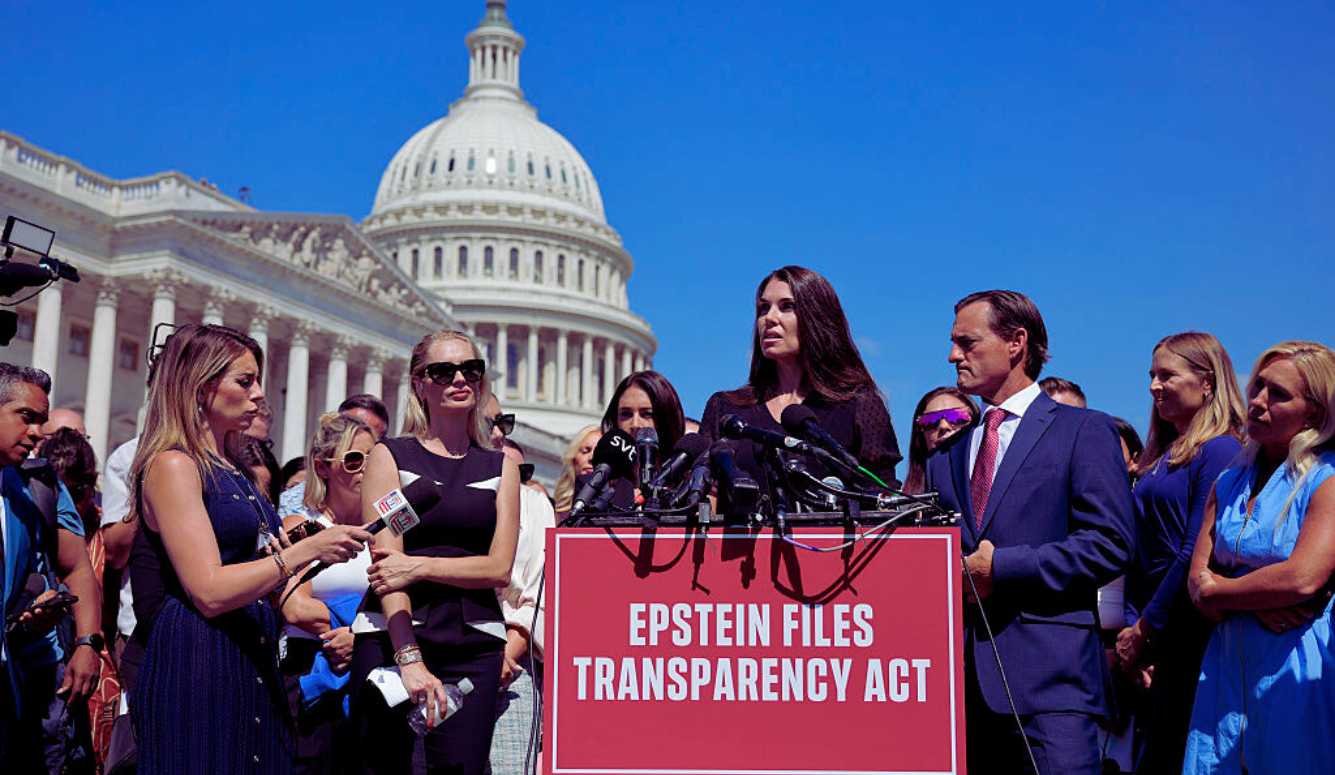

America’s Jeffrey Epstein feeding frenzy received renewed sustenance on 30 January when the Trump Justice Department released about 3.5 million documents for public consumption. So far, none of the newly released files has provided new evidence regarding Epstein’s crimes or those supposedly committed by others he knew. The so-called Epstein Files are mostly private correspondence between Epstein and various individuals with whom he associated, from his closest friends to distant acquaintances.
That includes me. I got to know Epstein in the early 2000s, when he provided some support for a major conference I organised on cosmology. He enjoyed thousands of associations like this, and the press has seized upon them, even when the people involved had nothing to do with Epstein’s alleged criminality nor any knowledge of it. But in 2026, evidence of actual wrongdoing doesn’t really matter. Epstein has become a demonic figure, and anyone associated with him in any way is tainted, if only by association and innuendo.
Last December, PBS announced that it was dropping Poetry in America, which had been scheduled to air for a fifth season this year. “PBS is no longer distributing the program and it has been removed from our digital platforms,’’ a spokesperson announced. A week later, the Boston Globe reported that Arizona State University would be terminating its relationship with Verse Video Education, a nonprofit organisation that produced the program. Verse Video was run by Elisa New, a poetry professor at ASU and the second wife of former Harvard president, Larry Summers. In 2024, ASU named New as director of its Educational Media Innovation Studio, which was developed to run her poetry program. Not only has the university now severed its relationship with Verse Video, it has also closed the media studio. All information about the studio and any resources it produced have been scrubbed from the ASU website.
These developments followed revelations that New, like her husband, had a close relationship with Jeffrey Epstein, who had advised her how to grow Poetry in America from a university course into a national program. Epstein had also supported the nonprofit and steered a major gift in 2014–15 from his friend Leon Black to her program at Harvard, where she taught until 2019. The Globe’s report also mentioned that New had received advice on programming from Epstein, and that she had secured an interview with Woody Allen with Epstein’s assistance in 2013. That episode was pulled before it aired after New’s staff objected to featuring Allen as a guest, and New never explicitly disclosed Epstein’s involvement.
ASU’s recent decision is nevertheless perplexing. At the same time that New was receiving support and guidance from Epstein at Harvard, ASU was openly accepting gifts from him, and through him, from Leon Black. I should know, because ASU president Michael Crow encouraged me to solicit those gifts. This admission is not intended to tarnish ASU or Crow. The decision to accept funds from Epstein and Black at that time did not seem inappropriate, as I will describe. But the alacrity with which PBS and the university are now throwing New under the bus betrays a spinelessness within higher education, the media, and elite institutions more generally as they navigate the fallout of the Epstein affair.
Allow me to put the situation in context, including my own involvement with Epstein, which has been reported extensively in the press.
Well before Epstein pled guilty to soliciting a seventeen-year-old for the purpose of prostitution in June 2008, he supported various programs at Case Western Reserve University in Cleveland where I taught. He never directly supported my research, but in the early 2000s, he provided some support for a major conference I organised on cosmology. He then supported a small, high-level meeting of twenty leading scientists—including Stephen Hawking and four physicists who had won (or would win) Nobel Prizes—to discuss issues associated with our understanding of gravity. The meeting was held in 2005 at the Ritz Carlton Hotel, St. Thomas, in the Virgin Islands (not on his island, as has sometimes been reported). Epstein’s foundation required that we also host a public event featuring the Nobelists and me at a university in St. Thomas, which was well-attended and provided a great opportunity for the panelists to interact with local professors and students.
As Epstein was nearing the end of his thirteen-month jail sentence in 2009, he called me. He had learned that I had moved to ASU and that I was hoping to establish the Origins Project program there. Jail time, he said, had convinced him that making money should no longer be his primary goal. He wanted to support science and science education, and he wanted advice about where to direct his money. He expressed interest in supporting the ASU effort. I told him that the conduct for which he had been convicted had been, aside from its illegality, highly inappropriate and plainly stupid. I also thought that his plan was laudable and possibly redemptive. Based on what I knew, I believed he deserved a second chance to contribute to society.
Michael Crow had personally recruited me to the university the year before. When I first approached him to ask if it was appropriate for the university to take money from a convicted felon, I named the donor. I am not sure if Michael was familiar with Epstein’s past at that meeting, although he did learn of it before any funds actually arrived at the university. As I recall it, he asked me if Epstein’s conviction had involved any kind of financial impropriety. I answered no, and as I remember it, he indicated that this should be the criterion governing the acceptability of donations to the university in general, and that seemed to be relevant to this particular case.
The logic of Crow’s position made sense to me then and it still does now. I had been worried about optics but I was impressed by his rationale. After all, money doesn’t come with an identifier, and one could hardly expect universities to examine the detailed personal lives of all of their donors, beyond determining if the funds being donated were legally obtained. The nature of the crime of which Epstein was convicted—soliciting a prostitute who was under the age of consent in Florida (which he claimed not to have known)—didn’t seem, at the time, to be sufficiently monstrous to justify prohibiting him from further worthwhile social activity.
The allegations against Epstein back then also involved behaviour that appeared to have ceased long before 2009. Although he was required to register as a sex offender, the law had determined that he was no longer an obvious menace to society. Rumours about other misconduct had circulated online, but rumours are just that, and having read some ridiculous speculation online about Stephen Hawking and me, I felt (and Crow apparently agreed) that the nature of adjudicated legal convictions should set the bar for accepting support. He had served his sentence, and US laws and norms both suggested that he now be treated like other citizens. Michael’s commonsensical approach to such things was part of the reason I had moved to ASU.
Keep reading
AI Is Not About To Become Sentient

The Innovation Trap

Treating Myths as Science

The Edifice Complex
Letters to the Editor
Criminal Research