Politics
Capitalism’s Paradox
Why prosperity breeds guilt, how status incentives reward critique, and what happens when function is replaced by moral performance.
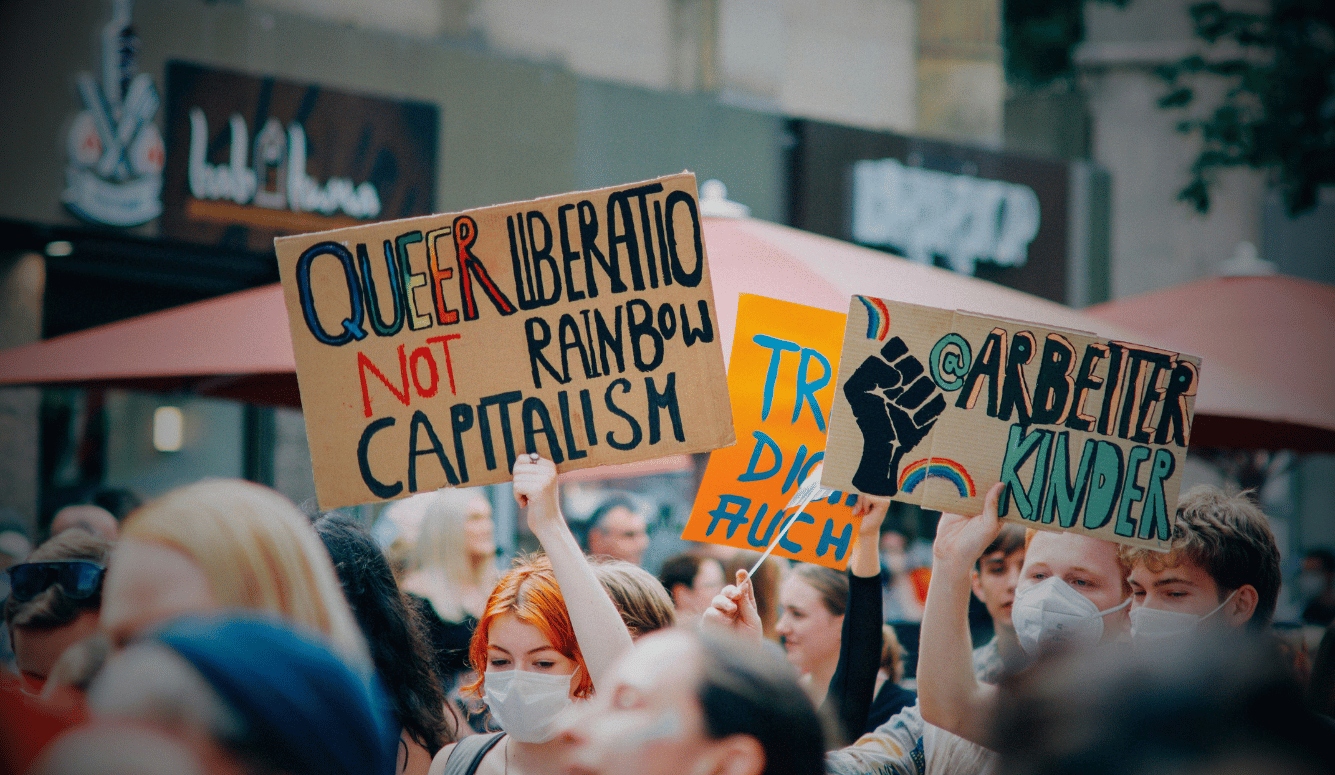

In some of the most beautiful and prosperous places in America, a curious paradox has taken hold: the people who benefit most from capitalism increasingly appear to resent it. They live in high-amenity cities and mountain towns with preserved open space, reliable infrastructure, advanced healthcare, abundant leisure, and the freedom to choose where and how they live. These conditions did not arise spontaneously. They are the cumulative result of markets, private investment, innovation, and long-term economic growth. Yet in these same environments, it has become socially fashionable to describe capitalism as immoral, exploitative, or fundamentally broken. This is often dismissed as hypocrisy. That framing is too simple. What we are witnessing is not merely individual inconsistency, but a structural paradox produced by success itself. Capitalism generates abundance, and abundance reshapes human priorities.
When societies struggle to meet basic needs, economic systems are judged primarily on whether they function. People care about jobs, food, shelter, safety, and stability. Once those needs are broadly met, attention shifts. People begin asking different questions. Is the system fair? Is it humane? Does it align with my values? Does my comfort come at someone else’s expense? Capitalism excels at producing goods, services, innovation, and choice. It is far less adept at providing moral reassurance. It is impersonal. It distributes rewards unevenly. It does not explain itself or justify outcomes. It simply operates. For people whose material lives are secure, this impersonality can feel unsatisfying and even unsettling. Comfort creates space for moral inquiry, but it also creates moral anxiety. As scarcity recedes from daily experience, gratitude often gives way to guilt.
Many of capitalism’s noisiest critics live comfortably within it. They own assets. They benefit from property appreciation. They enjoy professional mobility. They have access to education, healthcare, and travel. Their material security allows them to focus on abstract harms rather than concrete tradeoffs. But this security produces a subtle psychological tension. It is difficult to reconcile personal comfort with awareness of inequality, luck, timing, or inherited advantage. One response is humility and gratitude. Another is guilt. A third is ideological reframing. Rather than saying, “I have done well in this system and feel conflicted about it,” it becomes easier to say, “The system itself is immoral.” This externalises discomfort. Personal unease is converted into ethical opposition. The system, rather than circumstance, becomes the culprit. Critiquing capitalism, then, serves a dual purpose. It relieves guilt and signals moral seriousness.
In many elite environments, criticising capitalism functions as a form of social currency. Within academia, media, creative industries, and high-amenity urban communities, scepticism towards markets is often treated as evidence of sophistication. Open appreciation for capitalism, by contrast, can be interpreted as naive, crude, or insufficiently reflective. This dynamic encourages ritualised critique rather than serious reform. People who rely daily on markets for their livelihoods, investments, and lifestyles still denounce capitalism in abstract terms, because the denunciation itself confers cultural status. It signals empathy, enlightenment, and alignment with prevailing moral norms. The critique becomes performative rather than practical.
 Maarten Boudry
Another reason the paradox persists is conceptual slippage. Many critics are not actually opposed to markets, voluntary exchange, entrepreneurship, or innovation. They are reacting to phenomena like regulatory capture, monopolisation, political favouritism, and rent-seeking. These are real problems that deserve scrutiny and correction. But rather than disentangling these distortions from capitalism itself, critics often collapse everything into a single villain. Capitalism becomes shorthand for all perceived injustice, even when the underlying causes are policy failures or institutional decay. This rhetorical shortcut is emotionally satisfying but analytically weak. It allows people to oppose “the system” without grappling with the complexity of how systems actually function or fail.
Perhaps the most important factor is insulation. Capitalism creates winners who can afford to criticise capitalism. Those insulated from scarcity do not experience immediate consequences when systems are weakened. They can tolerate inefficiency, higher costs, and reduced enforcement longer than those living closer to the margin. This insulation gives rise to what might be called luxury beliefs. Ideas that sound compassionate or morally elevated but impose costs that are borne primarily by others. When ideology replaces function, the effects are predictable. Costs rise. Services degrade. Disorder becomes more visible. Trust erodes. At that point, the same people who once prioritised moral signalling begin quietly caring about outcomes again. Not through grand ideological reversals, but through zoning meetings, school boards, enforcement decisions, budgets, and migration choices.
History suggests that societies oscillate between moral critique and practical correction. Periods of abundance invite moral experimentation. Periods of strain restore attention to function. This cycle does not end in revolution or collapse as often as rhetoric suggests. It ends in recalibration. The loudest voices rarely determine outcomes. The boring majority—people who want stability, safety, and opportunity—eventually reasserts itself. Order tends to return without anyone publicly admitting error.
Capitalism is an especially convenient target because it lacks intentionality. It does not care. It does not explain itself. It does not offer a moral narrative. It produces outcomes without regard to how those outcomes feel. Humans, on the other hand, are narrative-seeking creatures. We prefer systems with villains and heroes, intention and blame. When capitalism produces inequality, people look for agency. They project motive onto an impersonal process. The system becomes a character rather than a mechanism. This projection makes critique emotionally coherent, even when it is conceptually flawed. For those oriented towards order, outcomes, and function, this paradox is infuriating. The same system that built infrastructure, enabled mobility, funded institutions, preserved landscapes, and created prosperity is denounced by the very people enjoying its fruits. What feels incoherent is not disagreement, but detachment from consequence. The critique often ignores the tradeoffs required to sustain the conditions critics take for granted.
And most critics of capitalism do not truly want to dismantle it. They still expect abundance, reliability, choice, and innovation. They still participate in markets constantly. They still rely on price signals, property rights, and private investment. Their critique exists entirely within the system they depend on. This is why capitalism persists despite constant denunciation. It continues to function because even its critics rely on it. The danger is not criticism itself. Healthy systems should be examined and improved. The danger is forgetting what actually produces prosperity and stability. When gratitude disappears entirely, reality has a way of returning the conversation to fundamentals. Abundance is not self-sustaining, order is not automatic, and systems that work are rarely appreciated until they begin to fail.
Keep reading
The Wrong Man

The Iran War: An Explainer

Postliberalism After Hungary

Move 37 and the Coming Mindhack

The Final Frontier

The Tragedy of Murdered Indigenous Women is Real. So How Did Activists Turn It Into a Punch Line?