Fiction
An Undisciplined Novel
Randa Abdel-Fattah’s latest novel is a heavy-handed parable designed to show that Islamist radicalisation in Australia is merely a myth invented by a racist establishment. In the wake of the Bondi shooting, this seems less believable than ever.
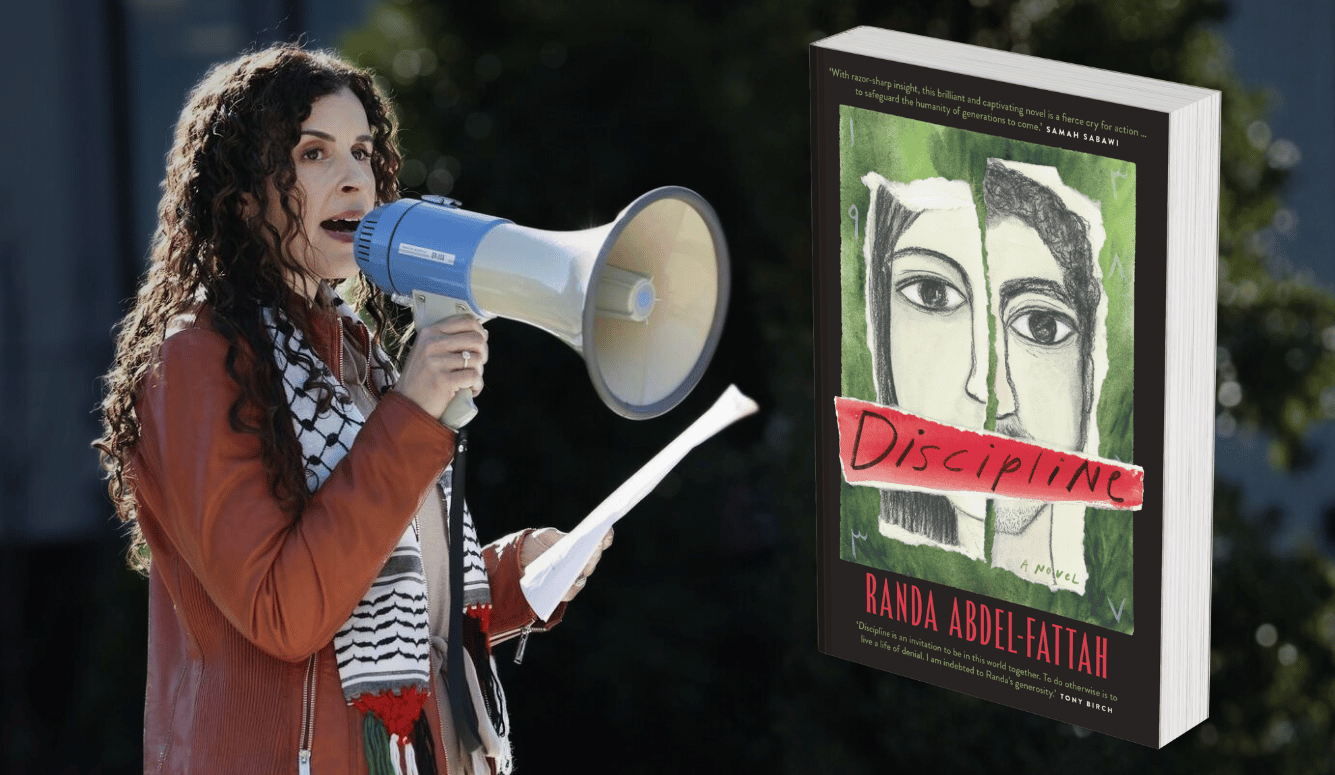

A review of Discipline by Randa Abdel-Fattah, 256 pages, University of Queensland Press (September 2025).
In all the millions of words written about Randa Abdel-Fattah and her wild ride at Adelaide Writers’ Week—from ex-invitee for 2026 to sole invitee for 2027—one point appears to have been overlooked. Abdel-Fattah was invited to Adelaide not as a pro-Palestinian activist, but as the author of a new novel called Discipline. In the headlong rush to the culture war battlements—on both sides—it seems people have not bothered to read it.
Well, I have.
The novel covers the lives of a small group of characters, all Palestinian Muslims, for a few days over Ramadan, in Sydney in May 2021. The background to the events in the story is the so-called “Unity Intifada”—Israeli airstrikes on Gaza that followed rocket attacks on Israel by Hamas. The characters in Discipline are all, naturally, transfixed by these events, and by the threat posed to their family members in Gaza and the wider Middle East.
Hannah is a young journalist at The Chronicle (pretty clearly modelled on The Australian). Her husband, Jamal, is a PhD student and tutor at the fictional Joseph Banks University. Both of them are devout Muslims and passionate antizionists. Jamal’s supervisor at JBU, Ashraf, represents a more accommodated version of Islam. He’s largely secular and enjoys a beer after work. He’s also an opportunist.
Ashraf’s flagging academic career gets a lifeline in the form of a project sponsored by Home Affairs: it’s packaged as a “creative” outlet for frustrated young people, but the real focus is anti-radicalisation among young Muslim males. The event that gets the plot moving is the arrest of a Muslim boy, Nabil, for wearing Hamas-related insignia at a protest against Israeli defence contracts on the JBU campus. Hannah is put straight onto the story. And coincidentally, Fayza, the principal of the Islamic school Nabil attends, is the sister of Ashraf’s ex-wife, Mya, who is now living a strict Islamic life with her new husband in Yemen.
Discipline is not badly written, albeit in a journalistic style that does not render the characters much of an interior life. For example, there is not even a hint that any of the characters experiences desire. (How could anyone think of sex while there is Israel?) All fiction contains both a plot and a theme, but Discipline veers over into Pilgrim’s Progress territory, where both plot and character exist chiefly to illustrate theme. One name for this kind of fiction is parable. Abdel-Fattah’s intent is ideological rather than literary, though I appreciate that neither she nor most of her colleagues would accept such a distinction. All literature, to them, is ideological. Still, there is no trace of creative ambiguity, that traditional marker of the literary, in Abdel-Fattah’s writing.
Of course, a “message novel” can be invested in a message likely to be accepted by a broad cross-section of readers—We should all try to be kinder to one another—but Discipline is not of that ilk. Its most striking feature is the tendentious and zealous nature of its message: Israel slaughters Palestinians, wantonly and without cause, and it is the righteous duty of Muslims everywhere to fight the Zionist menace, by any means available. In Australia, this means fighting the lackeys of Israel in government and the media, who blindly succumb to the Zionist propaganda spoon-fed them by the Jewish lobby.
This unyielding message is likely to resonate with only a minority of Australians. Rather than drawing new converts to her cause, Abdel-Fattah’s objective is to reinforce solidarity among those already sympathetic to it. That said, nobody ever went broke feeding bias confirmation into the giant maw of Australia’s chattering classes, and at time of writing Discipline is sold out and being reprinted.
 Claire Lehmann
Keep reading
The Battle for the Strait

Germany’s Cozy Catastrophe

AI and the Wiki Wars

Foreign Power, Local Politics

Podcast #333: The Search for Truth