Australia
Australia and the Clash of Worlds
The convicts and soldiers who arrived in January 1788 had not just traversed a vast distance across the oceans; they had effectively journeyed back in time.
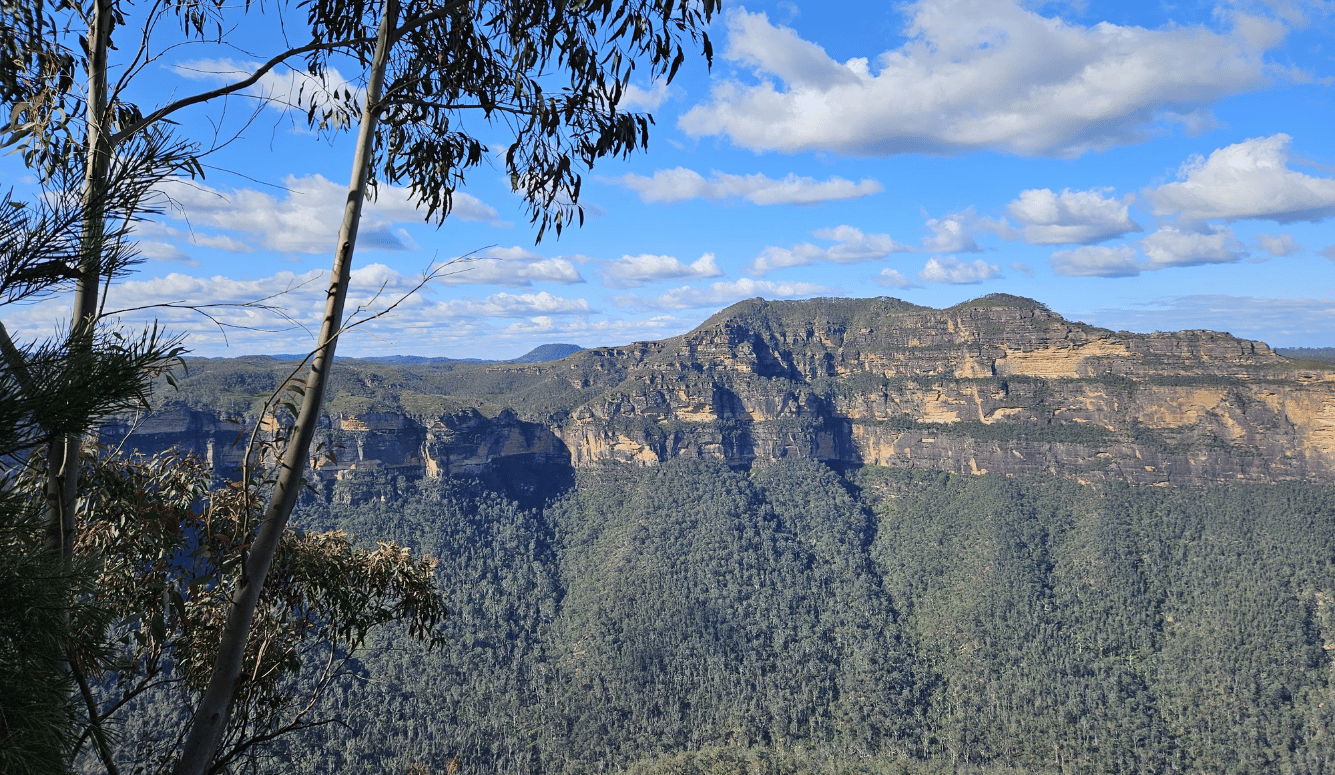
Australia has an extraordinary history. For 50,000 years, the inhabitants of this vast island remained largely isolated from the rest of humanity, living as human beings had lived for aeons, in small tribes of semi-nomadic hunter-gatherers.
There was some contact with the world outside Australia, of course, even before the Europeans first encountered this landmass. Over the millennia, a small trickle of outsiders crossed the Torres Strait—at first, walking over a land bridge and wading through shallow waters; later, leapfrogging across an archipelago of islands; and still later, after the Earth warmed and the waters rose, in small boats. The newcomers brought dingoes and perhaps a few primitive technologies: spear-throwers and certain designs in hafted weapons. Later, the Macassans would sail over from their Indonesian island each year to fish the sea cucumbers out of Australia’s balmy northern waters. Still later, a few Dutch and British sailing ships spied the coast and a few ran aground on rocky islands and inlets. But none of these visitors stayed.
Like all early peoples, the inhabitants of Australians were deeply conservative. They invested the landscape surrounding them with myth and legend; they gave their lives meaning through stories and taboos. Despite this, these were not lives of unremitting hardship—on the temperate southeastern coasts, in particular, fish, eggs, and birds were plentiful and good eating, alongside goannas and kangaroos. But the raw materials they had to work with were sparse—they had no domesticable animals, no easily cultivable plants. As a result, life remained fixed, unchanging; cut off from the dramatic developments that followed from the agrarian and industrial revolutions, the people here must have had little idea of how profoundly we human beings can transform our world.
The convicts and soldiers who arrived in January 1788 had not just traversed a vast distance across the oceans; they had effectively journeyed back in time. They created a deep gash in Australian history. And, as any good sci fi buff knows, when you disrupt the timeline in that way, the consequences can rip the fabric of reality. Where other countries gently eased into modernity, century by century, in slow increments and “revolutions” that often lasted centuries, in Australia two systems collided. We are still feeling the aftershocks of that collision.

While many of the early encounters between the newcomers and the original inhabitants were co-operative and amicable, the asymmetries of power and motivation must have quickly grown clear. As Tony Abbott points out in his book Australia: A History, those who masterminded and led the expedition to Sydney Cove never intended the place purely as a dumping ground for the criminal refuse of society. It was a strategic venture, part of a struggle between England and France for dominance over trade routes, a potential source of flax and timber for shipping. It was also a new territory to be exploited, a new possession to be taken—and taken with violence, if necessary.
Reading some of the early written accounts of encounters with the Aborigines, it is clear how much many of those Europeans admired them and how natural they found their defence of their homeland. Matthew Flinders described his shipboard Aboriginal companion Bungaree as “a worthy and brave fellow.” Governor Arthur Phillip named Manly Beach in honour of the “confidence and manly behaviour” of the men he encountered there. He acknowledged that the Aboriginals were a freedom-loving people—a quality surely close to the heart of a free-born Englishman of the late Enlightenment: “nothing will make amends for the loss of their liberty,” he said of Bennelong after his imprisonment. In 1802, Governor Philip Gidley King described Pemulwuy, one of those who chose armed resistance and whose attacks terrorised the settlement, as “a brave and independent character.” Many Europeans recognised the full humanity and dignity of the Aborigines they encountered and the justice of their cause—and yet that did not dampen their determination to defeat them.
It was always a completely unequal battle. Some Acknowledgements of Country contain assertions that “the land was never ceded” and that Australia “always was and always will be” Aboriginal land. This can only be true in some metaphysical sense. In the real world, clearly, it has been ceded. All around us are the magnificent achievements of modernity—the Opera House, the gleaming skyscrapers of the central business district. A thousand things in my immediate vicinity as I write this—from the coffee in my flat white to the fluffy poodle mix who greeted me with frantic licks this morning, from the aeroplanes roaring over the Inner West to the chlorine that has eaten away the elastic on an old swimsuit I recently binned—are here because, after being “hidden in the summer for a million years,” as the Icehouse song puts it, this place was discovered. And the newcomers brought their technology, their plants and animals, their trading relationships and—above all—their ideas. Once that happened, the rest was inevitable. Hunter gatherer life never stood a chance.
There are some Aboriginal activists (especially in Victoria) who make warmongering gestures: the NeoNazis with their desire to purify Australia have their equivalents in activists—often white-looking urban inhabitants of questionable Aboriginal heritage and their academic fellow-travellers—who call for Australia to be “decolonised”—a term usually left conveniently vague but that, taken to its logical conclusion, implies ethnic cleansing on a mammoth scale. Reversing the course of history can only be done, if at all, with immense bloodshed. Most people are not hungry for some epic battle of this kind, most people—including, surely, most people with Aboriginal DNA—have no desire to return to an Australian Year Zero, to respool the tape and turn back the clock.
But amid all this, the nation’s identity has become starkly politicised, making it very difficult to come together and celebrate Australia Day. Civic nationalism aspires to be unifying—as in the song, “I am, you are, we are Australian.” But politics is inherently divisive and, once politicised, history becomes divisive too. (Australian historians are divided into factions, each with their own version of past events.) There is an odd contradiction here too. The division of Australians into original inhabitants and European convicts and their gaolers is completely historically outdated. Australia is one of the world’s most multicultural countries. Over a third of Australians were born abroad; more than half have parents who were born abroad. Most white Australians do not have ancestors who came here in colonial times: that isn’t their history.
Precolonial Australia was a time capsule, a parallel world that survived only because of its isolation: fascinating and inherently fragile. The conflict between the old world of Australia and the new world of Europe was inevitable. That the new way of life would supplant the old one was equally inevitable. It’s therefore unsurprising that to some Australia Day is a day of mourning. A whole way of life that depended entirely on isolation, that could offer little resistance to European germs, or weapons, or ideas, was lost and this day marks the beginning of that loss. In that sense, yes, 26 January 1788 was the first day of an invasion.
But the date marks something else, too: the start of an enterprise that ultimately led to the creation of one of the freest, most prosperous, most egalitarian societies on Earth. It led to the wonderful country that I am blessed to live in today.

I’m constantly aware of Australia’s deep history. It’s one of the most extraordinary things about this country. It’s like living next to a wormhole here: we can travel through time and space. We are closer to the deep history of humanity than perhaps anywhere else on Earth. Don’t get me wrong: I am a fan of Australian modernity. I’m glad the fleet arrived—and, in any case, it was inevitable. Change was always coming to Australia and it was always going to be painful. But how can you not feel for those people who are the descendants of those who lived here in precolonial times, whose identity was rooted in their spiritual connection to the land, in their centrality to the story of this place and whose populations were swamped and their cultures superseded? Perhaps the fracture was too extreme, perhaps the joint can never be sealed and the edges never fully smooth over. But I doubt it. Even when the past is tragic, the future can be bright.
I believe time will heal these wounds. In an ideal future, perhaps, we will stop fighting over dates and symbols and the Welcome to Country—alongside many other ways of keeping the memory of Australia’s Aboriginal past alive—will become fully integrated into the Australian national story, an intrinsic part of the national religion, even as the events of January 1788 recede so distantly into the past that they turn from history to myth—just as the Easter Bunny accompanies the resurrection on the calendar and in people’s imaginations and Santa Klaus flies his reindeer happily down from Lapland as some celebrate the birth of Jesus. Perhaps in the year 3026, Australians will be united in their equal appreciation of everyone who formed this country: the Aboriginals, the convicts, and the free settlers; the Gadigal tribesmen and the Pakistani Uber drivers. Perhaps by then this land will be equally sacred to everyone who is part of it. After all, I only just got here and it’s already sacred to me.