Iran
Can the Ayatollahs Fall?
Amid the darkness of a communications blackout, Iranians are fighting for their freedom and the totalitarian theocracy under which they have lived since 1979 seems more threatened than ever before.
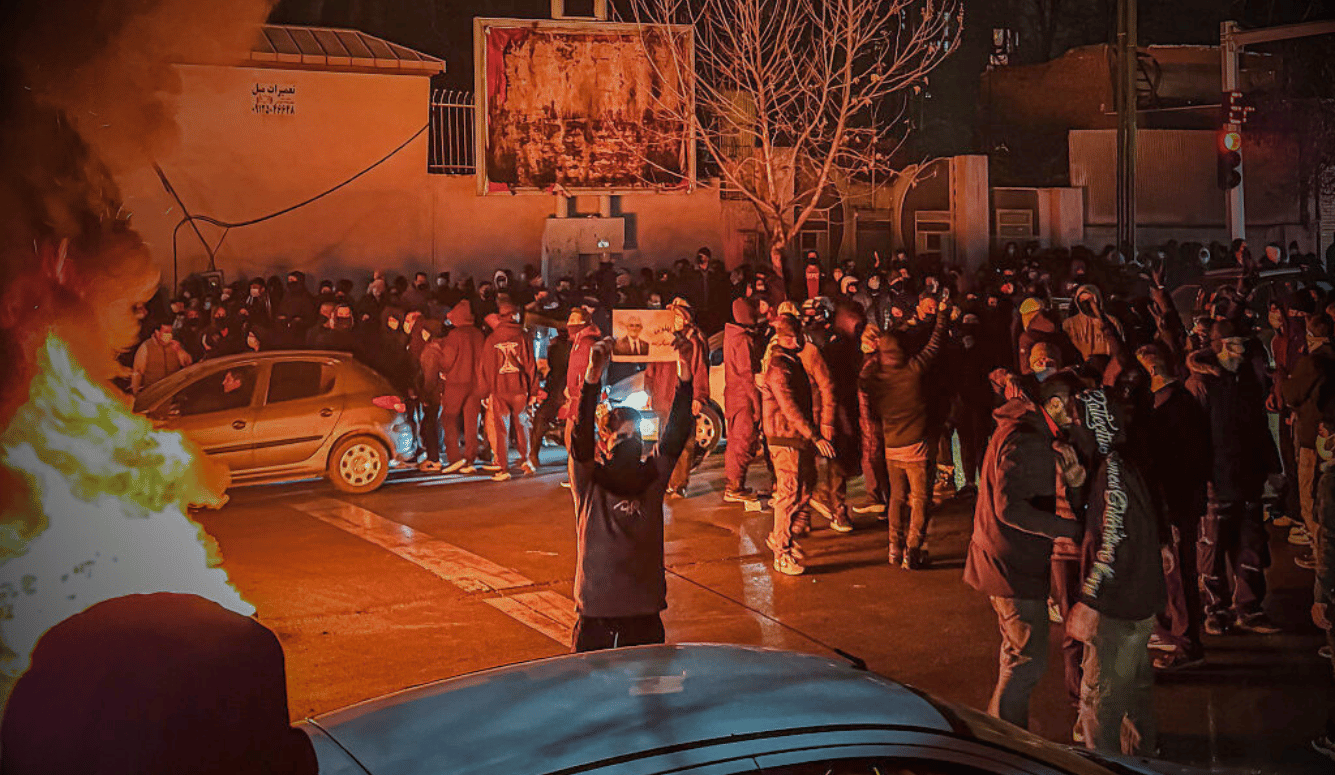

Whether the massive current wave of demonstrations and rioting—in effect a popular uprising—will eventually lead to the overthrow of Iran’s theocratic dictatorship or, like previous bouts of rebellion, will end in successful government repression that leaves the totalitarian status quo intact, that is the question.
During the first days of the upsurge, when the protesters on Tehran’s streets focused on economic demands, Israeli intelligence was dismissive of their prospects of success. But this past weekend (10–11 January), the assessment changed. The demonstrations have grown to massive proportions and spread countrywide, and the protesters—who probably now number in the millions—are forthrightly demanding freedom and democracy. Israeli intelligence now believes that regime change is a realistic possibility.
The regime’s shutdown of the internet and telephone lines on Thursday 8 January, along with the closure of the country’s school and university systems, allegedly “because of weather conditions,” clearly signalled that the Ayatollahs—the Islamist clerics who have run Iran since 1979—are deeply worried. The unrest has involved the torching of government buildings, including police stations, while the protesters can be heard chanting “Death to [Supreme Leader Ali] Khamenei” and “Death to the Dictator.”
In shutting down social media and the internet the regime sought to block communications between the various centres of dissent and—as in previous anti-regime uprisings—to clear the way for savage repression by the security forces, while the blackout prevents the protesters from sending footage of the expected bloodbath abroad. On Thursday, opposition sources said that in the days since the uprising began on 28 December 2025, some fifty demonstrators and a dozen policemen had died. But as of yesterday, 11 January, there have been unconfirmed reports from Iran—most of them drawing on hospital data—that many hundreds, perhaps even as many as 2,500, protesters, have been killed. By the weekend, the police had been joined by the part-time pro-government Basij militiamen in trying to suppress the demonstrations. But it is not yet clear whether the regime’s principal protectors—the 150,000-strong Iranian Revolutionary Guard Corps (IRGC)—had been sent out into the streets with orders to kill.
The regime’s instinct is probably to follow the usual playbook: suppressing the demonstrations with almost indiscriminate live fire—a technique that worked in the uprisings of 2018–19 and 2022–23. But this time, there is a new factor to consider: President Donald Trump’s repeated warnings that the United States will intervene if the Ayatollahs start killing “peaceful protesters.” Trump may have reached the conclusion that, with a little outside help, the current uprising could actually bring about regime change in Tehran, which has long been the wish of policymakers in both Washington and Jerusalem.
 Kaveh Shahrooz
During previous cycles of Iranian anti-government protest followed by repression, American leaders—most notably Barack Obama—did nothing but bluster and issue weak condemnations. But the Ayatollahs now seem to be taking heed of America, following Trump’s successful abduction of former Venezuelan leader Nicolás Maduro on 3–4 January and in light of last June’s American bombing of Iran’s nuclear plants during Israel’s twelve-day aerial assault on the Islamic Republic.
Trump has claimed that Iran’s leaders approached him on Saturday asking to open negotiations on the Iranian nuclear arms project—something Washington has demanded for the past year but Tehran has avoided. However, publicly Tehran has remained resolute regarding the uprising. The Iranian attorney-general has threatened that protesters will be treated as “enemies of God,” a charge that is punishable by death, and regime spokesmen have threatened the US and Israel with retaliation if the Americans intervene. (Israel has so far maintained a low profile. While vocally supportive of the protesters, the country has issued no threats and made no preparations to intervene. But the IDF has said that it is maintaining a high level of alert in case the Iranians decide to attack the Jewish state in an attempt to divert attention away from the tumult on their own streets and to rally Iranians around the flag.)
In the weeks before the uprising in Tehran, Benjamin Netanyahu repeatedly warned that Iran was busy reconstituting its nuclear weapons program and rebuilding its ballistic missile factories, and Israel seemed to have obtained a green light from Trump to mount a second aerial offensive against Iran once these efforts turned critical. But against the backdrop of the current uprising, it appears that Trump wants Netanyahu to hold his horses and see how events in Iran unfold. If, however, Israel spots Iranian preparations for a surprise ballistic missile attack on the Jewish state, it may feel forced to launch a pre-emptive strike of its own, possibly with American participation. During the Israeli assault on Iran last June, Iran’s ballistic missiles caused a great deal of damage—though few deaths—in Israel’s cities and IDF bases.
Recent reports from Washington indicate that Trump and his advisors are weighing “very strong options,” in Trump’s words, for intervention and now that the death toll among the demonstrators is rising, it is difficult to see how Trump can back down, after his repeated public threats to intervene. Clearly, America is not going to put boots on the ground. And air strikes—using carrier-based aircraft or units operating out of Incirlik, Turkey—against Basij or IRGC bases or Iranian government institutions is not a very attractive course of action, either, since it would require a massive, protracted operation. The US Air Force would need to first clear a path through Iran’s air defences, which have presumably been reconstituted since Israel demolished them last June, in the first days of its twelve-day offensive, before it targeted sites in Tehran and in the interior of the country.
At the moment, it appears, the US has insufficient forces in the Middle East to launch a major aerial offensive against Iran. One readily available alternative might be a massive one-off cruise missile strike, which might make Tehran back down, send the IRGC back to barracks, and begin negotiations with the protesters—though what exactly the government could offer them short of abdicating power is unclear. The government has no money and at this point, the protesters will not be easily bought off anyway.
The current uprising began with a walkout by the bazaris, shop owners in Tehran’s bazaars, to protest against the country’s descent into economic chaos, which mortally threatens their livelihoods. In October–December 2025, Iranian inflation was running at 40–50 percent and the rial was massively devalued and is now trading at 1.4–1.47 million to the US dollar, recalling the collapse of the economy in Weimar Germany in the 1920s, when people needed suitcases full of bills just to buy a loaf of bread. According to the Iranian government’s own statistics, as much as fifty percent of the population may be living beneath the poverty line and in recent months water supplies have been severely curbed and there have electricity shutdowns and fuel rationing. (Iran has abundant oil but lacks refining capacity.)
Keep reading

A Costly Misconception
Addressing the Academic Skew

Letters to the Editor
Podcast #332: The Historical Case for Israel
The IOC Is Protecting Female Athletics. Canada’s Secretary of State for Sport Isn’t Happy About It