Antisemitism
Father and Son, Partners in Terror
The identity of the Bondi Beach terrorists reveals some uncomfortable but important truths about antisemitism within Australia’s Muslim population.
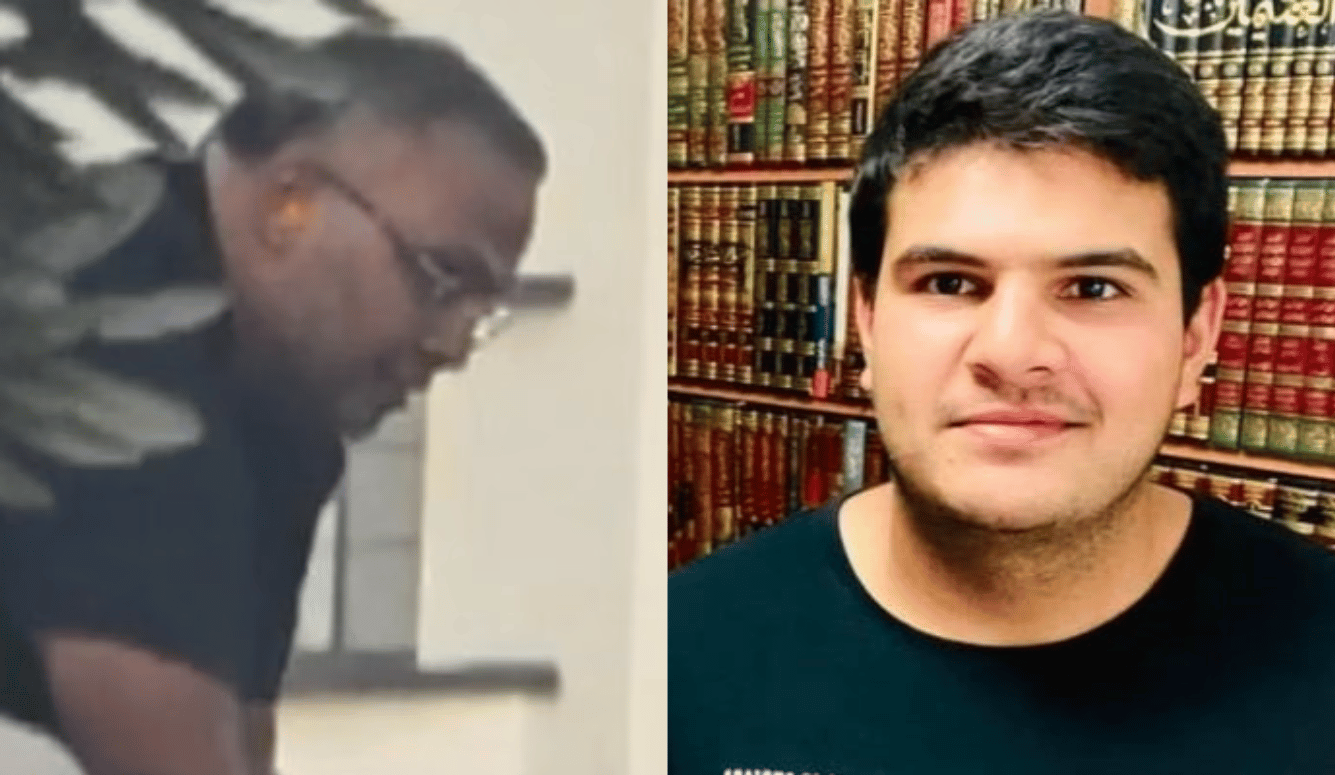

Editor’s note: This article was updated on 17 December 2025 to reflect new information about the identity of the gunmen. Australian police have now confirmed that the father Sajid Akram was a Muslim from Hyderabad in India—rather than from Pakistan, as an earlier version of this article erroneously stated.
The antisemitic Bondi Beach terrorist attacks have brought the global intifada to one of the farther-flung corners of the English-speaking world. Sydney is famed for its beauty, glistening with waterways—and proud of its multicultural populace. I myself am a Muslim psychiatrist here who regularly treats Jewish patients.
The beach is the one of the key symbols of our rugged Australian egalitarianism. As the sand tickles our soles, we are reminded that we all stand on an equal footing. Bondi is the pre-eminent such landmark, a snapshot of our world, full of bronzed people strutting about in board shorts and swimmers. Now it will also be remembered as a blood-soaked place of terror, hatred, and mass murder. At least fifteen people are dead, with many more in a critical condition. And the death toll is likely to grow.
The attacks by father-and-son pair Sajid and Naveed Akram seem increasingly likely to have been connected to Islamic State. Police have found ISIS flags in the perpetrators’ cars. The two men visited the Philippines for an unknown purpose, unaccompanied by any other family members, just weeks before the attacks. In 2019, Naveed was investigated by authorities under suspicion of links with a Sydney ISIS cell. While he was not deemed a threat, he has a history of ISIS adjacency.
The attacks should not come as a surprise. Within days of the 7 October massacres, pro-Palestine protesters marched by the Sydney Opera House, another iconic landmark, shouting slogans like “fuck the Jews.” Multiple bystanders have alleged that there were chants of “gas the Jews,” too. This occurred well before Israel had begun any kind of response to the Hamas atrocity.
 Jack Pinczewski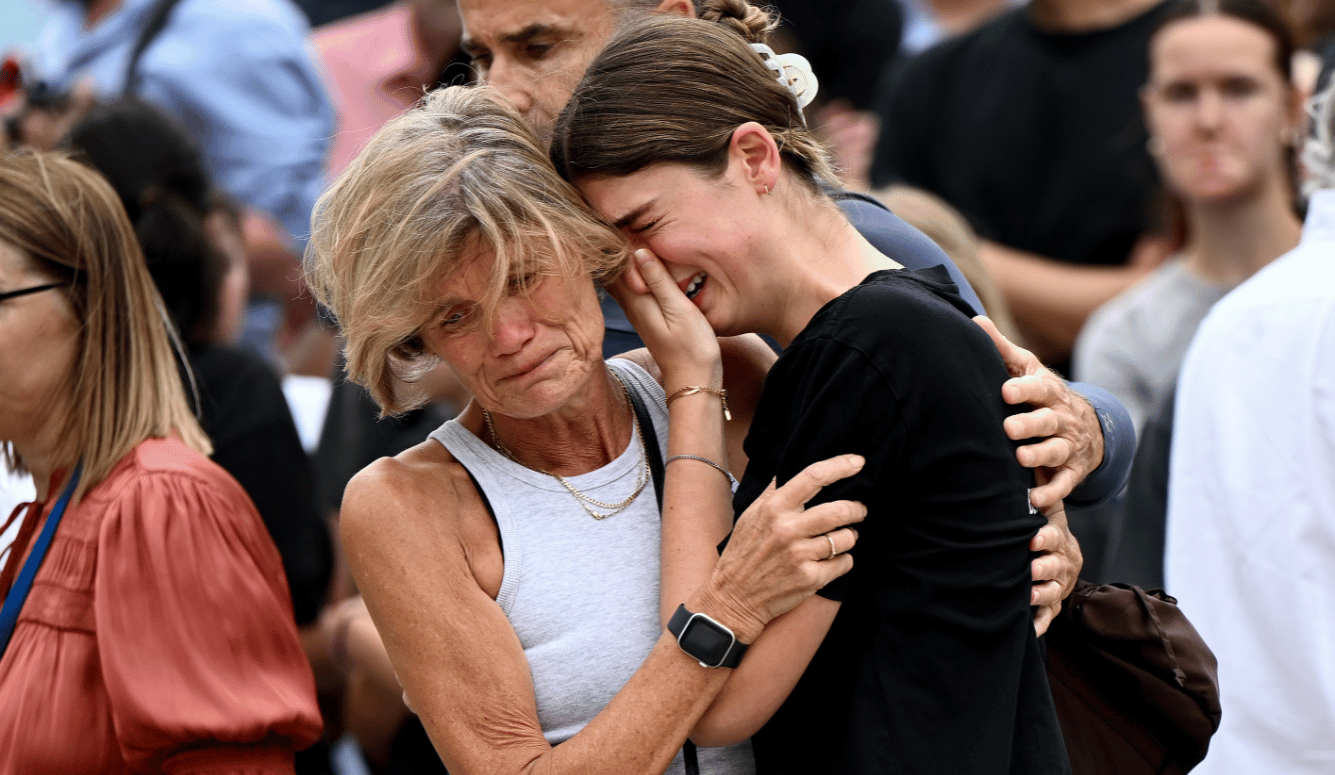
Since then, there has been a global surge in antisemitic attacks. A report by the Executive Council of Australian Jewry found that recorded antisemitic acts in Australia increased by 316 percent from 1 October 2023 to 30 September 2024, with a total of 2,062 incidents. From graffiti to the torching of synagogues and the firebombing of Jewish buildings, there has been a crescendo of attacks, some of which were likely orchestrated by Iran.
The Jewish community have been warning about the possibility of just such a local massacre as the Bondi shootings. The government has paid lip service to the need to combat antisemitism—producing reports, holding meetings, and appointing an antisemitism envoy. Meanwhile, it has recognised Palestine as a state and been fiercely critical of Israel’s actions. Whether or not these criticisms were justified, they have only heightened the sense of insecurity among local Jews. The government was emboldened in its stance when Opposition leader Peter Dutton was soundly defeated in the general election this past May, after he took an especially strong pro-Israel stance in solidarity with the embattled Jewish community.
Discussions about antisemitism here have increasingly focused on the rise of radical right-wing groups with neo-Nazi connotations. On 8 November, a group of around sixty men clad in head-to-toe black rallied outside the New South Wales Parliament in Sydney, displaying a banner that read “Abolish the Jewish lobby” and chanting a slogan associated with the Hitlerjugend: “Blood and Honour.” There has indeed been increased antisemitism emerging from the Right, especially in the United States. The popular influencer Tucker Carlson, for instance, recently compared Charlie Kirk’s death to Christ’s, who, he opined, was killed by “a bunch of guys sitting around eating hummus thinking about, ‘What do we do about this guy telling the truth about us?’” Indeed, antisemitism has traditionally been primarily a problem of the Right. The Left’s focus on universal values and egalitarian principles has historically often inspired them to fight against all forms of bigotry, including against Jews.
Benny Morris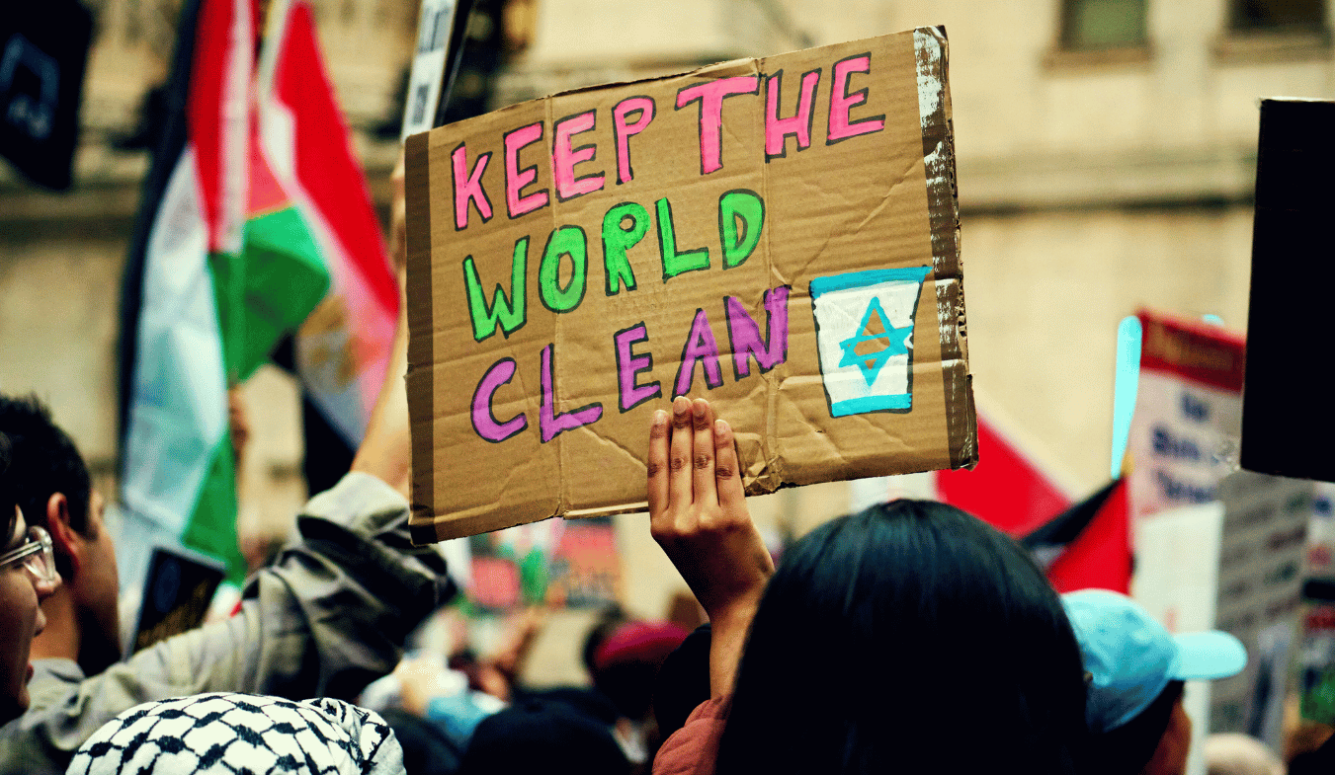
This has changed. In fact, the focus on right-wing neo-Nazi groups has allowed left-wing academics, activists, and progressive media to argue that antisemitism has been a growing problem across a whole range of different groups. This has permitted them to deny the fact that antisemitism is especially rampant and vicious among our Muslim communities.
In addition, the modern Left’s obsession with identity has made it easier for them to hold all Jews responsible for the actions of Israel. The line between anti-Zionist activism and outright antisemitism has become increasingly blurred. The need to appease the Muslim communities that have rapidly grown in numbers and influence throughout the West has led governments to sideline Jewish concerns. And—as uncomfortable as it may be to acknowledge—in the quarter century since 11 September 2001, terrorist attacks such as the one in Bondi have been overwhelmingly the work of Muslims. The modern strain of antisemitism is tied to an Islamist ideology that is fixated on Jews and Israel and encompasses a broader grievance politics focused on the perceived oppression of Muslims by the West. This politics has its roots in what many Muslims consider a civilisational humiliation.
The heroism of Ahmed al-Ahmed who rushed one of the terrorists from behind, tackled him, and managed to disarm him of his weapon, thus saving lives—all while under fire from the second terrorist—should remind us that it is important not to tar all Muslims with the same brush. Individual Muslims save Jewish lives all the time. (A number of Muslims, including the driver Youssef Ziadna, who rescued thirty people, also risked their lives to save Jewish kibbutz residents on 7 October 2023.)
But this should not lead us to ignore the widespread problem of Muslim antisemitism.
One unusual feature of the Bondi shootings is that they were committed by a father–son duo. While historically such collusions may have been common because of clan loyalties or parental coercion, joint attacks of this kind have been relatively rare in the modern annals of Islamic extremism.
The home-grown variety of Islamist terrorism is often an expression of generational protest. Many young Muslims lack a sense of belonging: they do not feel at home either with their parents’ ancestral traditions or in the mainstream West. Instead, they discover a sense of community in an expression of transnational Muslim identity through the ummah. In such a worldview, Israel’s domination of Palestine encapsulates and illuminates the way in which Muslims are repressed by the West in general.
The Akram terrorists may have been triggered into action by events in the Middle East. But if their links to ISIS were longstanding, the situation in Gaza may not have been as central a motivating factor as we might think. For the Islamic State, Jews are the historical enemy of Islam and were responsible for creating the Shia sect in order to divide Muslims. Their opposition to Jews is doctrinal.
The Bondi attacks are a frighteningly tangible expression of antisemitic motifs, Islamic apocalyptic traditions, and militant Salafi theology, which coalesced into an internally coherent—though deeply evil—worldview that inverts victimhood and legitimises mass murder. We can only hope that this tragedy may help Australia grow wiser and provide a deeper understanding of what it means to be exposed to the harsh realities of global terror.
Keep reading
AI Is Not About To Become Sentient

The Innovation Trap

Treating Myths as Science

The Edifice Complex

Letters to the Editor

Criminal Research