Art and Culture
Defaming the Dead
Is telling lies about someone after they die okay if that someone was a very bad person?

Imagine that some forty-odd years after your death, someone tells a terrible lie about you that many people hear and believe. Legally, it is not possible to libel the dead. But is it ethical? It’s tempting to say no, because something that shouldn’t have happened has happened, and even though you are dead, your reputation has been damaged. And if we agree that this is a wrong, does it make any difference if the victim of that wrong was a very bad person?
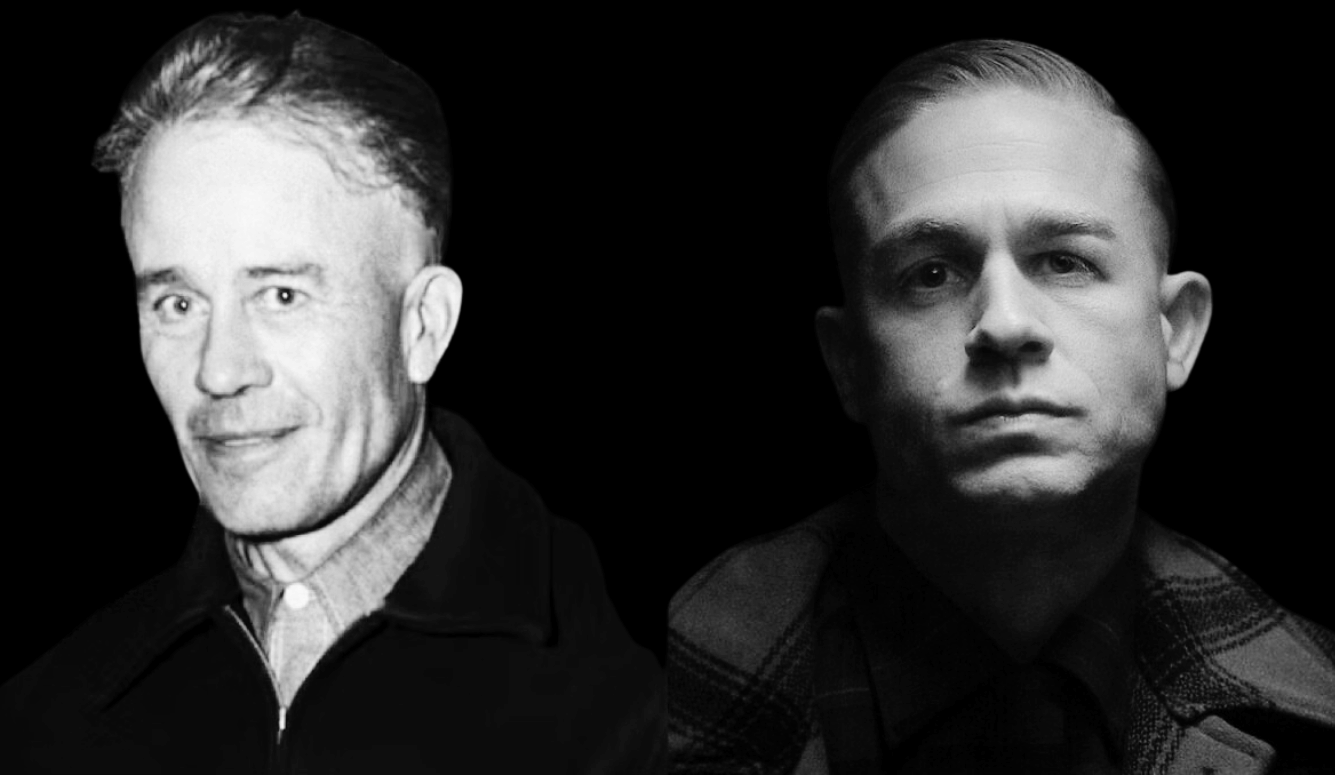
With those adjustments, we arrive at the case of Ed Gein, whose story is told in the third season of Ryan Murphy’s Netflix series Monster (previous seasons of which profiled the serial killer Jeffrey Dahmer and the parent-killers Lyle and Erik Menendez). Murphy’s version of Gein (played by Charlie Hunnam) is an effeminate middle-aged man who lives alone in a chaotic and decaying farmhouse, where he pursues the macabre hobby of making things out of human skin harvested from corpses stolen from local graveyards. He is also a murderer who eats parts of his victims and then packages other parts for the neighbours (without telling them where the meat comes from, of course). He has a female confidante and accomplice with whom he is romantically entangled, and he’s into autoerotic asphyxiation and cross-dressing. He stalks and murders a young woman he feels has a babysitting job that was rightfully his; he murders two lost deer hunters with a chainsaw; he temporarily abducts and permanently terrifies his babysitting charges; and (worst of all in terms of cultural taboos) he has sex with multiple corpses.
The series is titled Monster: The Ed Gein Story, and the Netflix description says: “Leatherface. Buffalo Bill. Norman Bates. These iconic Hollywood killers all trace back to one terrifying real-life murderer: Ed Gein.” The real Gein certainly was a murderer. And the diffident protagonist of Alfred Hitchcock’s Psycho did, indeed, draw inspiration from Gein, whose appearance and manner were so completely at odds with his actions. But how faithful is Murphy to Ed Gein’s actual life story?
True-crime historian Harold Schechter, professor emeritus at Queens College, City University of New York, published an influential history of Ed Gein in 1989 titled Deviant: The Shocking True Story of Ed Gein, The Original Psycho. Schechter is careful to distinguish rumours circulating about Gein in the small town of Plainfield where he lived from what was finally established by police, by psychiatrists and other clinical professionals, by the testimony of Gein himself, and by the eventual trial.
Gein did not eat his victims, nor did he distribute their flesh for consumption by others. He did not have a female confidante and accomplice—the character of Adeline Watkins (Suzanna Son) is fabricated from a real woman who initially declared that she had been in a romantic relationship with Gein, but quickly retracted that claim. A babysitter and a pair of deer hunters did go missing in the county, but these disappearances were never tied to Gein and he never murdered anyone with a chainsaw. In fact, no male bones or body parts were recovered from Gein’s property at all: just as Dahmer exclusively murdered men, Gein’s victims were exclusively female, whether they were dead or alive. There’s no suggestion that Gein was ever anything but a competent babysitter (although some of the neighbourhood children later felt bad, when they realised that they had seen, but not understood, some of Gein’s skin-masks and shrunken heads).
And Gein did not have sex with corpses. “Gein would go to his own grave insisting that besides masturbation, he had never had a sexual experience of any kind in his life,” Schechter tells us. He adds:
Though Eddie freely admitted to grave robbing and didn’t hesitate to supply the authorities with information—a complete list of his victims, the dates of his raids, and a detailed account of his methods—he never spoke about any sexual activity with the dead, except to deny that he had made use of the bodies in that way. Indeed, when asked whether he had ever performed sex on a corpse, he reacted indignantly—not, however, because the notion of copulating with the cadaver of a sixty-nine-year-old invalid seemed monstrous to him but rather because it seemed so unhygienic. He had avoided sexual relations with the unearthed bodies, he told authorities, because “they smelled too bad.”
Wasn’t Gein’s true story bad and interesting enough to captivate a Netflix audience? After all, plundering gravesites and wearing the skin of the dead was surely more unusual and immoral than Lyle and Erik Menendez’s murder of their own parents. And if the true story was bad and interesting enough, why embellish it with debunked rumours and outright lies?
 Charlotte Allen
The most obvious answer is that Netflix wanted the series to be more sensational, more taboo, and more outrageous. There is not a lot of necrophilia content on Netflix, and Murphy seems to realise that he has to keep pace with the horror films that Gein’s crimes inspired if he is to satisfy the slasher audience Netflix evidently wants to attract. So, the series is not just about Ed Gein, it is also a commentary about the impact Gein’s story has had on the horror genre. The scene in which Gein murders the deer hunters with a chainsaw while dressed as his dead mother is best understood as a reference to both The Texas Chain Saw Massacre (which featured a skin-mask wearing serial killer murdering and dismembering young people with a chainsaw) and Psycho (in which the antagonist murders travellers while dressed as his dead mother), and not to events that actually occurred (although Gein did make skin garments, there is no evidence he ever killed anyone while wearing them).
Do these distortions matter? Works of fiction “based on a true story” enjoy considerable storytelling latitude, although it would defy convention to tell an entirely false story and claim it is true—The Texas Chain Saw Massacre was marketed this way even though it bears almost no relation to the story of Ed Gein that allegedly inspired it. Netflix recently got itself into trouble by opening the series Baby Reindeer with the even bolder claim “this is a true story”—and is now fighting a lawsuit from the real-life counterpart of the show’s antagonist. Monster: The Ed Gein Story didn’t make that claim, but it still uses its protagonist’s real name.
Which takes us back to our opening question about the ethics of defaming the dead. It’s not plausible to insist that the dead have no interests. We make wills because we care about how our property is distributed after we are gone; we tell our next of kin whether we want to be buried or cremated because we care about what happens to our bodies after we lose consciousness permanently. Some of us honour the wishes of long-dead grandparents or even-longer-dead ancestors and would consider it disrespectful to do otherwise. So while it might appear logical to deny that Murphy’s series has wronged Gein himself, merely pointing out that he is dead is not sufficient to establish that he has no interests at all.
Could a retaliatory impulse explain reluctance to see any issue with Murphy’s third season? According to Schechter, many residents of Plainfield were bitter about Gein being sent to a psychiatric institution (where he was diagnosed as schizophrenic) rather than to jail. Ten years later, he did finally stand trial for one of the murders and was found guilty, but because it had been decided that he was unable to understand the difference between right and wrong, he was simply returned to the psychiatric institution. Perhaps those learning about Gein’s crimes today feel a similar bitterness, and so they think being lied about in this specific way compensates in some small way for a historical injustice.
Or perhaps it would be better to argue that if something has gone wrong in the case of Monster: The Ed Gein Story, it is the audience being lied to that matters not Gein being lied about. The truth matters for its own sake, and when using real people’s names and dramatising real people’s lives, storytellers have an obligation to do so accurately. When a story is told incorrectly, its subject is not wronged (unless they are alive to suffer reputational damage), but its audience may be, by being misinformed, and thereby absorbing false beliefs. How many of the tens of millions of people who have watched the show since its release (Netflix reported 12.2 million in its first week) then asked ChatGPT how much of it was true? Not many, I would imagine.
Does it matter whether people have false beliefs about a four-decades dead murderer? There are far more consequential matters about which we might develop false beliefs, and it’s hard to see how these particular false beliefs could hurt anyone. In the end, the issue might be nothing more than a matter of principle—that “based on a true story” should mean what it says. And stories not based on truth should not market themselves as such.
Keep reading
AI Is Not About To Become Sentient

The Innovation Trap

Treating Myths as Science

The Edifice Complex

Letters to the Editor
Criminal Research