Australia
Bondi Beach Massacre: Australia’s Deadliest Terrorist Attack
Fifteen people are dead after gunmen opened fire at a Jewish Hanukkah festival on one of Sydney’s most iconic beaches.
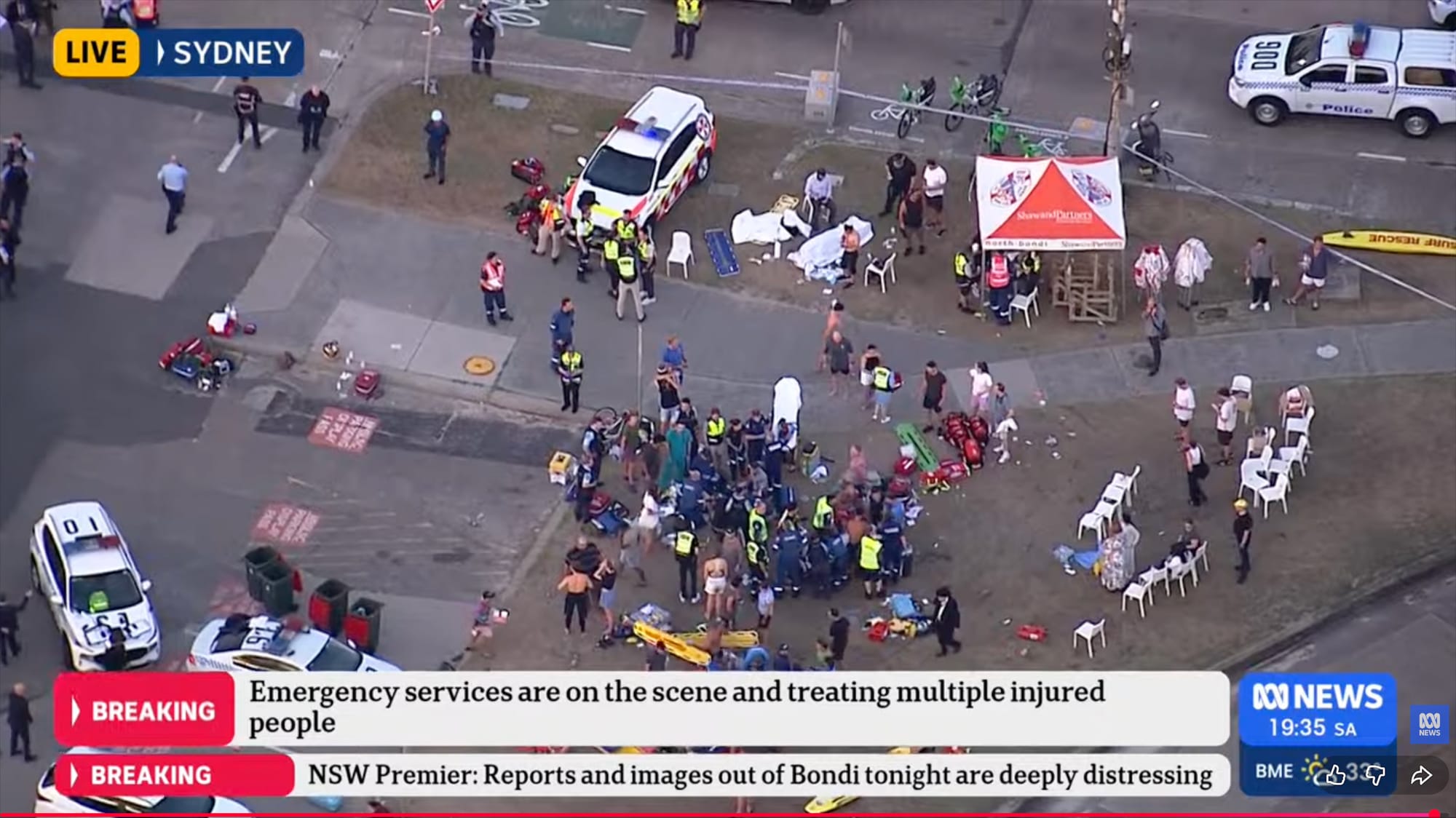

Editor’s note: This article was updated on 15 December 2025 to reflect revised casualty figures. Authorities have now confirmed that fifteen people were killed in the Bondi Beach attack.
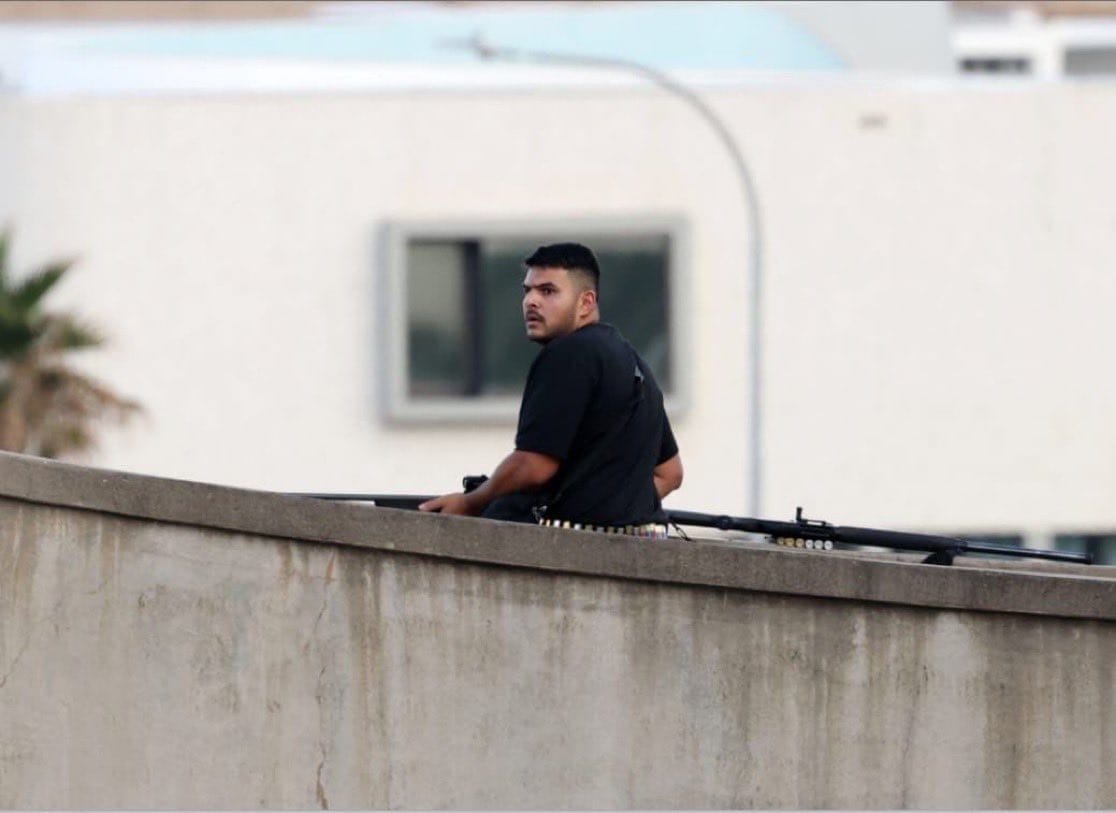
Tonight’s massacre on Bondi Beach is the deadliest terrorist attack ever carried out on Australian soil, and the worst attack on Jewish civilians since 7 October 2023. Images circulating from the scene show at least two men, apparently armed with a shotgun and rifle, positioned on a footpath and a pedestrian bridge, firing toward the beach where a Jewish Hanukkah festival was being held. As of this 6:16am 15 December, fifteen people are confirmed dead, with 38 more hospitalised. Undetonated improvised explosive devices were found at the scene.
NSW Police Commissioner Mal Lanyon said police have authorised the use of special powers to help identify and detain anyone who may have connections to the attack, and are investigating the possibility of further offenders and suspicious items. One of the shooters has been identified as Naveed Akram by a senior law enforcement source, with police reportedly conducting a raid on a property linked to him in Sydney’s southwest.
This attack has wrenched Australians. While antisemitic incidents have occurred in Australia in recent years, they have largely taken the form of arson, graffiti, and vandalism. The atrocity carried out today represents an escalation of extreme proportions, resembling something that only happens overseas—not here.
Until tonight, Australia’s experience of terrorism had been defined by relatively low casualty counts. The deadliest recognised terrorist attack on Australian soil before Bondi was the Sydney Hilton Hotel bombing in 1978, which killed three people. More recent incidents—including the Lindt Café siege in Sydney in 2014, the Brighton siege in Melbourne in 2017, and the Bourke Street stabbing in 2018—claimed one or two lives each. Numerous other plots were disrupted before execution. By death toll alone, the Bondi Beach massacre now exceeds every previous terrorist attack in Australian history.
What compounds the shock is not only the scale of the violence, but its setting—Bondi Beach, an iconic landmark of Sydney, and symbol of Australia’s laidback self-image.
Video footage from the attack shows a civilian confronting one of the gunmen and grappling with him at close range. During the struggle, the civilian succeeds in wresting the weapon from the attacker, even as a second gunman continues firing from a nearby pedestrian bridge.
The man who wrestled a firearm from an alleged gunman at Bondi Beach has been identified by Seven News as a 43-year-old Sutherland fruit-shop owner.
— The Australian (@australian) December 14, 2025
Seven News reports he was shot twice, in his hand and shoulder. He was in surgery on Sunday night.
A relative told Seven news the… pic.twitter.com/oA4NDvECAb
For many Jewish Australians, tonight’s massacre represents the escalation of a pattern long warned about. While the shock is real, so too is the dismay that this day was long predicted. In the months following 7 October, the trajectory of antisemitic violence in Australia was already becoming clear.
As I wrote in a piece published in December 2024:
A timeline published by The Australian this weekend exposes the timid response from Australia’s leaders. Albanese said nothing when a mob descended upon Central Shule Chabad Synagogue in Melbourne’s East on the anniversary of Kristallnacht. He said nothing when an anti-Israel convoy drove through Sydney’s Eastern suburbs, home to many Jewish Australians. He remained silent when families of Israeli hostages fled from protesters who ambushed them, calling them “baby killers.” No response came when a Melbourne professor had his office stormed, protesters calling him a “war criminal” for working with an Israeli University. Silence again when former Olympian, Australian Senator, and Indigenous woman Nova Peris was surrounded by an intimidating mob at the Great Synagogue in Sydney.
This pattern of unrestrained Jew-hatred was followed, months later, by mass demonstrations in Sydney in which portraits of Iran’s Supreme Leader were carried across the Harbour Bridge, alongside symbols associated with Islamist extremist groups.
 The Quillette Editorial Board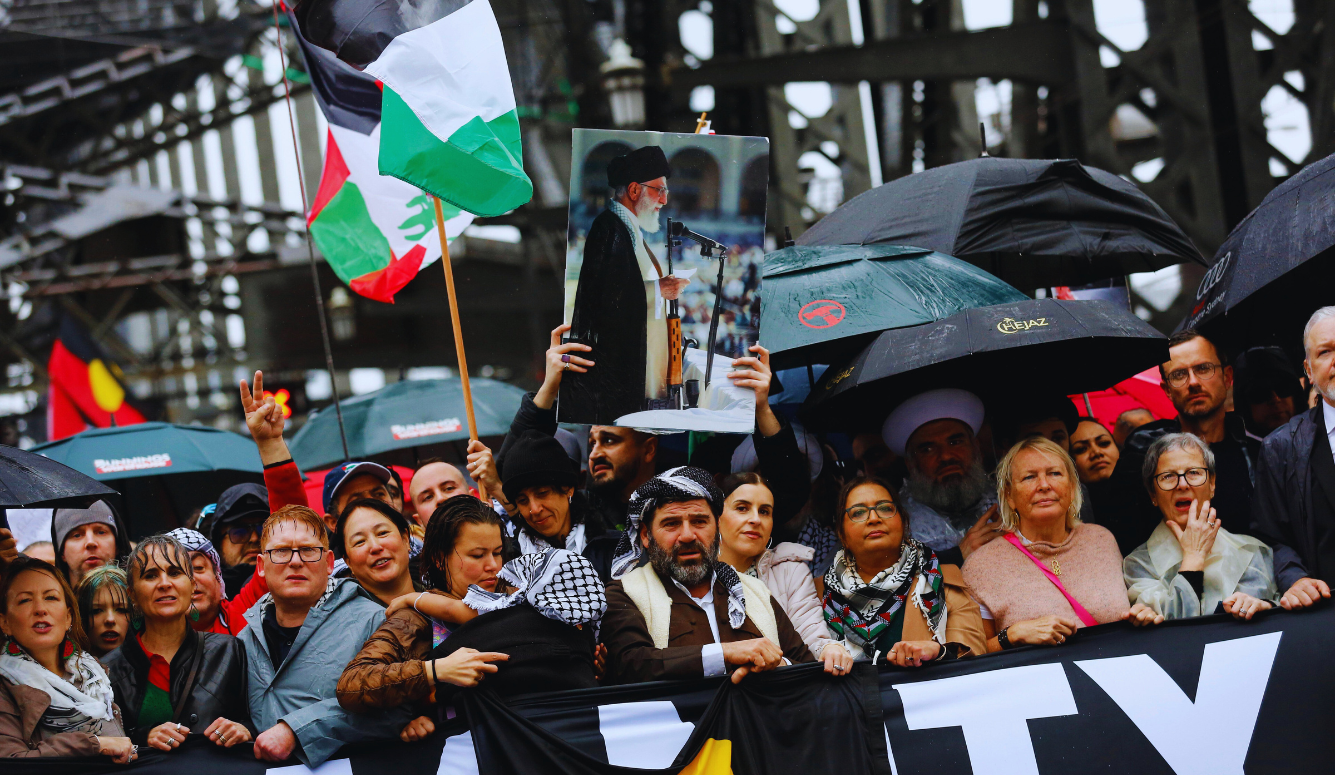
In the aftermath of 7 October, historian Jeffrey Herf described the ideological logic that connects antisemitism to mass violence. “Its barbarity may be shocking to many observers,” he wrote, “but it will not have surprised those familiar with the ideology of the perpetrators. This latest outburst of violence is the logical outcome of the Jew-hatred.”
Despite the recency of 7 October, there has been widespread denial of antisemitism—globally and in Australia. Violence against Jews in Israel is routinely rationalised as something Israelis must have brought upon themselves: the inevitable consequence of history or some kind of provocation. This logic treats mass murder not as an expression of hatred, but as a reaction. Yet, as Paul Berman has argued, Islamist violence is driven not by grievance alone but by a death-cult ideology that treats the murder of Jews as a calling. Jewish Australians celebrating Hanukkah on Bondi Beach could not be further removed from the politics of the Middle East. And yet they, too, have been targeted—evidence that this ideology does not stop at borders, and does not require proximity to Israel to find its victims.
Keep reading
AI Is Not About To Become Sentient

The Innovation Trap

Treating Myths as Science
The Edifice Complex
Letters to the Editor
Criminal Research