Politics
In Defence of Manifest 2024
The Guardian’s reporting on a gathering of heterodox thinkers is truly lamentable journalism.
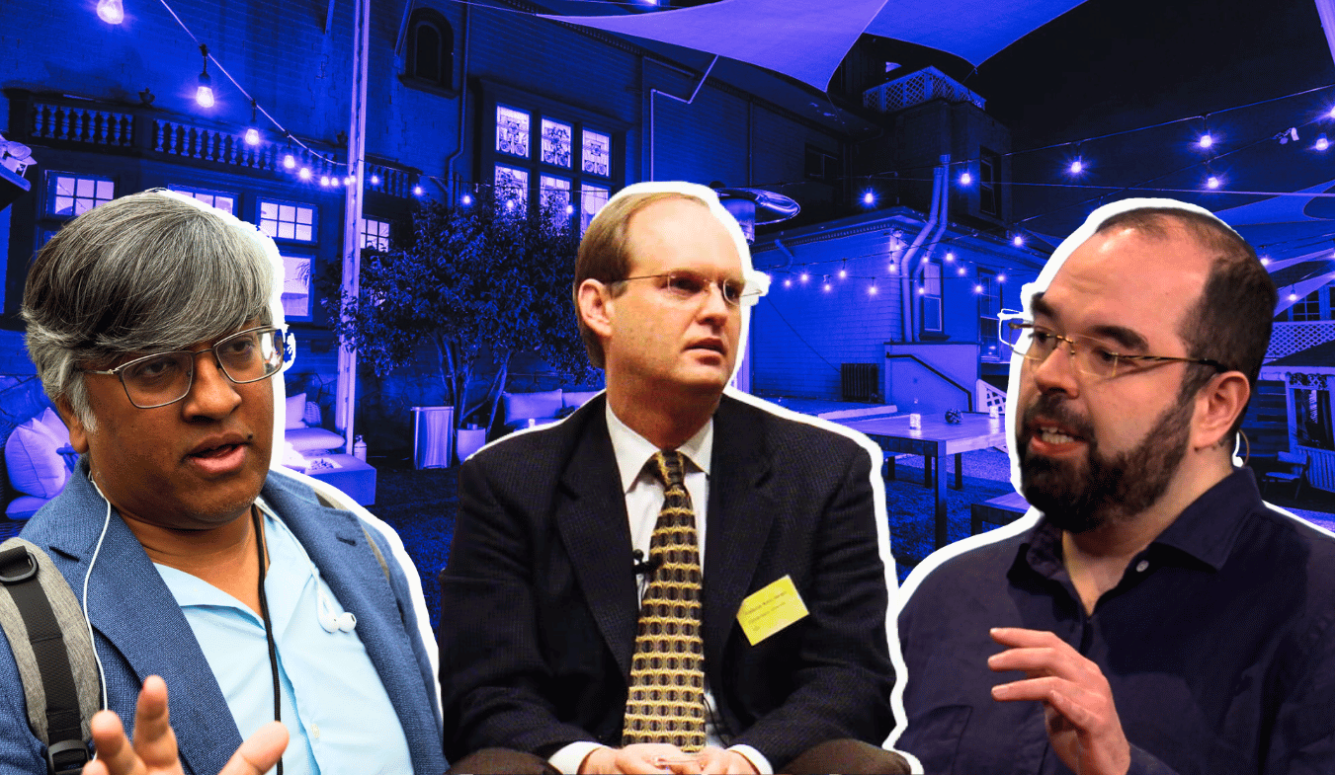

Last weekend, I went to Manifest 2024, which was like a cross between a summer camp and a family reunion. Ostensibly a gathering convened to discuss prediction markets, it was really about everything intellectual. Attendees included rationalist and AI alignment pioneer Eliezer Yudkowsky, psychiatrist and blogger Scott Alexander, prolific George Mason University polymath (and prediction-market pioneer) Robin Hanson, and many other academics, writers, and thinkers simply interested in ideas. Sessions included a lecture on the derivative of a discontinuous function at the discontinuity, a lively debate about AI development and safety, and a “night market” at which people traded various rare items.
Woodstock for nerds! pic.twitter.com/NKW6AFHfIJ
— steve hsu (@hsu_steve) June 8, 2024
I wasn’t surprised that Manifest attracted media interest, but I was taken aback by the shabbiness of Jason Wilson and Ali Winston’s report for the Guardian. Titled “Sam Bankman-Fried Funded a Group with Racist Ties. FTX Wants its $5m Back,” the article alleges that SBF used some of his ill-gotten gains to fund a nonprofit called Lightcone Infrastructure, which then used the money to buy the Lighthaven property in order to host “TESCREAL” conferences like Manifest. These conferences, we are told, have platformed racists, misogynists, eugenicists, shadowy tech elites, and various other unsavoury characters.
This is truly lamentable journalism, replete with factual errors, misrepresentations of key people and ideas, and a general attitude of haughty contempt that seeks to denounce rather than understand and explain. Worse, the authors seem to be entirely unfamiliar with the subculture about which they are writing. They lump wealthy technologists, effective altruists, and eugenicists together in an effort to tarnish a loose community of open-minded people united by a commitment to intellectual curiosity.
The Guardian article makes several basic factual errors. For example, Wilson and Winston write that “Manifold is a startup that runs Manifund, a prediction market.” Manifund was started by Manifold co-founder Austin Chen, but it is fully independent from Manifold. And it’s not a prediction market, it’s a grant program. This isn’t an easy mistake to make—a glance at the homepage of the Manifund website would have been enough to tell the authors what it is for.
In a Twitter thread, Lightcone CEO Oliver Habryka pointed out four more inaccuracies. Contrary to the article’s claims, no FTX funds were used to purchase Lighthaven. Habryka is not the registered agent of Lightcone RG, the LLC that owns the Lighthaven property. The sole member of Lightcone RG is not Lightcone Infrastructure, it’s the Center for Applied Rationality. And while the article’s authors claim to have received no response from Habryka to a request for comment, Habryka says that he never received an email.
A recent Guardian article about events hosted at our conference venue Lighthaven is full of simple factual inaccuracies. We are reaching out to request the following five corrections: @betsyreed2 @awinston 1/n https://t.co/TygjmYynKn
— Oliver Habryka (@ohabryka) June 17, 2024
Although these errors were immediately brought to the attention of both authors, their editor, and the Guardian itself by numerous people on Twitter, it took nearly two days for the necessary corrections to be made.
The article’s epistemic errors are, if anything, even more egregious. “The revelations [of FTX funding],” Winston and Wilson warn their readers, “cast new light on so-called ‘Tescreal’ intellectual movements—an umbrella term for a cluster of movements including EA and rationalism that exercise broad influence in Silicon Valley, and have the ear of the likes of Sam Altman, Marc Andreessen and Elon Musk.” (TESCREAL is an acronym for Transhumanism, Extropianism, Singularitarianism, Cosmism, Rationalism, Effective Altruism, and Longtermism.)
 Jonathan Kay
The problem with this framing is that, apart from a shared interest in technology and the future, and their provenance in the California tech scene, many of these movements have very little to do with one another and are often directly opposed. It simply isn’t true that EA and rationalism “have the ear of the likes of Sam Altman, Marc Andreessen and Elon Musk.” Musk is the most sympathetic of the three to rationalist and EA concerns about AI safety, but he is still working on frontier AI development at Tesla and xAI, against the wishes of most rationalists and EAs. Altman, meanwhile. is working toward superintelligence at OpenAI and Andreessen is the main patron of effective accelerationism, which seeks to develop AI as quickly and freely as possible.
Most rationalists and many effective altruists worry that AI will kill everyone unless researchers are able to figure out how to align AIs with human values. Others believe that AI will help to solve problems like poverty and even death, and that it should be developed as quickly as possible. Conflating these different points of view demonstrates mortifying ignorance. It is like conflating logical positivism, Austrian economics, and psychoanalysis because they all happened to be popular in Vienna around the same time and shared an interest in truth-seeking.
The article describes Manifest’s speakers as “controversial” and then tries to link them to the far-right. Robin Hanson is a brilliant researcher, whose contributions extend to prediction markets, cryonics, futurism, whole-brain emulation, the Great Filter, psychology, and much more, but Wilson and Winston reduce him to the epithet “misogynistic George Mason University economist.” They also attack Razib Khan, not for anything he has written or said, but for publishing articles in the paleoconservative webzine TakiMag and for once writing a letter to the white-nationalist site VDare.
Robin Hanson
They go on to traduce Brian Chau, executive director of the effective accelerationist nonprofit Alliance for the Future, as a racist and sexist based on claims made in an article by a journalist-in-residence at Tarbell. Ironically, Tarbell is funded by the “TESCREAL” nonprofit Open Philanthropy, one of the largest supporters of EA causes. The most notorious of Chau’s “false, racist” claims was that George Floyd was a “domestic abuser,” when in fact Floyd was convicted of aggravated robbery with a deadly weapon—not a terribly meaningful distinction and certainly not evidence of racism.
It doesn’t appear to matter to Wilson and Winston that Richard Hanania has apologised for the time he spent dabbling in white nationalism more than a decade ago, nor that his current beliefs tend substantially towards mainstream liberalism, nor that he spends much of his time on Twitter and Substack deriding the stupidity of the populist Right. In their Guardian article, Hanania is dismissed as a “rightwing writer … whose pseudonymous white-nationalist commentary from the early 2010s was catalogued last August in HuffPost.” Accusations of racism and misogyny are not arguments, they are simply slurs used to defame thinkers who do not share the authors’ worldview.
Richard Hanania
The most disgraceful allegations are directed at former Duke and Penn professor Jonathan Anomaly, whom they describe as a “eugenicist.” It is true that Anomaly has written a paper titled, “Defending Eugenics: From Cryptic Choice to Conscious Selection.” The problem is that “eugenics” means different things to different people. Many on the Left use the term to refer to brutal policies of forcible sterilisation or killing people deemed genetically inferior, while Anomaly uses it to refer to things like voluntarily selecting your spouse for traits that you’d want to see in your children or genetically screening embryos. These are obviously not the same and they should not be treated as such. Yet Wilson and Winston make no attempt to engage with Anomaly’s arguments at all—they rely instead on the “eugenicist” label, which many of their readers will assume is synonymous with “Nazi.”
Keep reading
A Bright September Day

The Retro Fashion of the Wealth Tax

Antizionist City

This Is the Way the World Ends