Fiction
We’re Still Waiting for a Great Post-COVID Pandemic Novel
Fiction writers are used to working in lonely isolation. Maybe that’s why the stories they’ve written about the pandemic seem so out of touch
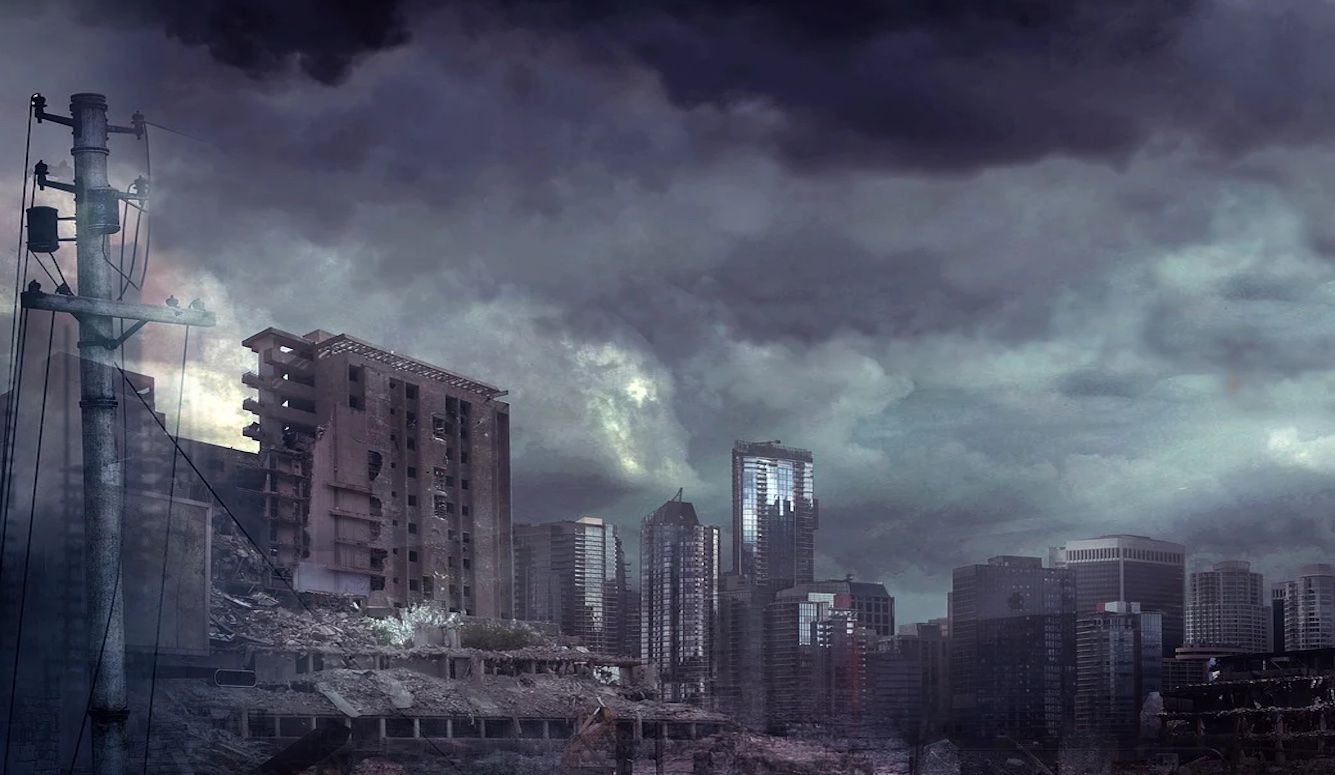

I can recall a time when pandemic fiction was fun to read.
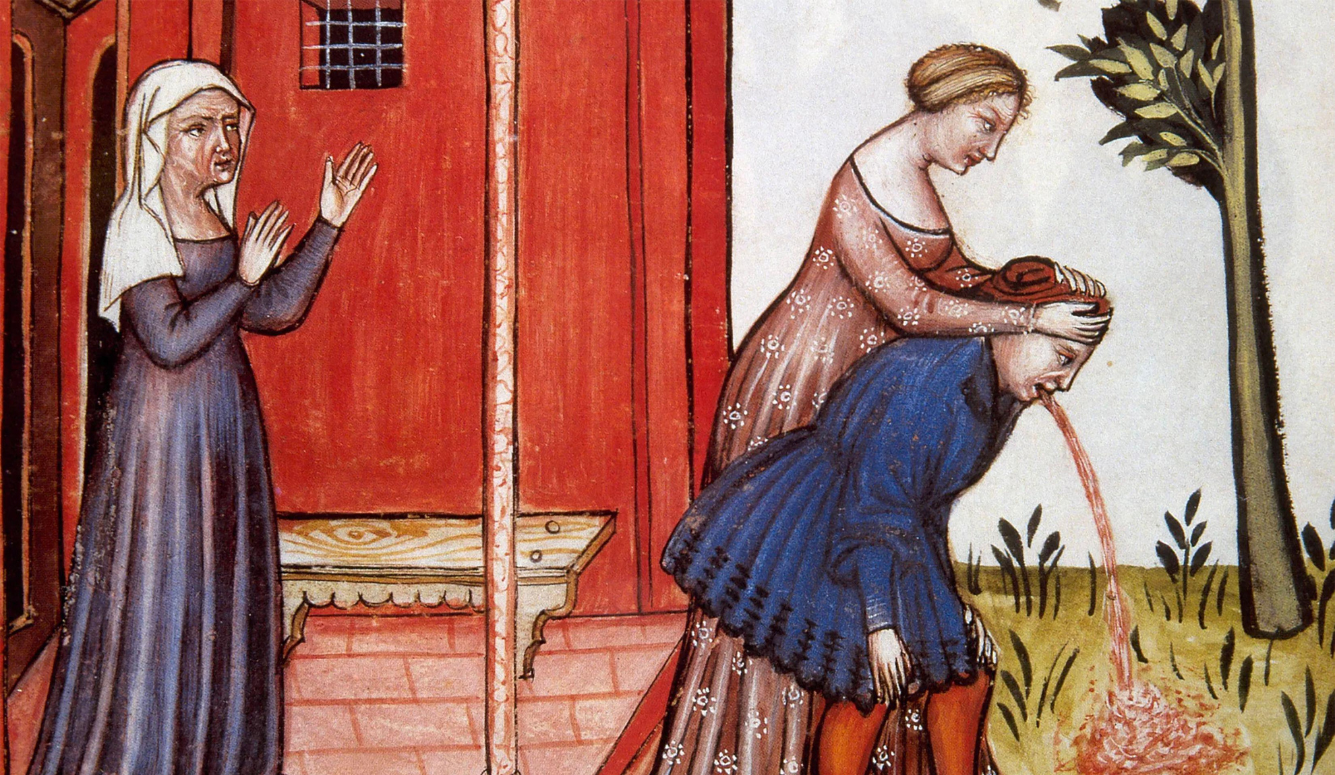
Stephen King’s The Stand, certainly in contention for the greatest novel to ever come out of the United States, turned a tale of a disgusting disease that killed almost everyone into an epic struggle between good and evil, between saints and the devil himself. Though the vast majority of the action takes place in the wrestling match between Las Vegas and Boulder, Colorado, no one who’s read the book (or watched the adaptations) can ever forget the opening 200 pages, in which “Captain Trips” devastates the United States, rotting nearly everyone into purplish, bloated corpses. The scene where two characters try to get through a body-strewn, blacked-out Lincoln Tunnel is possibly the most frightening thing anyone has ever written.

King showed a lot of wisdom about pandemics, which is more than one can say about his tsk-tsking Twitter account during this actual pandemic. “The dancing sickness took place during the latter part of the fifteenth century. Bubonic plague—the black death—decimated Europe near the end of the fourteenth. Whooping cough near the end of the seventeenth, and the first known outbreaks of influenza near the end of the nineteenth. We’ve become so used to the idea of the flu—it seems almost like the common cold to us, doesn’t it?—that no one but the historians seem to know that a hundred years ago it didn’t exist.” Back when King wrote The Stand, pandemics were exciting, they were novel, and they were weird.

Modern storytellers have given other twists to the pandemic story, but it’s always the same basic vibe. Something completely bizarre rips humanity to shreds, and it’s up to a small band of survivors to try and restore order, or at least to make sense of the new order. In Justin Cronin’s The Passage trilogy, or at least the thrilling first installment, a science experiment gone wrong transforms most of humanity into hideous blackened vampire-like creatures. In the film 28 Days Later, a diseased chimpanzee bites an animal-rights activist, and then two hours of the most exquisitely terrifying zombie action ever results.
Well, now we’ve all lived through an actual pandemic, and we know the truth. Some people have gotten sick and died, mostly people who were old or already sick to start. Other people got sick and it lingered dangerously for a long time, but most of them didn’t get very sick, and recovered without much problem. And the rest of us either didn’t get sick, or were, in a unique feature of the current pandemic, sick without symptoms. Then came the vaccines, which provided enough protection to restore life to a semblance of normality for those with the good sense to take them. Nevertheless, panic persisted, and continues to linger even now.
But despite what the movies, and early propaganda videos out of China, might have told us, no one was dropping dead in the street or while driving trucks through a tunnel. Half-bloated near-corpses weren’t wandering through stores, desperately trying to loot potatoes. Instead we had healthy people, masked in fear, hoarding toilet paper. Blood-spewing zombie vampires didn’t try to claw their way through our boarded-up windows while we were watching Netflix.
Actually, we found out that non-fictitious pandemics, for the vast majority of people, are kind of boring, a slow drip of cruel stupidity. As of this writing, about 6.3 million people have officially died of COVID over the last two and a half years. That’s a substantial number. But it’s also less than 0.1 percent of the world’s population. For most, this pandemic has been a carnival of government overreach, ever-shifting rules, online snitching, and finger pointing. Our society has suffered record rates of suicide, alcoholism, business closure, educational failure, and just generally bizarre toe-stubbing incompetence at all levels.

The COVID era has been the most dystopian of most of our lifetimes. The terminology: social distancing, test-and-trace, “wait to gather,” “my mask protects you,” “stay home to save lives,” has seemed like something out of Orwell or Huxley. Even in those cases where non-pharmaceutical interventions were claimed as effective, they warped reality beyond what anyone could have predicted.
But fiction written about the pandemic, at least so far, has not been up to the challenge of chronicling these lunatic disruptions. Our novelists are very much of the “stay home and wear a mask” class. It’s less the era of Captain Trips, and more the era of Private Whispers. Thus far, when it comes to important moral questions surrounding this medical cataclysm, it’s impossible to give most fiction a passing grade.
On March 14th, 2020, Rosanne Cash, a writer who is also the daughter of Johnny Cash, tweeted out “just a reminder than when Shakespeare was quarantined because of the plague, he wrote King Lear.” This sentiment was going around a lot in the golden days of quarantining the healthy, when the prevailing wisdom was that we just needed to order takeout, stay home, watch Tiger King, and wait for all this to pass.
Just a reminder that when Shakespeare was quarantined because of the plague, he wrote King Lear.
— rosanne cash (@rosannecash) March 14, 2020
Three days later, the New York Times published a piece by Sloane Crosley titled, “Someday We’ll Look Back On All Of This And Write a Novel.” According to the New York-based humorist, “The nature of tragedy is that it takes more than it gives, but it’s also produced some of our most iconic literature. The Great Depression brought The Grapes of Wrath. The Spanish Inquisition helped inspire Don Quixote. Cholera gave Camus The Plague (so to speak)…”
Though we were just six days into the pandemic, Crosley was full of empathy, which shone through her terror. “This is now everyone’s story,” she wrote. “And here we have a generation of writers, myself included, already inclined toward narrative nonfiction, who are about to spend a ton of time literally staring at the walls. Yikes…This is the feeling we will need from the stories that come out of this crisis. The good ones will not be born of ego or competition or fear. They will slow things down. They will put the new world into sharp relief.”
I made fun of Crosley’s piece on the website I edit, which in turn made her angry. In the early days of the pandemic, I engaged in a petty little literary catfight, which I regret. But her sentiment struck me as ridiculous at the time, and it still does. We had no idea what was coming, and the world was weird and stressful enough such that we didn’t have to decide how we were going to chronicle it in our novels.
Well, Crosley did write a novel, and it’s coming out in June. But to her credit, it’s a romantic comedy that involves a magazine editor who’s become an experimental psychologist cult leader. It’s not a pandemic novel at all, except that she wrote it during a pandemic. So she avoids further scrutiny here.
But some actual COVID-era fiction has begun to emerge. To say the least, it’s not The Grapes of Wrath or King Lear. Society collectively stepped on a rake during the COVID era, but fiction (so far) has responded with insularity, not the epic impulse, reflecting the stay-home-and-follow-orders tendency of our intellectual class. These are stories of passive people who mask up, hide away, and shrug, hoping for better days.
Life Without Children, the new story collection from Irish writer Roddy Doyle, is probably the best of the first batch of pandemic fictions, if only because it’s just not bad. Doyle is a warm, empathetic writer who produces classically-constructed New Yorker-approved stories about characters who feel lived-in and real. His current protagonists are middle-class at minimum, reflecting the elevated status of the writer who gave us The Commitments, The Van, and Paddy Clarke Ha Ha Ha. Those were charming tales of working people in Dublin. Life Without Children is a group of stories about decent people who suddenly find themselves confined in decent houses.

Compared to Texas—where I live, and where some things kind of shut down for six weeks and some other things kind of shut down for about six months—Ireland imposed COVID measures that were extremely strict. This included a series of rough, checkpoint-enforced lockdowns that lasted into the vaccine era, and which at one point prevented people from travelling more than five kilometres from their home. Doyle’s characters aren’t having bubbled dinner parties or complaining about being forced to wear a mask to the Home Depot or the Grammys or wherever. The government has locked all that kind of thing down good and hard.
There are some mild peals of protest. In the titular story, Life Without Children, set in early March 2020, Alan goes on a business trip to Manchester. England, which, not yet being under the sinister death-estimate sway of apocalyptic epidemiologists, is still awash in pub-going, hen parties, and viral spreading (while, back home, Ireland has already given the gift of lockdown to its citizens). Before deciding to pitch his phone in the bin for the remainder of the trip, something we all wish we’d done many times during that blasted year, Alan goes for a walk:
He doesn’t want to get used to the words and terms, their meanings and consequences—COVID, cluster, at-risk, asymptomatic. He doesn’t want the carefulness. This way is freedom, back home is boredom and terror. He can walk up this hill to the life he never had, or walk back down to the life he doesn’t want. He’s still feeling exhilarated, although he has to check first. He believes what he’s doing—he does. He’s still out in the air, though. He’s socially distant. He hasn’t burrowed into the crowd. He’s a bit mad, and tired. And a bit feverish, maybe. His throat is dry. But that’s from the climb. He’s anxious.
Besides being quite well-written, not really a surprise from Roddy Doyle, this passage also brilliantly evokes the vibe of a time and a place. We all felt this way at the dawn of the pandemic era. But then lockdown comes, and Doyle’s characters turn submissive, and, yes, a bit mad.
While on a government-permitted walk within the aforementioned government-mandated 5K radius, a man gathers up discarded masks from the boardwalk and covers himself with them. “He takes the final mask, a leopard-skin thing that’s much too small. He holds it up and shows it to the crowd—and brings it quickly to his eyes.” And then he starts to sing, against public-health advice.
But that’s the only bleat of protest in the book, from a guy whom the pandemic has clearly driven crazy, either temporarily or permanently. A character in a different story can’t attend his mother’s funeral. Oh well. He’s very sad, but he knows it’s for the public good. Another can’t visit his wife who’s in the hospital for a non-COVID illness. C’est la guerre.
In the longest and buzziest story, the one most likely to get some sort of Stephen Frears movie adaptation, Gone, a woman leaves her husband “the day before the lockdown.” She leaves her phone and her identity behind completely. He’s understandably distraught to be self-isolating, literally by himself. “I’d shout her name. Before I could stop myself. Coming down the stairs, say.”
The story moves back and forth between their perspectives. She changes her identity. He grows a beard and gets a job delivering takeaway to the millions of COVID shut-ins. One day, irony of ironies, he delivers a scampi box, spice-burger, and Coke to his ex. She tells him, “I like your COVID hair.”
The takeaway from the takeaway? He says: “I was smiling when I got back into the car. And all night, I felt like a man who smiled readily. And I don’t know why, really–because it’s sad.” And she thinks, “It’s definitely sad. But everything’s sad these days, I suppose. And I have to admit. I do have to admit–personally. I’m happy.”
Bully for Laura! Good for everyone who found personal fulfillment during COVID. But it’s too easy, and too pat. See, Roddy Doyle says. It’s a pandemic. You can be happy. Easy to say when you’ve got a book deal and a 30-year track record of staying home anyway. And that might be why writers aren’t the best people to accurately report on the damage that pandemic politics, and policies, wrought around the world. When staying home is the voluntary pre-pandemic default, maybe you shouldn’t be reporting on the societal damage that results when the government makes it mandatory.
Gary Shteyngart’s Our Country Friends exemplifies another type of COVID book: The rich-jerks-trapped-in-a-compound-novel. Rachel Cusk did this in her 2021 art tale Second Place, which regarded itself quite fondly. Shteyngart’s novel is much more manic, and much more COVID-direct, and it was hailed as one of the era’s first real pandemic novels.

Shteyngart suggests a comparison to Anton Chekhov in the publicity for Our Country Friends (which would be like me saying, Hello, I’m Edmund Wilson, pleasure to meet you). Nevertheless, Chekhov is indeed the template for this long autoerotic exercise in literary comic flexing. Senderovsky, a middle-aged Russian novelist in steep career decline, gathers his dearest friends at his upstate compound at the dawn of COVID to keep them “safe.” He also invites a sexy memoirist who has written a kind of Hillbilly Elegy type book, and a sexy Brad Pitt-ish actor, who has optioned one of Senderovsky’s books for some sort of streaming adaptation. Senderovsky has a wife, a mental-health doctor named Masha who is obsessed with masking and social distancing, and a neurodivergent daughter adopted from Asia who is obsessed with the K-pop band BTS. Masha is determined to protect her daughter, even though she is more likely to fall down a well than suffer anything serious from COVID.
Shteyngart pulls out all the contemporary stuff here: Everyone suffers from a terrifying case of Trump Derangement Syndrome—except for Dee, the sexy memoirist, who is agnostic. They watch the George Floyd riots on computers, clucking their tongues of disapproval at white supremacy. Menacing black pickup trucks roam around the compound’s perimeter, bearing Don’t-Tread-on-Me-style bumper stickers but never quite paying off with a culture clash. It turns out that the paparazzi are the real enemy. Cancellation rears its head, as something offensive Dee said once sets off an Internet firestorm.
Meanwhile, there is a pandemic. The characters refer to people dying in the city, then dying less in the city and more elsewhere. They mask and distance and then gradually the masks come off and the distancing turns to fucking. In a series of gross scenes that seem to have had Gary blasting furiously away on his keyboard, Masha soaps up the actor’s schlong in a walk-in shower, leaving the phlegmatic Senderovsky neutered. Dee is a goyish object of desire who reminded me of Philip Roth’s Monkey, and several characters get a shot at her. There are various hookups, and one character decides it turns him on when his partner wears a mask during sex. Very edgy.
Then the actor leaves the compound. And then he returns–with COVID! But he never calls it COVID. He calls it his “secret sharer.” This is all pre-vaccine, of course. He knows he has it, but doesn’t want to tell anyone because apparently he misses the community. So he lives with his “secret sharer,” and infects most everyone. His own symptoms are mostly gastrointestinal, which Shteyngart shares in disgusting detail. But things are far more serious for a character named Vikram, who ends up contracting COVID from his rich lover. Before they learn Vikram’s fate, readers get a 100-page fever dream about life in Brooklyn in the ’90s. And so what starts off as a light satire of bourgeois privilege at the dawn of the pandemic turns into an extended indie riff on The Way We Were.
Despite the endless sex and partying, Our Country Friends is a kind of COVID morality play. Vikram exists merely to have one lung and suffer. He is every immunocompromised person in America whom selfish people like the actor struck down with their pandemic ignorance. To his credit, though, Shteyngart doesn’t exactly spare the COVID moralists. He portrays Masha’s mask-enforcing as increasingly neurotic and ridiculous. But there’s no doubt where he falls in the end. If we’d all just stayed home and followed the rules in our bubbles, then poor fictional Vikram would be doing just fine.
Keep reading
Payback Time for Steven Galloway
War Stories
Life in The Grim Old Days
In Defence of Academic Standards
Letters to the Editor