Academia
The Liar’s Club: Looking Back on Princeton
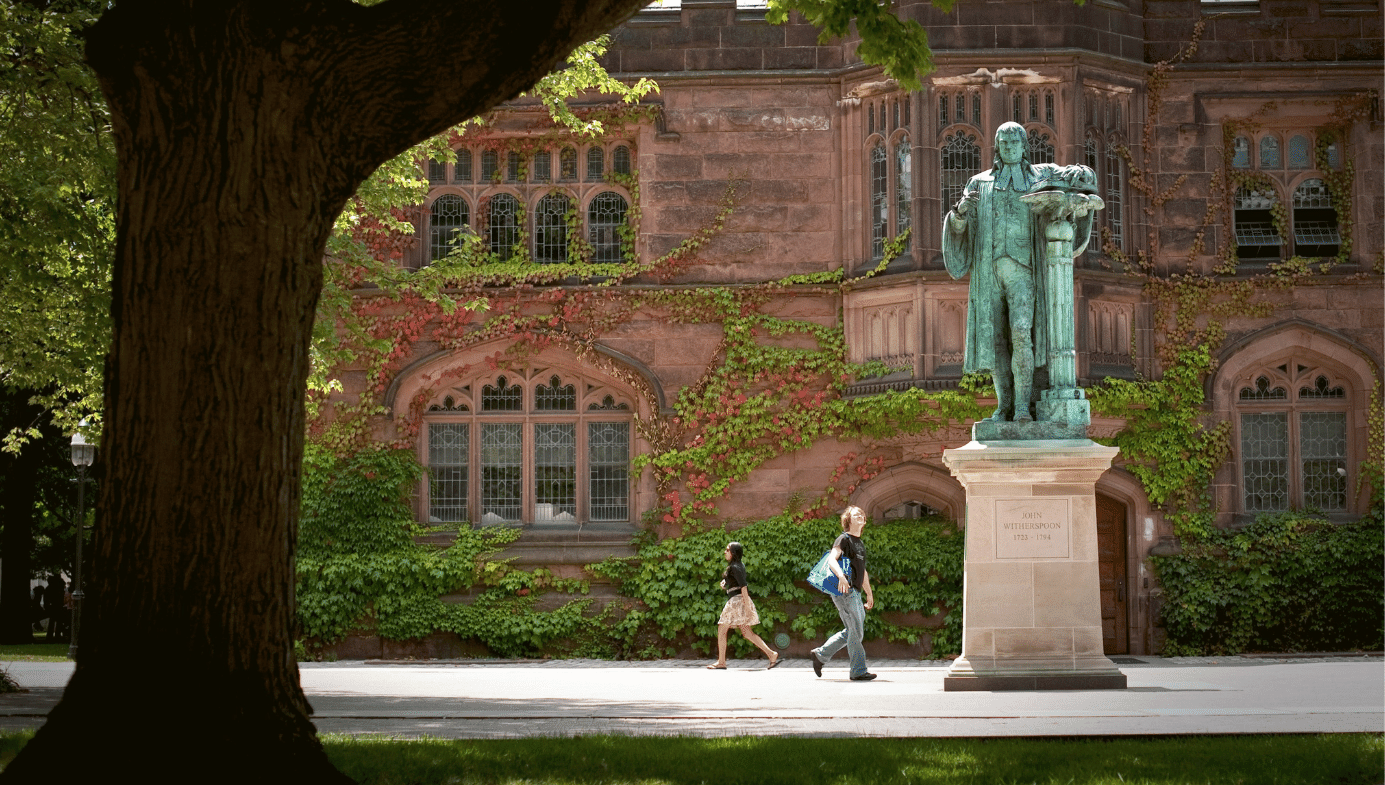

In 2017, I got the welcome news that I’d been admitted to Princeton University. At the time, I was ecstatic. And I remain humbly grateful for the education I received there. But now that I’ve graduated, I’m not sure the prize was worth the price I paid to win it. With millions of young Americans now in the midst of preparing their own college applications, this feels like a good time to explain why.
During high school, I spent almost every Friday and Saturday night studying, or working on the sort of extracurricular activities that I knew would assist my college applications. I had little time for friendships or dating. For meals, if I remembered to eat, I’d often wolf down my food in solitude. It wasn’t a healthy way to live, yet this is how many ambitious American students behave in their bid for admission to one of the country’s top schools. Vicki Abeles and Jessica Congdon’s 2010 documentary film Race to Nowhere gives a good sense of the kind of pressures these teenagers impose on themselves. And in the decade since that film was released, those pressures seem to have grown stronger.
In 2019—even before the COVID pandemic made things worse—the Pew Research Center published data indicating that a whopping 70 percent of American teenage respondents considered anxiety and depression to be a “major problem” among their peers. The same proportion also expressed concern about gaining admission to a college or university of their choice. More than 60 percent felt pressure to get good grades. And the competition only seems to be getting more intense. In 2019, when Pew was reporting its data, Princeton’s undergraduate admissions acceptance rate was 5.8 percent. In 2021, it stands at 3.98 percent.
As my own example shows, the hyper-competitive admissions process at elite institutions can rob teenagers of important experiences. It also can encourage a sense of hyper-individualism, since the only way to beat the odds is by endlessly boosting one’s own accomplishments. What’s worse, this achievement-obsessed mentality doesn’t seem to dissipate with an admit letter from the right school. At Princeton, I regularly saw students who were well-acquainted walk past one another without so much as a greeting, each absorbed in his or her own private paper chase. Those scenes from film and television of students on college campuses whimsically throwing around frisbees and having snowball fights—I never saw that happen. Yes, people ate together, drank together, went to parties, played sports, and studied in groups. But to an almost comical degree, these activities were tightly scheduled. You’d be hard pressed to find a Princeton student who didn’t track his or her life in 30-minute increments.
Students still have sex, of course. But it was hard not to notice a lack of sustained romantic relationships. In my case, I allowed a meaningful relationship to lapse because I prioritized my studies, imagining that this kind of intense focus would lead to a job in investment banking (a dubious goal to begin with, but more on that below). Regardless of whether a relationship really would have affected my grades in any significant way (which seems doubtful), it was the wrong choice.
It was also hard not to notice the transactional nature of social interactions among undergraduates—especially when it came to Princeton’s “eating clubs,” glorified co-ed fraternities where many students eat their meals. Membership in these clubs serves as a marker of prestige, while also (supposedly) helping members advance their careers through alumni networks. In this way, even the simple act of eating in the company of others can become just another form of self-advancement.
At Princeton, a student can’t join a club until sophomore spring. And so many students (including me, I confess) spend their first three semesters on campus attempting to bolster their chances of getting into the club of their choice. This can include selecting extracurricular activities, sports, friendships, and, in some cases, even romantic relationships, as a means to stack the odds. In my junior year, I heard about a group of freshmen girls who’d actually started up a dedicated group chat to trade information about the officers of an especially selective club.
Compared to the average young American, students who graduate from Princeton tend to have bright economic futures. One might think that this would lead them to be less anxious than their less fortunate counterparts. But from what I’ve seen, the opposite is true.
The sort of student who gets into Princeton has probably spent his or her teenage years in constant fear of slipping up in any way that might threaten his or her picture-perfect college application—whether at school, in his or her personal life, or on social media. Fellow students looking to sabotage one another and college admissions officers looking to lighten their reading load all have an eye out for any slip-up. In the social-media age, teens often feel like they’re being constantly watched and judged. But given that a single bad tweet—or even an off-color meme shared in a private group chat—can cost you a shot at the Ivy League, as it did to 10 Harvard hopefuls in 2017, that’s not mere paranoia.
College promotional materials typically promise incoming students an open-ended voyage of intellectual self-discovery. But, like many of my peers, I intentionally chose classes at Princeton that I knew I could ace—which is why I avoided anything in the sphere of engineering or computer science, subjects that I feared would be challenging for me. To satisfy cross-disciplinary requirements, engineering students I knew tended to take the easiest possible humanities courses. Humanities majors likewise vied for the easiest possible science courses. Comprehensive lists of the easiest classes in each required distribution area circulated freely among students.
This risk-averse attitude extends to career choice, with investment banking, management consulting, and tech being at the top of many students’ wish lists. Most of my friends at Princeton aspired toward these fields. As did I.
In 2017, Princeton sent about 37 percent of its graduates to jobs in consulting, finance, tech, or related areas. In 2019, Harvard sent 35 percent of its graduating class into these industries. Since 2015, the University of Pennsylvania has been sending around 30 percent of its graduates to Wall Street. In 2020, 30 percent of the Penn graduating class took jobs in finance, 20 percent in consulting, and 16 percent in tech—with the three categories collectively accounting for about two thirds of all graduates.
In 2013, Vivek Wadhwa, a Distinguished Fellow at Harvard Law School, authored a notable piece entitled If you want to be an Entrepreneur, Don’t Go to Harvard. “My greatest disappointment after joining academia was to see my most promising students accept jobs at Goldman Sachs or McKinsey,” he wrote. “Engineering students with ambitions to save the world would instead become financial analysts—who used their skills to ‘engineer’ our financial system. Or they would take grunt jobs in management consulting—another waste of valuable talent.” Wadhwa cited student debt as the chief cause of this phenomenon. And no doubt, that’s a major factor. But it’s notable that the increasingly generous nature of the financial-aid programs at Harvard, Columbia, Yale, Duke, Princeton, and other similarly prestigious schools hasn’t done much to change the career aspirations of graduates. The attraction of secure career options seems to be at least as much about internalized risk avoidance and prestige seeking as economics.
All great schools occasionally produce standout intellectual celebrities who blaze their own trails, such as Gabrielle Thomas, the Harvard-trained epidemiologist who also scored a podium result as an Olympic sprinter last year. But the vast bulk of graduates aren’t blazing new trails, creating innovative new companies, or saving the world nearly as much as these schools might have you believe. Most are doing the same thing that many office workers do, just wearing fancier clothing in nicer offices.
Nor does the treadmill mentality stop once you’re making a steady paycheck in one of those safe and lucrative industries. A friend of mine from my year at Princeton who now works at a big investment bank recently said he was trying to avoid what he called the “PE Trap” (i.e., private equity). By this, he was referring to the usual pathway of starting at a bank and soon after getting recruited into a private equity firm (or some other alternative asset manager, such as a hedge fund). He told me that what he really wanted was a substantive role with a company that produced a real product, as opposed to just shareholder dividends. This made sense to me. But to his fellow banking associates, it was anathema. The pressure to stay on the well-trodden path doesn’t stop after college.
All of this may seem confusing to those who assume that campus life at a place such as Princeton is dominated by woke ideology, not dreams of Wall Street—an impression that would certainly be supported by the performative social-justice gushing contained in the applications that prospective students submit. Whatever an applicant’s actual views, it’s a huge plus to signal the right social-justice commitments. Consider, for example, the student who gained admission to Stanford with an essay-question answer consisting of the #BlackLivesMatter hashtag repeated 100 times.
I submitted this answer in my @Stanford application, & yesterday, I was admitted...#BlackLivesMatter pic.twitter.com/R5YxM77bWL
— Ziad Ahmed (@ziadahmed) April 1, 2017
Keep reading
How France Lost Control of Its Streets

How to Suppress Men’s Writing
Back to the Dark Ages

Prison or Peer Review

France’s Imaginary Austerity