Sport
On the Issue of Female Athletics, the IOC Has Shirked Its Duty to Lead
It’s wrong to make everyone wait for proof of the obvious when it comes to genetic males outperforming genetic females.
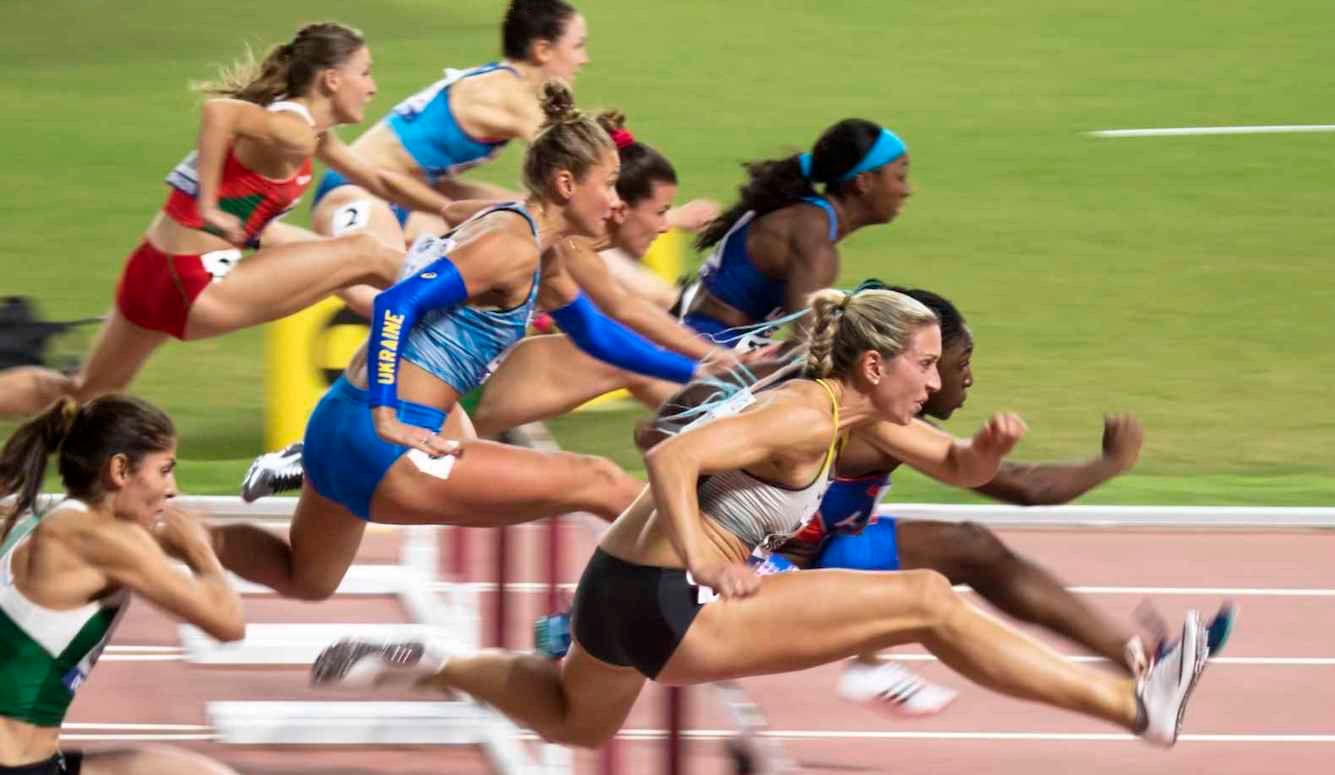

Last week, the Swiss-based International Olympic Committee (IOC) issued updated, non-binding guidance in regard to the inclusion of transgender women and intersex athletes in the female category in elite competitive sports. This IOC Framework on Fairness, Inclusion, and Non-Discrimination on the Basis of Gender Identity and Sex Variations is presented as a means to balance, on the one side, the right of every person to “practice sport without discrimination and in a way that respects their health, safety, and dignity” with, on the other, the need to protect “the credibility of competitive sport” by ensuring “no athlete has an unfair and disproportionate advantage over the rest.” Although the included principles were drafted “with the specific needs of high-level organized sports competitions in mind,” the IOC also urges that they be “promoted and defended at all levels of sport.”
The new framework contains some welcome elements. Most significantly: It affirms that fairness to the female field remains central to the category’s eligibility standards, and that establishing fairness is a matter of “evidence-based,” “robust,” and “peer-reviewed” scientific research. The principles also serve to encourage as much inclusion as possible within evidence-based bounds, a goal we wholeheartedly support. And the framework “replaces and updates” the 2015 IOC Consensus on Sex Reassignment and Hyperandrogenism, disliked by almost all stakeholders, which requires transgender women to suppress testosterone levels in their blood to below 10 nanomoles per liter for 12 months before they are eligible to compete in the female category.
Testosterone is the primary driver of the performance gap between males as a group and females as a group. Starting from the onset of male puberty, testosterone builds the male body in the respects that allow even middling male athletes routinely to outperform elite females. Because of this, the presence of circulating testosterone in the male range throughout one’s puberty and athletic career remains the best and most efficient proxy for the male athletic advantage. However, the IOC’s 2015 policy—which included (1) setting the testosterone cutoff for eligibility for the female category at under 10 nanomoles/liter, several times higher than the levels typically produced by healthy female ovaries; (2) requiring only a year of testosterone suppression, a step that only partially mitigates the advantages accrued over a post-pubescent male lifetime; and (3) suggesting the medicalization of healthy female-identifying athletes who might not otherwise choose to suppress their male-type testosterone production—was widely opposed. The IOC’s decision to turn away from the under-10 rule, as it’s sometimes known, should be seen as a good move whatever side of the debate you’re on.
Nevertheless, the new framework is flawed in at least three respects—flaws that the IOC must address if the organization is to demonstrate real leadership in this area. Until then, as others have emphasized, it will be playing catchup with international sports federations; absent proper IOC guidance, the latter will continue to set eligibility rules on their own initiative.
 Holly Lawford-Smith
Firstly, while the IOC was correct to acknowledge that its under-10 rule was not fit for purpose, its vaguely worded replacement—the stipulation that an athlete shall not have an “advantage that disproportionately exceeds other advantages that exist at elite-level competition”—is effectively standardless, making it a litigator’s dream and an administrator’s nightmare. By its terms, every eligibility decision is subject to challenge by an excluded athlete, on the grounds that their governing sports federation can’t or hasn’t established that the performance boost they get from their male sex-linked traits “disproportionately exceeds” the boost that an exceptional female athlete gets from non-sex-linked traits such as flipper-feet or fast-twitch muscle fibers.
Presumably, a federation couldn’t meet this standard in the case of an athlete who only makes the final, but not the podium; indeed, the IOC’s emissaries have acknowledged that a transgender woman or intersex athlete could be excluded only if they are “too good” in comparison with their best competitors. But even then, there is nothing in the IOC document to say what “too good” means so that a federation could establish that it, in fact, has met the standard: Would two percent better than the field be enough? Or does “disproportionately exceed” require more of a difference—say, something closer to the group-based performance gap? Or is this criterion satisfied if the difference, whatever it may be, is enough to account for the margin of victory?
It’s fine for the IOC to reconsider the use of circulating testosterone as a hard-and-fast standard. In refining sports policy, we should always try to be and do better. But the replacement also has to be fit for purpose, and this one will lead to more questions than answers. It would also serve to rekindle the arguments made on behalf of runner Caster Semenya, which were properly rejected by the Court of Arbitration for Sport in 2019. In these respects, the new standard seems to us like two steps backward rather than one step forward. A far better course of action would be simply to scrap the testosterone-reduction requirement, and update the existing standards in keeping with the best available scientific evidence.
Secondly, in its effort to avoid a political backlash from Movement progressives that would come from talking about biological sex, the IOC has largely omitted essential biological references from its framework. The operative words—male, female, testes, ovaries, androgens, estrogens—appear to be all but verboten. As a result, a plain-text reading of the document suggests that any athlete could be excluded from the female category if she could be shown to have a “disproportionate advantage”—even if she is indisputably female. As written, anyone who is “too good,” for any physical reason, may be cast as unfairly unsettling the playing field.
Quillette
Given that the Olympic Movement is fuelled by inspiring feats of singular talents, on the women’s side as much as the men’s, this can’t be what the IOC intended. (So no, despite being “better at swimming than anyone is at anything,” because she is biologically female, Katie Ledecky won’t now be at risk of exclusion from women’s events.) Even so, it is telling that the IOC won’t communicate plainly. Leadership in this area must include the courage to speak the words necessary to convey relevant meaning. The IOC’s politically-motivated, obfuscatory doublespeak has other, more principled and committed actors, such as World Athletics head Sebastian Coe, stepping in to fill the void.
Thirdly, while the IOC is correct to insist that eligibility standards—and the decisions on inclusion and exclusion based thereon—must be evidence-based, it’s wrong to make everyone wait for proof of the obvious when it comes to genetic males “consistently” outperforming genetic females in a “specific sport, discipline and event.”
Keep reading
How to Suppress Men’s Writing
Back to the Dark Ages

Prison or Peer Review

France’s Imaginary Austerity

The Limits of Perfectionism