Politics
The Enemy of My Enemy
But let’s remain clear in our minds what they really stand for, because sometimes the enemy of your enemy turns out, in the long run, to be just another enemy.
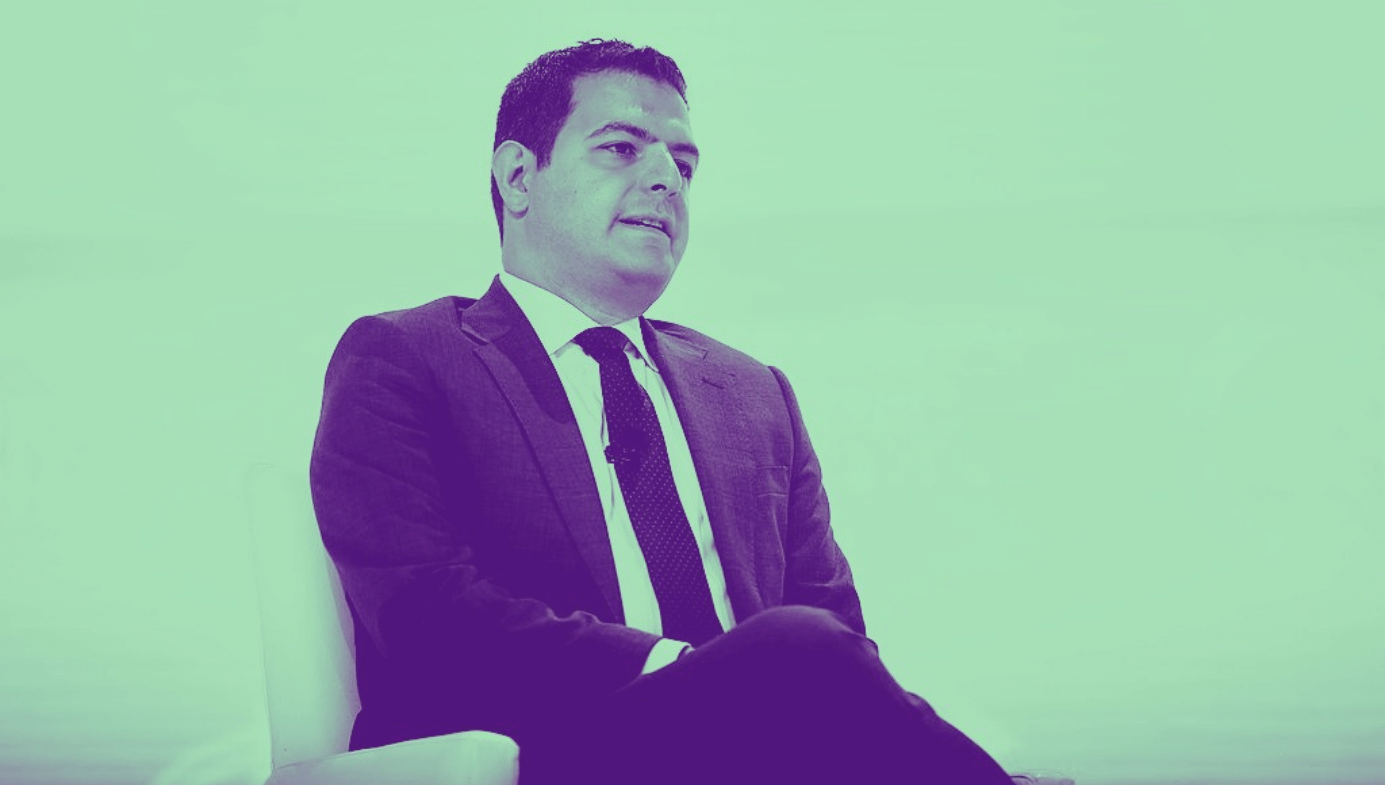

During a recent conference of nationalist conservatives—a faction attempting to bring intellectual substance and coherence to the political phenomenon of Trumpism—one of the movement's leading figures, Yoram Hazony, proposed “a new deal between national conservatives and traditionalists on the one hand, and anti-Marxist liberals on the other.”
This new coalition is intended to replace the American Right’s “fusionist” alliance between religious conservatives, free-marketers, and Cold War hawks, who were once drawn together by their shared antipathy to communism. Nationalists now regard fusionism with disdain, and by proposing an alliance with the center-Left, Hazony and his faction hope to downgrade the free-marketers and freeze out the secular libertarians.
This new alliance is a terrible idea, and liberals would be well-advised to treat Hazony’s offer with a whole lot of skepticism. Yet it seems that some of them are taking him up on it.
There is a basic rift on the “anti-woke” Right that is increasingly coming out into the open. Some of us oppose the censorious conformism of the social-justice Left because we are classical liberals who believe that freedom of speech and inquiry are critical to the functioning of a free society. Then there are those whose opposition rests on the belief that they should be the ones imposing limits on free inquiry in the name of traditional values. They don't want a free society, they want a virtuous society, in which their idea of virtue is promoted by government.
The nationalist conservatives are in the second camp. During his speech at the recent conference, for example, journalist Josh Hammer denounced the classical liberal wing of the Right as “effete, limp, and unmasculine, because it removes from the political arena, and consigns to the ‘private’ sphere, the very value judgments and critical questions that most affect our humanity and our civilization.”
Notice that the word “private” appears in skeptical quotation marks. Hammer goes on to denounce “the fundamentally and empirically false distinction between the ‘private’ and ‘public’ domains.” Those of us old enough to remember when “wokeness” was called “political correctness” might also remember that it was justified with a declaration that “the personal is political.” The nationalist conservatives have now embraced this slogan in pursuit of a quite different goal. In Hammer's words, that goal is “the defeat of cultural wokism and restoration of cultural sanity by partial means of the return of overt public religiosity—that is, the return of God to the public square.” He concludes:
We need a vision of conservatism that prioritizes not zombie free-market idolatry, but a vigorous political agenda dedicated, to quote a popular 2019 essay, to “fight[ing] the culture war with the aim of defeating the enemy and enjoying the spoils.”
That 2019 essay was a broadside written by the religious polemicist Sohrab Ahmari, and the full quote goes like this: “‘The only way is through’—that is to say, to fight the culture war with the aim of defeating the enemy and enjoying the spoils in the form of a public square re-ordered to the common good and ultimately the Highest Good.” The “Highest Good,” capitalized like a proper noun, refers in Catholic doctrine to “obedience to the will of God.” Ahmari goes on to call for “the use of the public power to advance the common good, including in the realm of public morality,” the aim of which is “to enforce our order and our orthodoxy.”
This is the context in which Hazony is offering his new deal to centrist liberals. The key concession he demands is this: “What we say to anti-Marxist liberals is where there is a large Christian majority in a country ... the public life of the country has to be Christian.” To which, he added, “Above all else we've got to get God and scripture back in the schools.” At the same conference, Rod Dreher—fresh from a residency with Viktor Orbán’s regime in Hungary—proclaimed, “We need to unapologetically embrace the use of state power.”
 The Quillette Editorial Board
What would this mean in practice? The nationalist conservative movement tends to be blustering and chest-thumping in its rhetoric, and vague and elusive when it comes to specifics. But we’re starting to see a few indications. Under cover of opposing the indoctrination of children in public schools, nationalists have pushed for intrusive bans on any teaching considered offensive to their political and religious sensibilities.
Some supporters have gone further still. In a bipartisan essay for the New York Times by four writers opposed to this project, the authors note that, "the Texas Public Policy Foundation, a conservative think tank, published a list of words and concepts that help ‘identify critical race theory in the classroom.’ The list included terms such as ‘social justice,’ ‘colonialism,’ and ‘identity.’” A conservative activist group in New Hampshire, meanwhile, is promising a $500 bounty to informants who denounce teachers to the authorities, causing them to “lose their jobs and licenses.”
On the national level, Rachel Bovard expressed the nationalist consensus that technology companies should be required to “prove themselves corporate patriots” or else “they simply cannot be allowed to endure” and should be broken into pieces by politically motivated antitrust prosecutions. The nationalists hope to fight progressive censorship by compiling their own lists of banned words, giving the state arbitrary power over the economy, and building a conservative surveillance state.
One of the characteristics of our era is that “anti-” has become a prefix that means “doing the same thing but in the opposite direction.” To be “antiracist” is to repurpose racial animus and prejudice against an ostensibly more deserving target. To be “antifascist” is to dress and behave just like a fascist, but under a communist flag. Following the same pattern, a faction of the Right believes that being “anti-woke” means employing the same tools of censorship and conformity, but to advance a conservative political and social agenda.
This gulf between the classical liberal Right and the religious/nationalist Right is not new. The old fusionists tried to paper over these differences, but occasionally coalitional harmony was disrupted by someone like Pat Buchanan bellowing about “religious war.” Yet, the fusionist coalition did have something to fuse it together—a shared vision close to that of classical liberalism, even if the factions sometimes offered different rationales in its defense. Some of these religious classical liberals are still around.
But the nationalist conservative agenda is so thoroughly illiberal that one wonders what the anti-Marxist liberals can expect to get out of the alliance. This is especially true considering how little liberals need the nationalists. Glenn Youngkin's recent victory in Virginia’s statewide election indicates that woke ideology is poisonously unpopular. Given the chance, people will vote against it and will cross party lines to do so. Nationalism is unnecessary, ideologically and electorally, to achieve this result. In fact, given that Youngkin performed far better than Donald Trump, who lost the state decisively a year earlier, nationalism is almost certainly a hindrance.
In spite of the nationalists’ assumption that they will be the senior partners in the new alliance, dictating its terms and conditions, it is they who need the boost of association with a popular cause. The cause doesn't really need them. So then why are some anti-Marxist liberals apparently ready to accept Hazony’s offer? Some of these intellectuals were featured speakers at the nationalist conference. As the Dispatch report notes, they include “Glenn Loury, a Brown University economics professor and prominent black conservative critic of the left's anti-racist dogma; anti-woke culture warrior Douglas Murray (don't tell them about his 2006 work NeoConservatism: Why We Need It); ‘classical liberal’ YouTuber Dave Rubin; the Somali-born champion (and, indeed, embodiment) of Enlightenment values Ayaan Hirsi Ali.”
Keep reading
The Insight Trap

Cornell and Consent
Robert Lynch on Status, Humour and the Apes We Pretend Not to Be | Quillette Cetera Episode 74
The Radicalisation of Tucker Carlson
A Pop Fiction Master and Monster