Science / Tech
Flying Cars: What, How, When, and Why?
Even though electric and self-driving cars have yet to saturate the market, dozens of companies are at various stages of launching flying cars in a variety of models.
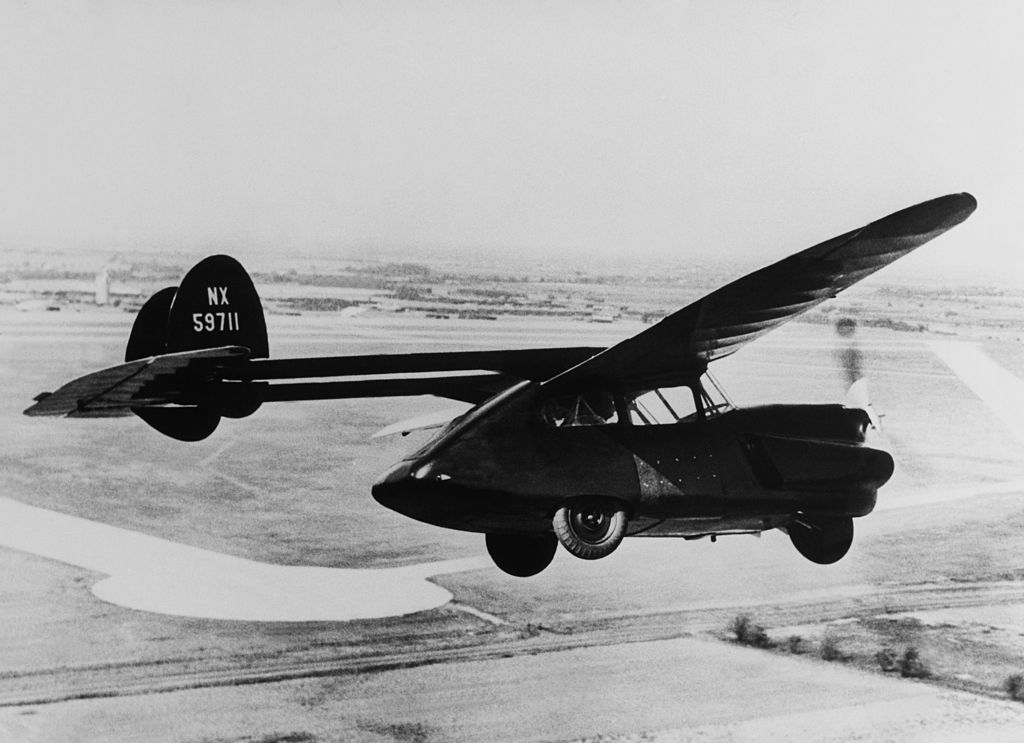

Futurists and science fiction writers were discussing the possibility of flying cars even before the appearance of cars and highways. As a concept, they have existed for nearly a century. Today, “flying cars” are an esoteric topic and an ambiguous term that refers to something more than simply a car that can fly. The idea has evolved and it is still evolving. For decades, the idea lacked interest and funding, but it has experienced a resurgence of attention over the last decade. Its comeback is the result of research into electric car technology and autonomous vehicles, and of interest from tech-billionaires who are willing to create start-ups to support their development.
Although flying car technology has been around for nearly a hundred years, these machines face an uncertain future. The current models are noisy, expensive, require heavy batteries, and present safety and security issues for passengers and anyone in their path. Assuming engineers can overcome the technical hurdles, are there compelling reasons to develop flying cars? And are their benefits greater than their potential risks?
Where is my flying car?
Talk of flying cars in the 1930s suffered from unfortunate timing, says J. Storrs Hall. In his new book, Where Is My Flying Car?, he argues that research stalled because the Great Depression, and then World War II diverted a good portion of the available engineering talent.
The earliest prototypes included the convertible and domed versions of the autogyro. For propulsion, they used autorotation, whereby a headwind turns a rotor and causes the vehicle to rise into the air. In 1949, the Aerocar was introduced—a hybrid airplane and automobile that could be driven on roads by folding up the wings and detaching the propeller. The Aerocar was granted civil certification in 1956, but there were not enough interested buyers to justify mass production. Consequently, only six Aerocars were built.
In the meantime, the US government invested in infrastructure—highways and bridges—for cars and trucks, and the aviation industry grew considerably with the exponential growth in helicopters, planes, and jets. The US military then became interested in developing a flying jeep, and the Airgeep first flew in 1959. The military tested several other models, but decided to scrap the project and focus on conventional helicopters instead. In 2009, the US Defense Advanced Research Projects Agency (DARPA) initiated a similar vehicle called the Transformer, but cancelled the program in 2013.
“Where is my flying car?" has since become shorthand for the failure of predicted technologies to appear. The depression and the war effort were understandable barriers, but Hall—a pilot, plane-owner, and futurist in his spare time—grew curious about the period following World War II. His research led him to Richard Feynman, a physics professor at Caltech, who in the 1950s envisioned an industrial revolution using nanotechnology for molecular manufacturing.
Hall, who is also a computer-processor designer and molecular nanotechnologist, proposes that if the scientific community had understood and followed up on Feynman’s vision, we would now probably be living in a world similar to that of 1960s futuristic cartoon, The Jetsons. The flying cars in The Jetsons looked similar to cars because their propulsion systems were more advanced than those we have today. These will require a second atomic age—a synthesis of nanotech and nuclear—to develop more advanced propulsion systems such as hydrogen cells and cold fusion, says Hall. To explain why Feynman’s vision never materialized, he cites an observation by Peter Thiel, further elaborated upon by Tyler Cowen in The Great Stagnation, that following a period of remarkable progress due to the exploitation of the low-hanging technological fruit, the US economy began slumping in the 1970s.
Another major trend impacting innovation after the Cold War was a shift in priorities. In Pasteur’s Quadrant, Donald Stokes points out that the emphasis of scientific research has changed over time. Stokes developed four quadrants named for prominent scientists who performed research in those areas. Niels Bohr conducted basic scientific research on the structure of the atom, so the quadrant of basic research is named for him. Research that combines basic and applied science is named for Louis Pasteur, whose work on vaccines, fermentation, and pasteurization was an early example. Thomas Edison pioneered industrial research with an emphasis on commercial inventions.
In the 20th century, the emphasis in science has moved from one quadrant to another. Historically, university research followed the Bohr model, the pursuit of knowledge for its own sake. After the Cold War era, science and engineering occupied Pasteur’s quadrant, seeking to advance both basic and applied science. Peterson’s field guide of bird markings for birdwatchers is neither basic scientific research nor applied science. Today, industrial research in Edison’s quadrant has come to dominate many fields.

For basic science, the incentive to spend public money on innovation is the public good. For applied science, the incentive is money and the interests of the company. You cannot receive patents on findings based on basic science and natural laws, so companies are not willing to invest millions or billions of dollars in that area. You can see how the space industry has shifted from NASA to Elon Musk, Jeff Bezos, and Richard Branson for space tourism and mining of minerals. NASA is still focused on gathering data for basic science and research.
The resurgence
Even though electric and self-driving cars have yet to saturate the market, dozens of companies are at various stages of launching flying cars in a variety of models. Although the earlier prototypes were not successful, they have paved the way for today's more advanced models.
With the more recent development and popularity of drones, several companies have designed passenger models. These include two Chinese companies, XPeng, which is backed by the e-commerce company Alibaba, and EHang, which is supplying the United Arab Emirates with autonomous taxis. The drones run on electric motors.
Building on the prototype autogyro, some flying cars resemble helicopters. In 2017, the Japanese government launched a flying car project with Japan's largest automobile company Cartivator, and hoped to use the SkyDrive to assist with igniting the flame at the 2020 Tokyo Olympics. The event was postponed due to the coronavirus epidemic, and the SkyDrive is still in the testing phase.
Joby Aviation, which is backed by Toyota, acquired Uber Elevate and plans to use Uber’s app to offer air taxi rides when the company’s aircraft eventually enters service. Uber’s business model plans to provide a convenience to busy passengers through a network of commercial on-demand aircraft and landing spots distributed throughout urban areas. For safety purposes, these vehicles use distributed electric propulsion—multiple separate generators and rotors—in case of a malfunction.
Some flying cars, such as the Dutch company PAL-V’s Liberty, can also function as cars driven on highways due to their foldable wings. In 2020, New Hampshire became the first state to authorize flying cars and passed legislation (known as the Jetson law) making it legal for aircraft to drive on its state's roads. Terrafugia, an MIT spin off, is developing the piloted, folding-wing, two-seat Transition, which will run on premium unleaded gasoline and fits into a standard single-car garage. For safety purposes, it will also have a parachute system.
 Hans Peter Dietz
Are flying cars a good idea?
Elon Musk is noticeably absent from the list of tech-billionaires supporting flying cars. As the brains behind SpaceX and Tesla, he believes they would not be that difficult to manufacture, but has chosen not to pursue their development. If somebody doesn’t properly maintain their flying car, he warns, it could drop a hubcap and guillotine a pedestrian. Also, with the current technology, flying cars are noisy (pilots of helicopters are still required to wear noise-cancellation headphones). Musk argues that traffic is already stressful enough, and filling the skies with buzzing metal boxes will only increase our anxiety levels. Instead, he has decided to focus on the Hyperloop—tubes and tunnels—as the future of transport to reduce congestion and travel time.
Some flying car concepts are commercial, while others are private. Some are piloted and others are autonomous. Samantha Masunaga of the Los Angeles Times calls flying cars an “intriguing chimera.” Propulsion systems currently utilize autorotation, gasoline, and electricity. They can resemble a drone or helicopter and have rotors, folding wings, or both. Autogyro calls its flying car a gyrocopter, and the Federal Aviation Administration (FAA) calls it a gyroplane. Samson Sky makes the Switchblade, which the company calls “a flying sports car.” It has three wheels and is classified as a motorcycle by the US Department of Transportation.
Flying cars are smart vehicles, and like smart houses and smart manufacturing they are smart because they provide the best technological solutions to existing problems. There are trade-offs to consider when choosing propulsion technologies, otherwise you end up with something that is not optimized for a particular task. Cars with wings, such as PAL-V’s Liberty and Terrafugia’s Transition, can fly over mountains, water, and traffic jams, but they need airstrips for taking-off and landing and for dropping-off and picking-up passengers.
Flying cars that carry passengers in urban environments, potentially among high rises, need vertical takeoff and landing (VTOL) engines which employ wing-mounted propellers for lift like a helicopter. Air taxis provide convenience through pre-determined routes which are more direct and reduce travel time. Similar to helicopters, all the SkyDrive and Uber air taxis need for take-offs and landings are a 10-by-10-foot pad similar to those found at hospitals, corporate headquarters, and even on yachts.
A major concern for flying cars and autonomous air taxis is safety. To ensure safe and efficient air traffic operations in urban areas, the long-term vision is the “smart city,” of which smart transportation will be a critical component. Urban air mobility (UAM), a concept created by NASA for urban transportation, utilizes automated air traffic management and other technologies for manned and unmanned aircraft. The UAM structure resembles an on-demand bus system rather than a taxi system, since under the centralized system all aerial vehicles are registered and controlled by a UAM platform that manages exact point-to-point routes set by its command-and-control platform.
Keep reading
The Insight Trap

Cornell and Consent

Robert Lynch on Status, Humour and the Apes We Pretend Not to Be | Quillette Cetera Episode 74

The Radicalisation of Tucker Carlson

A Pop Fiction Master and Monster